
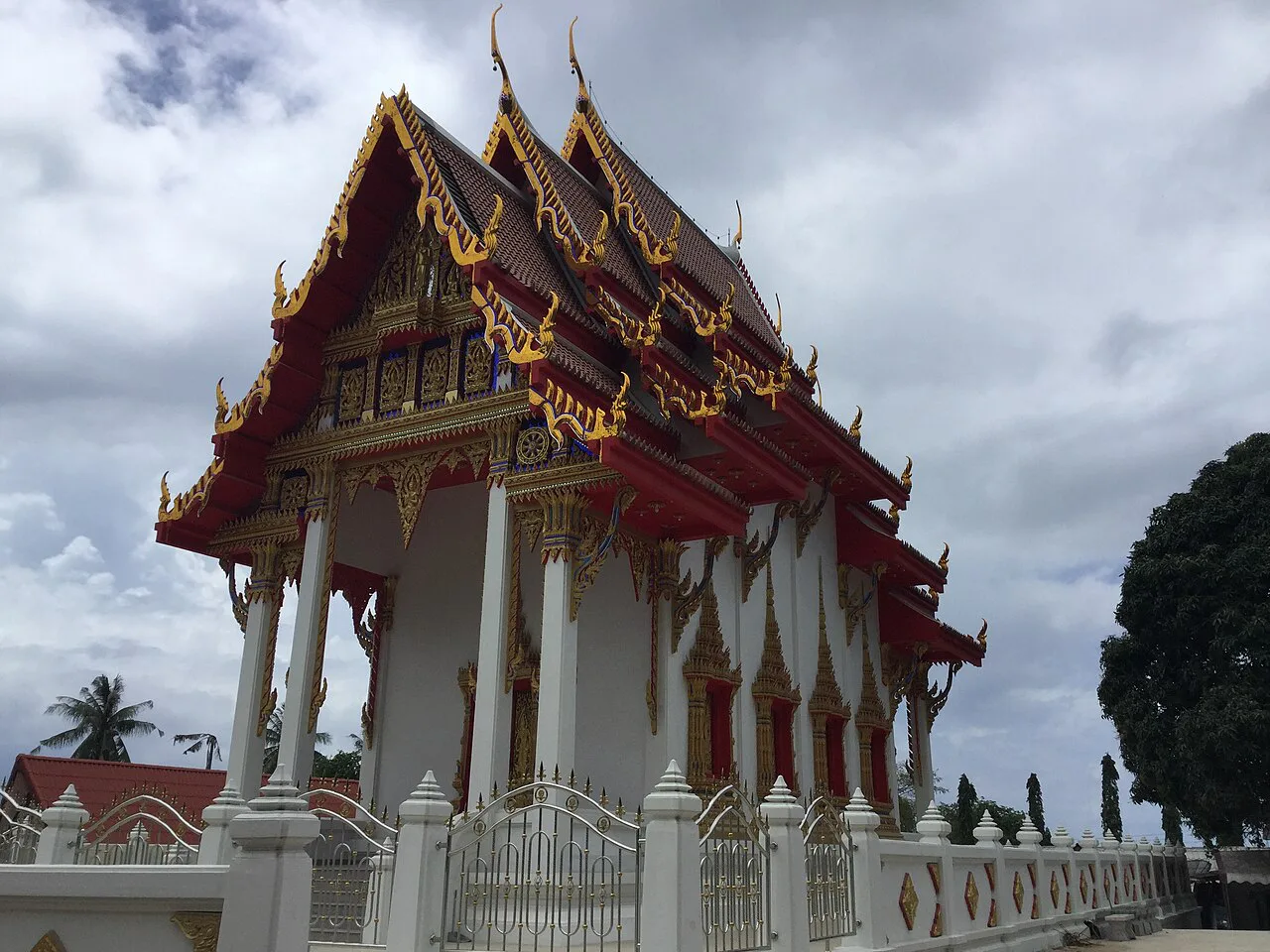
Wat Koh Tao: What to Know Before You Visit the Island's Buddhist Temple

Wat Koh Tao is the island's Buddhist temple, a working religious site rather than a beach, viewpoint or photo stop. Expect a modest Thai compound, quiet courtyards and visitors who treat the place as a place of worship first. This guide covers how to get there, how to dress, and how to build a sensible half-day around it.
What Wat Koh Tao is, and what it is not
This is an active Thai Buddhist temple, which means monks and laypeople may be using it for merit-making, chanting or alms rounds while you are there. It is not a museum with a ticket window, a viewpoint with a sunset crowd, or a beach club with a bar. Knowing that shapes how you behave and what you photograph.
Koh Tao is known above all as a diving island, and the national tourism authority describes it as one of Thailand's top scuba destinations, so many visitors never think to look for a temple at all. Treating the temple as a quiet counterweight to all that water time is the right framing, and it costs little time.
Where the temple sits on Koh Tao
If you arrive by boat, you will probably land at Mae Haad, the island's main gateway. Ask locally for directions to the temple from there, and decide whether the distance is walkable for you or better handled on two wheels or in a taxi. A hot afternoon makes every uphill stretch feel twice as long.
How to get there: scooter, taxi or walking
There is no public bus system on Koh Tao, so in practice your choices are a rented scooter, a songthaew-style taxi or your own two feet. A scooter suits confident riders comfortable on steep, sometimes uneven concrete and mixed traffic. A taxi suits anyone who would rather not ride the island's hills at all.
Walking works only if you are staying close by, because the temple's approach road is short but the island's heat and gradients add up quickly. Wear shoes with grip rather than flip-flops, carry water, and plan the visit for the cooler end of the day.
Temple etiquette: what to wear and how to behave
Cover your shoulders and knees, which is standard practice at Thai temples rather than a rule posted for tourists. A light scarf or a long cotton shirt in your day bag solves this in seconds for both men and women. Remove your shoes before entering any ordination hall or building where people are praying, and watch what the people around you do rather than assuming.
Keep your voice low, avoid turning monks into a photo backdrop, and do not point your feet toward a Buddha image. Women should not hand objects directly to a monk; placing them on a cloth or table is the usual workaround. If a ceremony is underway, stand at the edge and observe quietly rather than walking through the middle of it.
What you will see on the grounds, and how long to allow
Thai temple compounds typically combine a main hall, smaller shrine buildings, a courtyard and shade trees that make the grounds feel cooler than the road outside. Specific statues or relics are not documented for this temple in any reliable source, so look at the buildings with fresh eyes rather than against a checklist. Ask a resident or caretaker if a sign is unclear.
Allow roughly thirty minutes to an hour to walk the grounds, sit quietly for a few minutes and take a few respectful photographs. That is plenty, and it keeps the temple from swallowing time you would rather spend in the water.
Hours, donations and what to confirm locally
No reliable source confirms the temple's daily opening hours, entry charges or donation arrangements, so do not plan around a fixed time. Ask at your accommodation the day before, or stop by and look for the gate and any notice board. Daylight hours are the safest assumption for any working Thai temple, and arriving very early or very late risks a closed gate.
Do not confuse the island with the temple when an online listing says Koh Tao is open around the clock with a three-to-five-hour sightseeing window. That entry describes the whole island, not a religious site, and it should not be read as the temple's hours. If you want to support the temple, a small cash donation into an offering box is customary practice, but confirm what is appropriate locally rather than guessing an amount.
Best time of day to visit
Early morning is generally the calmest and coolest choice for a Thai temple, and you may see laypeople making merit. If a ritual is underway, stay at a distance and let it finish before you move through the grounds. Late afternoon is the second-best option, when the heat eases and you can pair the visit with sunset on the west coast.
What is nearby for the rest of your day
Scooter riders can carry on to the south for a swim and snorkel, where Shark Bay is known for the blacktip reef sharks that give it its name. If you would rather stay above the water, the quieter southern coves reward a slow afternoon. Both pair naturally with a temple visit because they sit on a sensible loop around the island's west and south.
The coastal hike from Mae Haad toward Chalok, passing Jansom Bay, Sai Nuan and Tao Thong, is the best way to stretch your legs without a scooter, though it wants proper shoes and a morning start. It ends within reach of Freedom Beach above Chalok Baan Kao Bay, so you can split the day between walking and swimming. Budget more time than you think for the climbs and the photo stops.
Accessibility and safety on the ride and the grounds
Temple grounds in Thailand are usually stepped and uneven rather than paved flat, so expect to need help at thresholds. Ask a companion or a resident to point out the most level entrance, and do not assume a ramp exists. The ride itself is the bigger risk: the island's roads include steep sections, and wet-season showers make the concrete slick.
Should you add Wat Koh Tao to your Koh Tao plan?
Yes, if you want one calm, genuinely Thai hour between dive days and beach afternoons. Skip it if your only reason is a photograph, because this is a working temple and it rewards visitors who come with a slower purpose. Either way, confirm the hours and any donation practice locally rather than relying on an online listing that describes the whole island.
Build the visit into a west-side morning: dress modestly, ride carefully or take a taxi, and keep it to under an hour so the rest of your day stays open. Pair it with the pier village for lunch or a southern beach for the afternoon, and you will have used the temple as it should be used, as a quiet anchor rather than a detour.
Explore more Koh Tao guides
Frequently Asked Questions
How many days do you need on Koh Tao?
Three to four days covers a dive course, a snorkel trip and a relaxed beach day without rushing. If you are only adding the temple on top of diving, one morning is enough, and you can spend the rest of your time in the water.