Phuket Weather by Month: Seasons, Rain & Best Time
See Phuket weather month by month: temperatures, rainfall, sea conditions, and which months suit beaches, islands, and budget trips.
On this page
Last updated November 2026. Phuket weather is hot all year, with a drier season from roughly November or December to April and a wetter southwest-monsoon season from roughly May to October. Exact conditions shift from year to year and from coast to coast, so we use this guide to turn typical climate figures into booking decisions and point you to live tools for the days that matter.
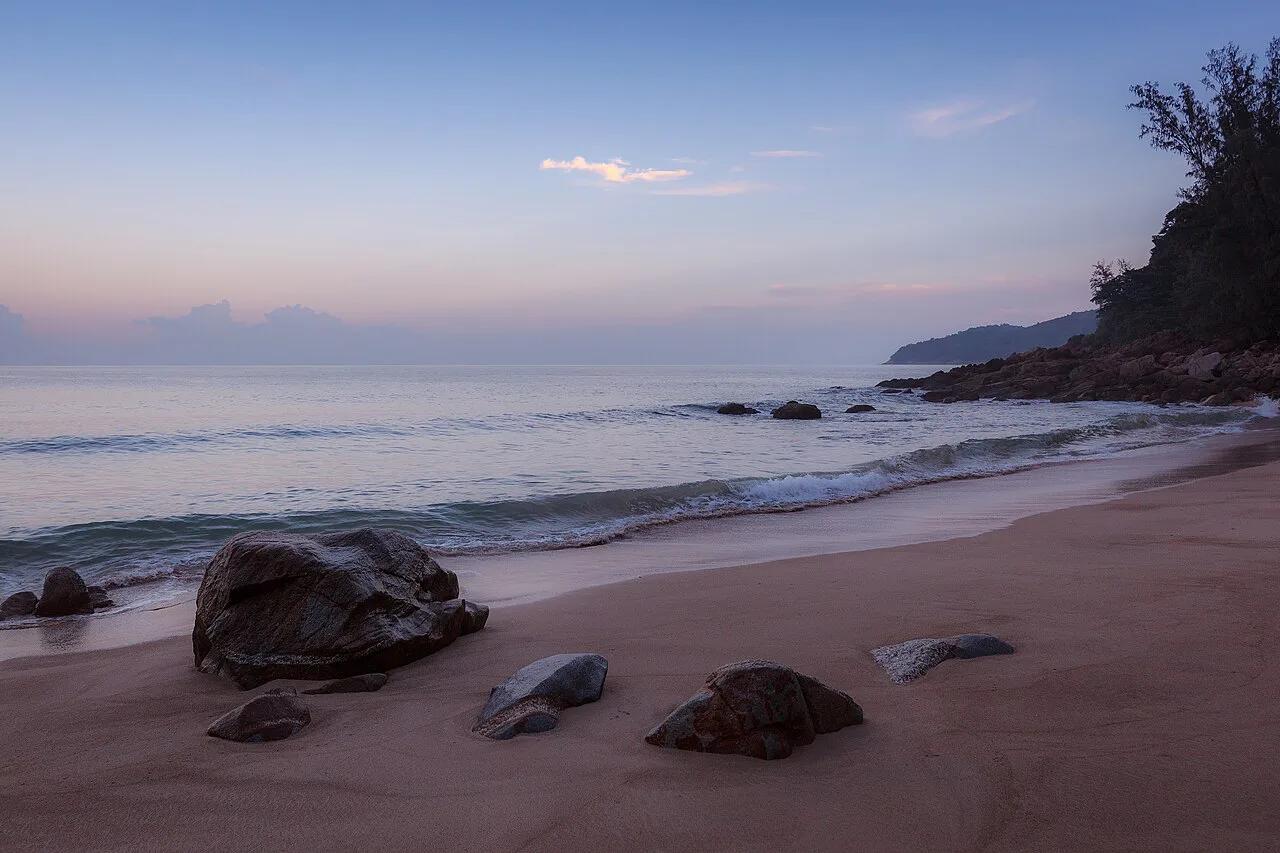
Featured image: HutheMeow, CC BY-SA 4.0, via Wikimedia Commons.
Phuket Weather at a Glance
Daytime highs sit between about 31°C (88°F) and 34°C (93°F) in every month. Nights hold near 24°C (75°F) to 26°C (79°F). Rainfall and sea state are what change. Treat the figures below as approximate local averages and confirm them against Thai Meteorological Department normals. Ratings are our own editorial assessment of rain risk, sea calm and crowd pressure, not an official score.
| Month | Season | Daytime temp | Rain (mm) | West-coast sea | Our rating |
|---|---|---|---|---|---|
| January | Peak dry | 33°C (91°F) | ~30 | Calm, clear | Best |
| February | Dry | 34°C (93°F) | ~24 | Calm, clear | Best |
| March | Dry, hot | 34°C (93°F) | ~74 | Calm, some swell | Best |
| April | Hot, Songkran | 34°C (93°F) | ~143 | Mostly calm | Good |
| May | Transition | 33°C (91°F) | ~260 | Moderate waves | Risky |
| June | Wet | 32°C (90°F) | ~213 | Rough, red flags | Risky |
| July | Wet | 32°C (90°F) | ~258 | Rough, red flags | Risky |
| August | Wet | 32°C (90°F) | ~287 | Rough, strong currents | Risky |
| September | Wettest | 31°C (88°F) | ~361 | Rough, strong currents | Risky |
| October | Wet | 31°C (88°F) | ~320 | Improving, unpredictable | Risky |
| November | Easing | 32°C (90°F) | ~177 | Calming, some waves | Good |
| December | Peak dry | 32°C (90°F) | ~72 | Calm, clear | Best |
Phuket's Seasons Explained

Dry-season months run from about November or December to April. Wet-season months run from about May to October, driven by the southwest monsoon. Sources draw the lines slightly differently, so we use that single definition throughout. Rain still falls in January, and sunny stretches still appear in August. Our deeper breakdown of the Phuket rainy season covers how those wet months play out in practice.
Phuket Average Rainfall
September is typically the wettest month at about 361 mm over roughly 23 rainy days. October follows at about 320 mm. February is the driest at about 24 mm and 3 rainy days. Rain usually arrives as heavy showers, often in the afternoon, followed by sun. Multi-day grey spells do happen in the wet season, and locals describe them in runs of three, six or nine days. Humidity climbs from about 69% in February to about 82% in September and October.
Month by Month: What to Expect
We group the year into four stretches. Each includes the practical consequence for your plans.
- January to March: the calmest sea of the year, with 24 to 74 mm of rain per month. Hotels and beaches such as Patong, Kata and Nai Harn get busy, so we'd head to quieter northern beaches. Our December in Phuket notes cover the start of this window.
- April to May: April peaks near 34°C (93°F) and has the Songkran water festival, with dates that vary yearly. Budget rooms with only a fan feel punishing. May is the transition month: humidity near 79%, about 260 mm of rain and about 21 rainy days. Waves start building on the west coast.
- June to August: about 213 to 287 mm per month, with red flags common. Roads are quieter and tours mostly run. Our July in Phuket guide shows how to use the sunny gaps.
- September to November: peak rain in September and October, then easing in November to about 177 mm. Sea temperature stays near 29°C (84°F). November is the cheapest way to buy into the drier season.
Which Month Should You Choose?
Use this table for a quick pick. For the full timing verdict, read our guide to the Best Time to Visit Phuket: Month-by-Month Guide (2026).
| If you are... | We'd pick | Why |
|---|---|---|
| Beach-focused | January to March | Lowest rain and calmest west-coast sea |
| Island hopping | January to April | Smooth boat crossings and clearer water |
| On a budget | June to August | Fewer crowds and lower room rates |
| Travelling with kids | December to February | Reliable swimming and fewer red-flag days |
| Diving or surfing | Check the target month | Best visibility is dry season; waves are wet season |
| Honeymooning | December to March | Settled skies and a pool-and-beach rhythm |
Sea Conditions and Beach Safety on the West Coast
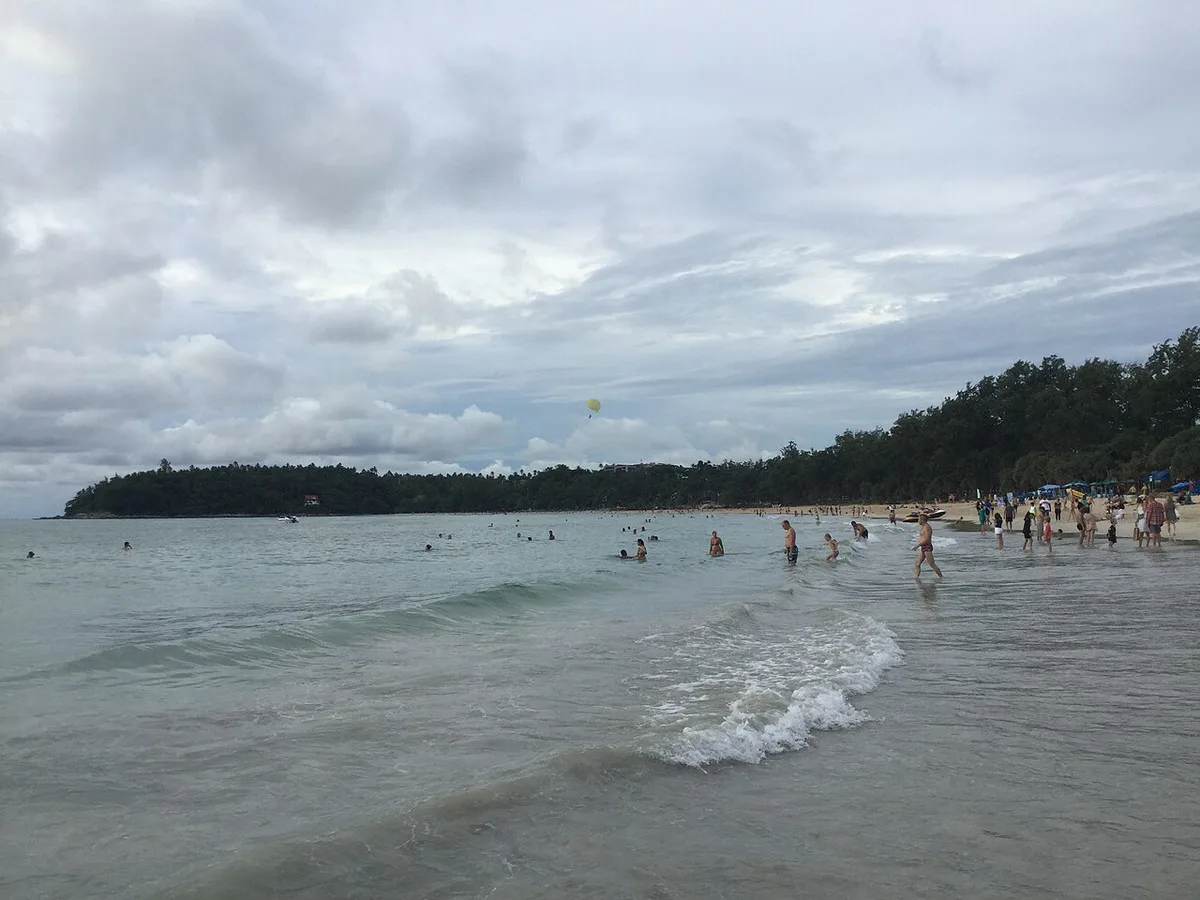
West-coast beaches such as Patong, Kata, Karon, Kamala and Surin get rougher surf and strong currents from about May to October. Red flags are common from June to September. We'd treat a red flag as a firm no-swim signal and ask your hotel or lifeguards about rip currents before you enter the water. East-coast spots such as Ao Po and Cape Panwa tend to stay calmer in the wet season, and hotel pools are a safe fallback. Sea temperature stays near 28°C (82°F) to 30°C (86°F) year-round, so cold is never the issue.
How to Check Phuket's Weather Right Now
For official forecasts and radar, start with the Thai Meteorological Department. Add a wind and wave forecast if you plan boat trips or diving. Webcams at Patong, Kata and Karon show the sea in real time, though webcams come and go, so test them before relying on one. Read a "chance of rain" icon as a possibility of showers somewhere on the island, not a washout. Rain is very localised, and a forecast often shows rain all week when the reality is scattered afternoon showers. We'd trust forecasts for a day or two ahead and little beyond.
What to Do When It Rains
Rain on the west coast does not mean the whole island is wet. Old Phuket Town makes a good base for a grey day, with cafés and shophouse streets you can walk between showers. Book a spa session or a cooking class for the afternoon when showers usually peak. Pick a hotel with a good pool, since the sea may be off-limits but sunshine returns between downpours. Our rainy season planning notes go further on flexible itineraries.

Costs, Crowds and Getting Around by Season
Dry-season months bring higher room rates and fuller beaches. As an illustrative example only, a mid-range room listed at ฿1,500 a night in September could list at ฿3,000 or more in January. Check live rates when you book. Wet-season roads are less hectic and most attractions and tours keep running. The Similan Islands are reported to close from about mid-May to mid-October, so confirm dates with the national parks authority. Heavy rain can slow taxi and ride-hailing pickups, and rough seas can delay boats, so leave a buffer before flights and keep island day trips flexible.
What to Pack for Phuket
Pack light all year, since clothing is easy to find locally. Dry season: shorts, T-shirts, sandals, a hat, reef-safe sunscreen and a thin layer for cool December and January nights on a motorbike. Wet season: a light raincoat or small umbrella, quick-dry clothes, a waterproof phone pouch and sandals with grip. Sun protection stays on the list even on cloudy days.
September brings about 361 mm over roughly 23 rainy days, so the wet-season raincoat and quick-dry clothes matter most then.
Common Weather Mistakes to Avoid
Do not assume the wet season means constant rain. Do not book an island trip on your last day with no weather buffer. Do not ignore red flags, because currents can be strong even when the beach looks inviting. Finally, do not skip hydration in March and April, when heat and humidity make 34°C (93°F) feel hotter.
Frequently Asked Questions
What is the weather forecast for Phuket for the next 20 days?
Forecasts beyond a day or two are unreliable for Phuket because showers are so localised. Check the Thai Meteorological Department for short-range forecasts and use month-level climate patterns for longer planning.
Can you show me a weather map of Phuket?
Rain radar and satellite maps are available from the Thai Meteorological Department and from wind and wave forecast tools. Radar is most useful for judging the next few hours of rain.
Useful notes for your Thailand trip
Optional updates to our guides.
You might also like

Continue reading
More guides you'll find useful