
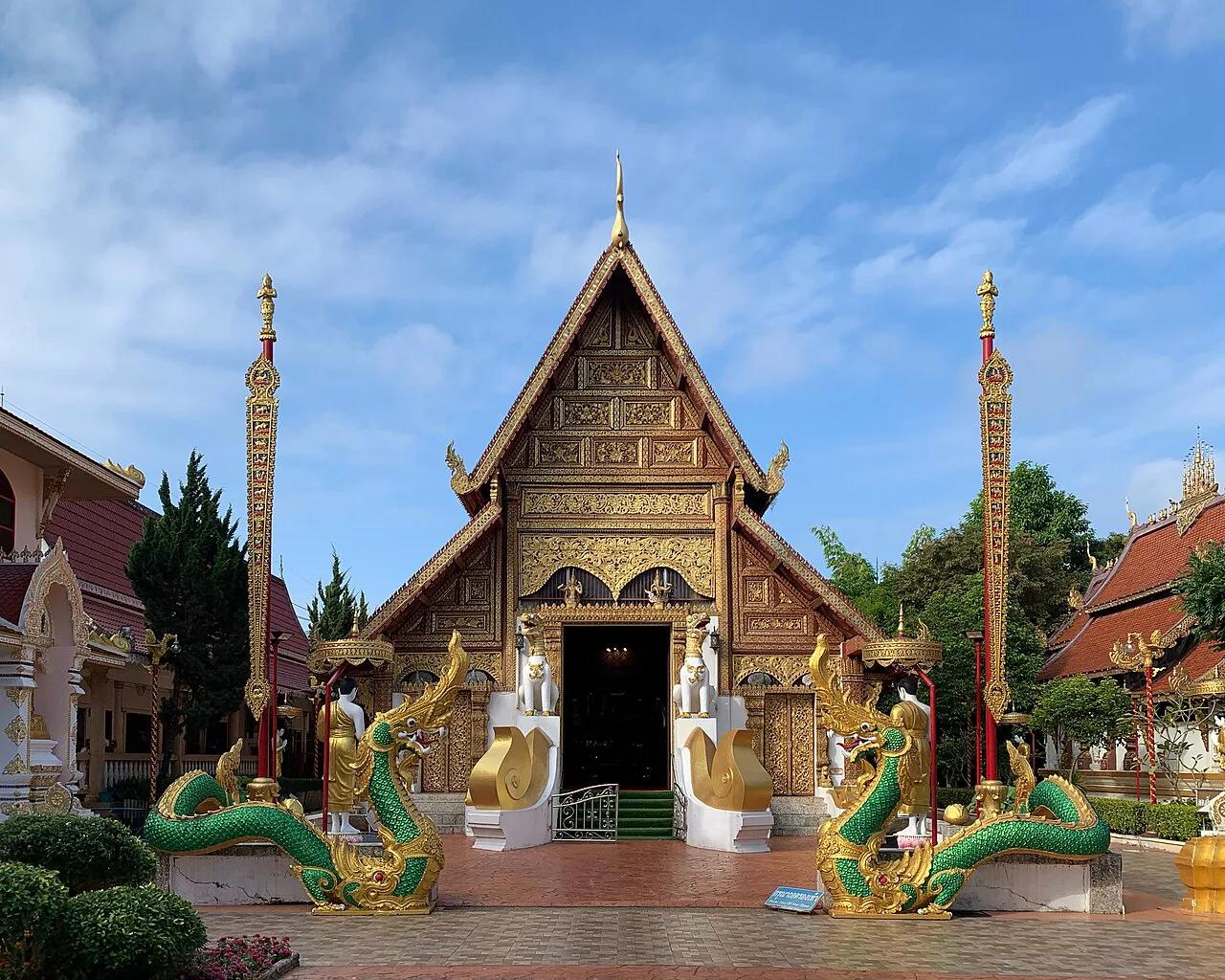
Wat Phra Singh Chiang Rai: What to See and How to Visit

Wat Phra Singh Chiang Rai is a short city temple in the heart of Wiang subdistrict, and an hour of your day is enough to see it properly. It suits a stop folded into a walk between the Old Town's other sights rather than a dedicated excursion. This guide covers where the temple sits, how to get there, what to look for in the viharn and compound, how long to allow, and which details you should confirm before setting out.
Wat Phra Singh Chiang Rai at a glance
This is a working royal temple in central Chiang Rai, not the far more famous Wat Phra Singh in Chiang Mai, and the shared name causes plenty of confusion. A visitor account describes it as a third-class royal temple of the common type, meaning a modest, active parish-style Wat rather than a major monument. Its draw is the principal Buddha image and the Lanna craftsmanship of the prayer hall, viewed up close and without crowds.
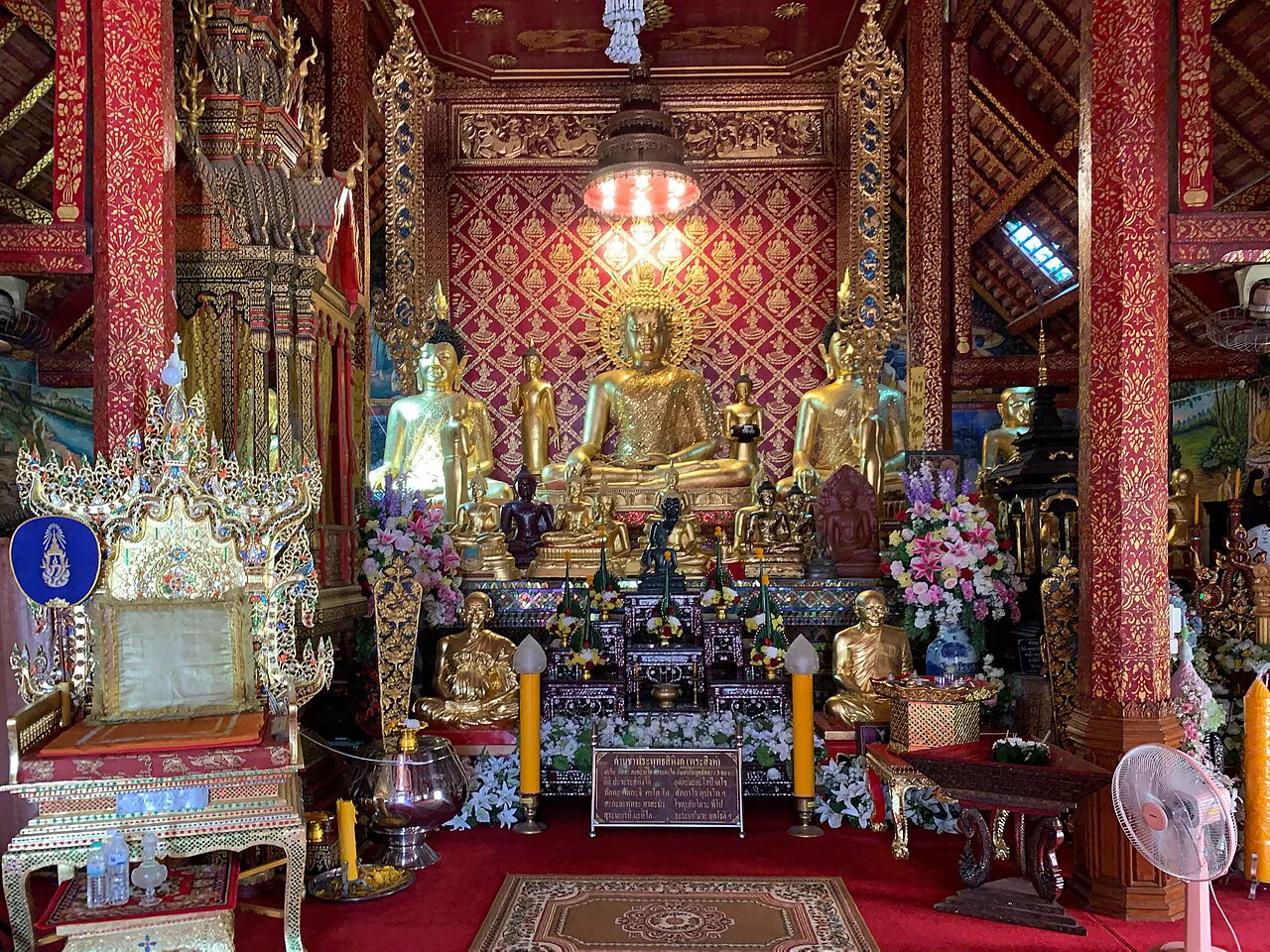
The headliner is Phra Singh Luang, the principal image in the ordination hall, described as Lanna art in the Mara-Vijaya posture, cast in bronze and covered with gold. The reported dimensions put it at roughly two meters across the lap and close to three meters high at the base, so it dominates the hall. Come for that figure rather than for a sprawling complex.
Traditional accounts link the temple's founding to the fourteenth-century Lanna Kingdom and to the Phra Buddha Sihing, but sources disagree on details and some read as machine-generated, so treat the origin story as tradition. What matters for a visitor is that the original Phra Buddha Sihing is associated with Chiang Mai, while a revered copy is venerated here. Do not repeat the claim that the original image is housed in this temple.
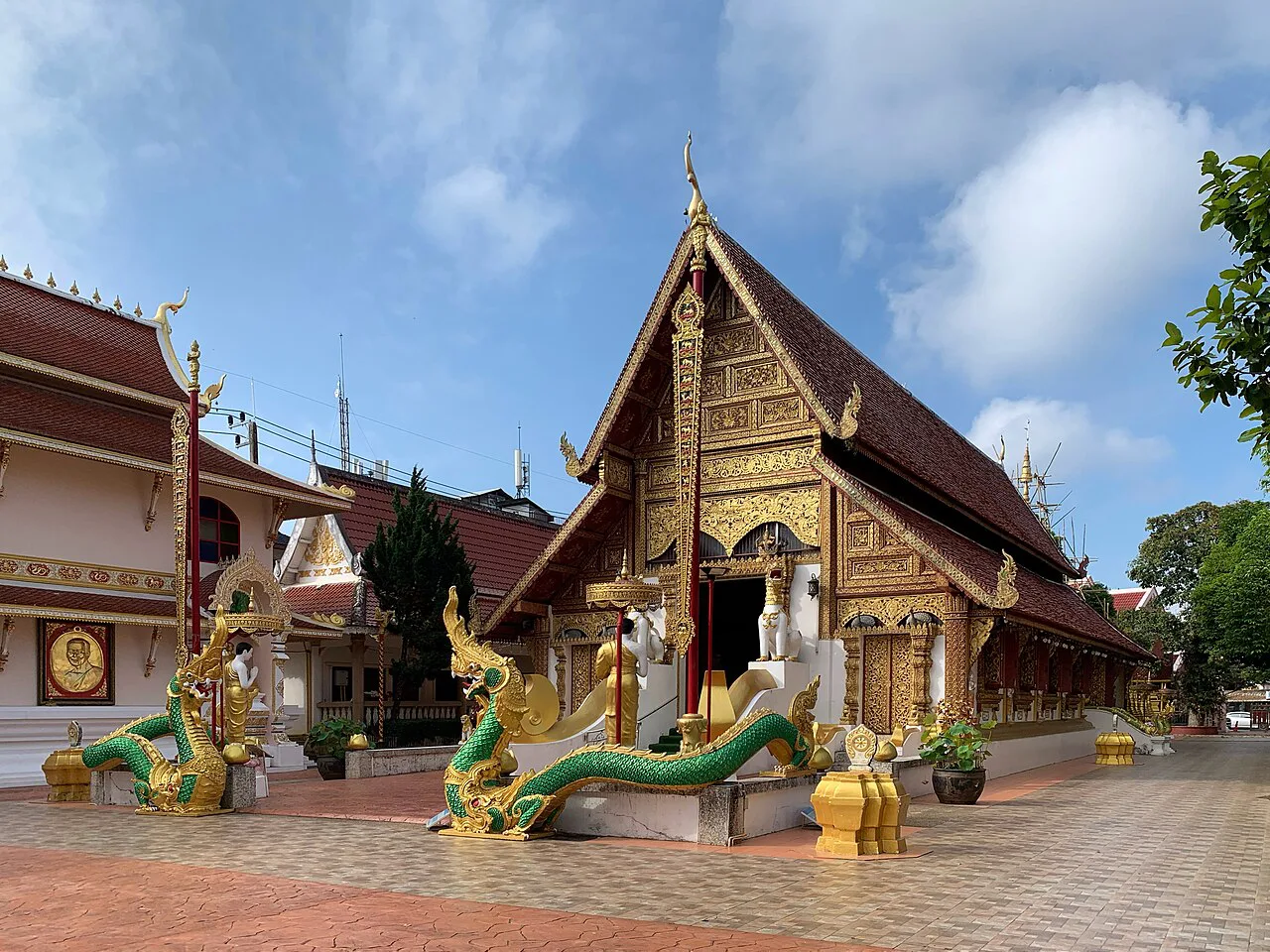

Where it is: Tha Luang Road, beside the old provincial hall
The temple sits on Tha Luang Road in Wiang subdistrict, Mueang Chiang Rai district, with its compound bounded by Singhaklai Road to the north, Phra Singh Road to the south, Tha Luang Road to the east and Phakdi Narong Road to the west. The landmark to navigate by is the old Chiang Rai Provincial Hall next door; find the hall and you have found the temple, and the map code WR6J+G3R drops you at the same block.
Because it sits inside the old city-center grid, the temple pairs naturally with a walking loop rather than a separate taxi trip. If you are staying anywhere in the Old Town, check your hotel's position against Tha Luang Road on a map before deciding on transport: guests within a few blocks can simply walk, while anyone further out should plan a short ride. For a wider set of options in the city, see the Chiang Rai Attractions: 5 Visitor Guides.
How to get there from central Chiang Rai
Tuk-tuks and songthaews, the shared pickups that run fixed routes around the city, both pass through the center, and taxis or ride-hailing apps work too. A guide to the temple notes that a trip from central Chiang Rai is likely to be short and inexpensive, but fares are negotiated or metered locally and change over time, so ask before you ride. Name the old provincial hall or Tha Luang Road rather than relying on an English temple name.
From the Old Town, walking is often the simplest option, so wear shoes you can slip off, because you will remove them before entering the viharn. If you are coming from further out, combine the trip with other central sights so one ride covers several stops. Arrange your ride through your hotel or an app rather than counting on the temple to answer transport questions.
What to see in the viharn
Start with the main prayer hall, where you will find Phra Singh Luang. Look up as well: the Lanna-style multi-tiered roof with curved edges and naga, the mythical serpent, decorating the gables and doorways is a signature of northern Thai temple building. The wood carvings on the doors and gable ends reward a few minutes of slow looking, and interior walls of Lanna viharns often carry murals, so check what is visible inside on the day of your visit.
Inside, the atmosphere is quiet and devotional, so keep your voice low and avoid blocking anyone who has come to pray. Photography is often permitted in temple halls, but watch for signs and never use a flash during worship. If monks are present, keep a respectful distance rather than approaching for photos.
The rest of the compound
Beyond the viharn, the grounds include the ordination hall, chedis that may house relics, and a library building that traditionally stored manuscripts. Walk the perimeter once to take in the mix of structures; the compound is small, so you will not need a map. It is well kept and calm, which makes it a good place to sit for a few minutes between stops.
How much time to allow and the best time of day
Budget one to two hours including the walk around the grounds, with the shorter end enough if you are pressed for time. A listing's suggested sightseeing window matches that range, and it fits neatly into a city day. Plan the visit for the morning, when the light through the hall doorways is best and the heat is lower.
Late afternoon is the alternative if you are fitting the temple between other stops, but check the closing time first. Because this is an active temple rather than a museum, ceremonies can briefly close the viharn to casual visitors, so be flexible; if the hall is busy with worshippers, wait or return later instead of pressing in.
Entrance fee and opening hours: what listings show and where to confirm
Listing sites show the temple open from 7:00 to 18:30 and describe entry as free, which is consistent with a city temple of this size. Treat those as third-party figures rather than official confirmation, since no reliable official page for the temple turned up. Check the hours again before a late-afternoon visit, and confirm at the entrance or with your hotel if you are making a special trip.
If you see an entry price quoted anywhere, verify it at the gate rather than planning around it, since listings disagree and a working temple's rules can change. Bring small notes in baht for donations or offerings, but do not assume a ticket booth; this is not a ticketed attraction in the way the city's larger sights sometimes are.
Temple etiquette: dress and behavior
Dress for a place of worship: cover shoulders and knees, and remove shoes before entering the viharn. Women should not touch monks or hand items directly to them, and everyone should avoid pointing feet toward Buddha images. Keep voices low, silence phones, and step aside for anyone praying. These rules apply across northern Thai temples, including the nearby Wat Phra Kaew Chiang Rai, where the Emerald Buddha, or Phra Kaew Morakot, is the draw.
Nearby options to pair with the visit
The old provincial hall next door and the surrounding Old Town streets make the most natural extension. For an evening walk, head toward the Chiang Rai clock tower, formally Hoh Nalika Chalerm Prakiat, a landmark designed by artist Chalermchai Khositpipat, and then on to the night bazaar for food and shopping. Both are close enough to combine with the temple in one relaxed afternoon.
If you want a hilltop view to close the day, Wat Phra that Doi Chom Thong sits on Doi Chom Thong hill in Rop Wiang Sub-district, a short ride from the center. For more indoor context on northern Thai culture, the Oub Kham Museum, Chiang Rai is another option, and the broader list of things to do in Chiang Rai can fill the rest of your day.
Is Wat Phra Singh Chiang Rai the same as the temple in Chiang Mai?
No. Chiang Mai's Wat Phra Singh is the larger, more famous temple, while this is a separate city temple in Chiang Rai with its own principal image. The confusion is common because both carry the Phra Singh name and both are linked to the Phra Buddha Sihing tradition, which is described in the Chiang Mai temple's own listings. The two should not be treated as substitutes.
Nor is this the White Temple, the bright contemporary complex outside the city center. Keep the two straight when you plan your day: Wat Phra Singh is an Old Town stop of about an hour, while the White Temple is a separate excursion. Both can appear in travel photos, so check the name on any pinned map before you set off.

Should you add Wat Phra Singh to your Chiang Rai day?
Yes, if you are already spending time in central Chiang Rai. It is a short stop that gives you a close look at a revered Lanna Buddha image and a calm moment in a busy day. It is not worth a dedicated trip from outside the city, and it is not the Chiang Mai temple or the White Temple. Confirm hours at the gate, dress respectfully, and allow an hour of your afternoon.
Frequently Asked Questions
Do I need to book a ticket for Wat Phra Singh Chiang Rai in advance?
Listings describe the temple as free to enter, so there is no advance ticket to buy. Check at the gate or with your hotel in case anything has changed, and bring small notes in baht for donations.
What is the difference between Wat Phra Singh in Chiang Rai and Wat Phra Singh in Chiang Mai?
They are separate temples. The Chiang Mai temple is larger and better known, while the Chiang Rai temple is a smaller city Wat with its own principal Buddha image. Both are connected to the Phra Buddha Sihing tradition, but the original is associated with Chiang Mai while a revered copy is venerated in Chiang Rai.
Is the temple suitable for visitors with mobility limitations?
The compound is small and fairly flat, but temples typically involve steps into the viharn and shoe removal. Ask your hotel about step-free access and consider visiting at a cooler time of day. No published accessibility information turned up, so check on arrival.