Getting Around Koh Samui: Best Transport by Area
How to get around Koh Samui: songthaews, taxis, scooters and rental cars compared by cost, risk and where you stay, plus mistakes to avoid.
On this page
Last updated November 2026: getting around Koh Samui comes down to three choices, because the island has no standard public transit system. Songthaews cover cheap hops along the main road, scooters and rental cars give you freedom, and taxis or hotel transfers suit airport runs and late nights. Your best pick depends on where you stay and how many days you have.
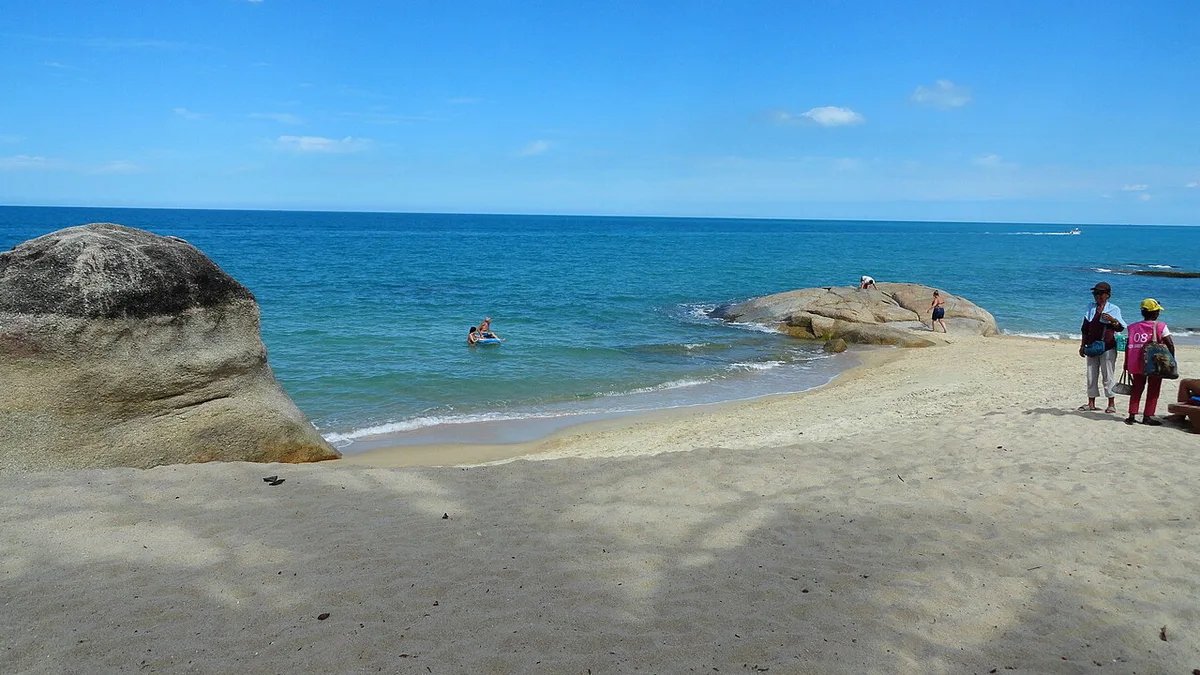
Featured image: jetalone, CC BY 2.0, via Flickr.
Koh Samui transport options compared
Most movement on the island follows the ring road, Route 4169, which links Chaweng, Lamai, Bophut, Maenam and Nathon. Older published figures put the loop at about 55 km, or roughly 1 hour of driving without stops. Reaching the island is a separate topic, so start with our guide to reaching Koh Samui if you have not booked yet. Costs below are relative tiers. Prices change, so confirm locally.
| Mode | Best for | Relative cost | Main friction | Skip if |
|---|---|---|---|---|
| Songthaew | Ring-road hops between beaches and Nathon | Lowest | No official stops, shared with other riders, acts like a private taxi after dark | You carry bulky luggage or head to hillside spots |
| Scooter | Explorers on 5+ days who ride confidently | Low per day | Steep slopes, wet roads, licence and insurance checks | You are a first-time rider or travel with children |
| Rental car | Families and groups covering several areas | Mid to high | Parking at beaches and markets, narrow side roads | You only plan one or two beach days |
| Taxi or transfer | Airport, pier and late-night trips | Highest | Meters rarely used, so fares are negotiated | You make many short daily trips |
Songthaews: the budget option and how they really work
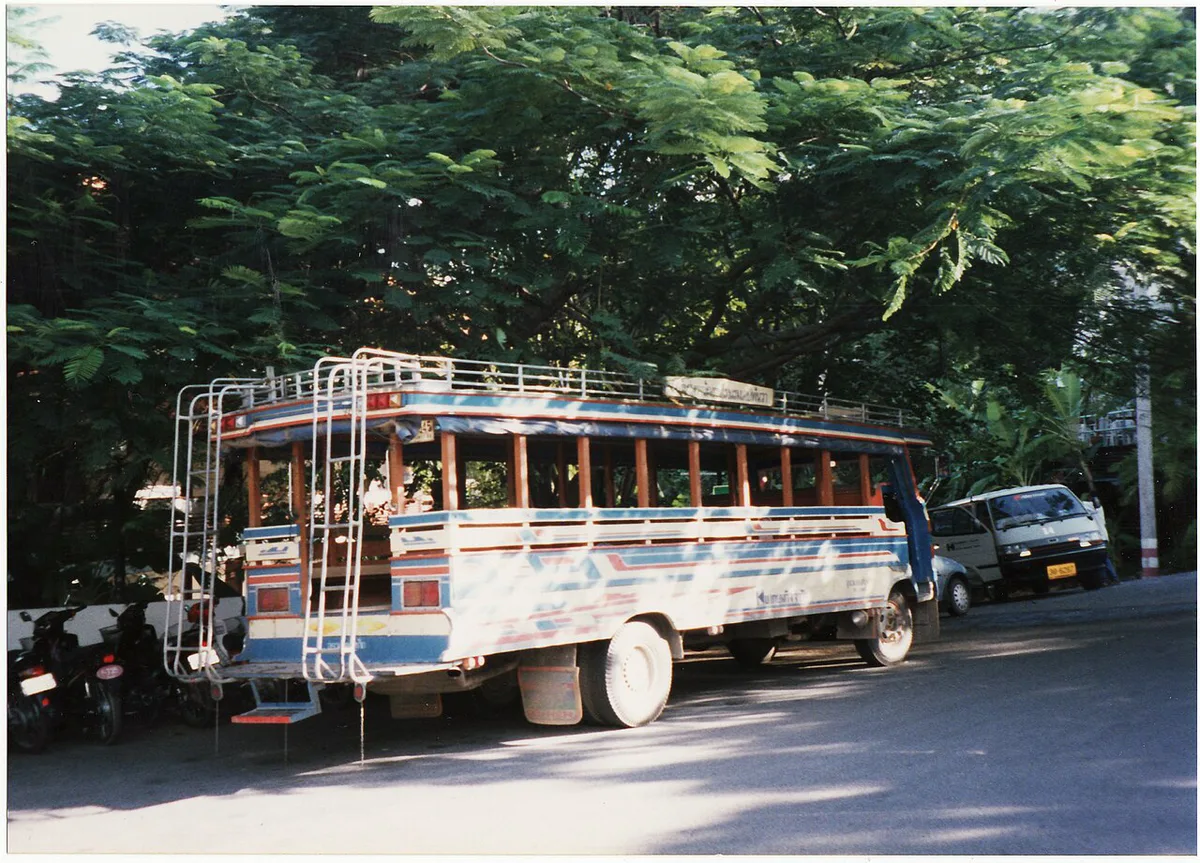
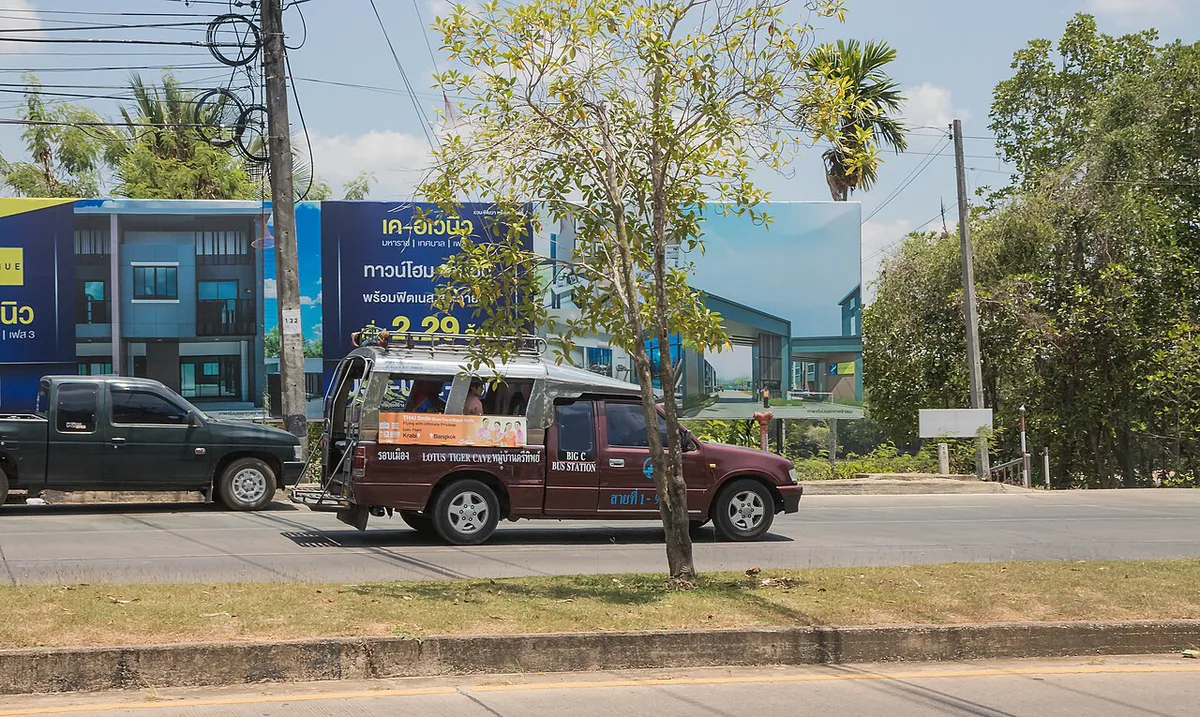
Songthaews are pickup trucks with two benches and a roof, and they are the closest thing Samui has to public transport. Older published rates start at ฿50 for a short ride, and capacity is around 10 passengers. There are no official stops, so you flag one down along the ring road and tell the driver where you are going. Drivers may change route depending on passenger load. After dark many behave like private taxis, so agree the fare before you climb in. Waterfalls, viewpoints and quiet west-coast beaches such as Lipa Noi sit off the main route, so a songthaew only gets you to the nearest junction. Luggage can ride on top, but the space is limited. A songthaew is a poor choice for hotel-to-hotel moves with big bags.
Scooters and motorbike taxis: freedom, risk and rules
Scooters are the most popular way to explore, and older listings quoted about ฿100 to ฿300 per day or ฿2,000 to ฿4,000 per month. Treat those as dated and confirm with the shop. Samui has many steep slopes, and wet roads make braking harder in the rainy season. Wear a helmet every time. Check the current licence or international permit rules with the Department of Land Transport before you rent. Confirm that your travel insurance covers scooter accidents, because many policies exclude riders without the right licence. Photograph every scratch on the bike before you leave the shop. Ask what the damage deposit is, and be wary of any shop that insists on holding your passport. First-timers, anyone who has been drinking and anyone carrying children should not ride. Motorbike taxis suit quick short trips if the driver has a spare helmet for you.
Rental cars: when they beat a scooter
Cars make sense for families, groups and anyone wary of hills and rain. Older listings showed small cars from about ฿700 per day, usually without insurance, and about ฿2,000 per day with insurance. The cheapest quote often leaves out cover, so compare the insurance level line by line. Rental desks are commonly found around the airport and Nathon pier, so collecting a pre-booked car on arrival is straightforward. Narrow or steep side roads and tight parking at beaches and markets are the main trade-offs. Light users can compare a car against a taxi plus one day of scooter rental. If you only need a couple of long trips, that mix often costs less.
Listed scooter hires of ฿100 to ฿300 per day sit far below a small car at about ฿2,000 per day with insurance, so compare the cover before choosing.
Taxis, transfers and ride-hailing: fares and negotiation
Taxis are the most expensive mode and meters are rarely used, so fix the price before boarding. Older examples quoted about ฿1,000 from Nathon pier to Chaweng and about ฿400 from Chaweng to Lamai, one way. Fares rise with distance and with airport or pier pickups. For the airport, read our Koh Samui airport guide for the arrival layout. Transfer options are also listed on the airport operator's site. Pre-booking a hotel transfer removes the haggling, while on-arrival taxis let you compare quotes. Ride-hailing apps such as Grab or Bolt may not work the same way as on the mainland, and local rules can change. Check current availability before you count on them. Pier arrivals are covered in our Koh Samui ferry guide, and the Raja Ferry site has operator details. If you come from the mainland, see the routes from Bangkok to Koh Samui: Flights, Bus + Ferry and Which to Choose. The Surat Thani to Koh Samui: Ferry, Bus & Transfer Guide page covers the other common route.
Songthaew rides started at ฿50 in older published rates, so a taxi priced at about ฿400 from Chaweng to Lamai, one way, is a clear step up.

Best transport by where you stay
Your base decides how much you need a vehicle. Use this as a starting point.
- Chaweng: songthaews pass often along the ring road, and taxis handle late nights. Congestion is the main problem, so skip a car for short stays.
- Lamai: songthaews and short scooter hops work well. Rent a scooter only if you ride confidently.
- Bophut and Fisherman's Village: a songthaew on the ring road covers most trips. Use taxis for evening markets.
- Maenam: a scooter or car helps, because you are further from the busiest beach strips.
- Choeng Mon: plan a taxi or scooter, since you are off the main songthaew flow.
- Lipa Noi and the west coast: rent a vehicle or pre-book transfers, because songthaews rarely come this way.
How long it takes: distances and day-planning tips
A full ring-road loop is about 55 km and roughly 1 hour of pure driving in older figures. Real trips take longer, since traffic builds around Chaweng and Lamai. Add time for photo stops, beach parking and waits for a songthaew. Do not try to combine a west-coast sunset, a hillside waterfall and an evening in Chaweng in one day. Pick one side of the island per day and finish before dark. Make your last ride home early if you rely on songthaews, because after dark they behave like private taxis.
Mistakes to avoid and safety checklist
A few repeat errors cause most of the trouble on Samui.
- Skipping the pre-agreed fare with taxis and night songthaews.
- Renting a scooter without the right licence or insurance.
- Relying on songthaews after dark.
- Underestimating hills and wet roads in the rainy season.
- Booking a remote hotel without a transport plan.
- Reading the ring road as a short hop, when traffic stretches every trip.
- Handing over your passport as a rental deposit without alternatives.
Useful notes for your Thailand trip
Optional updates to our guides.
You might also like

Continue reading
More guides you'll find useful