
Phuket Scams: Common Tourist Traps and How to Avoid Them
Phuket scams visitors actually meet, from jet ski damage claims to taxi overcharging, with red flags, safer options and who to call.
On this page
Last updated November 2026: most Phuket scams are small, but jet ski and rental damage claims can cost real money. Our 20 Phuket Travel Tips for First-Timers: What to Know guide covers the wider trip. This page goes deeper on each trap, with the red flag and your first move.
Featured image: Insights Unspoken, CC BY-SA 2.0, via Flickr.
Quick answer: the scams most likely to cost you in Phuket
Most interactions on the island are honest. The U.S. Embassy in Thailand describes most scams as relatively minor offenses, though some visitors have lost considerable sums. It also names Phuket among the places where tourist scams are most concentrated. Money loss clusters in a handful of situations. Each has one habit that defuses it.
- Jet ski damage claims: photograph or film every panel before launch, and ask for a written contract.
- Scooter and car rental disputes: offer a cash deposit, never your passport.
- Taxi and tuk-tuk pricing: agree the fare before you get in, and say exactly where you are going.
- Gem shop and closed-site detours: decline any stop you did not ask for.
- Card and ATM fraud: keep your card in sight and use ATMs you trust.
- Street pitches: a free scratch card or survey is a sales lead, not a gift.
Phuket scams at a glance
Use this table as a pre-trip screen. For emergencies, the Tourist Police line is 1155 and the Royal Thai Police line is 191. Check current numbers before you travel.
| Scam | Where it happens | Red flag | What to do instead |
|---|---|---|---|
| Jet ski damage claim | Patong, Kata and Karon beach rental stalls | Damage pointed out only after you return | Film every panel before launch, get a written contract, or skip the rental |
| Scooter or car damage claim | Beach-side rental shops | Shop insists on holding your passport | Offer a cash deposit, inspect the vehicle together, walk away if refused |
| Taxi and tuk-tuk overcharging | Beaches, Patong, airport | No fare quoted before you board | Agree the price and whether it is per ride or per person |
| Commission detours | Tuk-tuk rides from tourist spots | Free or very cheap ride offer | Name your destination and decline extra stops |
| Gem shop pitch | Street approaches, tuk-tuks | Claims of a government-sponsored sale | Walk on; buy only from referred retailers |
| Card skimming or extra swipes | ATMs, shop tills | Card taken out of sight | Stay at the till; switch ATMs if the slot looks altered |
| Street pitches | Beaches, Soi Bangla in Patong | Prize, survey or photo offer | Say no firmly and keep walking |
| Arrival touts | Airport arrivals hall, Ko Phi Phi ferry arrivals | Pressure to change your booking | Pre-book the room and the transfer |
Jet ski damage claims at Patong, Kata and Karon
Jet ski damage claims are the best-known Phuket scam. You rent for an agreed time and price. Back on shore, the operator points to scratches and demands cash for repairs. Older reports describe claims of tens of thousands of baht, and some operators turn threatening. Efforts to stop the practice have reportedly had little effect, so check current conditions. You have three honest options. Skip the rental. Book through a resort or operator that gives you a written contract. Or accept the risk and protect yourself. Protection means time-stamped photos or video of every panel, the engine cover and the seat before launch. Keep the receipt and the rental slip. Never hand over a passport. If a dispute starts, stay calm and call the Tourist Police on 1155.
- Minimum evidence: video walk-around before and after, with the operator visible.
- Ask what the damage fee is before you pay, and get it in writing.
- Do not argue alone on the beach; step away and phone 1155.
Scooter and car rental: passport and damage disputes
Motorbike disputes work the same way. You return the bike and hear about damage you did not cause. Your leverage collapses if the shop holds your passport, and it weakens as your flight date nears. The embassy also warns that some agencies keep spare keys. Most small operators ask for a passport, but many accept a cash deposit if you ask. Refusing may mean leaving the cheapest shop, which costs a few minutes of searching. That is a fair price for keeping your leverage. Inspect the vehicle together and note every mark on the contract. For a car, an established brand with a clear contract may give more peace of mind. Our safe scooter rental checklist walks through the paperwork step by step.
Taxi and tuk-tuk overcharging and commission detours
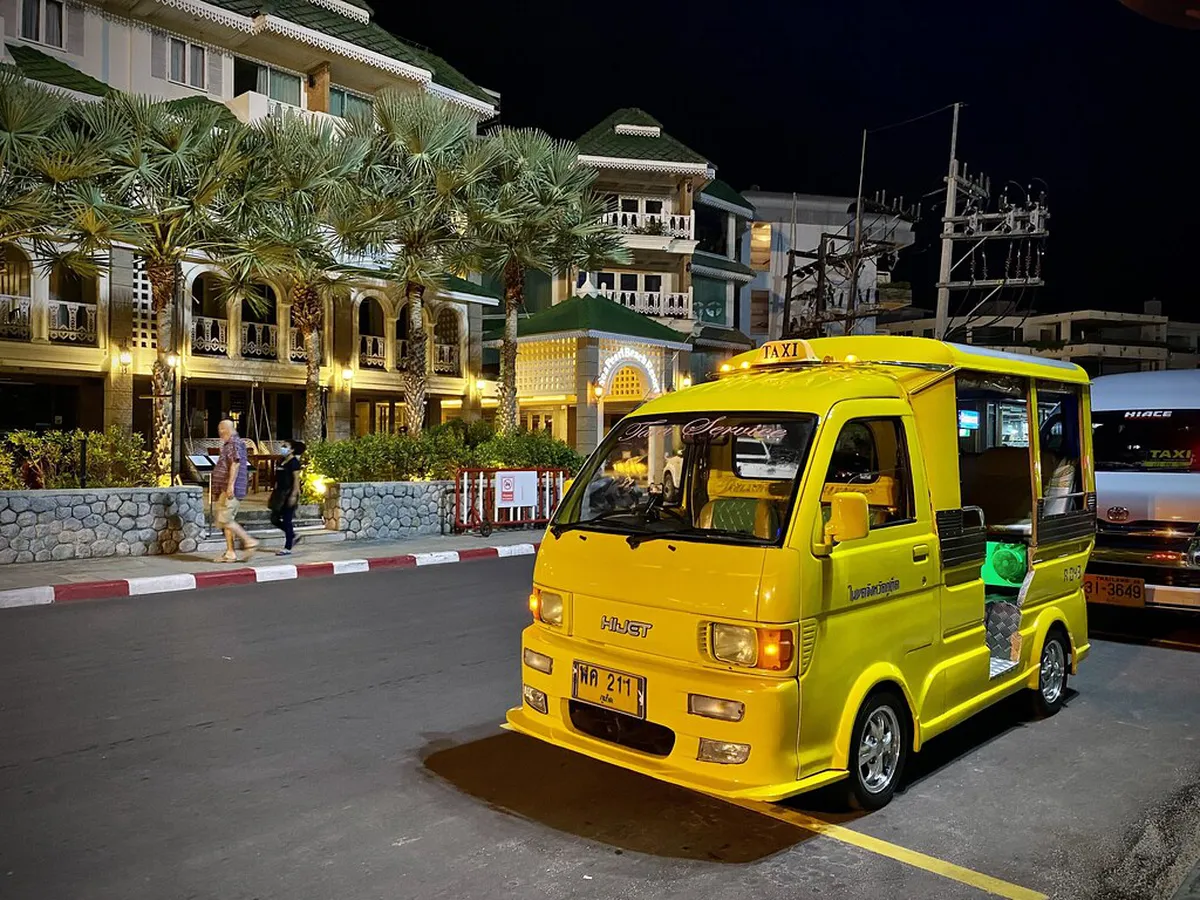
Phuket taxi and tuk-tuk prices are a long-running complaint. Phuket tuk-tuks are four-wheeled open-air vans. Older reports quote a minimum of ฿400-500 between west-coast beaches. They also quote at least ฿100 across Patong Beach, and ฿200 for under 2 km along the bypass road. Treat those as dated figures and check current rates. Agree the fare first. Ask whether it covers the ride or each passenger. Metered taxis exist, but an older report says they are mainly found at the stand outside the airport arrivals hall. Our guide to getting around Phuket compares the options. A second trap is the very cheap ride. Offers of ฿10, ฿20 or free usually come with stops at gem and souvenir shops where the driver earns commission. You save a fare but can lose hours. Give exact instructions and decline sightseeing detours. A taxi-registration helpline, 1584, has been reported on stickers, but calls may reach a Thai-language recording. Verify before relying on it.
Offers of ฿10, ฿20 or free rides often signal a gem-shop stop, and the stones sold there are likely glass or synthetic.
Gem and souvenir shop detours, and the "attraction is closed" line
The gem pitch promises wholesale stones you can resell at a profit back home. The embassy says these stones are likely glass or synthetic. Drivers who offer a "one-day government sponsored sale" earn commission from the dealers. Neither the Thai government nor the royal family sponsors gem or jewelry shops, so ignore that claim. A related line is the stranger who says a temple or museum is closed. They offer another site nearby, which ends in a gem or clothing store. Check hours online and walk on. If you want jewelry, buy from retailers recommended by trusted sources. If you paid by card, call your card issuer at once to ask about a dispute.
Card and ATM fraud

Skimming devices can sit on an ATM keypad or card slot. They copy your PIN and card data for a fake card. If something looks loose or odd, use another machine and tell the bank. Extra swipes are the other risk. One reported Phuket case involved a ฿10,000 charge that appeared a month after a small clothing purchase, where the card had left the customer's sight. Stand at the till and watch your card throughout. Tap to pay where you can. Check statements during and after the trip. If a charge looks wrong, contact your card issuer immediately.
Street pitches: scratch cards, surveys, photos and black money
Timeshare scratch cards are more a deception than a theft. A rep offers a card promising a free boat trip, or a beach survey promises a prize. The real aim is your name and hotel details. The prize call that follows leads to a hard-sell presentation, and you lose half a day. Decline politely at the first approach. On Soi Bangla in Patong, people in costume may invite you to take their photo. You can then be told the fee is ฿100 or more, payable now. Pay or dispute is a safety judgement, not a rule. Handing over a small sum can defuse a tense moment, and arguing on the spot carries legal and personal risk. If it escalates or you feel unsafe, move toward other people and call 1155. The best fix is to refuse photos you did not ask for. Black money schemes are rarer. A stranger claims to hold dyed banknotes that special chemicals can restore. Reported losses start at ฿20,000, and the chemicals are useless. Walk away from any deal that sounds too good to be true.
Reported losses start at ฿20,000 in black money schemes, far above a ฿10 ride offer, so cheap bait and expensive traps both need refusing.
Arrival hassles: accommodation touts at the airport and ferry piers
Phuket airport arrivals and ferries from Ko Phi Phi attract agents who earn commission. Some help if you stay patient and firm. Others steer you to hotels that offer less than promised. Even with a booking, a driver may claim not to know your hotel or stop at an agency to push a different property. Pre-book your room and a transfer for the first night or two. You pay a small premium, and you avoid touts, detours and a stressful first evening. Keep your booking confirmation on your phone, and quote the hotel name and address to the driver. Our Phuket arrival advice lists more first-day logistics.
Everyday pitfalls: wrong change and unpriced services
Learn the baht notes and coins before you shop. The embassy warns that some shops give change as if you paid with a smaller note, or simply forget a few baht. Count your change at the counter. Services with no posted price invite disputes, too. Before a treatment starts, confirm the price and the treatment list. This applies at any Phuket Massage Guide: Types, Prices & Where to Go shop. It applies equally at a Phuket Spa Guide: How to Choose by Area, Budget and Time. Most operators are honest, and a clear price list prevents misunderstandings on both sides.
If you have been scammed: step by step
Act quickly and keep evidence. Work through this order.
- Collect evidence: time-stamped photos or video, the rental contract, receipts, the taxi plate and booking screenshots.
- Call the Tourist Police on 1155. They can help you reach the regular police.
- Dial 191 for the Royal Thai Police if you need immediate help.
- Ask for a written police report and an English translation.
- Contact your card issuer immediately if a card was involved.
- Call your embassy or consulate. Many countries have no Phuket office, so your first contact may be in Bangkok.
- Tell your travel insurer and keep copies of every document.
Scams that follow you home
Two scams are not tied to a Phuket location. Fake charity or friendship requests ask you to wire money. Emails claiming a friend was robbed or jailed in Thailand ask for transfers. Verify through the person directly or through your embassy before sending funds.
Frequently Asked Questions
What are some common scams to avoid in Phuket?
Jet ski and scooter damage claims cost the most. Taxi and tuk-tuk overcharging and commission detours come next. Card skimming, timeshare pitches and the Soi Bangla photo fee round out the usual list.
What are the common scams in Thailand?
The U.S. Embassy lists gem scams, tuk-tuk and tour bus detours, and jet ski or scooter claims. It also lists wrong-change tricks and false claims that a site is closed. Most are minor, but check current advice before you travel.
What to be careful of in Phuket?
Be careful with rentals, fares and card handling. Photograph rented vehicles before use and offer a cash deposit instead of your passport. Agree taxi fares first and keep your card in sight. For trouble, call the Tourist Police on 1155.
Useful notes for your Thailand trip
Optional updates to our guides.
You might also like


Continue reading
More guides you'll find useful