
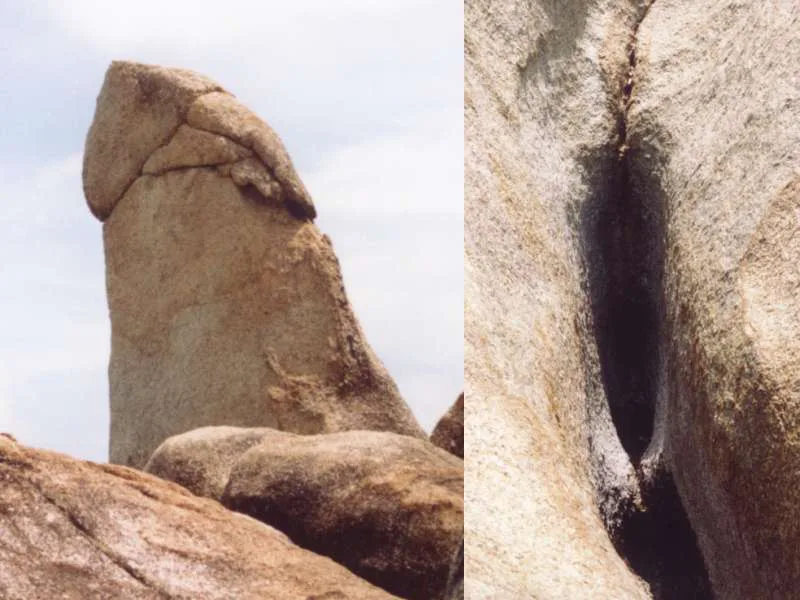
Hin Ta Hin Yai: A Practical Guide to Koh Samui's Grandfather and Grandmother Rocks

Hin Ta Hin Yai is worth 30 to 45 minutes, not half a day. The two granite boulders sit at the shoreline at the southern end of Hat Lamai in Tambon Maret, and most visitors walk down, look, take photos and leave within the hour. This guide covers where the rocks are, how to reach them from Lamai or Chaweng, the legend on the signboard, what to watch for on the rock platform, and which nearby stops make the drive worthwhile.
What Hin Ta Hin Yai actually is
Hin Ta means Grandfather Rock and Hin Yai means Grandmother Rock, names given because the formations resemble male and female anatomy. They are not carved or built; the Tourism Authority of Thailand describes them as a natural phenomenon created by granite eroded by seawater and heat into unusual boulders. Locals treat the fertility symbolism as ordinary rather than risqué, so expect Thai families and couples alongside tour groups rather than a novelty sideshow.
The site sits in the Hua Thanon area, on the coast road at the southern edge of Lamai Beach. That position is what makes it an easy add-on: you are on the same stretch of coast road that runs south from Lamai center toward Hua Thanon fishing village. Plan the stop around that road rather than treating the rocks as a separate excursion.
Where exactly to find them
Set your map pin for the southern end of Lamai Beach, not Lamai center. Approaching from Lamai, the rocks appear on the seaward side of the main coast road past the fruit stalls and coconut ice cream carts of Hua Thanon; a short path lined with souvenir and snack vendors leads from the road down to the formations. The walk from the road takes about two minutes, so you do not need hiking gear, but the final stretch over rock is uneven.
The legend on the signboard
A signboard at the site tells the story of Ta Kreng and Yai Riem, an elderly couple from Nakhon Si Thammarat who sailed to arrange their Son's marriage. A storm caught their boat, they drowned, and locals say their bodies washed ashore and turned to stone. Treat this as local legend rather than history: nobody claims the story is verified, and the geology explanation sits alongside it. The legend is worth hearing before you look at the rocks rather than after.
How to get there from Lamai, Chaweng and elsewhere
From Lamai center, the rocks are a few minutes by scooter or taxi along the coast road heading south. From Chaweng, allow roughly 20 to 30 minutes by taxi or songthaew depending on traffic through Lamai, which can slow noticeably in the middle of the day. A rental scooter gives you the most flexibility, since this is a quick stop rather than a destination that needs a fixed schedule.
Without your own transport, songthaews run along the island's roads and the site is on the Koh Samui Smart Bus route. Agree the songthaew fare before you get in, since these are shared taxis without meters. Many island tours also include the rocks as a scheduled stop; ask the operator which stop order your tour uses and whether the viewing time is enough for the viewpoint staircase as well as the rocks.
Parking and admission charges
There is no admission fee to see the rocks. Parking is a small charge if you arrive by scooter or car, reported in the range of roughly 10 to 30 baht depending on where you leave the vehicle, with scooter parking at the lower end. Rates are set locally and can change, so carry small notes and confirm the amount with the attendant before you park rather than after.
Opening hours and when to go
One travel guide lists visits from 6am to 7pm, but that is a single non-official source and the site is an open shoreline rather than a gated attraction. If you plan an early-morning or evening stop, check with your hotel or a local operator the day before rather than relying on published times. Early morning also brings far fewer people and less midday heat on the exposed rock platform, which matters because shade down at the shoreline is minimal.
What you actually see, and how long to allow
The two formations are the main event, and the resemblance is obvious once you are standing in front of them. Beyond that, you get a rock platform at the water's edge, the signboard legend, and the stalls along the path selling dried fruit, souvenirs and coconut ice cream. Most visitors are in and out within 30 to 45 minutes, which is the honest budget for this stop.
A second reason to stop is the Lamai Viewpoint directly above the site, reached by a small staircase behind the toilets. Many visitors miss it. From up there the view is more commanding, taking in Lamai Beach on one side and the rocks and Hua Thanon beach on the other, so give the stop a little extra time if you make the climb.
Practical cautions on the rock platform
Footing near the water is uneven and getting close to the formations involves some scrambling over rock. Flip-flops are fine, but flimsy sandals are a poor choice, and you should keep an eye on spray and wet stone. There is little shade at the shoreline, so bring water and sun protection if you stop around midday, and keep the visit short if you are travelling with young children or anyone unsteady on their feet.
What is nearby
Silver Beach, also called Haad Thong Takian, lies about ten minutes north and pairs naturally with the rocks for one outing: see the rocks mid-morning, then swim and eat lunch on the sand. A detailed look at the cove's layout and swimming is in the guide to Silver Beach, Koh Samui. Note that this stretch faces east, so it is built for morning light rather than sunset.
If you are routing a temple day rather than a beach day, Wat Plai Laem sits on the island's north coast and makes a separate half-day outing; the Wat Plai Laem, Koh Samui guide covers what to see there. Closer to this stretch of coast, the Wat Khunaram mummified monk is a short temple stop on the road toward Lamai, useful if you want one cultural stop between beach time.
Should Hin Ta Hin Yai be on your Lamai day?
Yes, if you are already on the southeast coast and treat it as a 30 to 45 minute roadside stop with a good story attached. Skip it as a standalone trip from Chaweng unless you are combining it with Silver Beach or another stop on the same road. Bring small notes for parking, wear shoes you can scramble in, and go early for cooler air and clearer photos.
Frequently Asked Questions
Is there an entrance fee for Hin Ta Hin Yai?
No, there is no admission fee to see the rocks. If you arrive by scooter or car, expect a small parking charge set locally, so carry small notes and confirm the amount with the attendant before you leave the vehicle.
How long does it take to visit Hin Ta Hin Yai?
Most visitors spend 30 to 45 minutes at the rocks, including the short walk down from the road and the stalls along the path. Add time if you climb the staircase to Lamai Viewpoint above the site, which many visitors miss.
Can you reach Hin Ta Hin Yai without a car?
Yes. Songthaews run along the coast road and the site is on the Koh Samui Smart Bus route; agree the songthaew fare before boarding. Many island tours also include the rocks as a scheduled stop, so ask the operator about the stop order and viewing time.