
Wat Plai Laem: A Practical Guide to Koh Samui's Guanyin Temple
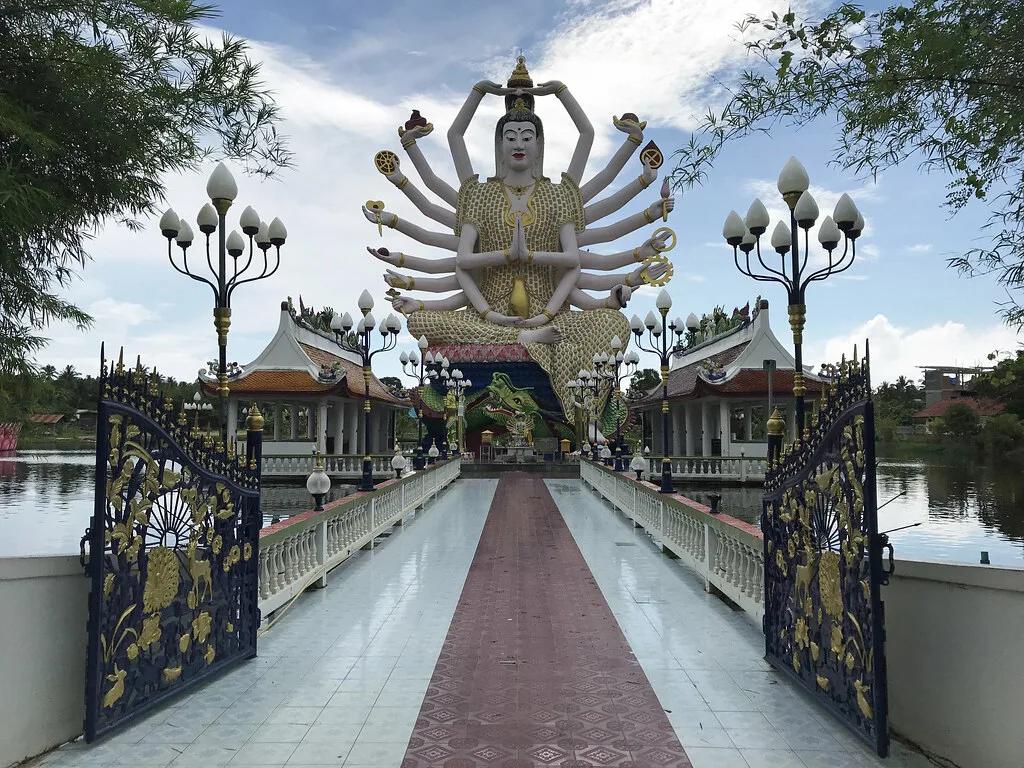
Wat Plai Laem is a modern, active Chinese-Thai Buddhist temple on Koh Samui's northeast coast, and its centerpiece is a towering white Guanyin with 18 arms rather than a seated Buddha. Entry is free and donations are welcome, so treat it as a short stop of roughly 45 to 90 minutes. This guide covers what the temple is, where it sits, how to get there, what to look at, how to dress, and how to pair it with nearby sights.
Because this is a working place of worship rather than a ticketed attraction, the useful planning questions are about behavior and timing rather than tickets. Published figures on hours and location come from visitor guides, so confirm them close to your visit.
What Wat Plai Laem Is
Wat Plai Laem is a Buddhist Wat on Ko Samui, and it is a modern temple that blends Chinese and Thai traditions. That mix is why the main image is Guanyin, the goddess of mercy and compassion, shown in Chinese style with 18 arms, while the grounds also follow Thai temple conventions. If you expect a conventional Buddha-first Thai Wat, you will read this place slightly wrong.
The design is credited in part to the Thai artist Jarit Phumdonming, and the site is dense with carving, painting and symbolic detail rather than being a single monument in an empty courtyard. Devotees come daily to pay respects, which shapes the atmosphere: quiet corners exist, but this is not a museum set.
Where It Sits on Samui's Northeast Coast
The temple stands on Road 4171 in Plai Laem, Bophut, Koh Samui, Surat Thani 84320. For orientation, it is roughly 3 km north of Samui International Airport, about 3 km east of Bophut Beach and around 7.5 km from Chaweng Beach, and it is very close to the Big Buddha temple. Those anchors matter more than a street number when you are briefing a driver.
Put Wat Plai Laem on the same half-day loop as the Big Buddha rather than in a separate cross-island trip, since the two sit in the same northeast corner. If you are working out the rest of your island time, the full set of Koh Samui Attractions: 5 Visitor Guides gives you the surrounding map before you commit a day.
How to Get There
By road, the published route runs up the main Route 4169 toward the northeast of the island, then turns off onto Route 4171 to reach the temple. Coming from the airport or Bophut, that is a short hop; from Chaweng, allow more time because the temple is on the far side of the northeast peninsula.
Your practical choices are a scooter if you are already riding on Samui, a songthaew or shared taxi along the northeast route, or a private car or taxi for the most direct run. Ask your driver for Wat Plai Laem and mention the Big Buddha as the landmark if the name is not immediately understood. Fares vary by distance, negotiation and vehicle type, so agree the price before you get in rather than relying on a published figure.
Hours and What Entry Costs
Wat Plai Laem is open to visitors during daylight hours, with published hours of daily 6 am to 6 pm, and entry is free while donations are welcome. Treat those hours as a planning guide rather than a guarantee: this is an active temple, so check locally or with your hotel on the day, especially around festivals or near opening and closing time.
There is no ticket booth to budget for, which makes this one of the easiest stops on Samui to fit into a low-cost day. The money that changes hands is optional: donations at the temple, and the small donation that comes with a bag of fish food for the lake. Carry small notes so you can give without hunting for change.
The 18-Armed Guanyin
The giant white Guanyin dominates the grounds from the center, standing as an illustration of unconditional compassion and a protector who can reach out across the world. Her many arms are the visual point of the statue, so give yourself time to walk around it rather than photographing from one angle and leaving.
Guanyin is also venerated here as a fertility figure and as a protector of sailors, which explains why devotees pray to her for children and for safety at sea. She sits within an elaborate ceremonial hall on a platform pavilion surrounded by the temple lake, and two long halls flank her with colorful murals retelling Buddhist myths.
The Island Ubosot and the Lake
The ubosot, the temple's ceremonial hall, sits on its own island in the lake, reached by a short causeway. That lake setting gives the compound its calm: water on all sides, large fish below, and the hall reflected in the surface. Walk the perimeter before you cross to the pavilion so you see the whole composition.
The lake is not decorative. Visitors who make a donation are given a bag of fish food, and the fish are a well-known feature of the site rather than a side attraction. Feed only through that donation system, and do not bring your own bread or snacks, which is both poor etiquette and poor nutrition for the fish.
The Laughing Buddha, Teak Doors and Bell Pavilion
Beyond Guanyin, look for the large white Budai, the laughing Buddha whose name translates as cloth bag, which he holds. Budai is traditionally shown as a bald, happy figure and is understood by some as an incarnation of the future Buddha. The white statue is a favorite photo subject, so expect a small crowd around it.
The detail work rewards slow looking: carved teak entry doors, shutters painted with symbolic scenes, and murals running along the halls. A second pavilion on the lake hangs hundreds of tiny golden bells from the roof, which ring in the breeze. Budget extra time for these small elements rather than racing to the big statues.
Dress Code and Conduct
Polite dress and conduct are required rather than suggested. Cover your shoulders with a shirt or scarf, wear trousers or long shorts, and leave the beachwear at the hotel, since a tank top and swim shorts combination can get you turned away. Devotees often wear white, so a light-colored top is a courteous choice.
Keep your voice low, step around anyone praying rather than through their line of sight, and ask before photographing people. Do not sit on ledges reserved for offerings or block the causeway to the ubosot for a portrait. The temple is a living place of worship first and a sight second.
How Long to Allow, and When to Go
Plan on 45 to 90 minutes. That covers the Guanyin statue, the island ubosot, the Budai statue, the bell pavilion and a slow pass along the murals, with time left for feeding the fish. If you are photographing seriously or visiting during a festival, allow closer to two hours.
Go early in the day to dodge both the heat and the tour groups, since the site has limited shade on the open lake platforms. Chinese festivals such as Lunar New Year draw much bigger local crowds, when the temple is lively but harder to navigate quietly. Plan around your own heat tolerance and the day's tour-bus rhythm rather than a published best hour.
Nearby Sights Worth Pairing
The Big Buddha temple is the obvious pairing, since it sits very close by on the same northeast corner and shares the Chinese-Thai character. Bophut Beach and its Fisherman's Village are within a few kilometers to the west, making a natural lunch stop after the temple. Chaweng, around 7.5 km away, is the longer run and better saved for the evening.
If you are building a wider island circuit, Silver Beach, Koh Samui is a good contrast stop on the east coast for a swim after a morning of temple visiting. On the south coast, Hin Ta Hin Yai, Koh Samui adds a short geological curiosity to a different day's route. Neither belongs in the same hour as Wat Plai Laem, so sequence them by coast.
Common Mistakes to Avoid
The most common error is treating Wat Plai Laem as a photo set: posing on the ubosot steps, blocking worshippers, and treating the Guanyin statue as a backdrop rather than a devotional image. The second is arriving in beachwear and being embarrassed at the entrance. Both are avoidable with a change of clothes and a moment's consideration.
The third mistake is feeding the fish outside the temple's donation system, which undercuts the temple and harms the lake. The fourth is assuming the published hours are fixed, when an active temple can adjust around ceremonies. Check on the day, carry small notes for donations, and the visit runs smoothly.
Is Wat Plai Laem Worth Your Morning?
Yes, if you want a compact, free, genuinely beautiful temple stop rather than a full day out. The 18-armed Guanyin, the island ubosot, the fish-filled lake and the bell pavilion pack a lot into a site you can see properly in about an hour, and the Big Buddha temple next door makes the trip efficient.
Skip it only if you have no interest in Chinese-Thai religious art or cannot manage the heat on open lake platforms. Otherwise, go early, dress properly, bring small notes, and confirm the day's hours with your hotel before you set out.
Explore more Koh Samui guides
Frequently Asked Questions
Is Wat Plai Laem the same as the Big Buddha temple?
No. Wat Plai Laem is a separate temple centered on an 18-armed Guanyin statue, though it sits very close to the Big Buddha temple on Samui's northeast coast. Many visitors see both in one outing because the drive between them is short.
Can you feed the fish at Wat Plai Laem?
Yes, through the temple's own donation system: a donation is exchanged for a bag of fish food for the lake. Bring small notes, and avoid feeding the fish anything you brought yourself, since that bypasses the temple and is not good for the water.
Is Wat Plai Laem wheelchair accessible?
There is no confirmed accessibility information for the temple, and the grounds include causeways, steps and uneven paving around the lake. Ask your hotel or a driver who knows the site about the current state of the paths before you rely on a wheelchair or stroller.