
Maharaj Market in Krabi Town: A Practical Guide to the Morning Market
Maharaj Market is a working covered morning market in the heart of Krabi Town, not a night market and not a polished visitor attraction, and the whole plan hinges on arriving early. Go in the first hours after opening, when seafood counters are full and prepared-food stalls are turning out southern Thai dishes, and expect much of the activity to fade before noon.
This guide covers where the market sits in Pak Nam, how to get there, what you will see stall by stall, how to order without an English menu, and how to confirm current hours before you set an alarm. It stays on this one market and treats the temples, river, and evening markets around it only as add-ons.
What Maharaj Market is, and what it is not
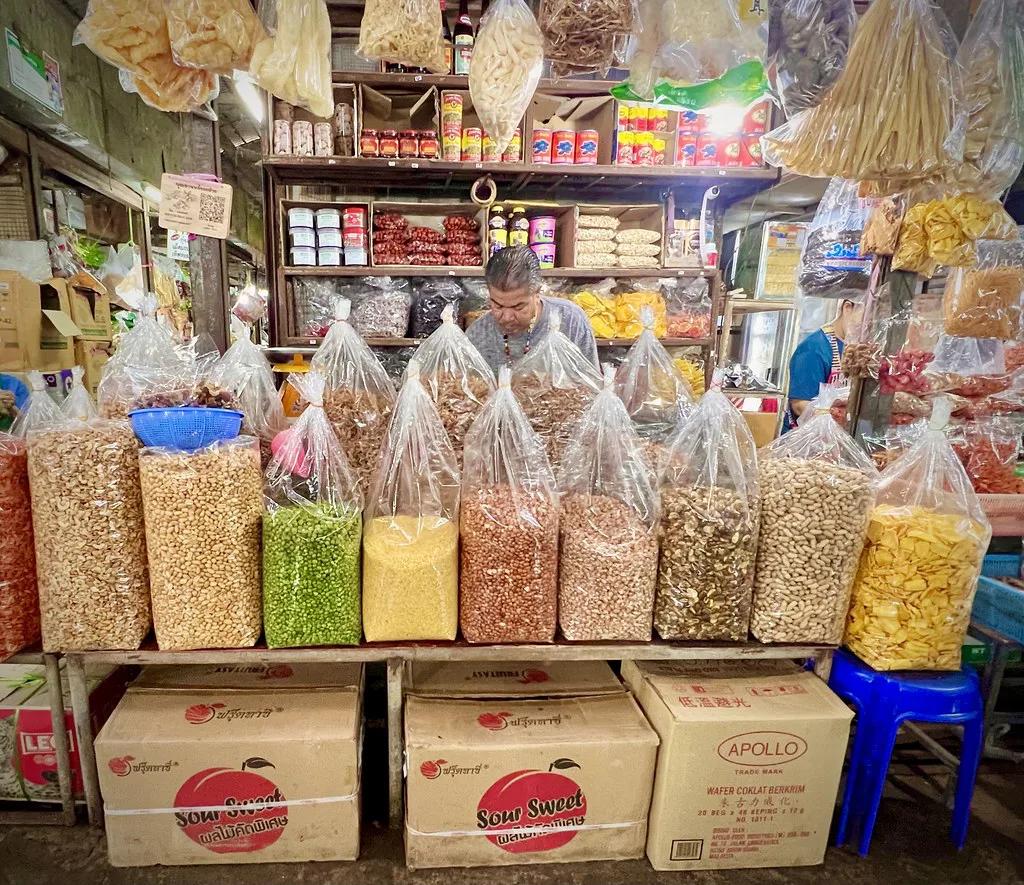
Maharaj Market, known locally as the morning market, is a roofed fresh-produce and food market in central Krabi Town where residents do their actual shopping. One roundup calls it a huge wholesale fresh produce market inside a roofed building.
The most useful thing to understand is that this is a morning errand, not an evening stroll. It is not the riverside weekend night market in Pak Nam, so showing up after dark gets you a shuttered hall, not dinner. Treat the evening markets as a separate outing.
Where it is: Soi Maharaj 7 in Pak Nam
The market address is listed as 69 Soi Maharaj 7, Tambon Pak Nam, Amphoe Mueang Krabi. In practice, look for the large roofed hall rather than a storefront, since the market occupies a building rather than a line of shops. Save the address or map pin before you leave your hotel, because Thai-language signage makes asking in English unreliable.
Pak Nam is the subdistrict that contains central Krabi Town, so the market sits in the town core rather than out on the coast. If you are based in town, it is one of the closest food experiences to your room; if you are staying at Nopparat Thara Beach, budget a transfer each way.
How to get there
From central Krabi Town, the realistic plan is to walk or take a very short ride. Wear shoes you do not mind getting wet, because fresh markets have puddles, and keep the walk short in the heat. If your guesthouse is on the edge of town, ask your host which road to follow rather than guessing.
From Ao Nang, the airport, and other coastal bases, you will need a songthaew or a taxi. Fares, journey times, and songthaew routes are not reliable from a blog, so confirm the price and the drop-off point locally before you get in, and ask to be set down near Soi Maharaj 7.
Hours and the arrival window that actually works
One travel listing reports the market as open daily from 05:00 to 12:00, seven days a week, and notes that by ten in the morning a good number of stalls are already packing away. Either way, the useful window is the morning, and the earlier you go the fuller the market will be.
A food writer who has walked the hall rates the 7 to 8 am range as a good time to visit and describes a start as early as around 3 am. Treat both accounts as reported rather than official. The listing has no website or phone number to check against, so confirm the current schedule at your hotel desk or with a local the day before, especially around public holidays, and do not build a tight itinerary around a 12:00 closing time that may vary.
What you will see, stall by stall
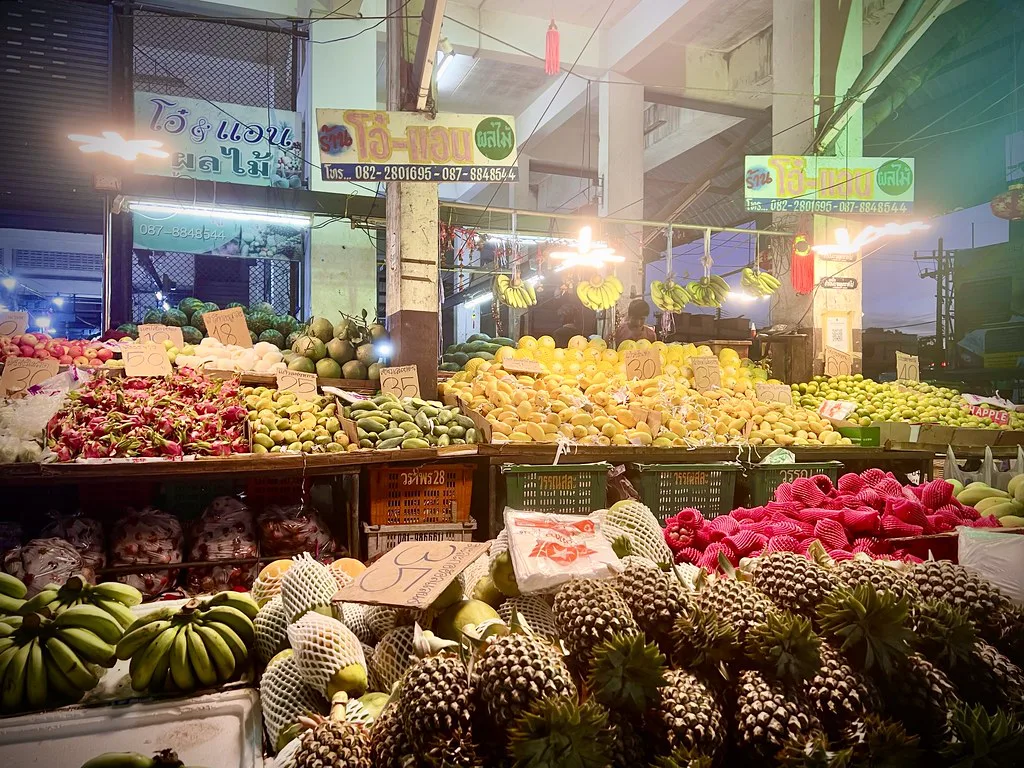
The market is organized into sections, which makes it easy to walk a loop rather than wander blindly. Expect fruit and vegetables, fresh and dried fish, meat, dry goods, and a substantial prepared-food area, all under one roof. The southern produce is the highlight: piles of turmeric, the root behind dishes like gaeng som, and small, pungent chilies that are hotter and sharper than the chilies you meet further north.
The seafood section reflects Krabi's position on the Andaman coast, with many fish varieties sold fresh or dried. Fishmongers will typically sell you a whole fish or scale and gut it for you, so ask before you assume either way. Fruit stalls run to bananas, coconuts, and pineapples in quantity, which makes the market a good place to stock up for a beach day.
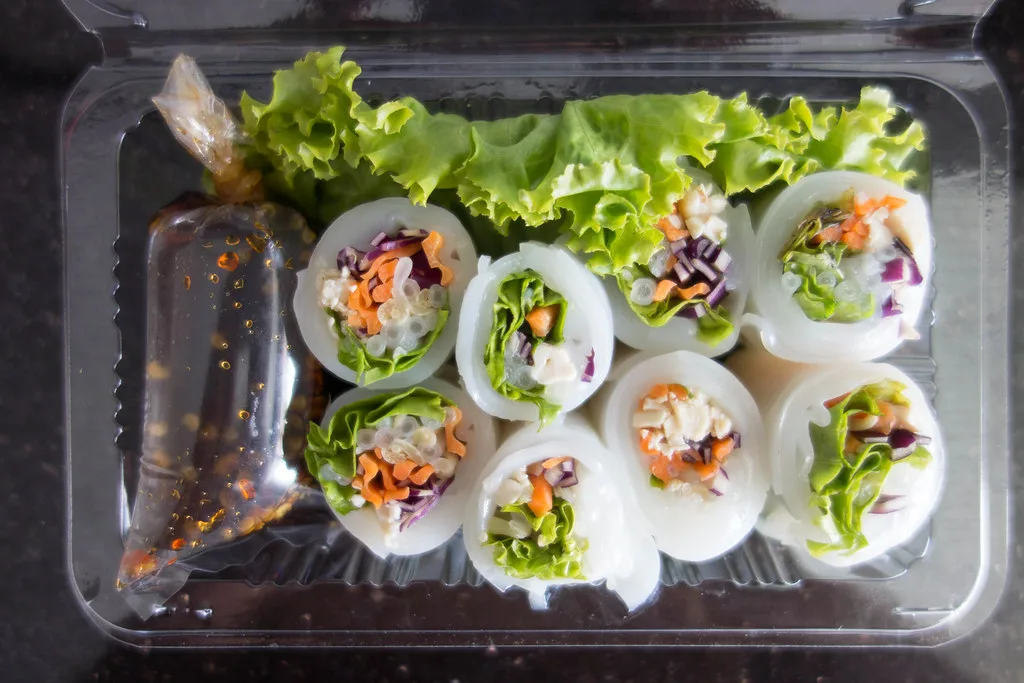
Alongside southern dishes you will find classic Thai sweets, including fuktong sangkaya, a steamed pumpkin custard, and other local snacks. Do not expect a printed menu or English labels; the food is out in front of you, so look at what is being served and point. Bring small notes, because change for large bills is awkward at a busy stall.
Breakfast: how to order southern Thai food by pointing
The prepared-food area is the reason to come hungry. Dishes are cooked in advance and laid out for people on their way to work, so you can assemble a large breakfast by picking two or three things that look good. Khao mok neua, a southern-style spiced beef rice, is one dish worth looking for, but availability shifts daily, so treat any single dish as a possibility rather than a guarantee.
Signage is mostly in Thai and nobody will hand you an English menu, which is fine: stall by stall, everything is visible, and pointing works. If you want to know what something is, gesture at the dish and use a translation app for the ingredient names. Stall prices are not published online, so check the posted price or ask before ordering.
Etiquette, heat, and other practical logistics
Wear something light and breathable, because the covered aisles get hot once the crowd builds, and choose shoes that can handle wet floors. Carry small denomination notes, a bottle of water, and a bag for anything wet or smelly you buy. Bargaining is normal at market stalls, but keep it friendly and brief; aggressive haggling reads as rude.
Keep your expectations practical rather than photographic. This is a busy working market with narrow aisles, and standing in the middle of one to frame a shot blocks people who are shopping. Step to the side, buy something, and move on.
How much time to allow
Allow roughly one to one and a half hours if you plan to eat breakfast and walk the produce sections. That is enough to loop the hall, buy fruit, and stand for a meal without rushing. If you are only shopping for snacks, 30 to 45 minutes will do.
The bigger constraint is the clock, not your appetite. Plan your arrival for the early morning, eat first while the prepared food is still hot, and then shop the produce on the way out. If you arrive close to midday, expect a thinner market and fewer choices.
What's nearby for the rest of the day
Several markets sit within a short walk, but they run in the evening, so they pair with a morning visit rather than replacing it. The city's night markets are the practical dinner option nearby, and the shopping center on Maharaj Road is the stop for groceries and air-conditioning if the heat gets to you.
For a fuller sense of Krabi Town, walk to Wat Kaew Korawaram, the white hilltop temple in the town center, after the market. It is a short walk from the market area and gives you a view over the town to close out the morning. For the coast and the town together, browse the wider set of Krabi Attractions: 6 Visitor Guides.
What to check before you go
Hours can change, and the market has no official website or phone line to confirm against, so ask your hotel or a local the day before. Check for holiday closures too, since this is a working market and its schedule can shift around festivals. If you are set on a specific dish, ask whether it is typically available rather than assuming.
Finally, confirm your transport back before you leave, especially if you came from Ao Nang or the airport, because the return ride is harder to arrange from a residential street than from a main road. Note the nearest main road and a landmark so you can direct a driver.
Is Maharaj Market worth an early alarm?
Yes, if you want to see how Krabi Town actually eats: the market is at its best in the early morning, and a breakfast assembled from the prepared-food stalls is the point of the trip. It is a working market, not a sight, so go with small notes, light clothes, and patience for narrow aisles.
Skip it if you are staying at Ao Nang or elsewhere on the coast and only have one free morning, since the transfer eats into the best hours. In that case, put the market on a town day and pair it with Wat Kaew Korawaram or the riverside rather than making a dedicated trip.
Explore more Krabi guides
Frequently Asked Questions
Is Maharaj Market the same as the Krabi Night Market?
No. Maharaj Market is a covered morning market in central Krabi Town that is largely finished by noon. Krabi's night markets are separate places that run in the evening, so plan them as different outings.
Do I need cash at Maharaj Market?
Bring small notes. The market is a stall-by-stall operation with no central checkout, and change for large bills is awkward at busy counters. Stall prices are not published online, so check the posted price or ask before ordering.
Is Maharaj Market worth visiting if I'm staying in Ao Nang?
It can be, but only if you are willing to travel early, because the market is at its best in the first hours after opening. From Ao Nang you will need a songthaew or taxi each way, and the fare and journey time should be confirmed locally rather than assumed. If your time in Krabi is short, a town day combining the market with Wat Kaew Korawaram works better than a dedicated round trip.