
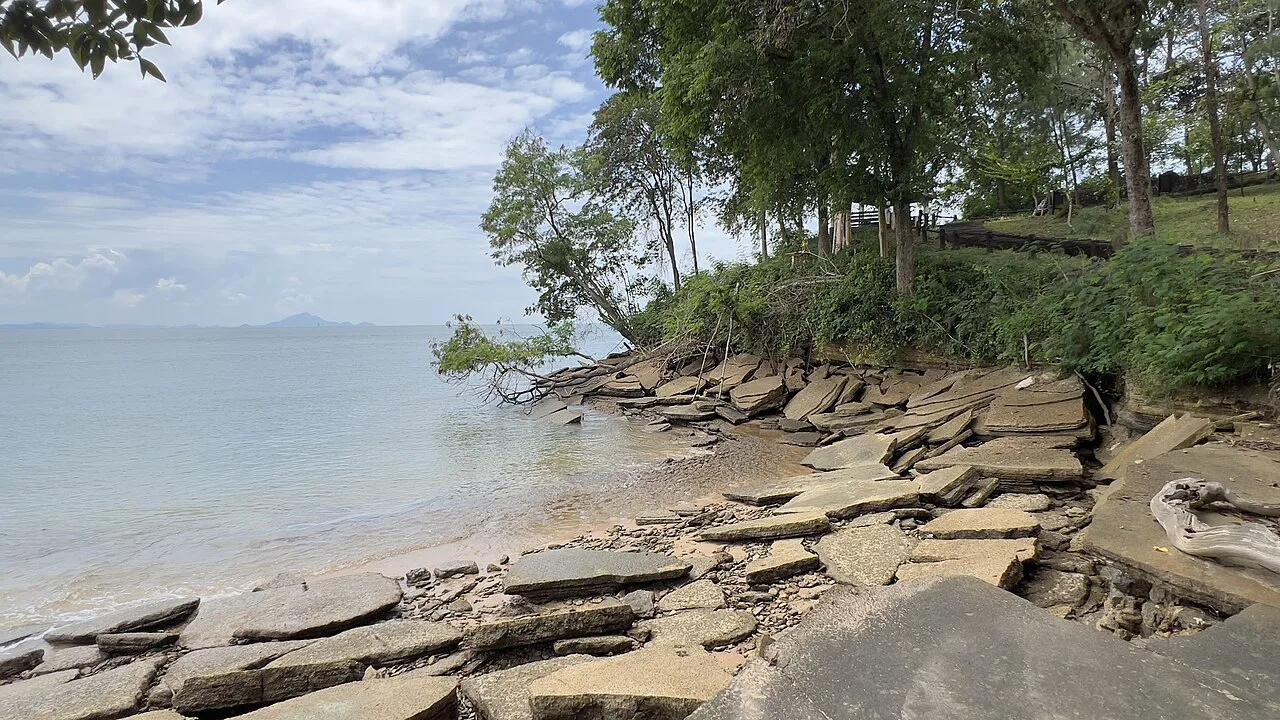
Shell Cemetery Krabi (Susan Hoi): What You'll See at the Fossil Beach

The Shell Cemetery in Krabi, known locally as Susan Hoi, is a short roadside stop of roughly 30 minutes: a fossil shell bed on the Sai Thai coast where compressed shells form flat slabs at the waterline. It is not a graveyard and not a museum, so arrive expecting a shoreline and interpretive boards rather than an exhibition hall. This page covers where the site sits, how to reach it from Ao Nang and Krabi Town, what the fossil slabs and visitor center actually show, and how the tide decides whether your stop is worth making.
The site earns its place in a Krabi plan only if you frame it correctly. Travelers who arrive expecting a major attraction tend to leave disappointed, while those who slot it in between Ao Nang and Krabi Town generally find it works well. The sections below also explain why you will see wildly different fossil ages quoted, and how to confirm current hours and fees before you set out.
What the Shell Cemetery actually is
Susan Hoi is a bed of freshwater shells compressed over millions of years into flat slabs that break at the waterline like paving. The formation records a period when this coastline was a freshwater swamp rather than sea, which is why the fossils are freshwater gastropods rather than coral or marine shells. The main shells are small spiral snails, roughly two centimeters across, packed densely into the rock.
Geologically the site is genuinely rare, with comparable fossil shell formations found in only a small number of places worldwide. That rarity is the real reason to stop, not any built attraction on site. Set your expectations to a natural rock platform with explanatory signs and a modest visitor center, and the visit makes sense.
Where it sits: Laem Pho, Sai Thai
The Shell Cemetery lies at Laem Pho in Tambon Sai Thai, Mueang Krabi District, on the coast between Ao Nang and Krabi Town. The published address is 2VFM+4FX, Sai Thai, Mueang Krabi District, Krabi 81000, which you can paste into a maps app for the drive. It falls within the Hat Noppharat Thara area, in the northeast of the national park, which is why the surrounding shoreline is protected rather than built up.
For a broader sense of how this stop fits with the rest of the province, the Krabi Attractions: 6 Visitor Guides collection sets out the region's main sites and what each one asks of your time. Treat the Shell Cemetery as one short entry in that list rather than a day's anchor.
How to get there from Ao Nang, Krabi Town and the airport
The advantage of this site is that it sits on the road-connected mainland, so no longtail boat is involved. From Ao Nang or from Krabi Town you can reach it by songthaew, tuk-tuk, private car or your own scooter along the coastal road; the site is a roadside pause on the way between the two. If you are coming from Krabi International Airport, it makes more sense as a stop en route to Ao Nang than as a dedicated trip.
Fares and journey times vary with your starting point and the vehicle you take, and no reliable published figure covers every route, so agree the price before you set off or check what your hotel desk quotes. If you are based in Krabi Town, Wat Kaew Korawaram in the town center is a straightforward landmark for orienting yourself before heading out along the coast.
Opening hours and admission: confirm before you go
Published hours for the Shell Cemetery currently read 8:00 AM to 5:00 PM daily, and one traveler report quotes an admission fee of 40 baht per person. These are third-party figures rather than a national park notice, so confirm the current hours and fee with the Tourism Authority of Thailand or the national park before relying on them. Do not build a tight schedule around the gate closing time without checking.
The age question: 75 million or 20–40 million years?
You will see the site billed as a 75-million-year-old shell cemetery, and you will also see far younger estimates in the same breath. The Tourism Authority of Thailand dates the shells to about 40 million years, describing a freshwater environment that shifted as the land moved. Other visitor write-ups estimate the fossils at 20 to 40 million years old, so the headline figure and the geological estimate do not agree.
Treat the age as contested rather than settled, and enjoy the fossils for what you can see with your own eyes: tightly packed snail shells in a hard limestone slab. If the dating matters to you, ask at the visitor center or check the national park's own materials rather than trusting a signboard or a blog.
What you actually see: slabs, marked blocks and three fossil points
The centerpiece is a wide stone platform extending toward the sea, where the shelly limestone sits about 40 centimeters thick over layers of lignite and shale. Because the coast shifts with the tides, the national park placed cut rock blocks on the shore showing visible cross-sections, labeled in English and Thai so you can see how the shell layers formed. Those blocks are the most instructive part of the visit and the easiest thing to photograph.
There are three separate fossil points at Laem Pho: Laem Pho 1 west of the tourist service center, Laem Pho 2 at the service center itself, and Laem Pho 3 roughly a kilometer east of it. Many visitors stop at the first slab they reach and turn around, so walk the sequence if you want the full picture. A small visitor center explains how the formation came together.
The tide is the deciding factor
What you can actually see depends on the water level, because the fossil slabs read best at lower tides and the beach is not walkable at every hour. The site's own guidance notes that the ebb and flow of the coast governs access to the beach, which is the reason the labeled cross-section blocks were installed on the shore in the first place. Check a local tide table for your date before you commit to a slot, and plan the stop around low water if you can.
How long to allow: half an hour or an hour
Most visitors are held for about half an hour, which is a fair estimate if you read the boards, look at the labeled blocks and walk to the nearest slab. Published guidance suggests allowing one to two hours, which suits anyone combining all three fossil points with a slow look at the visitor center and the sea view. Decide which version you want before you arrive, because the site rewards a deliberate stop and feels thin if you rush past.
Who should bother? Anyone interested in geology, travelers with children who want something to study up close, and people who want a leg-stretch between Ao Nang and Krabi Town. If you are chasing beaches, snorkeling or a full day out, spend your time elsewhere and skip this.
Best time of day and conditions
The commonly recommended windows are morning from about 7:00 to 10:00 and late afternoon from about 15:00 to 17:00, when the light is softer and the heat is less punishing. There is little shade on an exposed rock platform, so bring water and sun protection whatever hour you choose. The sea breeze helps, but it does not replace a hat.
Practical constraints and facilities
This is a modest, short experience, and its mixed reception comes from visitors expecting a headline attraction and finding a shoreline with interpretive boards. Facilities are limited, though there are souvenir stalls selling local shell products near the entrance, and the parking area is described as spacious. Bring what you need with you rather than counting on on-site services.
What's nearby: making it a stop, not a destination
The most natural pairing is Nopparat Thara Beach, Krabi, which sits on the same coastal stretch and gives you sand and shade after the exposed rock platform. Continue into Ao Nang for food and shops, or head the other way into Krabi Town for the river and the town's temples. Either direction turns the fossil bed into a sensible pause rather than a trip of its own.
If you are staying in town, Khao Khanab Nam and the Krabi River waterfront give you an easy contrast to the coast, and Koh Klang across the water offers a different pace again. None of these needs to be combined with the Shell Cemetery on the same day; pick the pairing that matches where you are sleeping.
Should the Shell Cemetery make your Krabi shortlist?
Give the Shell Cemetery a slot only if you can time it near a lower tide and you are already moving between Ao Nang and Krabi Town. Budget about 30 minutes, walk past the first slab to see more than one fossil point, and read the labeled cross-section blocks, which carry most of the explanation. If you want a full morning or a beach day, put your time elsewhere.
Before you go, confirm the current hours and any admission fee with the Tourism Authority of Thailand or the national park, and check a local tide table for your date. Neither figure is stable enough to plan around blindly, and the tide decides more than the gate does.
Explore more Krabi guides
Frequently Asked Questions
Can you swim at the Shell Cemetery?
The site is a fossil rock platform and shoreline rather than a swimming beach, and the slabs are best seen at lower tides when the water has pulled back. For swimming, head to the sand at nearby Nopparat Thara instead, and check conditions locally before going in.
Is the Shell Cemetery wheelchair accessible?
No official accessibility information is published for the site, and the approach involves a shoreline rock platform that is uneven underfoot. Contact the national park or the Tourism Authority of Thailand directly to ask about the paths, the visitor center and parking before you plan a visit that depends on step-free access.