
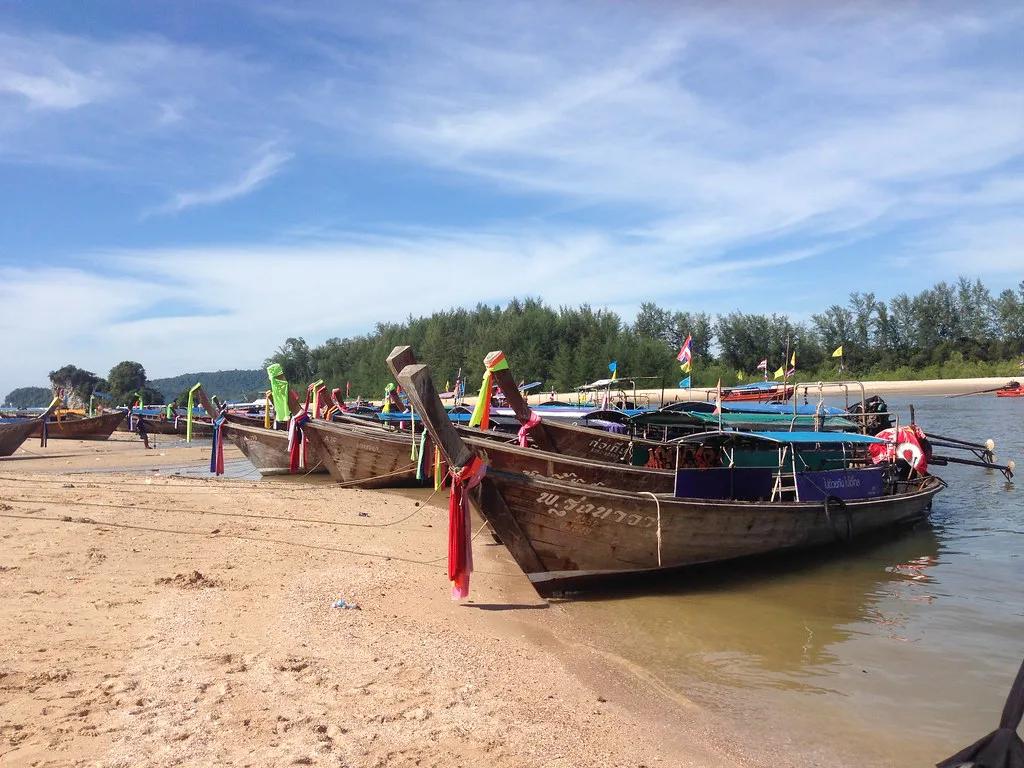
Nopparat Thara Beach: Krabi's Quieter, Tree-Lined Shore
Nopparat Thara Beach is the wide, tree-lined stretch of sand on the northwest edge of Ao Nang, and it is markedly quieter than the Ao Nang beachfront a short distance away. Plan on a half day, most of it under shade or wading in the shallows, and use this guide for the beach's position, how to reach it, what the sand and water are like, and which nearby spots are worth adding.
Treat the pier area at the beach's southern end as your practical anchor point, because it is both a landmark for drivers and the stretch where you are most likely to find boats and boat traffic. Everything else on this page is organized around arriving, settling in, and deciding whether to stay for sunset or move on.
What Nopparat Thara Beach Is and Where It Sits
The beach runs along the northwest edge of Ao Nang in Krabi Province, southern Thailand, and is generally described as a broad, tree-lined stretch of white sand. If you are already based in Ao Nang, this is the easiest beach swap you can make: you stay in the same resort area and walk or ride a few minutes up the coast.
The beach is often treated as the western end of the Ao Nang shoreline rather than a separate destination, which is useful when you are reading maps or explaining to a driver where you want to go. Reference the pier or the national park headquarters area rather than just the beach name if you want to be dropped at the quieter end.
How to Get There: Walking from Ao Nang, Tuk-Tuk or Songthaew, and the Pier
Walking from central Ao Nang is possible and takes roughly half an hour at an easy pace, though treat that as an estimate rather than a fixed schedule and judge it against the heat on the day. The walk follows the coastal road past the resort strip, so it is straightforward but exposed; starting early or late avoids the worst of the midday sun.
For a faster trip, take a tuk-tuk or songthaew from Ao Nang and agree the fare before you get in, since no published rate is reliable across drivers and seasons. Ride-hailing apps work in the Ao Nang area and let you see a price upfront, which removes the negotiation entirely. Either way, ask to be dropped at Nopparat Thara Pier so the driver knows exactly which end of the beach you mean.
If you are arriving by boat from the islands, you may land at or near Nopparat Thara Pier rather than Ao Nang, which makes the beach your first or last stop of the trip. Boat operators and schedules change, and some island crossings leave from other piers, so confirm your departure point and check-in time directly with the company you booked rather than assuming.
What the Beach Is Actually Like: Sand, Trees, Shade, and the Rock Formation
Casuarina and coconut trees back the sand, and that shade is not a small detail in Krabi's heat: it is the reason this beach works for a long, low-effort afternoon. The tree cover also gives you a place to leave bags while you wade, though you should still keep valuables on you. Expect seashell-strewn sand and a broad open flat rather than a narrow strip.
At the southern end, a large rock formation anchors the view and makes an easy landmark for meeting up if your group spreads out. The beach is still backed by dense trees in places and reads as noticeably less developed than the Ao Nang frontage. That combination of wide sand, rock and tree line is what gives the place its calm, slightly wild feel.
Swimming and Tides: Calmer, Shallower Water Than You Might Expect
The sea here is generally calm and the sand shelves gently, which makes the beach a good match for wading, children and anyone who wants to float rather than swim laps. The trade-off is that shallow water at low tide can mean a long walk out before it gets deep, so confident swimmers may find the Ao Nang side more satisfying. Check the tide before you commit to a swim session.
No current tide table, water-quality reading or lifeguard schedule is published for this beach in a form you can rely on from a planning page, so check a Thai tide app for Krabi on the morning you go and look for posted flags or signs at the sand. If nothing is posted, treat that as an absence of information rather than a green light and stay conservative with kids.
How Long to Allow and When to Go for Quieter Sand
Two to three hours covers the beach comfortably: enough time to walk the length, wade, eat something nearby and sit under the trees. Add an hour if you are coming on foot from Ao Nang and want to rest before walking back. Travelers who treat it as a sunset stop rather than a swim stop often get the most out of it.
Mornings bring the softest light and the emptiest sand, while late afternoon draws people out for the evening. The beach's reputation for peace and quiet is relative to Ao Nang's busier frontage, not an absolute guarantee, so avoid assuming you will have it to yourself in high season. A user-shared post notes the beach is quieter and larger than the famous Ao Nang beach nearby and recommends it for exactly that reason.
Sunset views over the Andaman are part of the draw here, but the exact position of the sun shifts through the year, so arrive well before the published sunset time and pick your spot rather than timing it to the minute. A walking-tour video gives a sense of the beach's scale and light in hot, bright conditions if you want a preview before committing an afternoon.
Facilities and Food Nearby: Snack Spots and the Pier-Side Strip
The beach is not a resort-style operation with a single concessions operator, so expect scattered beachfront snack spots and small eateries rather than a managed facility with set prices. The pier-side strip at the southern end is where you will find the most concentration of food and drink, plus the foot traffic of people catching boats. Carry cash and confirm prices before ordering, since nothing here is standardized.
There is no reliable published list of chair rentals, umbrella fees or facility charges for this beach, so ask on arrival what anything costs before you accept it. If you want a more predictable setup with shade and service, the hotel frontages along Ao Nang are usually the likelier option, at the cost of more people.
What's Close By if You Want More: Klong Muang, Tubkaek, and the Boat Route to Railay
Heading north up the coast takes you toward Klong Muang and Tubkaek, both quieter stretches that suit travelers with a scooter or a hired car rather than a short walk. These are worth a separate half day, not an add-on to a beach afternoon. Staying on this beach as your main stop keeps the day simple.
From the Ao Nang boat route you can reach Railay, the region's headline beach for climbers and day-trippers. Book through the boat operators at Ao Nang or the pier and confirm the return time before you leave, because services taper in the late afternoon. If island hopping is your priority, plan it as its own day rather than squeezing it into this beach visit.
Inland, Krabi Town holds the temple Wat Kaew Korawaram, a whitewashed temple stop that is straightforward if you have a vehicle or are passing through town, and the limestone pinnacles of Khao Khanab Nam rise by the river as another town-side landmark. If you are building a broader Krabi itinerary, the full set of guides covers the area's main attractions in one place.
Practical Checks Before You Go
Confirm on the day that the beach and its access road are open and that no event or construction is blocking the pier end, since local conditions and posted rules change without appearing on travel sites. Your hotel front desk in Ao Nang is the fastest check for current access and any local advisories. Ask specifically about the pier end if that is where you plan to be dropped.
Any entry fee, parking charge or national park status should be checked with the national park authority or on posted signage at the site rather than assumed from secondary listings. If a booth is operating, pay there and keep the ticket. If nothing is posted, do not assume the beach is free or that it is not.
Should You Swap Ao Nang for Nopparat Thara?
Yes, if you want shade, space and calmer water within easy reach of Ao Nang; no, if you want a full-service beach day with guaranteed facilities or deep water for swimming. The case for going is strongest as a morning or sunset visit paired with a meal at the pier end.
Treat it as a deliberate change of pace rather than a destination in its own right, and check the tide and access on the day you go. If Krabi is your base for several days, this beach slots in easily between bigger boat days.
Explore more Krabi guides
Frequently Asked Questions
Is Nopparat Thara Beach good for swimming?
The water is generally calm and shallow, which suits wading and families with young children, but at low tide you may walk a long way before it gets deep. Confident swimmers often prefer the Ao Nang side. Check a Krabi tide table on the morning you go and look for posted flags or signs at the beach.
Is Nopparat Thara Beach free to visit?
No authoritative published entry-fee or national park charge is available for this beach, so confirm any fee or status on arrival — at a booth if one is operating, or on posted signage — rather than assuming either way. If a booth is operating, pay there and keep your ticket.
Can you walk from Ao Nang to Nopparat Thara Beach?
Yes, the walk along the coastal road takes roughly half an hour at an easy pace, though that is an estimate rather than a fixed schedule. It is exposed to the sun, so go early or late. A tuk-tuk or ride-hailing app is the faster alternative, and you should agree any fare before getting in.
Is Nopparat Thara Beach quieter than Ao Nang?
It is generally described as quieter and larger than the Ao Nang beachfront, with casuarina and coconut trees providing shade. That quiet is relative, so do not expect an empty beach in high season. Mornings tend to be the calmest.