
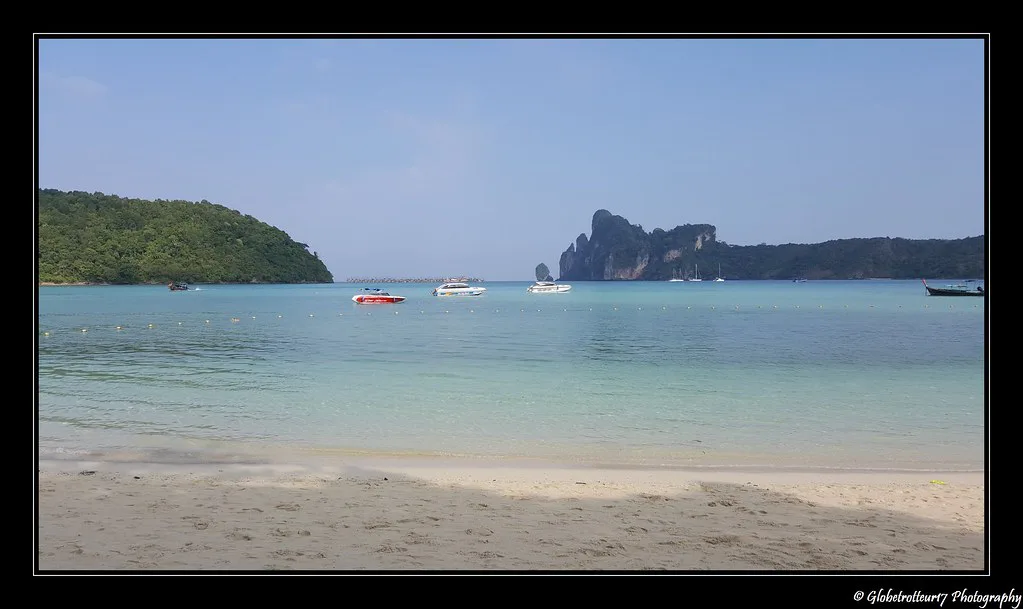
Loh Dalum Bay, Koh Phi Phi Don: What to Expect Before You Go
Loh Dalum Bay is worth an afternoon if you are already staying on Phi Phi Don, and it costs you a two-minute walk from Tonsai rather than a boat trip. The wide crescent sits on the north side of the island's narrow waist, directly opposite Tonsai Bay, and its shallow turquoise water is the view you look down on from the Phi Phi viewpoint. This guide covers where the bay sits, how to walk there, how tides decide whether you swim or wade, the after-dark scene, the tsunami memorial and how much time to give it.
Where Loh Dalum Bay sits on Phi Phi Don
Phi Phi Don's populated center is a flat isthmus pinched between two bays: Tonsai on the south side, where the pier and most arrivals land, and Loh Dalum on the north. The beach is a broad, almost enclosed crescent, which is why the water stays shallow and warms quickly in the sun. Because both bays meet at the same narrow strip of village, you cross from one shore to the other on foot in a couple of minutes. For a wider look at the island's sights, see the Phi Phi Attractions: 6 Visitor Guides.
The bay faces north toward the Andaman Sea channel between Phi Phi Don and Phi Phi Leh, and the land behind it rises toward the viewpoint hill. The isthmus itself was destroyed by the 2004 tsunami, which arrived from both sides. For orientation, treat the beach as the northern edge of the village: everything you need, from guesthouses to shops, sits within the strip between the two bays. If you are weighing quieter beaches further out, Loh Moo Dee Beach, Koh Phi Phi Don is the one most often mentioned.
How to reach Loh Dalum Bay from Ton Sai Pier
Walk. Ferries and speedboats land at Ton Sai Pier on the south side, and from there you head north through the village lanes; the sand opens up within a few minutes. You do not need a longtail boat, a taxi or a tour to reach this beach, so ignore any pitch that sells Loh Dalum as a boat destination.
Arrival ferries and speedboats from Phuket and Krabi run on published timetables, and fares vary by operator, class and season, so check current prices with the operator before booking rather than assuming a fixed rate. The Phuket Ferry beach guide describes the crossing from Tonsai as a two-minute walk across the village, which confirms how short the transfer is.
The lanes are sandy and uneven, so wheeled luggage is awkward; many guesthouses sit within the isthmus itself, which makes the beach a genuine doorstep amenity rather than a day trip. If you are staying elsewhere on the island, such as the quieter eastern coves, plan on a walk or a short boat ride into the village first.

High tide versus low tide: the trade-off that defines the bay
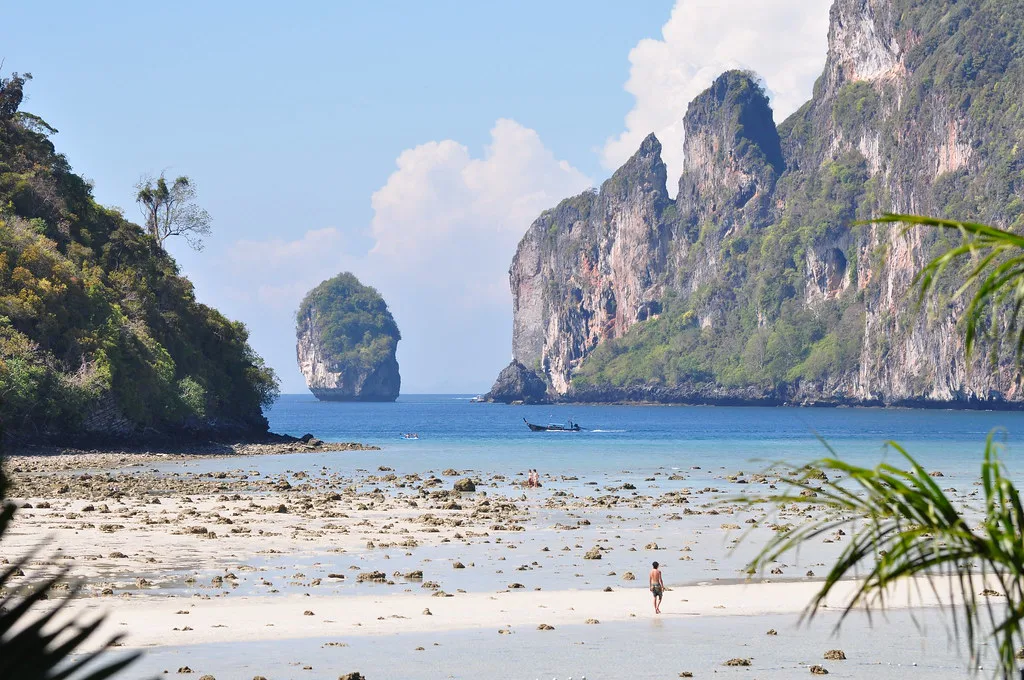
The same shallowness that makes Loh Dalum distinctive also dictates your visit. At high tide the bay holds one of the calmest swims on the island, with gentle water and a soft sand bottom. As the tide drops, the bay empties dramatically, leaving a long flat walk to reach the water's edge. Plan the day around a local tide table rather than assuming a fixed schedule, and swim on the rising or high tide if swimming is the goal.
The bay is reported as a wide, almost totally enclosed crescent with water that stays shallow and warm, so expect to wade far out before it deepens even at the best of times. If you want deep water for laps or snorkeling, this is not the beach for it; treat Loh Dalum as a wading and floating spot and look elsewhere for reef snorkeling. For scale, the bay is the view you get from the viewpoint, so the walk up gives you a free preview of the tide state.
Swimming and safety at Loh Dalum
Swim in the calm high-tide window, watch children closely on the flats as the water retreats, and check the water condition visually before you go in; there is no lifeguard service documented here. The long low-tide flats are the main hazard in practice: what looks like shallow water can mean a lengthy walk back over soft sand and coral rubble. Footwear helps, and so does keeping an eye on how fast the water is pulling back.
There are no published entry fees, opening hours or closures for the beach in this guide. Confirm any local rules, vendor setups or activity charges on the ground when you arrive, and ask your guesthouse about current conditions, since sand movement and seasonal weather change the shoreline. The 2004 tsunami memorial park at the eastern end also marks the signed evacuation route to the viewpoint hill, worth noting before you settle on the sand.
The beach after dark: fire shows and bars on the sand
After sunset the northern beach becomes the center of Phi Phi's nightlife, with bars set along the sand and fire shows drawing crowds as the evening goes on. That makes it a different beach from the daytime version: families and swimmers will find the morning and late afternoon calmer, while nightlife-seekers will want to arrive after dark. Both characters coexist on the same crescent, so judge the fit for your group rather than assuming a single mood.
Expect noise to carry across the narrow isthmus; if you are booking a room near Loh Dalum, ask whether it faces the beach and how late the bars run, because the same two-minute walk that makes the bay convenient also puts you inside the nighttime scene. For a sense of what the sand and water look like in daylight, this Loh Dalum Beach video gives a quick visual.
The tsunami memorial and the signed evacuation route
A memorial park stands at the eastern end of the beach, marking the 2004 tsunami that swept across the isthmus from both bays. The route to the viewpoint hill is signed from this end of the beach, so the memorial and the trailhead sit close together. Treat the memorial as a place to pause rather than an attraction with formal visiting arrangements.
Because the evacuation signs point uphill, it is worth noting their position when you first arrive, especially if you are visiting during the monsoon months. No opening hours, fees or closure dates for the memorial are published in this guide; confirm locally if you plan around it.
How much time to allow
A quick swim stop takes about an hour: walk over from Tonsai, swim the high-tide window, and return. A half-day works better if you combine the beach with the viewpoint climb, since the trailhead is right at the eastern end and the bay is the view you get from the top. Budget more time at low tide simply because of the walk to the water.
If you are building a full day, pair the morning beach with other Phi Phi stops; the island's boat trips, including snorkeling at Monkey Beach, run on their own schedules, so check with operators on the day.
Nearby within walking distance
Tonsai Bay, the pier, the village shops, the viewpoint trailhead and the memorial all sit within a few minutes of Loh Dalum's sand, which is why this bay works as a base rather than a destination you travel to. Other Phi Phi beaches, such as the quieter Loh Moo Dee Beach, sit further from the village and involve either a longer walk or a boat. For a boat-based alternative, Wang Long Bay, Phi Phi offers a different day out.
For boat-based excursions, Loh Dalum itself is not the draw; the limestone lagoon and coves around Phi Phi Leh are, so slot those into a separate trip rather than expecting them from the beach. Pileh Lagoon, Phi Phi Leh is the classic stop on those tours.
What to check locally before you go
Tide times, weather, vendor setups and any activity charges are not fixed here; check a local tide table, ask your accommodation, and look at the water before committing. Beach businesses open and close with the season, so verify on arrival rather than relying on fixed hours. This page sticks to what the sources say: reach it on foot, swim at high tide, expect the nightlife after dark and confirm the rest on the ground.
Should you build your Phi Phi day around Loh Dalum?
Yes, if you want a walkable beach with a calm high-tide swim and an easy evening scene, and you accept that the tide sets your schedule. Skip it for snorkeling or deep water, and plan around the high tide if swimming matters. Check the tide table and ask your guesthouse about current conditions before you go.
Explore more Phi Phi guides
Frequently Asked Questions
Is Loh Dalum Bay worth visiting?
Yes, for travelers already on Phi Phi Don. It is a two-minute walk from Tonsai, gives you a calm high-tide swim and the viewpoint view, and turns into the island's nightlife strip after dark. It is less compelling if you want deep water, snorkeling or a quiet beach.
Can you swim at Loh Dalum Bay?
Yes, but timing matters. The bay is shallow and empties dramatically at low tide, so swimming is best on the rising or high tide, when the water is calm. At low tide expect a long walk to the water rather than a swim.
How far is Loh Dalum Bay from Tonsai Pier?
It is a short walk, roughly a few minutes, north through the village lanes from Ton Sai Pier. You do not need a boat or taxi to reach it.