
Monkey Beach, Phi Phi: How to Visit the Wild Macaque Cove
Monkey Beach is a small white-sand cove on the east side of Phi Phi Don where a resident group of wild macaques lives, and it is not a managed attraction with gates or staff. Most visitors see it as a stop of roughly a quarter to half an hour on a longer longtail boat day, and the smartest way to plan is to decide your transport first, then your food rules.
This guide covers where the cove sits relative to Tonsai and Loh Dalum, the trade-offs between a hired boat, a kayak and the jungle trek, how to handle the monkeys safely, and what to confirm locally before you set out. Nothing here is a substitute for checking current national park rules or asking your boat operator directly.
What Monkey Beach actually is
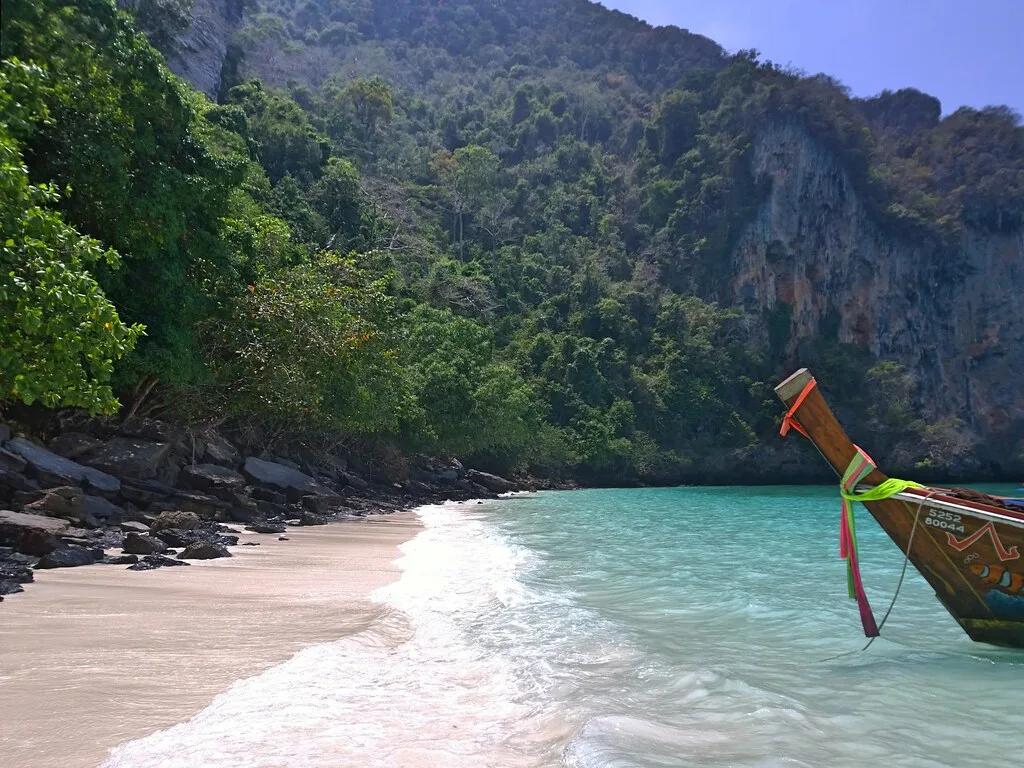
Monkey Beach is a narrow strip of white sand and clear turquoise water on Ko Phi Phi Don in Krabi Province, described as a small cove noted for its resident wild macaques. Because the monkeys are wild, their presence is likely but not guaranteed, and no one should treat the beach as an enclosure or petting zoo.
There is no ticket booth and no published opening hours at the sand itself, so treat any fee, rule or timing question as something to confirm on the day. The cove is best understood as public shoreline inside a national park area, which is exactly why visitors carry the responsibility for behaving well.
Boats pull up close to the sand rather than docking at a pier, so you step off into shallow water. That detail shapes everything: pack light, wear footwear you can get wet, and plan how you will clamber back aboard.
Where it sits on Phi Phi Don
The cove lies on the east side of Phi Phi Don, the larger of the two main Phi Phi islands, across the island from the busy Tonsai and Loh Dalum side. That east-coast setting helps explain why the water in the cove often looks calmer and clearer than what you see near the main pier, and why the surroundings feel less developed. For the full picture of what else to see on the island, see Phi Phi Attractions: 6 Visitor Guides.
Tonsai is the main village and arrival point, while Loh Dalum Bay is the beach just north of it that curves toward the opposite side of the island. If you are staying in Loh Dalum, the kayak option starts from your own beach rather than from the pier.
Because the beach is on the far side, you cannot simply walk out of your hotel and arrive. Every visit is a small expedition, whether by water or on foot, and that is worth building into your day rather than squeezing between two other stops.
How to get there: boat, kayak, or trail
You have three realistic options. A longtail boat from Tonsai is the easiest and suits groups, families and anyone with limited time; the cove can be accessed by longtail boat, kayak or a challenging trek through the jungle. Choose based on your tolerance for effort and how much control you want over timing.
Kayaking from Loh Dalum is the middle option: more effort than a boat, less commitment than the trek, and rewarding if you enjoy paddling. Skip it if you are inexperienced on open water, traveling with very young children, or unsure about wind and boat wakes on the day.
The jungle trail is the hardest and least forgiving route, usually described as a demanding hike rather than a stroll. Attempt it in proper shoes, with more water than you think you need, and turn back early if the path is muddy, overgrown or unclear. Going with someone who has walked it before is a sensible hedge.
Hiring a longtail boat from Tonsai
Walk to the Tonsai pier area and talk to a longtail driver directly, then agree the route, the stops and the return time before you board. Say out loud that you want Monkey Beach as one stop on a longer loop, and confirm whether waiting time at the beach is included or charged separately.
Ask what the total charter covers, from which pier you depart and where you will be dropped, and settle the price before you get in. Fares vary by route, season and negotiation, so get the figure confirmed face to face rather than assuming a standard rate.
Day trips that combine Maya Bay, Monkey Beach and Khai Island are sold as packaged products, which can be simpler than negotiating a private boat if you are traveling alone. The trade-off is less flexibility and larger crowds at each stop.
Carry cash in Thai baht, keep the agreed plan on your phone, and note the boat's marking or number so you can find it from the sand. If the weather turns, drivers are usually the best judge of whether the east side is workable that day.
Kayaking to the cove
Paddling from Loh Dalum is the most self-directed way to arrive, and the effort is manageable for reasonably fit adults in calm conditions. Use a dry bag with a buckle or roll-top closure rather than a zipped daypack, and fasten it to the kayak so nothing floats away if you capsize.
Kayak rental terms, deposits and whether a guide is required are set by the individual operators around Loh Dalum, so confirm them where you rent. Ask about life jackets, a paddle leash and the latest time to return before you commit.
Do not paddle with food in the boat. Monkeys associate bags and rustling packets with handouts, and a kayak gives you less room to move away if one climbs aboard.
The jungle trek, honestly
The trail is the option most people underestimate. Reviews describe it as challenging, and that usually means steep sections, roots, heat and humidity rather than a flat path through shade. Start early in the day, tell someone where you are going, and carry water for the return leg.
Wear closed shoes with grip, not flip-flops, and keep both hands free. If you are unsure of the route, hiking alone, or the ground is wet, turning back is a reasonable decision rather than a failure, and you can always reach the cove by boat instead.
Getting on and off the sand
Boats pull right up to the beach, so arrivals happen in shallow water rather than at a platform. Hand bags to someone already ashore, keep your phone in a sealed pocket, and wear sandals you can slip off and carry.
Keep your bag buckled shut and worn across your body, because zips are easy for monkeys to open and loose handbags are the most tempting target. Set your things down only where you can see them, and never leave a bag unattended on the sand while you swim.
Monkey behavior and safety rules
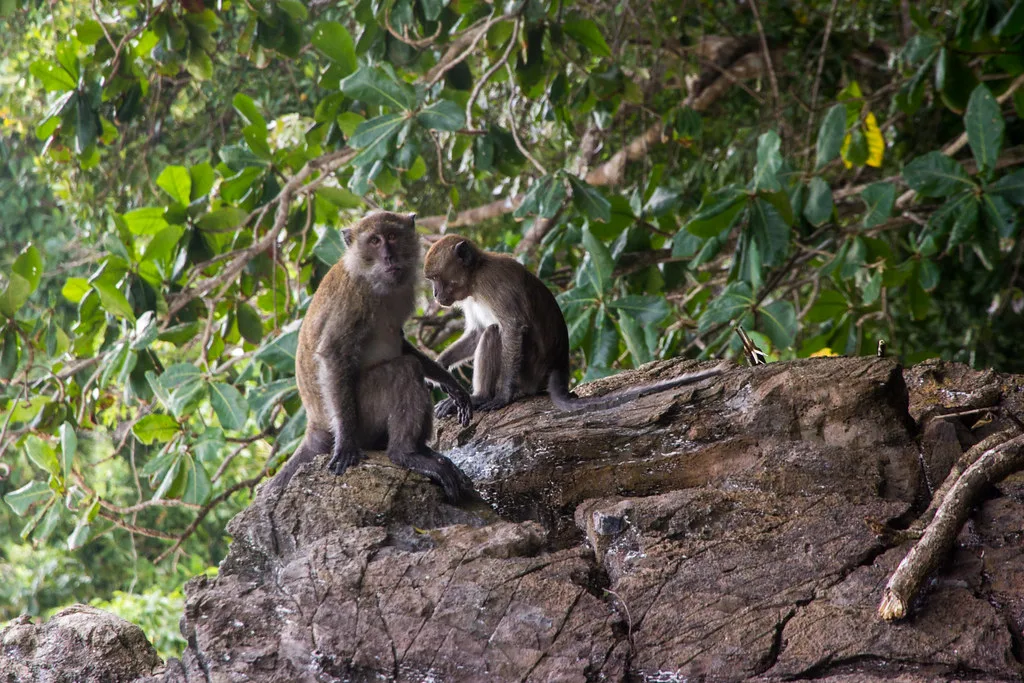
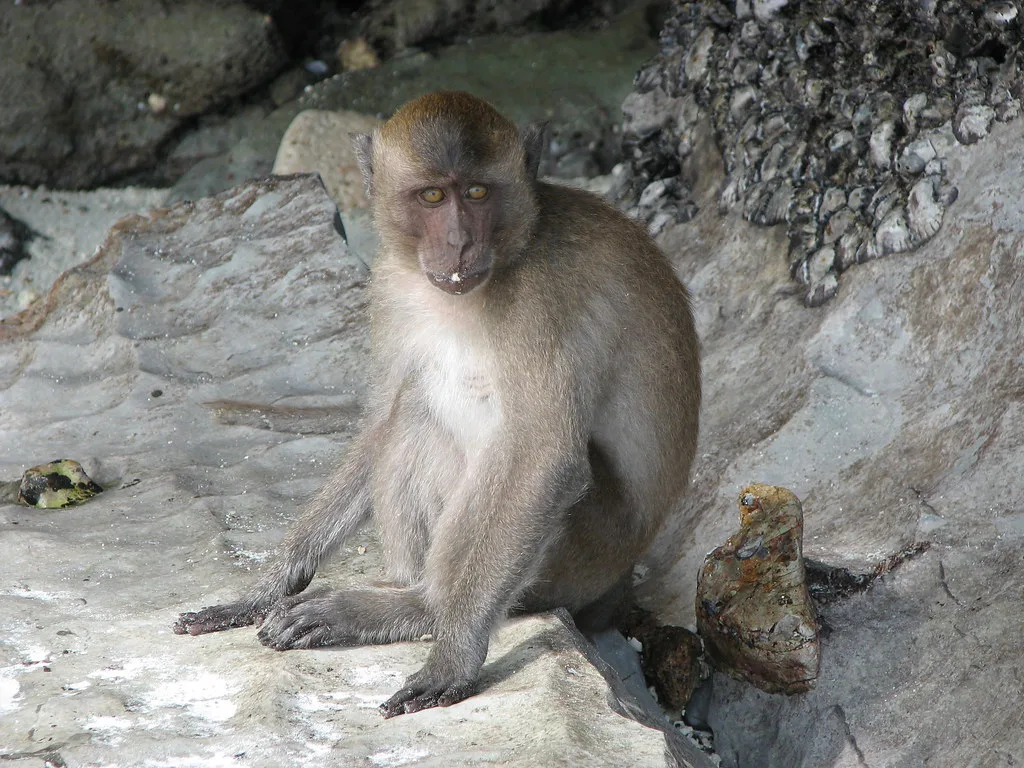
The single most important rule is to bring no food and to open nothing in front of the monkeys. A packet of sweets opened on arrival drew a swarm within moments, so keep snacks on the boat and out of sight until you leave.
Carry only water, and keep it closed and stowed rather than waving a bottle around, since a monkey grabbed a full bottle as soon as it heard the lid. Watch children closely, keep a few body lengths between yourself and the animals, and never block a monkey's escape route.
Do not touch, corner, tease or feed the macaques, and do not try to pose with one for a photo. Wild macaques can bite and scratch, and a calm-looking animal is still unpredictable when food or bags are nearby.
If you are bitten or scratched
Leave the beach and get professional medical care the same day, then follow the doctor's advice on rabies evaluation and treatment. Rabies is a serious risk after a monkey bite or scratch, and the decision about vaccination belongs with a clinician, not with a blog or a boat driver.
Clean the wound with soap and running water on the way if you can, note the time and location, and tell the clinician that the injury came from a macaque on Phi Phi Don. Keep any vaccination records you already hold, since they inform the course of treatment.
Swimming, snorkeling and how long to stay
The cove's appeal is as much the water as the wildlife: calm, clear and good for a short swim or snorkel. Travelers describe swimming, snorkeling and relaxing in the turquoise water as the main activity alongside watching the monkeys.
Budget roughly a quarter to half an hour ashore unless you are kayaking or trekking in, which adds the travel time at each end. This is a stop, not a half-day beach destination, and treating it that way keeps your boat day moving and reduces pressure on the monkeys.
Go early in the morning if you want thinner crowds, since packaged day trips tend to cluster around the middle of the day. Ask your driver which order they plan to run the stops to avoid arriving with three other boats.
What to pair with it on the same boat run
Monkey Beach works best as one link in an east-side and southern loop rather than a solo outing. Ask your driver to include a quieter beach such as Laem Tong Beach, Phi Phi Don, or a viewpoint stop, so the day has variety beyond one small cove. If you want other sandy alternatives, Loh Moo Dee Beach, Koh Phi Phi Don, makes a relaxed contrast to the crowded cove.
On the Phi Phi Leh side, Pileh Lagoon is a common companion stop with its enclosed, cliff-ringed water, and Wang Long Bay on Phi Phi Don offers another sheltered cove. Which of these you can fit depends on sea conditions and the route your driver agrees to.
Maya Bay on Phi Phi Leh is the headline stop for many boat days, but its access rules and any closures change, so confirm the current situation with your operator or the national park before you count on it. Do not rely on a guidebook printed years ago.
What to confirm before you go
Check current national park rules, any seasonal restrictions and the day's sea conditions with your boat operator or the park office, since none of these are fixed year-round. Ask specifically whether Monkey Beach is open to landing on your travel dates and whether your planned route is running.
Pack reef-safe sunscreen, a dry bag, cash for the boat, closed shoes if you plan to trek, and no snacks in your daypack. Reconfirm your departure point and time the evening before, and leave a margin for weather delays on the crossing.
Is Monkey Beach worth the stop?
Yes, if you treat it as a short wildlife stop on a longer boat day and follow the food rules strictly. Go by longtail from Tonsai for the least effort, paddle from Loh Dalum if you want independence, and attempt the trail only if you are fit, prepared and sure of the route.
Before you board, confirm the route, the price and the return time with your driver, and check current park rules and conditions. That short conversation is what separates a smooth half-day loop from an afternoon spent waiting on the sand.