
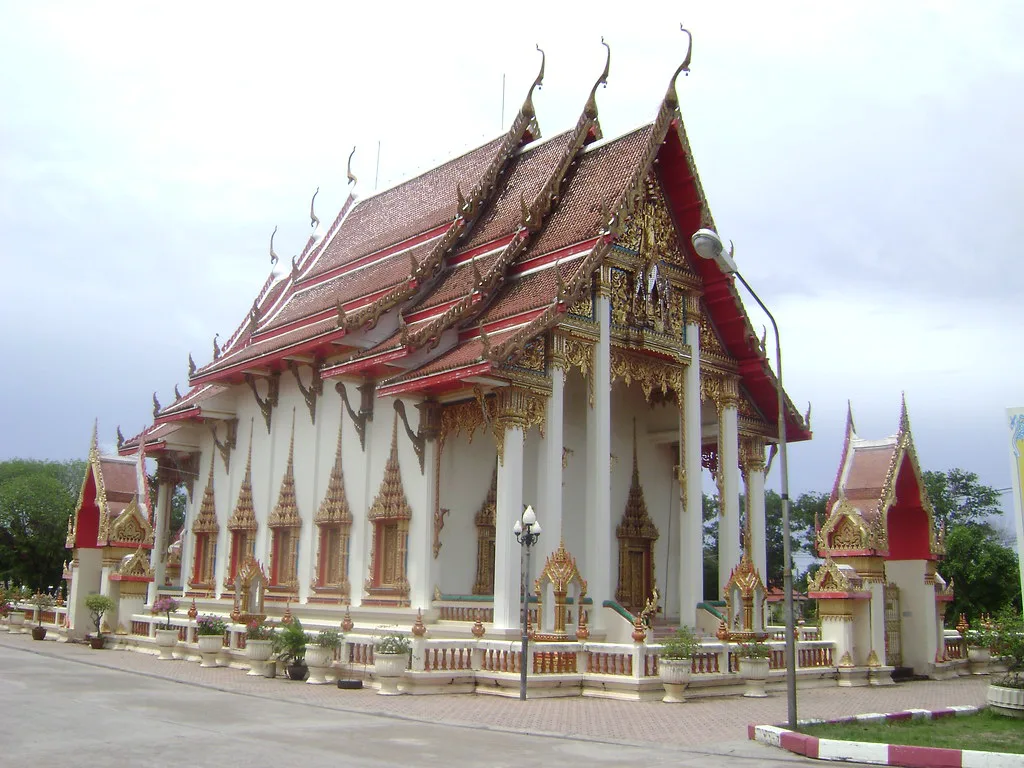
Wat Chalong: A Practical Guide to Phuket's Most Important Temple
Wat Chalong is worth an hour or two of your Phuket trip if you want the island's most significant temple rather than another beach afternoon. Locals revere it, the architecture is genuinely grand, and the tall pagoda gives you a wider view of the island than the average photo stop. This guide covers where the temple sits, how to reach it, what to see inside, the dress code, how much time to allow, and whether to pair it with Chalong Bay or the Big Buddha.
Two names appear on maps and signs: Wat Chalong, the everyday name, and Wat Chaiyathararam, the formal one. Recognizing both saves confusion when a ride-hailing app or a road sign uses the other. The Tourism Authority of Thailand lists the temple as Wat Chalong (Wat Chaitaram), and third-party guides also give the formal form Wat Chaiyathararam, so either may show up on a booking app.
What Wat Chalong Is and Why It Matters to Phuket Locals
Wat Chalong is an active Buddhist temple, not a museum, and that is the key to visiting it well. Phuket residents come here to make merit and pay respects, particularly to Luang Pho Cham, a former abbot remembered for his reputation across the region. If you arrive expecting a quiet monument, the combination of worshippers, incense, and tour groups can be a surprise; plan for it rather than against it.
The temple's formal name, Wat Chaiyathararam, appears on official signs, while Wat Chalong is what most locals and drivers use. Construction is said to date to the mid-nineteenth century, though the site has been expanded and refurbished repeatedly since. Treat it as a living religious site first and a landmark second.
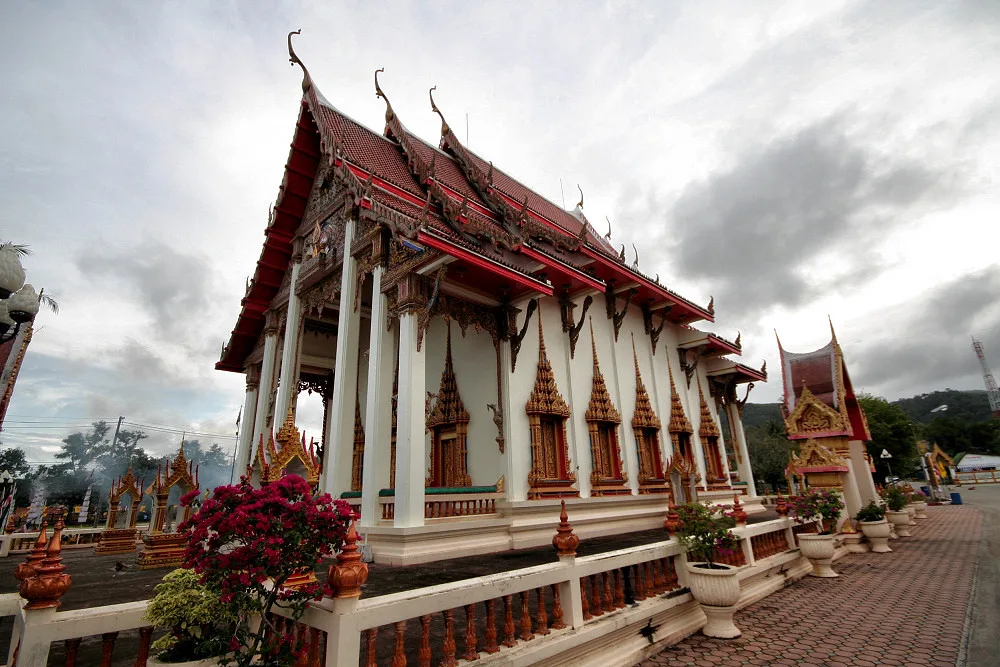
Where Wat Chalong Sits and How to Get There
Wat Chalong stands on Chao Fa Tawan Tok Road in Chalong sub-district, in the island's southeast-central interior, not on a beach. Third-party listings give the address as 70 Moo 6, Chao Fa Tawan Tok Road, Chalong, Mueang Phuket District, Phuket 83000. From Patong, Kata, or Phuket Old Town, the temple is inland and roughly reachable in 20 to 40 minutes by road, though traffic on Phuket's main arteries varies enough that you should add a buffer. The Tourism Authority of Thailand places the temple on Thanon Chao Fa in Chalong sub-district, which is the same road under its Thai name.
For independent travelers, the practical choices are a metered taxi or ride-hailing car, a private driver for the day, a hotel-arranged songthaew, or your own scooter. Ride-hailing is convenient but can surge during rain or peak hours; a private driver makes sense if you plan to combine the temple with Chalong Bay or the Big Buddha, since you are not paying for waiting time separately. Scooters give freedom but demand confidence on Phuket's fast, curvy roads, and helmets are required. No fare is reliable enough to quote here without an operator source, so check the app estimate before you accept.
Opening Hours and Entry: What Sources Report and Where to Confirm
Published hours for Wat Chalong disagree. A travel platform lists the grounds as open 8 a.m. to 7 p.m. with free admission, while another third-party guide says the temple closes at 5 p.m. Because these are not official temple publications, treat both as indicative and verify before you travel, especially on public holidays or Buddhist holy days. The Tourism Authority of Thailand's attraction page is the closest official listing; check it before a long drive, and ask your driver or hotel to confirm current opening hours.
Several third-party sources report that entry to the temple is free, with no ticketing for general access. That is consistent with most active temples in Thailand, but it does not guarantee every structure or event is free. Do not build a budget around a quoted fee either way; instead, confirm on the day and carry small notes for merit-making donations or for food stalls at temple fairs.
What to See: The Prayer Hall, the Memorial Hall, and the Chedi
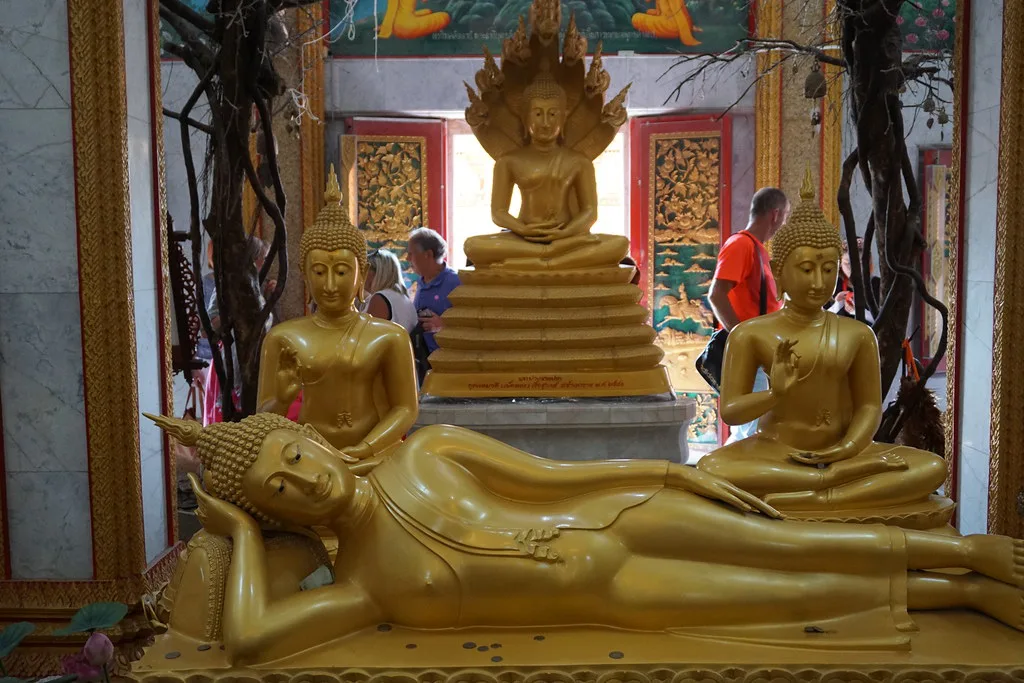
The main prayer hall contains a gilded statue of Luang Pho Cham, along with statues of other former abbots of the temple. Devotees apply gold leaf to images to make merit, so expect to see worshippers in a line or kneeling at the statues rather than tourists posing freely. Watch what people do, keep a respectful distance, and do not touch the images unless you see a clear, sanctioned practice underway.
The most distinctive structure is the Phra Mahathat Chedi, a tall pagoda decorated inside with murals of the Buddha's life and housing several Buddha images. One platform describes it as roughly 60 meters tall, with multiple interior levels. Whether you can go all the way up can depend on access and maintenance on the day, so ask at the temple rather than assuming the climb is open.
Climbing the Chedi: Murals, Views, and the Stairs
If the upper levels are open, the chedi is the part of Wat Chalong that rewards you most for effort. The interior murals are the quiet highlight; the higher floors give views over the temple grounds and, on a clear day, toward Chalong Bay. The climb is stairs, not an elevator, in a hot, humid building, so treat it as a physical decision rather than a guaranteed photo opportunity. Wear shoes you can slip off, carry water, and skip the top if you are overheated or unsteady on steep steps.
Dress Code and Temple Etiquette
Cover your shoulders, chest, and knees before you arrive. A light scarf and long, loose trousers in your day bag are the simplest solution; sleeveless tops, tank tops, short shorts, and very short skirts are exactly what gets visitors turned away or asked to cover up. You will also be asked to remove your shoes in some buildings, including the sermon hall and the chedi, so choose footwear that comes off easily.
Inside, behave as you would in any working place of worship: keep your voice low, do not point your feet at Buddha images, and do not position yourself above the images except where devotees are clearly doing so for merit-making. Photography is generally acceptable in the grounds, but avoid using a flash or posing disrespectfully around worshippers. If a room has a barrier or a sign, stay behind it.
How Much Time to Allow, and the Best Hours to Go
Allow 60 to 90 minutes as a baseline: 20 minutes for the prayer hall and memorial hall, 20 to 30 for the chedi and its views, and the rest for the grounds. One third-party platform suggests a recommended sightseeing time of one to two hours, which matches the pace most visitors settle into. If you are combining the temple with Chalong Bay or the Big Buddha, budget a half-day.
Go early. Opening time, whenever you confirm it, is the coolest and calmest window before the heat and tour groups build. Late afternoon is the other reasonable slot, but check the confirmed closing time because published hours differ between 5 p.m. and 7 p.m. Avoid the middle of the day in the hot season if you plan to climb the chedi.
Accessibility and Comfort Across the Grounds
The grounds are largely flat and paved, which helps if you use a wheelchair or have limited mobility, but the chedi stairs are the limiting factor. Shade is patchy, so bring water, a hat, and sun protection, and plan rest stops. Toilets and drink stalls are usually available near the entrance; confirm on arrival if you need accessible facilities. For a cooler, flatter alternative with sea views elsewhere on the island, the Phuket aquarium at Cape Panwa is worth knowing about.
Nearby Options to Pair with the Temple
Chalong Bay is the closest natural add-on, a short ride from the temple and useful for a seafood lunch or a pier-side walk. The Big Buddha on Nakkerd Hill is another common pairing, but check access and opening status before driving up, since hilltop sites can close for maintenance or weather. Karon Viewpoint, on the road between Kata and Nai Harn, gives you the classic three-bay panorama and fits a southern loop if you have your own driver.
If you are building a culture day, the Thai Hua Museum in Phuket Old Town explains the island's Sino-Portuguese heritage and pairs well with a temple visit. For a sunset finish, Promthep Cape is the island's signature viewpoint and a sensible last stop after the temple if you have a car or driver.
Is Wat Chalong Worth Adding to Your Phuket Trip?
Yes, if you want one temple that shows you Phuket's living Buddhist culture without a long day trip. Third-party sources report free admission, it is close enough to the main beach areas to combine with a beach morning or a southern loop, and the chedi views are the payoff for the stairs. Confirm the day's hours and chedi access before you set out, pack covered clothing, and go early to beat the heat.
Read the Phuket Attractions: 6 Visitor Guides collection next to see how the temple fits with the island's other stops, and book your transport only after you have checked the hours you intend to visit.
Explore more Phuket guides
Frequently Asked Questions
Is there an entry fee for Wat Chalong?
Most third-party sources describe general admission as free, and no official ticketing is listed for the temple grounds. Because that is not confirmed by the temple itself, check the Tourism Authority of Thailand listing or call ahead before you rely on it, and carry small notes for donations or temple-fair food.
What is the dress code for Wat Chalong?
Cover your shoulders, chest, and knees, and remove your shoes in buildings where signs or worshippers indicate it, including the sermon hall and the chedi. A light scarf and long, loose trousers are the easiest way to comply without overheating. Sleeveless tops and very short shorts are the most common reasons visitors are asked to cover up.
How long does a visit to Wat Chalong take?
Plan on 60 to 90 minutes for the prayer halls, the chedi, and a walk around the grounds. Third-party listings suggest one to two hours, which fits a relaxed pace. If you combine the temple with Chalong Bay or the Big Buddha, allow a half-day including travel.