
Wat Phra Thong: A Visitor's Guide to Phuket's Half-Buried Buddha Temple

Wat Phra Thong is a working Buddhist temple in Thep Krasatti, in Phuket's Thalang District, and its draw is a golden Buddha that is said to be only half exposed above the ground. Plan on a short, quiet stop of roughly an hour rather than a half-day, and treat it as an airport-side errand on your way north or south. This guide covers where the temple sits, how to approach it by car, what you actually see in the grounds, and whom it suits.
One mix-up to clear up straight away: this temple is not the island of Koh Phra Thong off Phang Nga, which needs a ferry from the mainland and has almost no tourist infrastructure. Everything here is in Phuket, a few minutes off the main road near Thalang. If you are planning a broader temple circuit on the island, the Phuket Attractions: 6 Visitor Guides collection shows how this stop compares with the bigger names.
What Wat Phra Thong is and why people visit
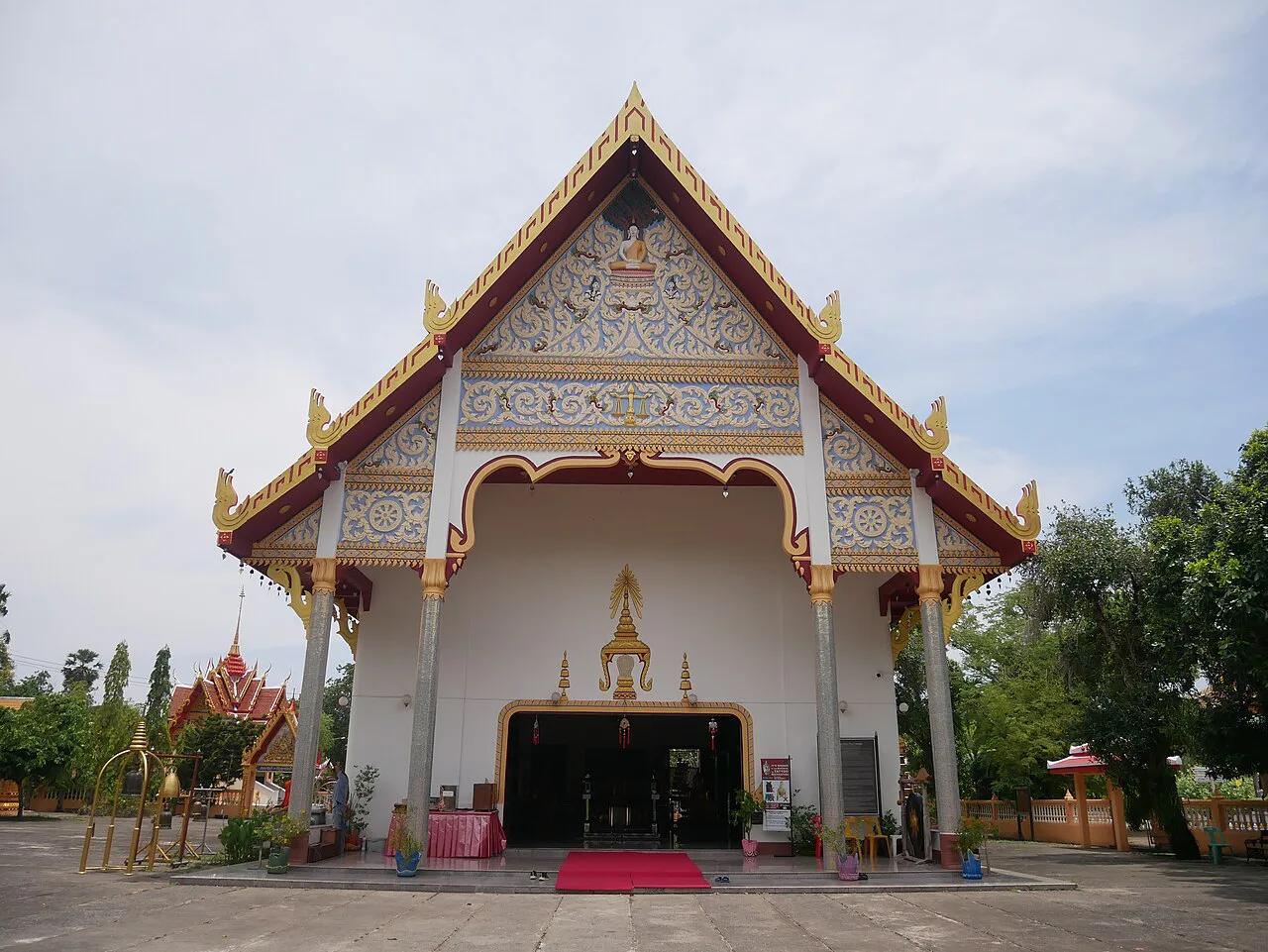
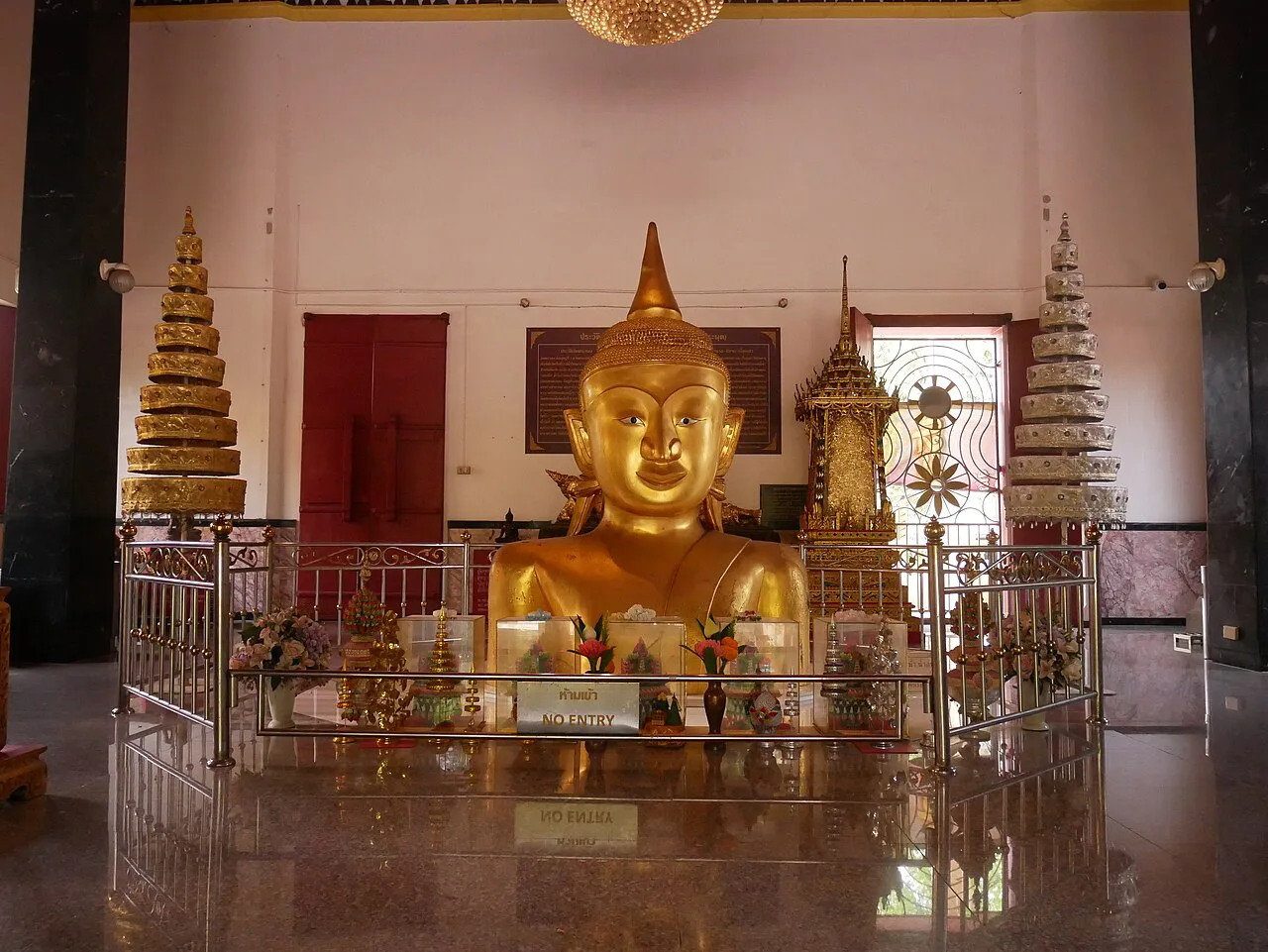
This is a modest but active temple complex built around the image of Luang Poh Phra Thong, also called the Golden Buddha, which sits partly buried in its own shelter. The temple's other name, Wat Phra Phud, translates roughly as the Temple of the Protruding Buddha, which tells you exactly what people come to see. You are visiting a place of worship first and a sight second, so quiet behavior matters more than photo angles.
The complex is known as a calm, garden-like compound where you can walk the grounds without the crowds that gather at Phuket's headline temples. Phuket Insider describes the atmosphere as quiet and peaceful, with few tourists and a spacious garden to wander. That makes it a good fit when you want a genuine temple interlude rather than a full excursion.

The legend of Luang Poh Phra Thong
As the story goes, a farmer's boy tied his buffalo to what looked like a post in a field, fell ill soon after, and died along with the animal. His father later dreamed of the spot, dug there, and found the top of a large Buddha image; attempts to free it were said to end badly for those who tried, so locals left it alone. A traveling monk who saw the exposed image proposed building a temple around it, and only part of the statue has been visible since.
Treat all of that as legend, not verified history, and note that a more practical explanation also circulates: a nearby canal is said to have changed course and silted over the image. The temple is generally counted among Phuket's older temples, and Go Guides records that King Rama VI, then crown prince, visited in 1909 and gave it its official name. Legend, geography, and royal recognition each explain part of why the site endures.
Where it is and how to get there
Wat Phra Thong stands in Thep Krasatti, Thalang, close to the Thalang District Office and roughly 13.5 km south of Phuket International Airport. That puts it on the airport side of the island, well north of Patong and Phuket Old Town. If your hotel is in the south, this is a stop to fold into an airport transfer or a northern day rather than a trip on its own.
If you are driving toward the airport, the street leading to the temple is on the right, and reaching it means making a U-turn first. Coming from the airport direction, watch for a small sign before you reach Thalang and follow that lane to the Wat's parking area. A metered taxi, a Grab car, or a hired car with a driver all work; there is no need to book a tour for a single temple. Confirm the current fare in the app before you set out, since rates change with demand and time of day.

What to see inside the grounds
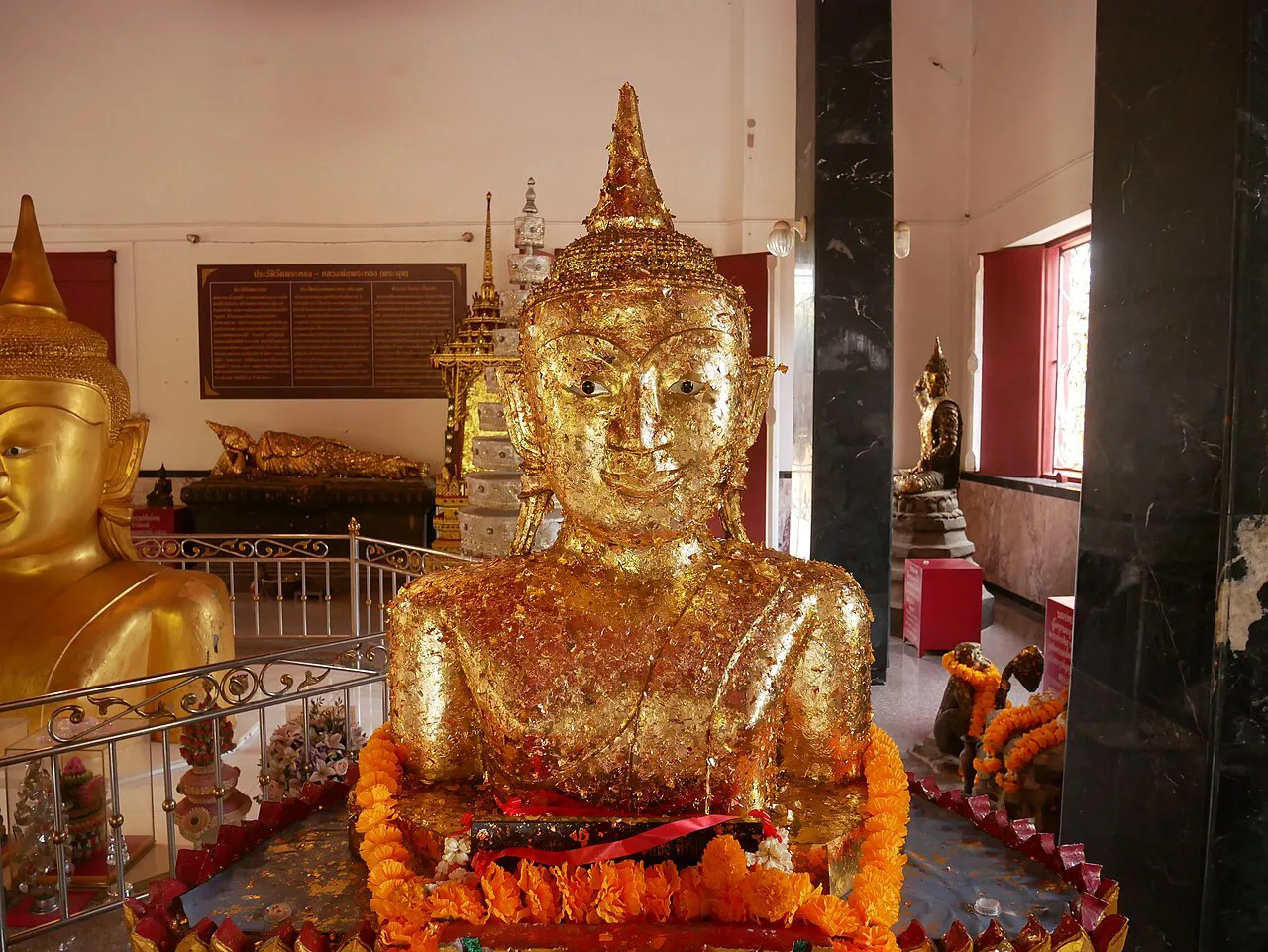
The centerpiece is the sheltered half-buried Buddha, the image that gives the temple its name and its reputation. Around it you will find several temple buildings with colorful detailing rather than one grand hall, so a slow loop of the compound covers most of it. Keep your voice low and step around anyone praying; this is an active spiritual center for local communities, not a monument.
The on-site museum is the detail most visitors miss, and its contents are specific: tin-mining equipment donated by locals, a Chinese dowry basket, Chinese foot-binding shoes, food carriers, cannons, and Javanese daggers. Those objects tie the temple to Thalang's tin and trading history rather than to a generic temple display. Check whether the museum is open when you arrive, since small temple museums often keep irregular hours.
Visitors commonly take part in rituals here, including fortune-telling, fate readings, and asking a monk to bless amulets. Whether you join in is a personal choice; if you do, follow the monk's lead and keep any offering modest and respectful. Anything involving money at a temple should be given directly and clearly, with no pressure to buy.
Opening hours, entry fees, and what to confirm
Go Guides lists the temple as open daily from 8am to 5.30pm at 172/2 Nanai Road, Thep Krasatti, Thalang, Phuket 83110, with the phone number +66 (0)93 621 4687. That is a third-party listing rather than a temple notice, so call or check before you build a transfer around it, particularly on public holidays. Temple grounds sometimes open earlier or close for ceremonies without notice.
No admission price is published for Wat Phra Thong in the sources available, and you should not budget for a fixed ticket. Many Thai temples of this kind charge nothing to enter, but donations for upkeep and for rituals are normal; confirm on arrival what, if anything, is expected. If a fee matters to your planning, ask by phone before you go rather than assuming.
How much time to allow
Budget about an hour, maybe a little more if the museum is open and you read the displays. This is a small complex with a spacious garden, and Phuket Insider describes it as quiet with few tourists, so there is no queue to plan around. It rewards a short, unhurried stop rather than a dedicated half-day.
Pair it with something else nearby rather than making the drive only for this. A reviewer on Tripadvisor describes the temple as a 250-year-old sanctuary with a sense of peace in spacious grounds, which matches the short-stop framing rather than a headline attraction. If you have one temple slot on the island and want the big, busy one, read about Wat Chalong instead.
Dress and behavior at an active temple
Cover your shoulders and knees, and take off your shoes before entering any building where shoes are left at the step. Walk clockwise around the main image if others are doing so, keep your head below the heads of monks and images, and do not point your feet toward a Buddha. Photography is usually fine in the grounds, but skip it during prayers and never climb on the image or its shelter.
Women should not touch monks or hand items directly to them; place offerings on a cloth or tray instead. If you sit on the floor, tuck your legs to one side rather than pointing them forward. These are the standard expectations at Thai temples, and following them is the difference between a welcome and a glare.
What's nearby on the same side of the island
If you want more temples in one run, Wat Thettharamnawa, also called Wat Tha Sai, is built entirely of teak and sits in quiet vegetation, making it an easy pairing with Wat Phra Thong. Wat Doi Thepnimit on Patong Hill and Wat Khao Rang Samakkhitham in Phuket Town are separate stops in different directions, so pick one rather than trying to chain all of them. Each has its own opening pattern and should be checked separately.
For a non-temple break on the same trip, the Thai Hua Museum in Phuket Old Town covers the island's Chinese and tin-mining heritage in more depth than the small display here. Families based in the south often prefer the Phuket aquarium at Cape Panwa, which is a different part of the island entirely. Both are better planned as their own outings.
Sunset seekers should know that Promthep Cape, at the island's southern tip near Nai Harn Beach, is a long drive from Thalang and not a sensible add-on to a temple morning. Keep the two on different days, and check the things to do in Phuket list if you are still assembling a plan. Wat Phra Thong works best as one piece of a northern loop, not as the anchor of a southern day.
Should Wat Phra Thong make your Phuket plan?
Yes, if you are passing between the airport and the north of the island and want a calm, uncrowded temple with a story and a small museum attached. No, if this is your single temple stop and you want scale and atmosphere: Wat Chalong is the busier, more celebrated choice. Travelers staying in Patong or the south should only come this far north if the drive is already part of the day.
Before you go, call the number listed for the temple or ask your hotel to confirm today's hours, since the published times come from a third-party guide. Bring modest clothing, allow an hour, and check in the ride app what the trip should cost from your hotel. That is enough to turn a legend into a practical stop.