Maeklong Railway Market: How to Visit From Bangkok
How to visit Maeklong Railway Market from Bangkok: how to see the train, DIY vs tour routes, what to skip, and safety tips. Check times first.
On this page
Last updated November 2026: Maeklong Railway Market is a working fresh market in Samut Songkhram province, built along an active track where vendors pull back awnings as a train approaches. It is a day trip from Bangkok, and the train times decide the whole visit. Compare other options in our Bangkok markets guide, then plan your day around the schedule.
Featured image: Codas, CC BY-SA 4.0, via Wikimedia Commons.
What Maeklong Railway Market Is (and How the Train Moment Works)
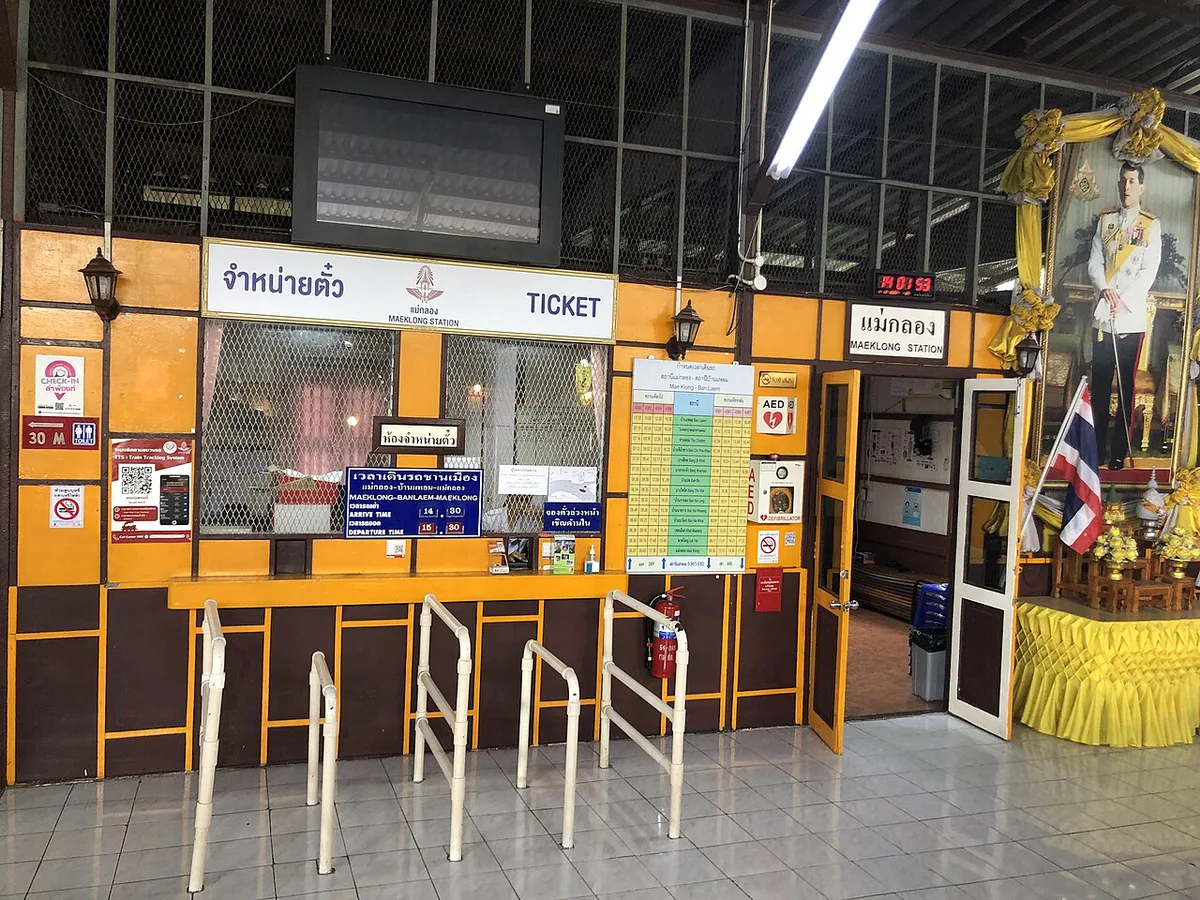
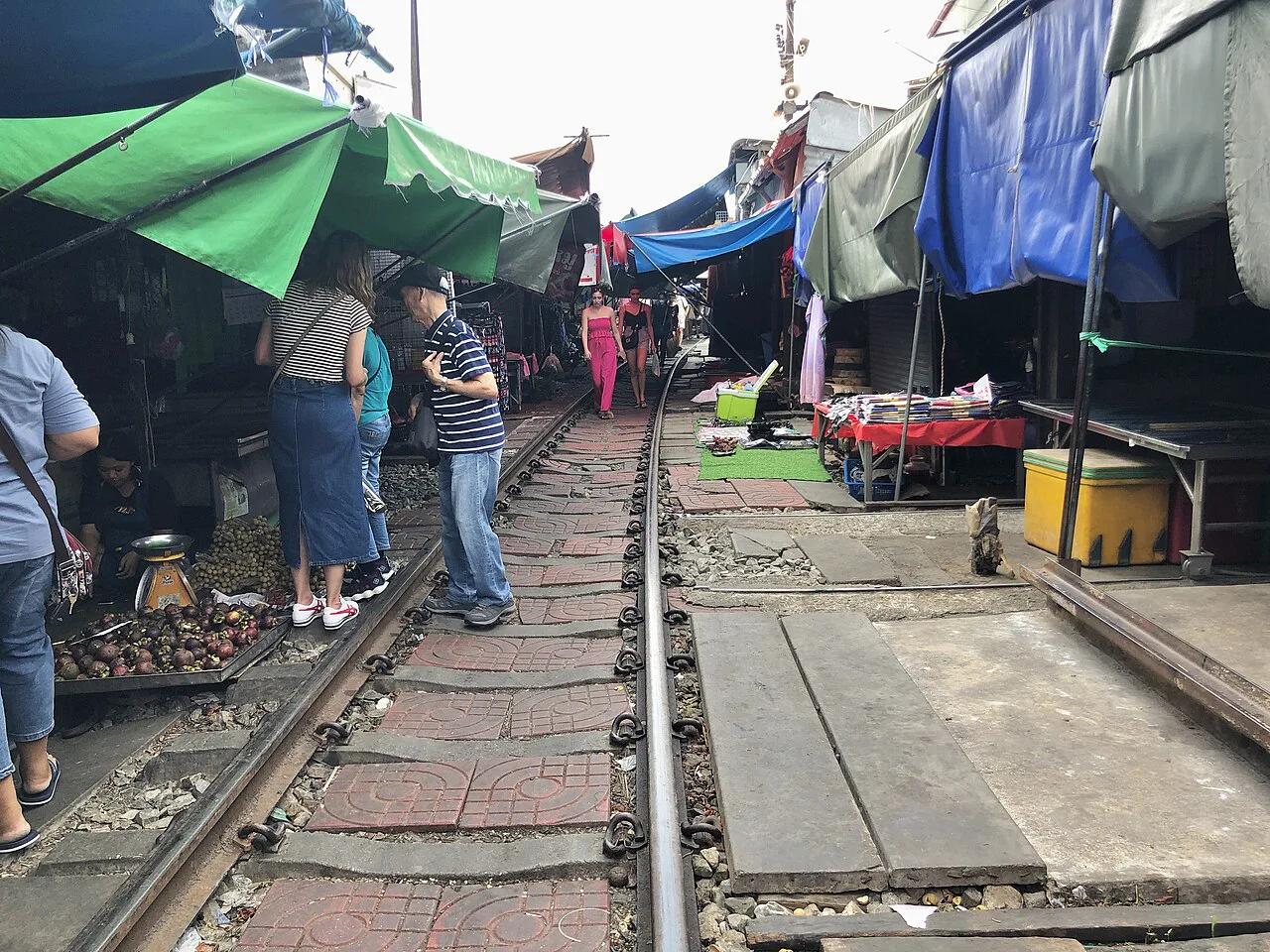
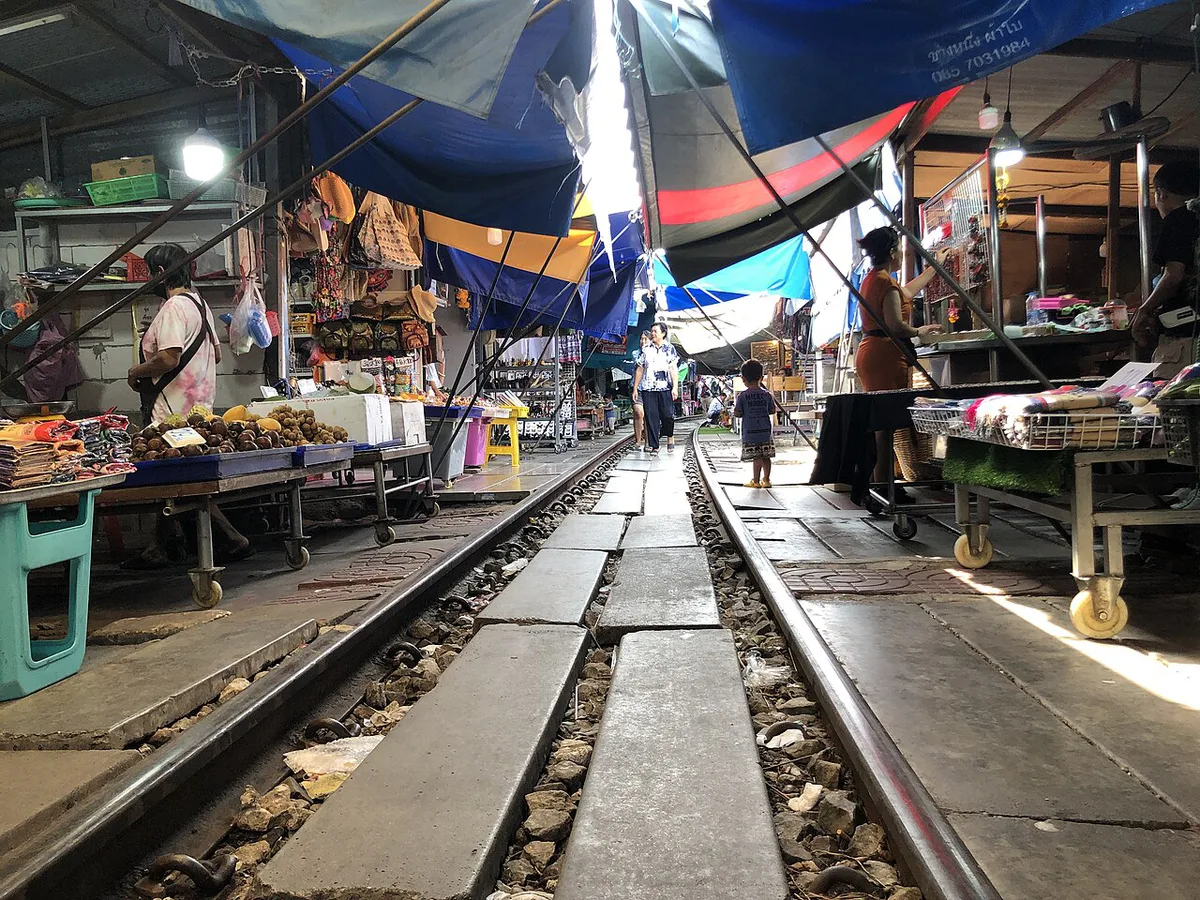
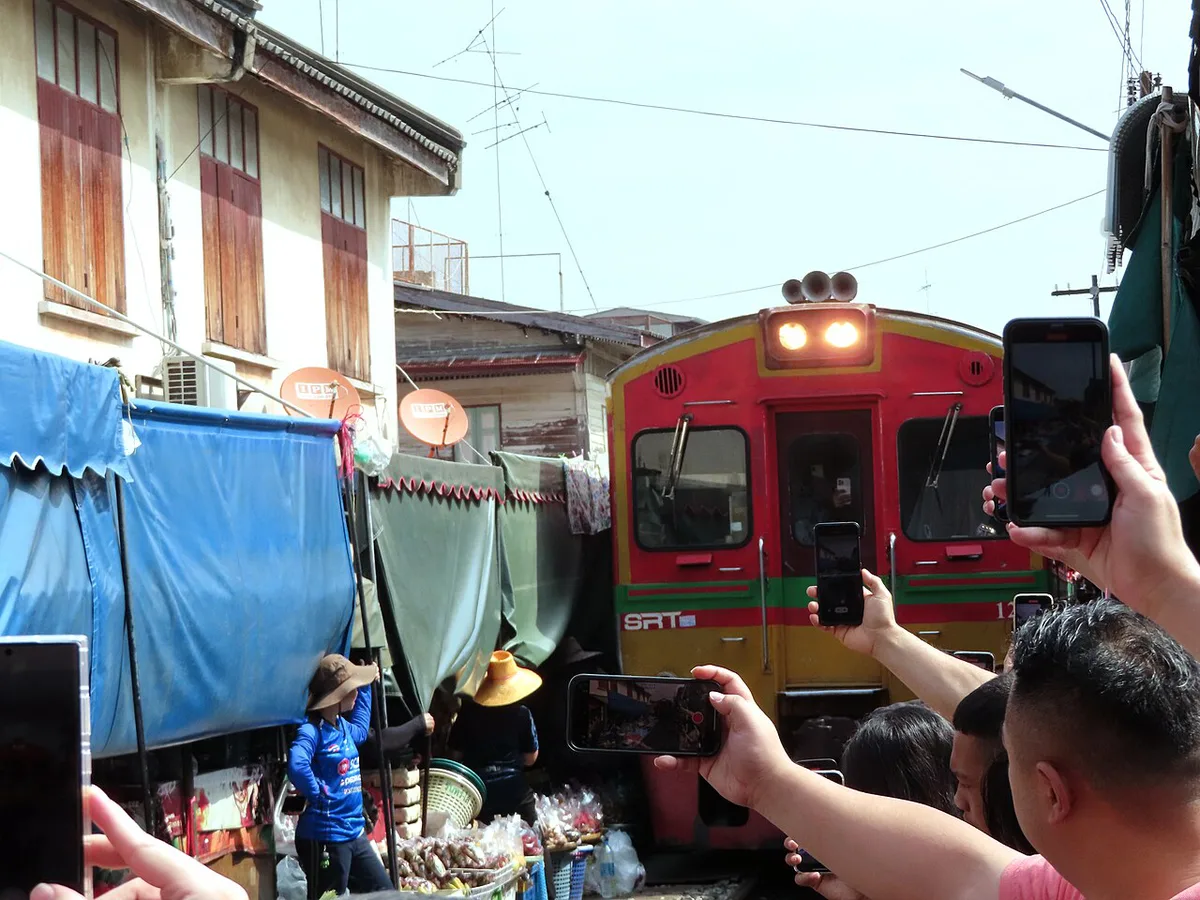
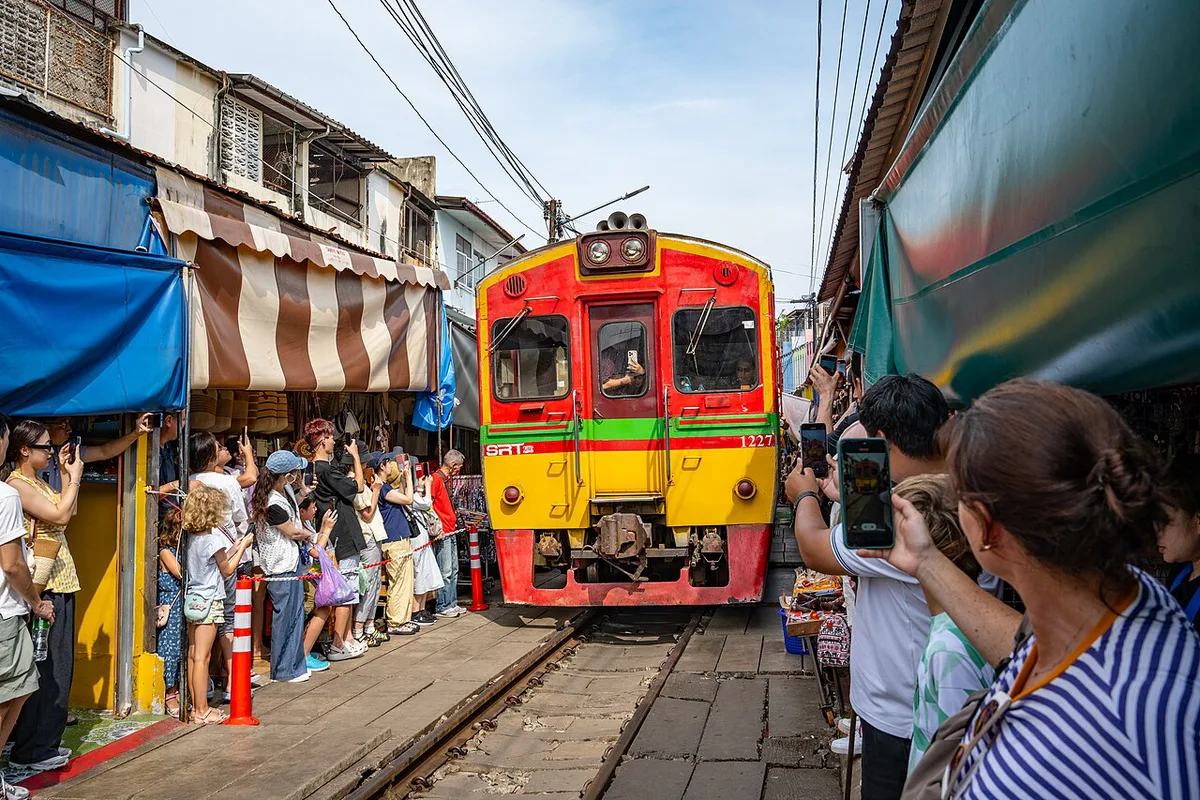
Locals call it Talat Rom Hup, the "umbrella pull-down market." Some maps spell it Mae Klong. Stalls of fish, fruit and vegetables sit right beside the rails, with awnings and trays set almost against the track. When a train approaches, vendors fold the awnings back and slide trays aside. Within moments of the last carriage passing, everything goes back in place. State Railway of Thailand operates the line. It is a metre-gauge route of about 66.9 km with 35 stations. Trains crawl at an average of roughly 30 km/h, and the line has no signals. You are watching a real working railway, not a staged show. Samut Songkhram province lies outside Bangkok, so plan this as a day trip rather than a city stop.
Getting There From Bangkok: Tour, Taxi/Car or Train
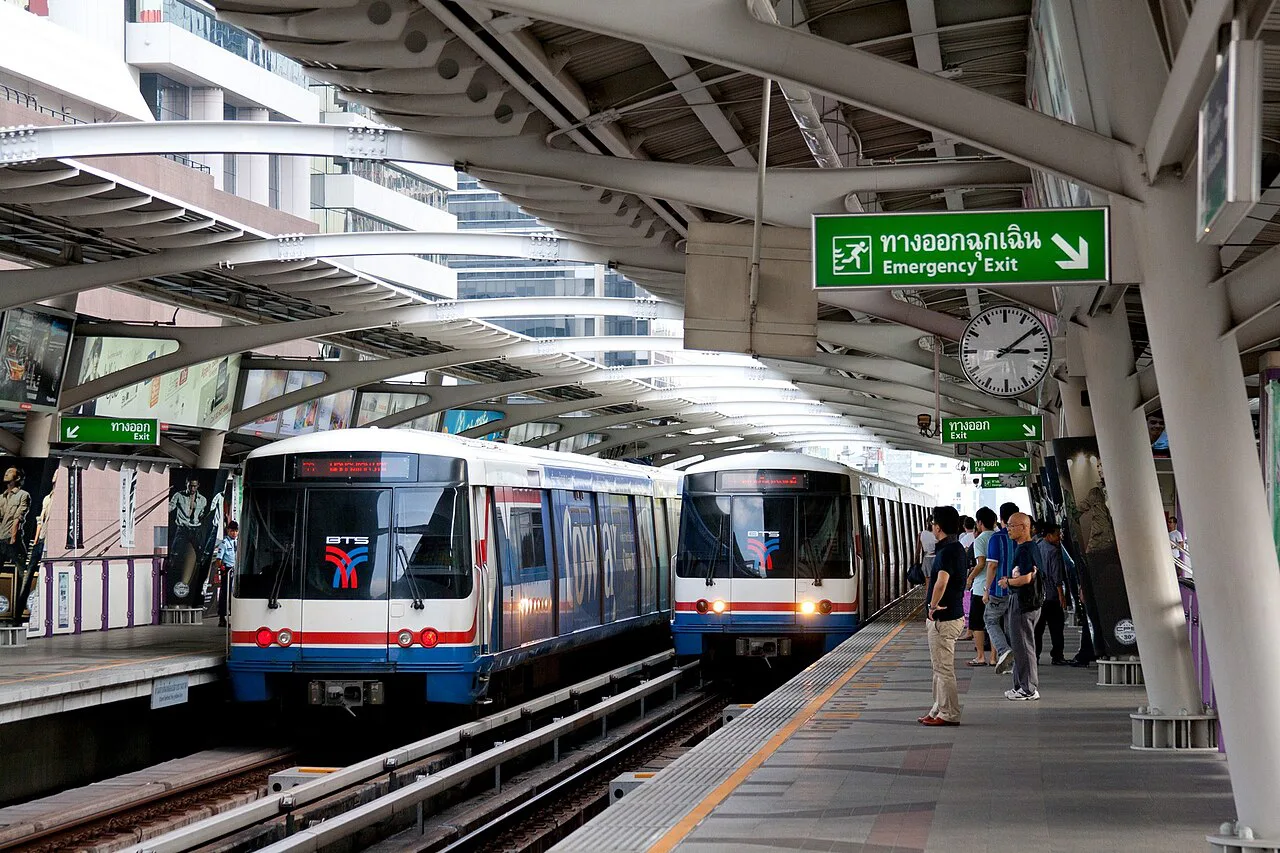
Three routes work. A half-day tour is the easiest and usually builds in the train time for you. A private car or taxi gives you control over the schedule. Tour accounts quote about 90 km and roughly 1.5 hours by car, but traffic varies, so confirm with your driver. Public transport is possible but slower. Wikipedia describes the Maeklong Railway as two sections split by the Tha Chin River. The Mahachai Line runs from Wongwian Yai to Mahachai. The Ban Laem Line runs from Ban Laem to Maeklong. Boats are the only link across the river. A DIY trip therefore means a train, a river crossing, then a second train. Check every connection before you commit.
Trains average roughly 30 km/h, and a DIY trip adds two train sections plus a river crossing to that schedule.
| Option | Time | Effort | Flexibility | Train-timing risk |
|---|---|---|---|---|
| Half-day tour | Medium | Low | Low | Low, since the guide plans around the train |
| Private car or taxi | Medium | Low | High | Medium, depends on your start time and traffic |
| Public train plus river boat | High | High | Medium | High, because two train sections and a crossing must line up |
When to Go and How to Time the Train
Build the day around the train, not the other way round. Tour accounts mention 8:30 and 9:00 as good picks for lighter heat and thinner crowds. Older published timetables listed four daily trains on the Ban Laem to Maeklong section. Both claims may be out of date. Confirm current times with the operator's timetable or station staff before you leave. Cooler, drier months from November to February are often recommended, though treat that as general advice. Whatever the season, the quiet gap between trains is the best time to eat and browse.
Early starts such as 8:30 and 9:00 suit lighter heat, and a half-day tour usually builds the train time in for you.
- Arrive well before the train you plan to see, so you can choose a spot behind the line.
- Re-check the timetable on the day, because schedules change.
- Pack cash, a hat, sunscreen and water.
- Wear closed shoes for wet ground.
- Decide in advance whether you will wait for a second train or leave after the first.
What to See, Eat and Buy at the Market
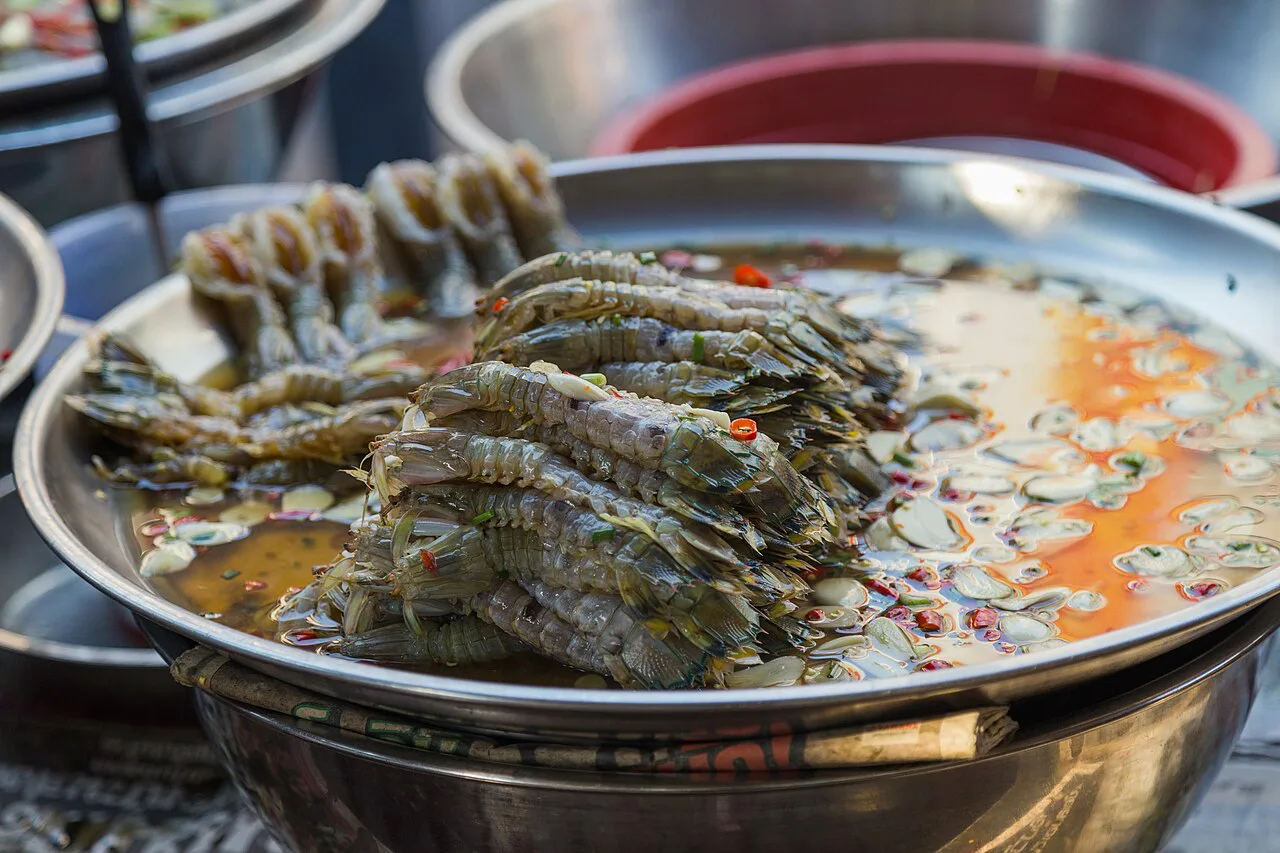
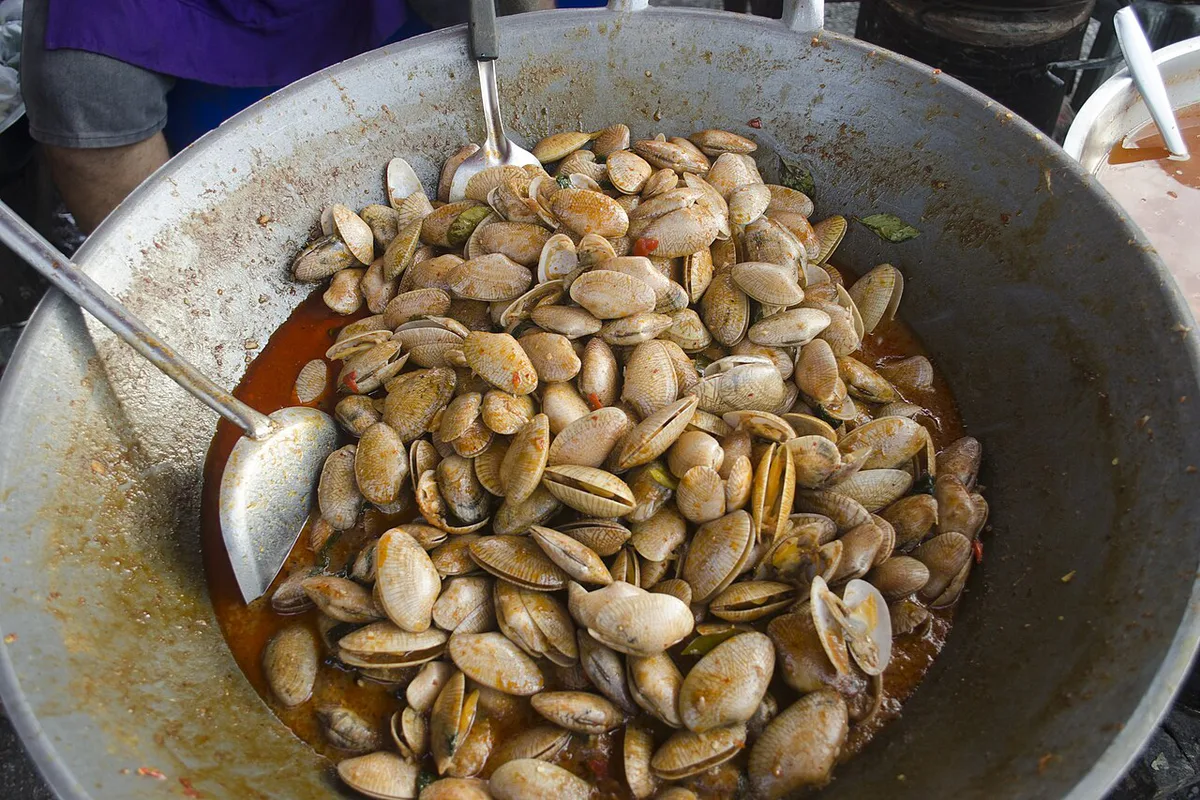
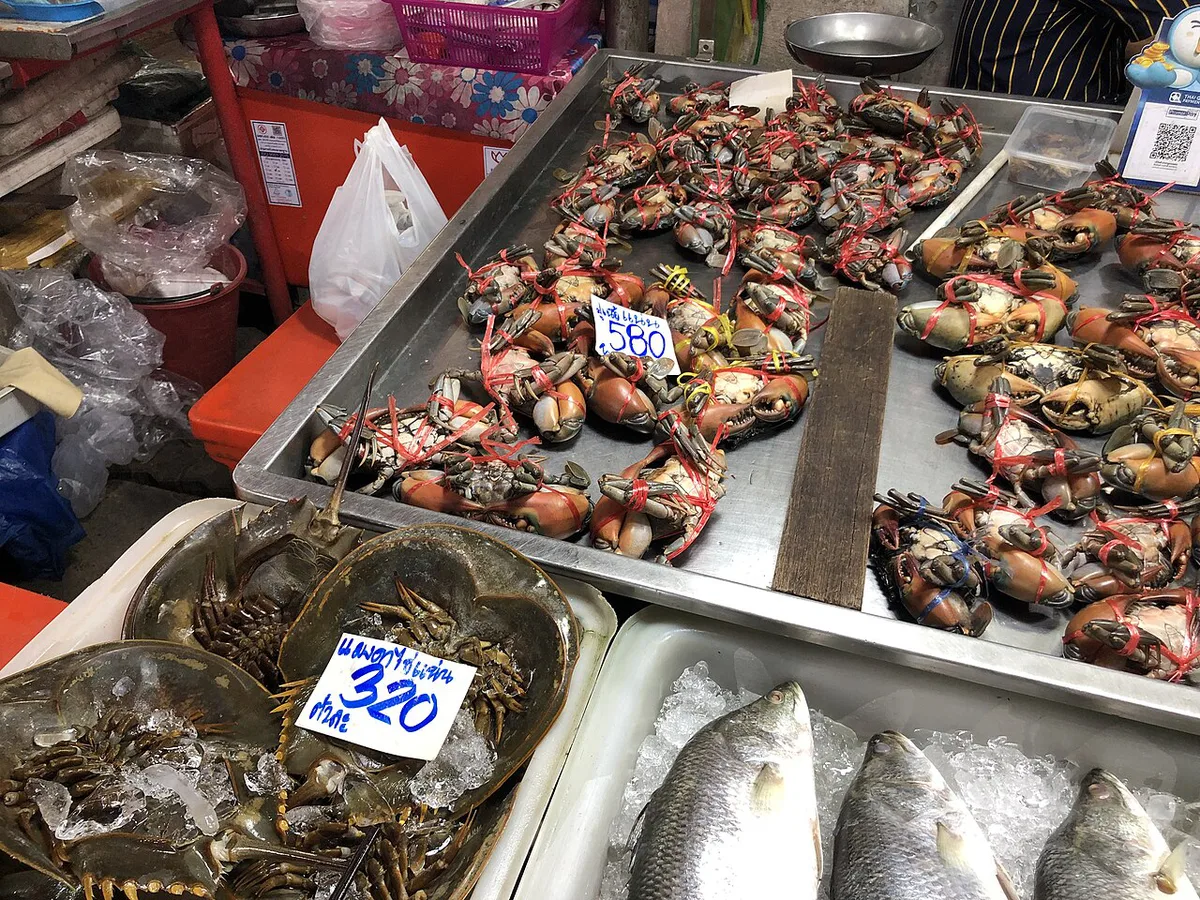
Expect a working fresh market, not a polished attraction. Fresh seafood, fruit, vegetables and spices are the main goods. Locals shop here for daily groceries, so some stalls feel crowded and wet. Many vendors may not take cards, so carry small bills. Souvenir hunters will be disappointed. For gifts, head to our Bangkok souvenir shopping guide instead. If you want a market nearer the city, Chatuchak Weekend Market Guide: Hours, Routes & Tips is a weekend city market, while Maeklong is a working fresh market that needs a day trip.
- Fresh seafood: best for looking unless you can cook it.
- Fruit: easy to buy and eat while you walk.
- Vegetables and spices: fun to browse, but bulky to carry.
- Snacks from stalls: pay in cash and carry small bills.
Safety and Etiquette on the Tracks
Vendors clear the track only for a short window, so stay alert. Keep behind the line as the train arrives. Hold children and bags close. Respect the people working here, because this is their livelihood rather than a set.
- Never step onto the track for a photo.
- Do not block vendors who are moving awnings and trays.
- Keep small children by your side at all times.
- Skip high heels and sandals on wet ground.
- Do not try to cram too many stops into one morning.
Costs and Budget
No official admission fee, train fare or market hours were confirmed for this guide. Check fares and timetables on the State Railway of Thailand site before you go. Relative costs look like this. A tour is the highest-cost option but saves effort. A private car is medium to high, depending on how you split it. The public train and boat route is the lowest in cost but the highest in time. Food and snacks at the market stay low, and cash is the safest way to pay.
Combining It With Damnoen Saduak or Another Stop
Many tours pair this market with Damnoen Saduak Floating Market in one morning. That works if you are short on time and happy with a fixed schedule. Transfers and tour-bus timing eat into the day, though. Damnoen Saduak is more tourist-heavy and partly staged. Maeklong feels more like daily life. If you want a calmer water market, see our Bangkok floating market guide for alternatives.
- Combine both if you have one free morning and like guided tours.
- Split them if you want to control your own timing.
- Skip the combination if early starts and heat bother you.
Is It Worth It? Who Should Go and Who Should Skip
Go if you like working markets, trains and street photography. The train moment is short, so the rest of the visit has to interest you too. Skip it if you dislike crowds, heat, wet-market smells or early starts. Limited mobility and strollers struggle on uneven, wet ground. Anyone wanting a staged photo will also be disappointed. If this is not for you, browse our 8 Bangkok Markets: Best Picks by Day, Budget and Style hub for easier options.
Frequently Asked Questions
Is Maeklong Railway Market open every day?
No official opening days or hours were confirmed for this guide. Trains and stalls follow their own routines, so check the current timetable before you go. Plan to stay through at least one train pass and a short browse.
Useful notes for your Thailand trip
Optional updates to our guides.
You might also like
Continue reading
More guides you'll find useful