
Erawan Shrine Bangkok: A Practical Visitor's Guide to Phra Phrom

The Erawan Shrine is a compact open-air Hindu shrine to the four-faced god Phra Phrom, sitting at the Ratchaprasong intersection in central Bangkok and reachable in a few minutes on foot from BTS Chit Lom. Set aside 20 to 40 minutes for the stop itself, plus whatever time you spend in the malls that surround it. This guide covers what the shrine actually is, the easiest route from the Skytrain, how to make an offering properly, dress and camera etiquette, and the calm-versus-crowd trade-off between morning and evening.
Phra Phrom, not the Buddha: what you are standing in front of
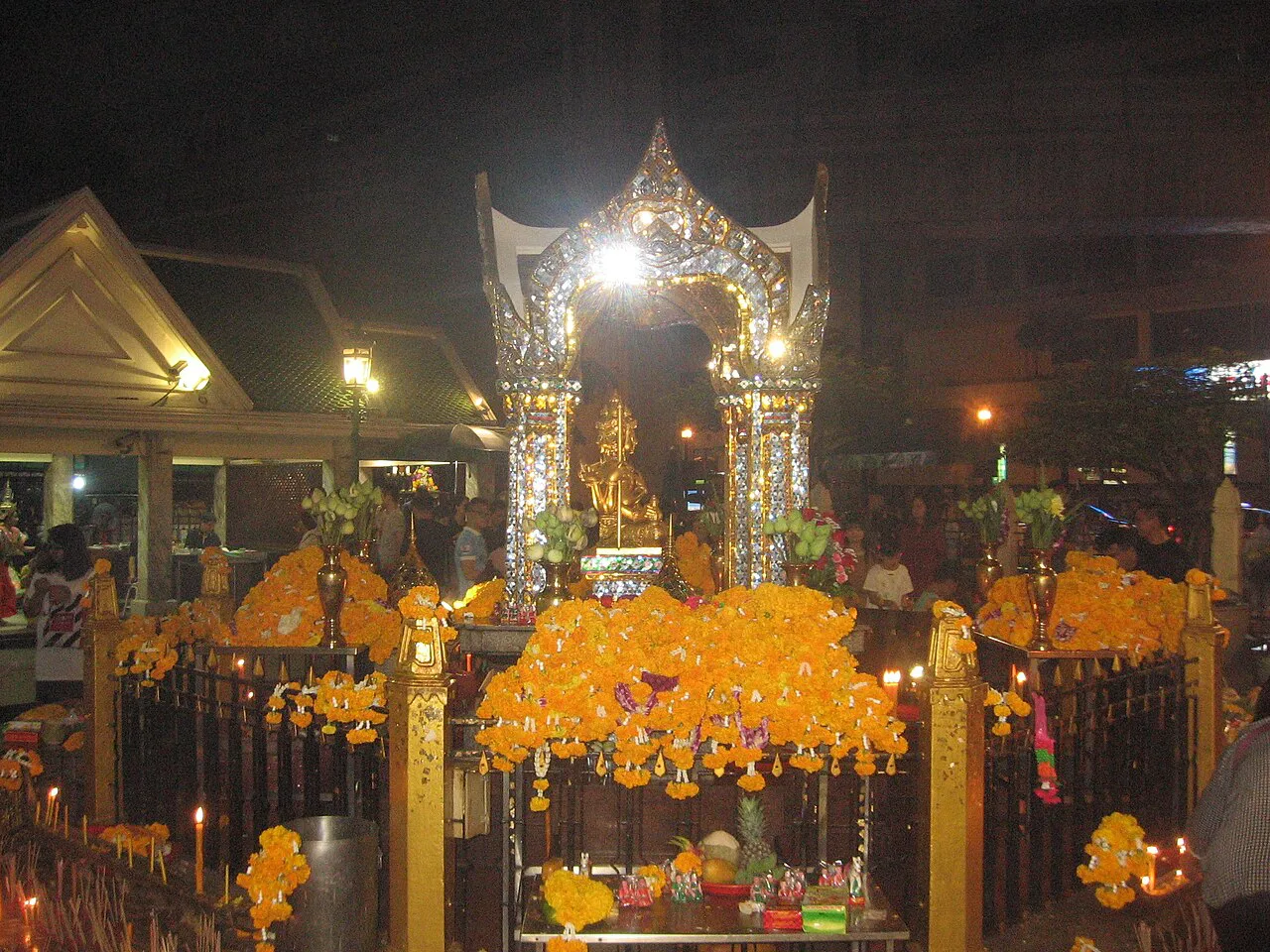
The gilded four-faced figure at the center of the shrine depicts Phra Phrom, the Hindu creator god Brahma, which is why Thais more often call the site the Thao Maha Brahma shrine. Many visitors, and plenty of maps and tour touts, call it the Four-Faced Buddha, but the statue is a Hindu deity that has been absorbed into Thai Buddhist devotional practice rather than a Buddha image. That distinction changes how you should behave: this is an active place of worship, not a photo set, and the people circling the statue are usually making vows or giving thanks rather than sightseeing.
The shrine was inaugurated in 1956 alongside the Erawan Hotel after construction setbacks were blamed on inauspicious timing, and it has been a fixture of the intersection ever since. It survived a 2006 hammer attack on the statue and the 2015 bombing at the site, and was restored and reopened after each. Knowing that history explains why the shrine reads as both a working place of devotion and a civic symbol for Bangkokians.

Where it sits at Ratchaprasong
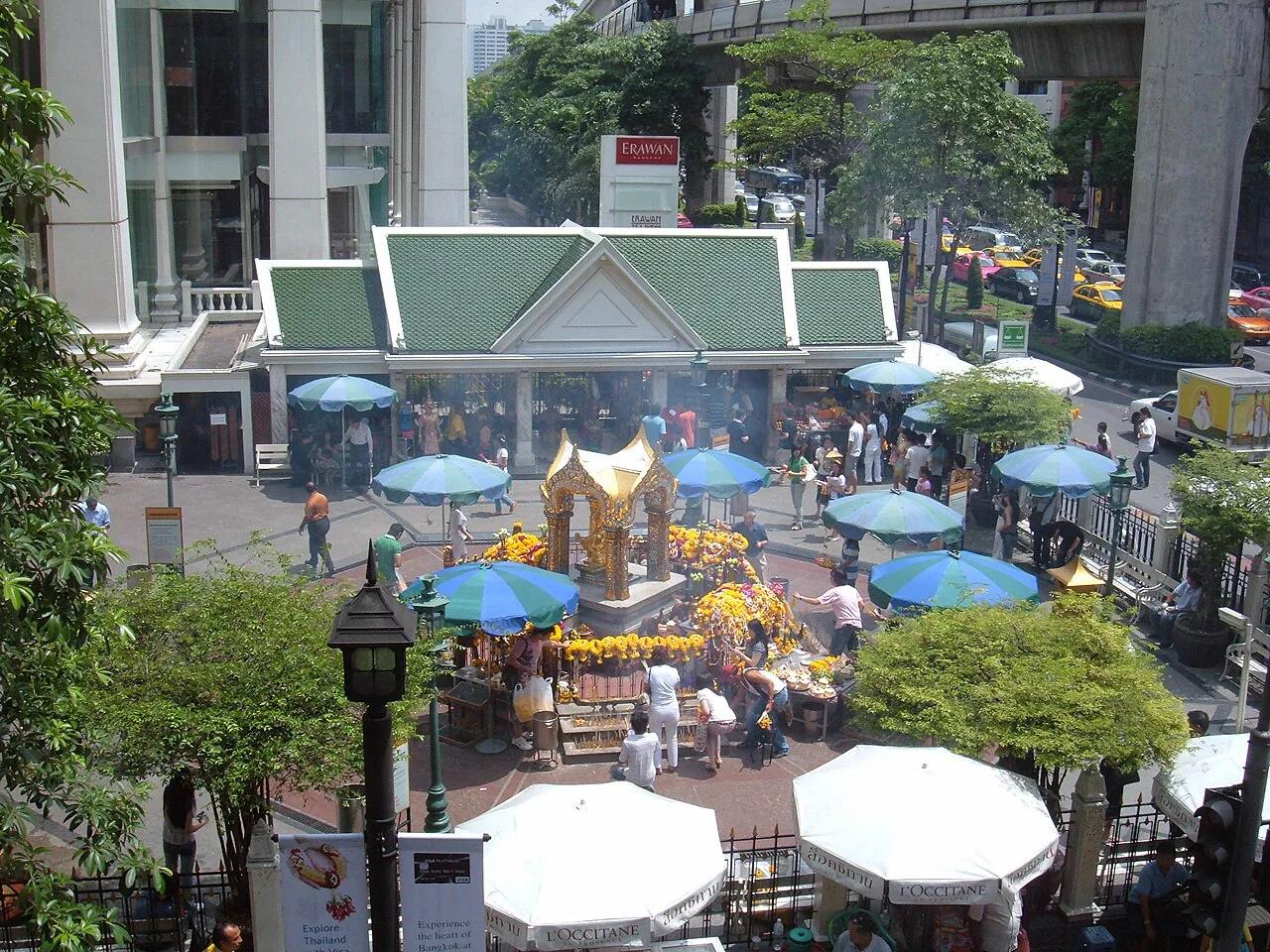
You will find the shrine at the Ratchaprasong intersection on Phloen Chit Road, hemmed in by Gaysorn, CentralWorld and Amarin Plaza. It is a corner plot rather than a walled compound, so there is no gate fee or ticket queue; you simply walk up to the railing around the statue. For orientation, search Thao Maha Brahma or Erawan Shrine in your maps app and you will land on the correct side of the junction.
Because it sits inside a shopping district, the shrine is easy to fold into a half-day rather than treating as a destination of its own. If you want a contrast piece nearby, the Jim Thompson house Bangkok is a short Skytrain hop away toward the National Stadium side of the network. Otherwise, keep the stop tight and continue on foot through the malls.

Getting there by Skytrain and Skywalk
The simplest approach is BTS to Chit Lom, then follow the elevated Skywalk toward the Ratchaprasong junction until the shrine appears below the walkway; Siam station is also within walking distance if you are coming from the other direction. The whole transfer is level, shaded and step-free, which makes it the obvious choice in the heat or during rain. If you are staying anywhere on the Silom or Sukhumvit BTS lines, you can reach the shrine without touching a taxi.
Taxis and ride-hailing apps will drop you at the mall frontages, but the intersection is one of the most congested in the city, so the Skytrain usually beats road transport during daylight hours. Carry small notes and coins for offerings and any dance offering you commission, since vendors and counters work faster with exact change.
Opening hours and admission
The shrine operates daily from 6:00 AM to 10:00 PM according to the visitor information published for it, and entry is free, with donations appreciated rather than required. Treat those hours as a guideline and confirm the current schedule on-site or through the Tourism Authority of Thailand before you build a tight plan around them. There is no advance booking; you simply arrive.
Offerings, flowers and any dance ceremony are paid for on-site, and published visitor guidance does not list fixed prices for them. Budget by checking the price boards at the official stalls when you arrive rather than relying on secondhand figures, and keep the transaction in cash.
What you actually see
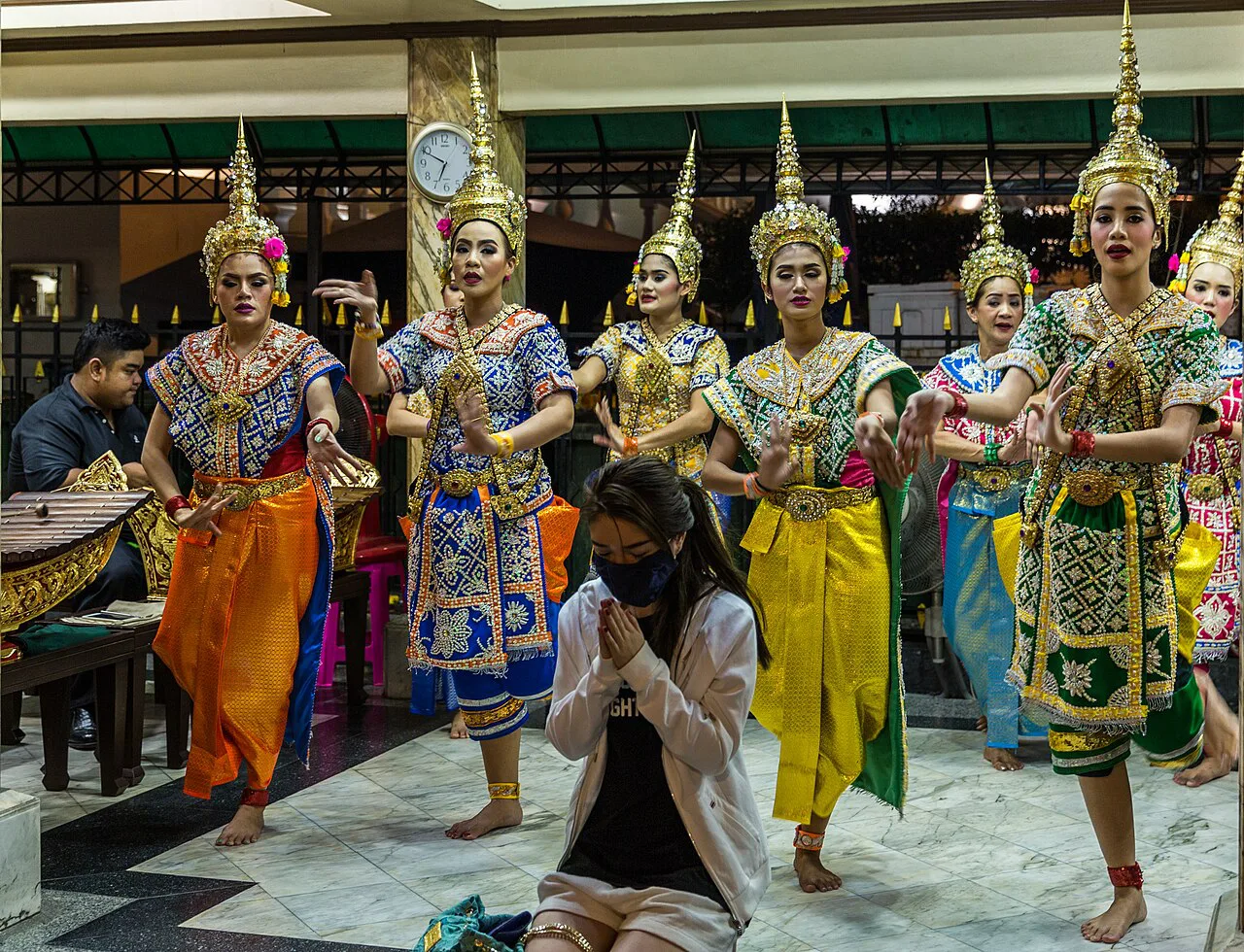
The statue itself is small and gilded, seated under a canopy and surrounded by a constant rotation of worshippers, garlands and incense smoke. Vendors around the railing sell lotus buds, candles, incense and small wooden elephants, and somewhere near the edge of the plot a classical Thai dance troupe performs for people who have come to give thanks. It is a busy, sensory place, not a quiet monument, so expect crowds, noise and the smell of burning incense at almost any hour.
Many visitors are surprised by how small the shrine is relative to its reputation, so plan to stand and observe rather than tour it room by room. The rituals happening around the statue are the main thing to watch, and the short loop of a prayer visit is what makes the stop manageable inside a shopping day.
How to pray, step by step
Start by buying an offering set, ideally from the official stalls inside the shrine grounds, which typically bundles lotus flowers, clean water, incense sticks and candles as symbols of earth, water, air and fire. Then walk clockwise around the statue, pausing to make a wish or give thanks before each of the four faces. Keep the sequence unhurried and let worshippers in front of you finish before you step up.
Different sources assign different meanings to the four faces, with common readings covering career, relationships, wealth and health, so treat those as devotional interpretation rather than doctrine. What matters practically is that you move around the statue in one direction, avoid cutting in front of people mid-prayer, and keep your voice down. When you finish, step back from the railing rather than lingering in the narrow walking lane.
Giving thanks with a dance offering
If a wish has been answered, the customary thank-you is to commission a short classical Thai dance performance at the shrine, arranged on-site with the troupe that works there. In practice you approach the dance counter, state your wish and pay for a performance, and the dancers perform in front of the statue while you stand nearby. Confirm the current fee at the counter rather than relying on any figure you have read elsewhere, and bring cash.
If you simply want to watch rather than commission, stand to the side of the dance area so that you are not blocking the path of worshippers. Performances are most frequent in the late afternoon and evening, and you will usually see one within a short wait.
Dress and camera etiquette
There is no enforced dress code, but visitors are expected to dress modestly, covering shoulders and knees as you would at any active religious site. Remove hats while you pray, keep quiet near the railing and avoid turning the space into a photo shoot. Behavior matters more than clothing here, and a calm manner will do more for you than any specific outfit.
Photographs of the shrine and the statue are welcome, but do not point your camera at worshippers while they are mid-prayer or filming their offering. Keep to the edges and wait for a gap rather than pushing into the circle. If someone signals you to stop, step back and put the phone down.
Morning calm or evening ritual?
Early morning is the quietest window, with fewer tour groups and easier access to the railing, which suits you if you want to observe without being pushed along. The trade-off is that the dance troupe is less active, so you get calm rather than spectacle. Aim to arrive within the first hour or two of the day if quiet is the priority.
Late afternoon and evening bring the full ritual atmosphere, with more worshippers, more incense and the best chance of seeing a dance offering. The cost is elbow room and a longer wait to reach the railing. Decide which of those two experiences you actually want, then plan your visit around it rather than trying to get both.
How long to allow
Twenty to forty minutes covers the essentials for most visitors: buying an offering, one circuit of the statue, a few minutes watching, and a look at the dance area. If you want to photograph carefully or spend time reading the shrine's history, stretch it to an hour. Because entry is free and there is no queue in the usual sense, you can fit the stop into a gap between errands rather than dedicating a morning to it.
Pair the stop with the shopping district, since you exit directly into the malls and can carry on in air-conditioned comfort. If you want a deeper cultural follow-up, the national museum Bangkok in the Phra Nakhon district covers Thai religious art and history in far more depth and makes a natural next stop.
Practical points before you go
Buy your offering from the official stalls rather than from vendors who approach you on the street, and carry small notes so that you can commission a dance or leave a donation without hunting for change. If a stranger offers to guide your prayer sequence for a fee, decline and follow the circuit yourself. The shrine is small enough to manage without a paid tour.
Expect a tight, crowded space around the statue, and accept that you are sharing it with people for whom this is a serious religious errand. If the crowd is too dense, step back toward the railing edge and wait for a thinner moment. And if you have more day left for the wider city, Bangkok Attractions: 6 Visitor Guides pairs well with this stop.
Nearby options within walking distance
Beyond the malls, the Bangkok art and culture centre is a short BTS ride toward Siam and offers a free, air-conditioned break from the heat. If the weather is mild, continue on to Lumphini Park for open space and shade after the crowd of the shrine. Stick to one of these, since the point here is a compact stop rather than a full sightseeing day.
If you prefer to keep moving through culture rather than crowds, the Pak Khlong Talat flower market down on Chak Phet Road is a good opening stop if you want all of this in one itinerary.
Morning calm or evening ritual: pick your slot
Decide first what the shrine is for in your day: a quiet, brief stop or a full immersive ritual. If it is the former, arrive early, follow one clockwise circuit, watch for a few minutes and move on before the crowd thickens. If it is the latter, come in the late afternoon, bring small change and allow the extra time to watch or commission a dance.
Whatever you choose, treat the shrine as a working place of devotion. Confirm the hours before you set off, dress with shoulders and knees covered, keep your camera pointed away from people mid-prayer, and you will leave with an honest look at how Bangkok prays in the middle of its busiest shopping district.