
Jim Thompson House, Bangkok: A Practical Guide to the Teak House Museum
Jim Thompson House is worth roughly two hours of a Bangkok afternoon, and you should plan around tour departures rather than simply showing up. The museum is a group of traditional teak houses reassembled beside a tropical garden in Pathumwan, a short walk from BTS National Stadium and a block from the Siam shopping district. This guide covers where it sits, how to reach it by train or canal boat, what the guided tour shows, and how to confirm tickets and closing times on the day.
It is not a silk factory and not a large museum: it is one Man's former home, filled with the Southeast Asian art he collected and framed by the story of Thai silk. Treat it as a quiet, guided stop in a busy shopping area rather than a half-day excursion.
What the Jim Thompson House Museum actually is
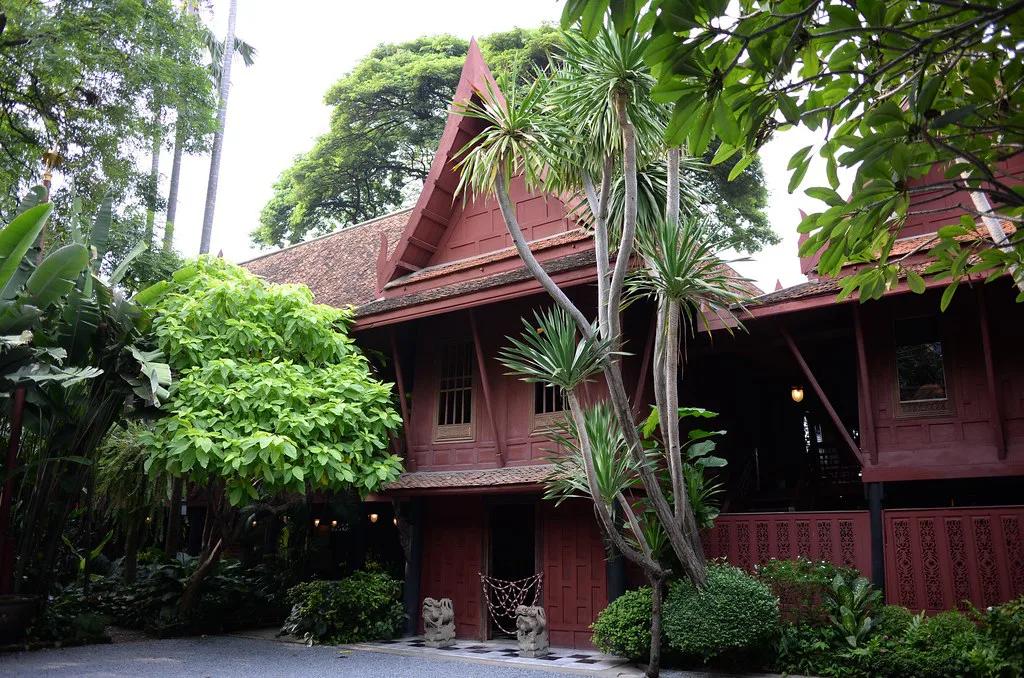
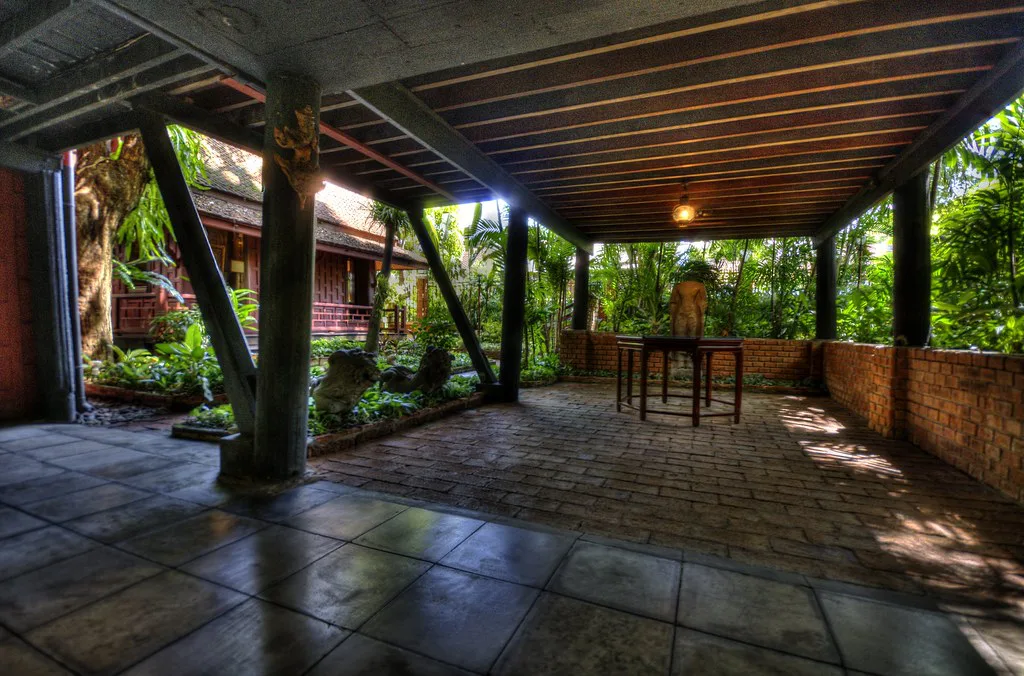
The property is a residence, not an industrial site. Jim Thompson, an American who helped revive Thai silk as an export fabric, bought several old Thai houses, had them taken down and rebuilt on this plot between 1958 and 1959, raised on teak pillars a full floor above the ground. The house sits across the canal from Ban Krua, the Cham weaving village that produced his silk.
Inside, the collection is the point: Buddha images in Dvaravadi, Lopburi and Ayutthaya styles, Burmese nat figures, Chinese blue-and-white and benjarong porcelain, and old Thai paintings, displayed much as Thompson arranged them. Two former servant buildings now serve as additional exhibition space. If you expect looms and dye vats you will be disappointed; if you want architecture, art and a biography in one stop, this delivers.
Where it sits: Soi Kasemsan 2 off Rama I Road
The address is 6 Soi Kasemsan 2, Rama I Road, Wang Mai, Pathumwan, on the lane opposite the National Stadium. The entrance is a narrow soi off a major road, so the practical landmark is the stadium and the Bangkok Art and Culture Centre across the intersection rather than a big sign.
Because it backs onto the Siam retail area, the museum makes an easy pairing with a shopping afternoon or a rain shelter when a downpour hits. It is also within walking distance of the Bangkok Art and Culture Centre (BACC), which is useful as a visual marker when you come out of the station and as a free stop before or after your slot.
How to get there by BTS, canal boat, bus or taxi
The simplest approach is the BTS Skytrain to National Stadium station, Exit 1, then a walk of about five minutes down Soi Kasemsan 2. Walking from Siam station is also possible, but the National Stadium exit puts you on the correct side of Rama I Road with the least road crossing.
Klong Saen Saep boats stop at Hua Chang Pier, roughly a three-minute walk from the museum, which is a genuinely useful option if you are coming from the Pratunam or Ramkhamhaeng side and want to avoid road traffic. Fares are collected on board and vary by distance, so carry small notes.
City buses 15, 47 and 204 pass nearby, but routes and stop locations change, so confirm with a current map on the day. A taxi or ride-hailing car is the easiest door-to-door choice outside rush hour; parking at the site is limited, and Rama I Road jams badly in the late afternoon.
Tickets and opening hours: confirm before you go
Published figures disagree. One official-host page lists the museum as open daily with last entry mid-afternoon and quotes an adult rate, a reduced youth rate and free entry for young children, while a hotel guide and a booking platform give different prices and different closing times. Because the museum's own information is the only version that should govern your plan, check its official website before you travel and treat any third-party figure as indicative.
The same applies to last entry: arriving with an hour to spare may be too late if the final tour has already gone. Build your day so the museum comes first and the shopping second, and confirm the day's tour schedule when you buy your ticket.
How the visit works: guided tours, shoes off, modest dress
You do not wander the house alone. Entry is by scheduled guided tour, offered in Thai and English, and the interior is only seen with a guide, which means a short wait is normal while the previous group finishes. The garden and courtyard you can walk at your own pace before or after.
Dress respectfully: shoulders and knees covered is the safe standard when Buddhist sculpture is in the room. Shoes come off at the raised teak threshold, floors get slick after rain, and artifacts should not be touched. Bags and tripods may be restricted, so ask at the desk rather than assuming.
What to see inside the six teak structures
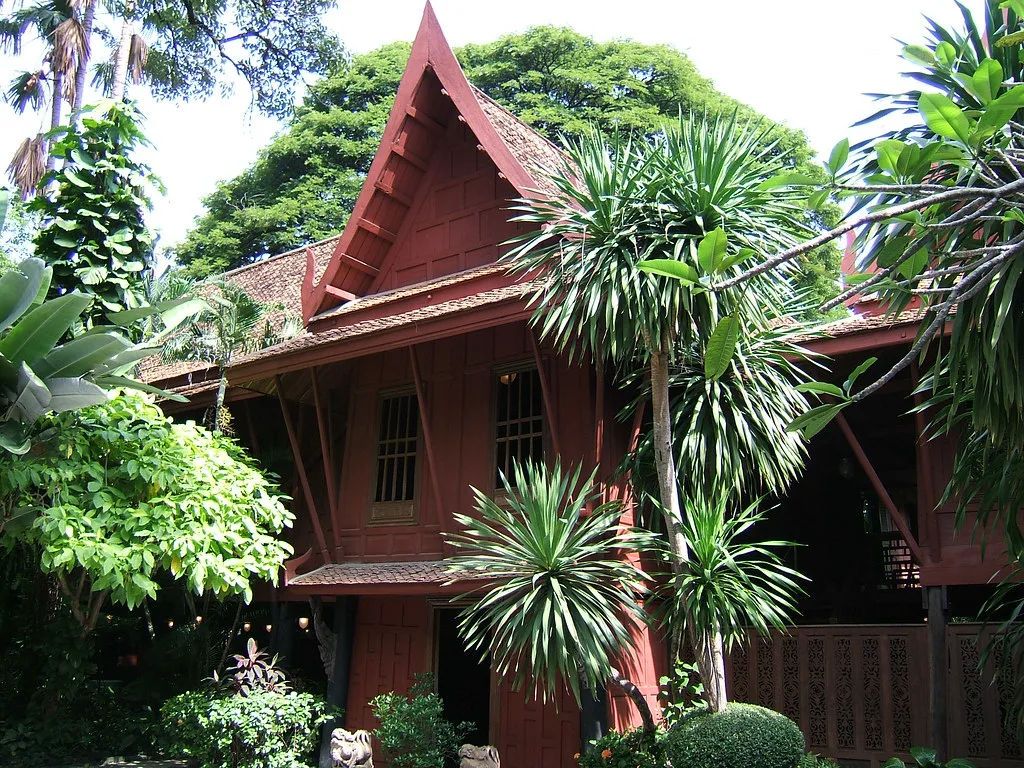
The buildings themselves are the first exhibit: six traditional Thai houses, some brought down from the Ayutthaya region, including a weaver's house from around 1800, reassembled on teak pillars with connecting walkways. Look at the roof lines, the raised floor and the open-air design that keeps the interior cool before you look at anything in a case.
Inside, the highlights are the standing and seated Buddha images from several schools, a head of Surya, the Burmese spirit figures given to Thompson on a trip to Burma, and the porcelain displays in the former pantry and servants' quarters. The silk story runs through the house: samples, photographs of Thompson with his weavers, and the export trade he built. Thompson vanished in Malaysia in 1967 and the case was never solved, but that fact is handled briefly rather than turned into a forensic exhibit.
The garden: Thompson's jungle
Thompson called the densely planted grounds a jungle, and the lofty palms, golden bamboo and creepers still create that effect. The planting broadly follows what was there in his lifetime, now kept in check by professional gardeners, which gives you shade and a genuine pause between the lane outside and the house.
Allow fifteen to twenty minutes for the paths and the pond at the rear, and more if you want photographs. Give your camera to the courtyard staircase and the canal-side angles, but check signage on where photography is permitted inside the house.
How much time to allow end to end
Budget about ninety minutes to two hours: a wait for the next tour, roughly forty-five minutes inside with the guide, then the garden and the shop. Add time if you arrive at a busy weekend slot or want to read every label. The on-site shop is the practical stop for silk souvenirs, though you should compare quality and price with the Jim Thompson stores elsewhere in the city rather than assuming the museum shop is cheapest.
Best time of day and season
Late morning to mid-afternoon gives the best natural light on the teak house and garden, and the museum's own visitor tips point to that window. Bangkok's cool, dry months from November to February are the most comfortable for the outdoor parts, while the hot season and rainy afternoons make the shaded interior the better half of the visit.
Crowds thin in the morning and on weekdays. Because the house is small and tour-based, a single large group can change the feel of your slot, so an early arrival buys you a quieter first tour more reliably than any other tactic.
What is nearby if you have the afternoon
The Siam and National Stadium area gives you malls, the art and culture centre and easy BTS connections, so the museum slots into a shopping day without a taxi. For a different kind of Bangkok stop, the Erawan shrine Bangkok at the Ratchaprasong intersection, home to the Thao Maha Brahma image, is a short train ride or a twenty-minute walk away and takes only minutes to see.
If your taste runs to national collections rather than a single house, the national museum Bangkok in the Phra Nakhon district near Sanam Luang is the bigger, older counterpart and needs half a day of its own. Closer to the museum, Lumphini Park offers shade and a lake within a couple of BTS stops, and Pak Khlong Talat, the flower market on Chak Phet Road, is a dawn or late-night stop rather than an afternoon one.
For a wider menu of stops across the city, our guide to things to do in Bangkok groups the sights by neighborhood so you can build a day around this one rather than zigzagging across town.
Practical gotchas before you set out
The lane entrance is easy to walk past, especially if you are watching traffic on Rama I Road; use the stadium and the art centre as your landmarks and turn into Soi Kasemsan 2 rather than looking for a large sign. The museum is a quiet stop in a shopping district, so arrive with that expectation and you will enjoy it more.
Check the museum's official website for current hours, ticket prices and any closure before you leave your hotel, and keep cash for the ticket desk in case card payment is unavailable. For the broader Bangkok picture, start with our Bangkok Attractions: 6 Visitor Guides and add this house as one timed stop in it.
Should you book the Jim Thompson House into your day?
Yes, if you want one compact, guided dose of Thai architecture, Southeast Asian art and modern Thai trade history without leaving central Bangkok. Skip it if you are after a working silk factory, a free-roam museum or a full-day sight, because it is none of those.
Plan around a tour departure, come in modest clothing, confirm hours and prices on the museum's official site the day before, and pair it with the art centre or the Siam malls rather than a long taxi ride across town.
Frequently Asked Questions
Is there a dress code for Jim Thompson's house?
Cover your shoulders and knees, since you will be viewing Buddhist sculpture, and be ready to remove your shoes at the raised teak floor. Floors can be slippery after rain, so wear shoes that are easy to take off and put back on.
Who was Jim Thompson?
An American entrepreneur and art collector who helped turn Thai silk into an internationally sold fabric in the mid-twentieth century. He built this house from reassembled traditional Thai buildings, filled it with Southeast Asian art, and disappeared in Malaysia in 1967 in a case that remains unsolved.
Can I walk around the Jim Thompson House without a guide?
The interior is seen on a scheduled guided tour in Thai or English; you cannot simply wander the rooms. The garden and courtyard are the parts you can enjoy at your own pace before or after the tour, so allow extra time for them.
How do I check the current ticket price and closing time?
Use the museum's official website, because published figures from third parties conflict on both price and last entry. Confirm the day's tour schedule at the ticket desk when you arrive, and plan the museum as your first stop rather than a late-afternoon one.