
National Museum Bangkok: A Practical Guide to Thailand's Front Palace Museum

The National Museum Bangkok is worth two to three hours of your Old Town time, and it is the right pick if you want Thai art and royal history in a quiet compound rather than another crowded temple. It occupies Wang Na, the former Front Palace, a walled group of throne halls, pavilions and courtyards just north of Sanam Luang in Phra Nakhon. This guide routes the visit, explains how to reach the gate on Na Phra That Road, and tells you which rules are enforced and where to confirm hours and admission.
What the National Museum Bangkok actually is
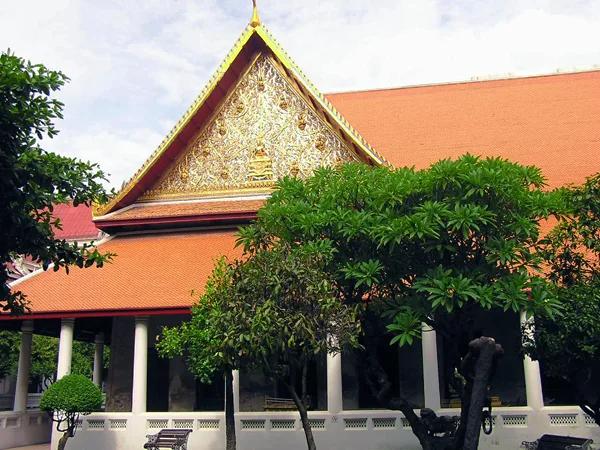
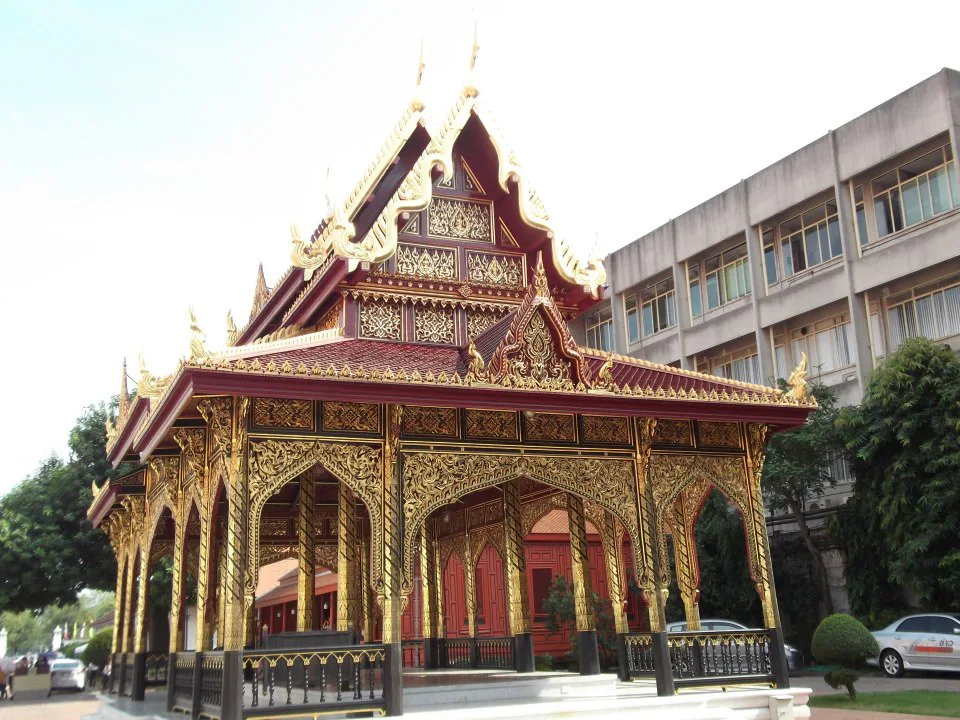
The museum opened in 1874, when King Rama V put his father King Rama IV's royal collections on public display — making it Thailand's first public museum. The collection later moved to Wang Na, the former Front Palace that had housed the second-highest official in the Siamese court before the position was abolished in 1887, and the site took the name Bangkok National Museum in 1934. Today it still reads as a palace rather than a gallery block: you walk between separate buildings across open ground, so the carved gables, tiled roofs and shaded courtyards are part of the exhibit. Budget your attention for both, because travelers who race between display cases miss what makes this site different from a conventional museum.
The collection tracks Thai art and history across many centuries, from early stone tools and pottery through Dvaravati and Khmer sculpture to Rattanakosin royal objects. Expect Buddha images, ceramics, textiles, lacquerware, weapons, musical instruments and ceremonial pieces spread over several halls rather than one chronological corridor. The official museum site is the place to check what is on display and whether any hall is closed during your dates.

Where it sits in Old Town and how to reach it
The museum address is Na Phra That Road in Phra Nakhon, on the same side of Sanam Luang as the Grand Palace, roughly a three-minute walk from the Thammasat University bus stop on routes 32, 33, 52, 82 and 503. Express boats to Chang Pier put you about 15 minutes on foot from the entrance, a pleasant route past the riverside and the university. Taxis and tuk-tuks set down at the main gate; agree the fare or insist on the meter before you get in.
By rail, MRT Sanam Chai is the useful station, with a walk of roughly ten to fifteen minutes depending on the exit and the heat. If you are stringing together several Old Town sights, treat the museum as a morning block and walk to the Grand Palace afterward rather than doubling back for transport. The wider Bangkok Attractions: 6 Visitor Guides collection helps you slot this stop into a fuller day.

What to see inside
Start with the Gallery of Thai History, the building closest to the entrance, because it gives you the sequence for everything else. From there, the decorative arts and ethnological collections cover craftsmanship and regional daily life, while the regalia and ceremony halls hold the goldwork, palanquins and funeral chariots that most visitors remember. Pick three or four buildings before you start walking; the complex is large and most people see only part of it in one visit.
Allow real time for the ceramics, mother-of-pearl inlay, textiles and wood carving, which reward close looking more than a quick pass. Displays are labeled in Thai and English but unevenly, so a paper map from the ticket desk is worth carrying. If sculpture is your priority, plan the route around those halls first and let the smaller rooms fill whatever time remains.
The Buddhaisawan Chapel and Phra Buddha Sihing
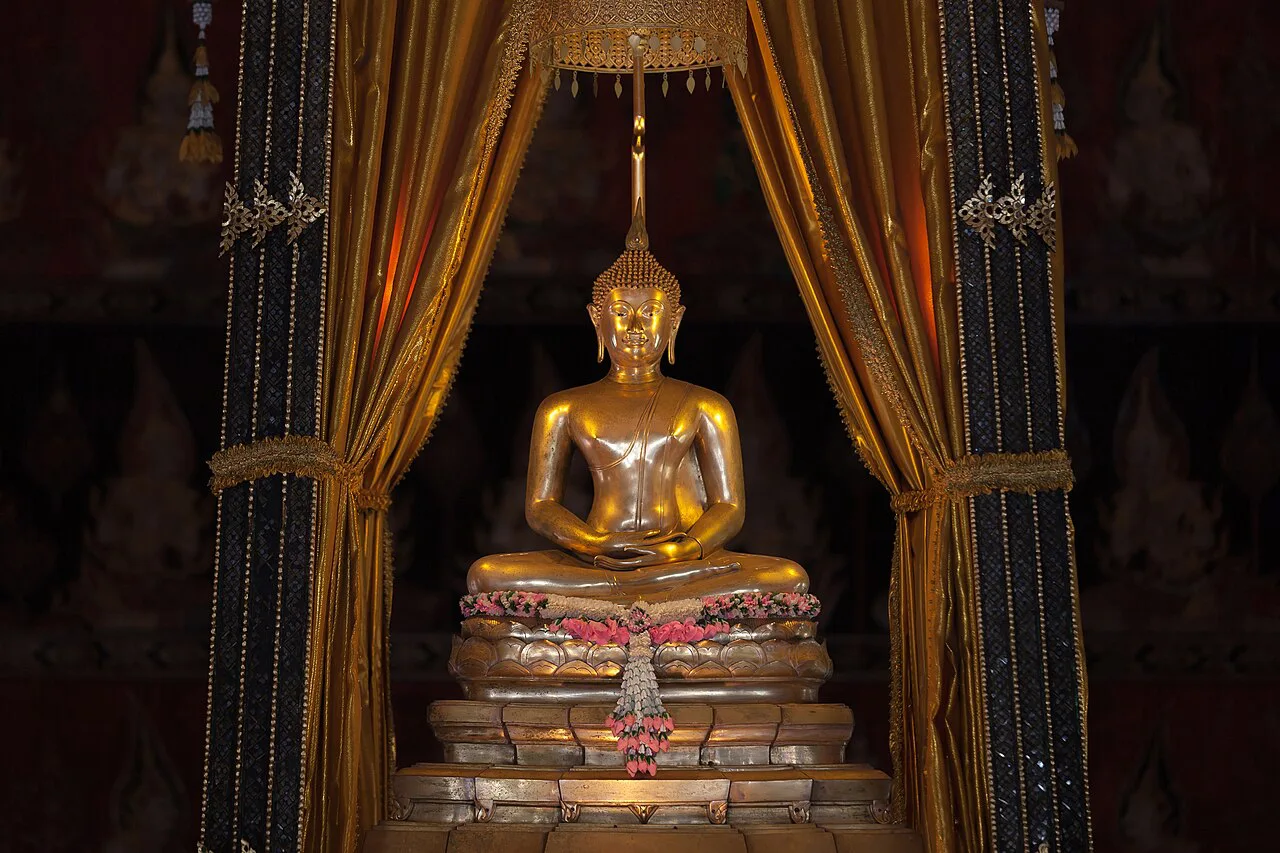
The Buddhaisawan Chapel is the room to slow down in: it enshrines the Phra Buddha Sihing and is wrapped in late eighteenth-century murals that are as important as the image itself. It functions as a sacred space, not a display case, so shoes come off at the threshold and voices drop. Photography rules inside are stricter than in the galleries, so watch for signage rather than assuming your camera is welcome.
Opening hours and tickets: what to confirm
Third-party guides disagree on the details, with one listing 8:30 to 16:00 and another 9:00 to 16:00, and at least one naming Monday and Tuesday as closed days. Because such listings go stale, confirm the current schedule and any holiday closures on the official Fine Arts Department page before you build a day around the museum. Do not rely on a live open or closed status shown by a travel app.
Foreign visitors pay a modest admission fee, but published figures conflict, so treat any specific number you see online as unverified and check the official page for the current rate and any reduced categories. Tickets are bought at the entrance in normal circumstances, and prepaid online entry is not clearly documented. If you want a guided introduction, free English-language walks are sometimes run by museum volunteers; confirm days and times on site or through the museum rather than trusting an old blog post.
Dress code, bag checks and photography
Dress as you would for a temple: shoulders and knees covered, no sleeveless tops or shorts, and footwear you can slip off quickly for the sacred buildings. Large bags and backpacks are typically checked at the entrance, so leave valuables in a hotel safe and carry only what you need. There are no documented lockers, which is another reason to travel light.
Photography is generally allowed in the galleries, but flash is restricted and tripods and selfie sticks are discouraged. Expect to be asked to stop if you block a doorway or use a flash near sensitive pieces. For a quieter, cooler alternative on a hot afternoon, the Bangkok Art and Culture Centre (BACC) near the Siam interchange is a different kind of stop altogether.
How to navigate a maze-like complex
This is not a single hall with a fixed route: it is a compound of separate buildings linked by paths and lawns, and signage is limited enough that people get turned around. Take the paper map from the ticket desk, mark three or four buildings you care about, and visit those first while your energy is high. Galleries and courtyards are mixed and shade is patchy, so carry water and plan short breaks between buildings.
How long to allow
A two- to three-hour core route covers the Gallery of Thai History, the decorative arts halls and the Buddhaisawan Chapel at a reasonable pace. Readers who stop at every label should plan a half day and accept they may still skip a hall or two. If your Old Town schedule is tight, decide before you enter whether this or the Grand Palace gets your remaining hours, because doing both properly in one day is hard.
When to go
Arrive at opening if you want the courtyards before the heat builds and the halls before tour groups gather. Mid-afternoon suits a shorter visit, since you will have less daylight and energy for the outdoor walk between buildings. In the rainy season, the galleries themselves are the shelter, but the crossings between them are not, so keep a light rain layer handy in the wet months.
Who should skip it
Skip the museum if you have a single Old Town day and have not yet seen the Grand Palace, or if your group includes young children who will not tolerate hushed galleries after a morning of temples. It is also the wrong call for anyone expecting one big air-conditioned blockbuster hall; the appeal here is the palace setting and the breadth of the collection. Travelers who want a single guaranteed air-conditioned room with rotating contemporary shows are better served elsewhere, and those who collect Buddhist shrines should put the Erawan shrine Bangkok on a separate Skytrain-based outing.
Nearby after your visit
The Grand Palace and Wat Phra Kaew are a short walk south, and Sanam Luang opens up in front of the museum for an easy breather between sights. Walk northeast toward the Thammasat University riverside for food, or continue to Pak Khlong Talat Bangkok, the flower market on Chak Phet Road, if you are heading toward the river in the late afternoon. For a different angle on the city, the Jim Thompson House, Bangkok sits across town and pairs well with a separate half day.
Should the National Museum get your Old Town hours?
Choose the National Museum Bangkok if you want a calm, uncrowded look at Thai art and royal architecture, and you can give it two to three hours. Choose the Grand Palace instead if this is your only day in Phra Nakhon and you have never seen it. Either way, confirm opening days and the current foreign-visitor fee on the official page the day before, and arrive with shoulders and knees covered.
Explore more Bangkok guides
Frequently Asked Questions
Do I need to book National Museum Bangkok tickets in advance?
Advance booking is not clearly documented, and visitors normally pay at the entrance. Check the official Fine Arts Department museum page for any current reservation requirement, especially around holidays, before you plan your day.
Is the National Museum Bangkok air-conditioned?
Cooling varies by building. Some galleries are enclosed and comfortable, while the courtyards and walkways between them are open to the heat and rain. Plan water, shade breaks and a slower pace rather than assuming one continuous climate-controlled hall.
Can I take photos inside the National Museum Bangkok?
Photography is generally allowed in the galleries, but flash is restricted and tripods and selfie sticks are discouraged. The Buddhaisawan Chapel has its own conventions as a sacred space, so follow the signage and staff instructions there.
What is the dress code for the National Museum Bangkok?
Cover shoulders and knees, skip sleeveless tops and shorts, and wear shoes you can remove easily before entering sacred buildings. Large bags are usually checked at the entrance, so carry only essentials and leave valuables at your hotel.