
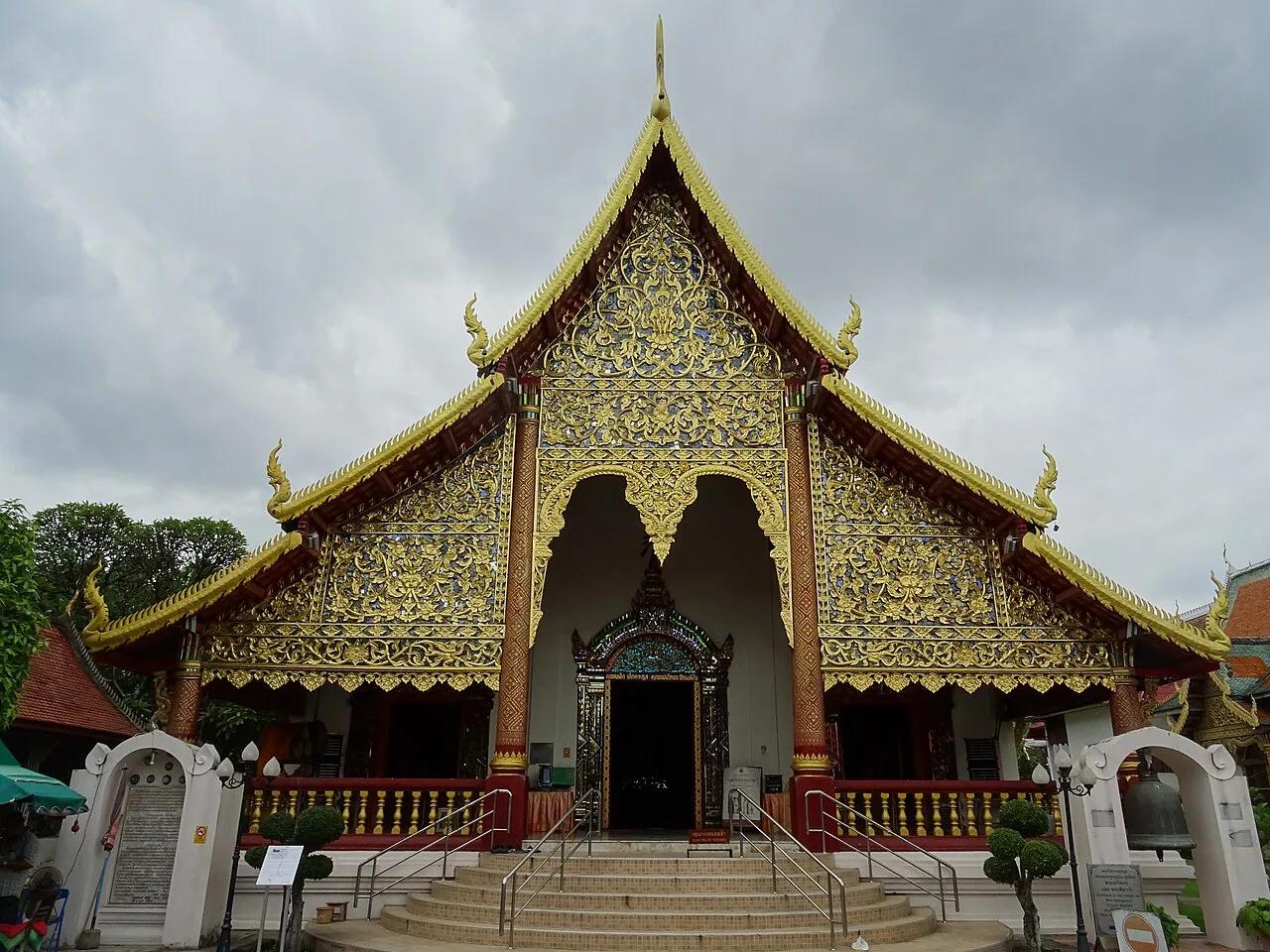
Wat Chiang Man: A Visitor's Guide to Chiang Mai's Oldest Temple

Wat Chiang Man is the oldest temple still standing in Chiang Mai, tucked into the Si Phum quarter in the northeast corner of the walled Old City. It is small, free to enter by most accounts, and takes under an hour, which makes it an easy first stop before the bigger temples. This guide covers exactly where it sits, the walking route from Chang Puak Gate, what to see inside, how long to allow, and how to check current hours and any fee before you go.
What Wat Chiang Man is and why it matters
Wat Chiang Man is generally described as Chiang Mai's oldest temple and its first royal temple. It was founded by King Mengrai, the ruler credited with laying out the city, though accounts differ on the year: some say 1297, others 1306, so treat any precise date as reported rather than settled. That gap is a useful reminder to read founding claims with a little caution.
What makes the temple worth a stop is not size but age and setting. It sits inside the old walls, holds two venerated Buddha images, and preserves a mix of architectural styles accumulated over centuries of restorations. It is a quiet, compact place rather than a grand monument, so go expecting a short, calm visit rather than a headline sight.

Where it is: Ratchapakhinai Road, northeast Old City
The temple address is on Ratchapakhinai Road in Tambon Si Phum, Mueang Chiang Mai District. It sits in the northeast corner of the walled Old City, in the block between Phra Pok Klao Road and Ratchaphakhinai Road. If you are staying anywhere inside the moat, it is within walking distance.
Think of the Old City as a square ringed by a moat and remnants of wall, with gates at the cardinal points. Wat Chiang Man is closest to the northern side, so it pairs naturally with anything else you plan in the northeast quadrant. Since the area is flat and compact, most visitors reach it on foot rather than by vehicle.

How to get there from Chang Puak Gate and the Old City
The simplest route is on foot. Enter the Old City through Chang Puak Gate on the north wall, turn left onto Ratchaphakhinai Road, and the temple entrance appears on your right after roughly 200 meters. Walking from most Old City guesthouses takes only a few minutes, and the route is straightforward enough to follow without a map.
If you are staying outside the moat, a songthaew or tuk-tuk can drop you near the gate or the temple road. Agree on the destination and the fare before you get in, since shared ride prices are negotiated rather than fixed and change with distance and demand. Ask your driver for Chang Puak Gate if the temple name is not understood.
Opening hours and entry: what to confirm before you go
Travel sources report the temple open daily from early morning to late afternoon, roughly 6am to 5pm, with free entry and donations welcome. Hours like these can shift, especially around festivals, and a small working temple may adjust access without notice. Confirm the day's hours at the entrance or through an official Chiang Mai tourism channel before making a special trip.
If a fee is ever charged, it will be posted at the site, and any collection goes toward upkeep rather than a ticketed attraction. Bring small notes in case a donation box is the only option. Because entry rules can change, treat any figure you read online as something to verify on arrival rather than a fixed price.
The central chedi and its ring of stone elephants
The chedi is the temple's oldest structure and the visual anchor of the complex. It is encircled by about 15 life-sized stone elephants that appear to shoulder the base of the stupa, a distinctive detail worth seeking out. Walk a full circle to see how the figures are set into the platform.
Stone inscriptions on the grounds are said to record restorations over roughly six centuries, which helps explain why the complex looks layered rather than uniform. Look for the differing materials and repair lines around the chedi base. The elephants are the most photographed element, so expect brief waits if others are posing beside them.
The two viharns and their Buddha images
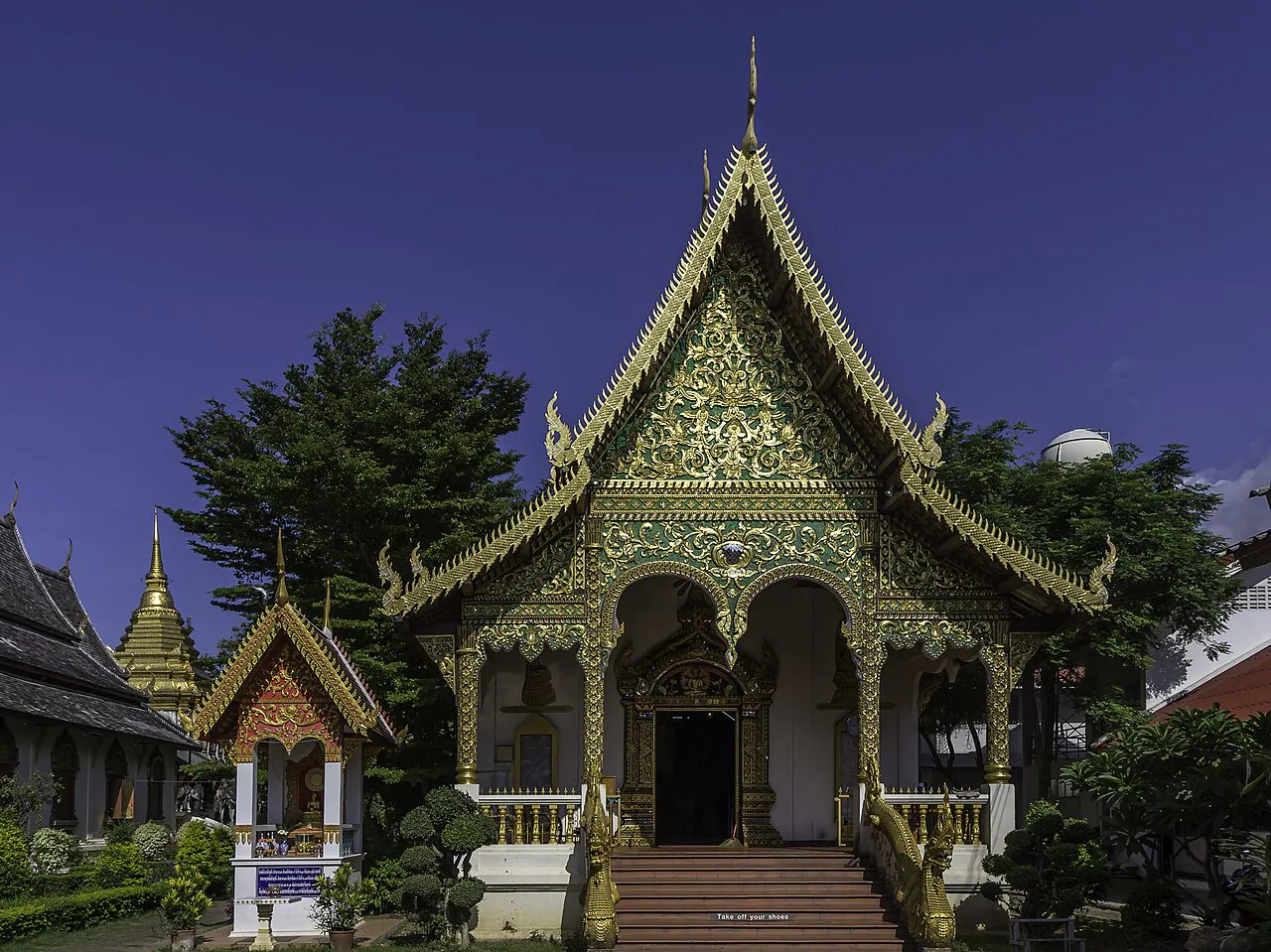
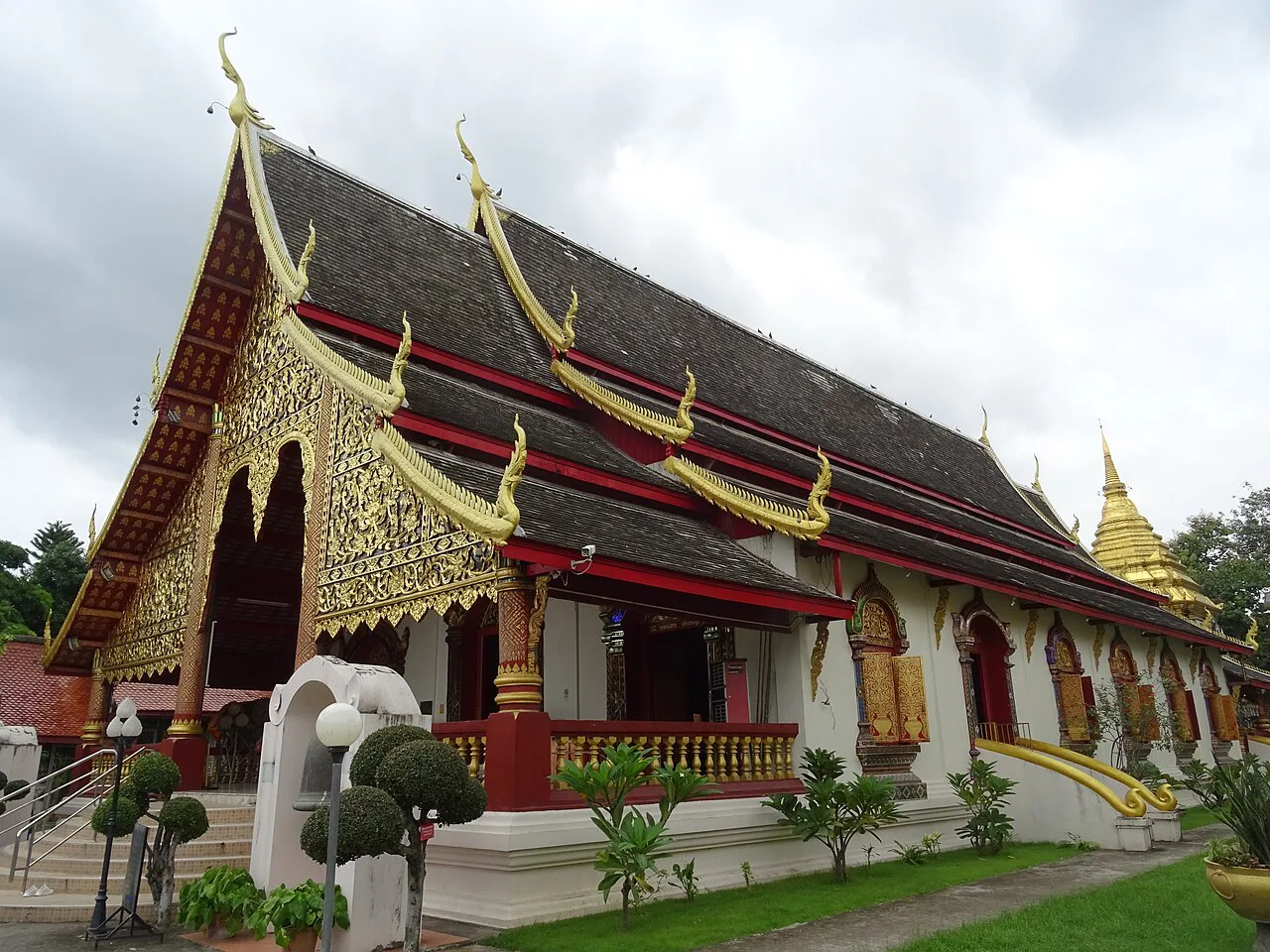
Two meditation halls, decorated in red and gold, hold the temple's most revered images, and you should know which is which before you look. The larger hall contains a standing Buddha holding an alms bowl, described as among the oldest Buddha images in Chiang Mai. Take your time here, since it is the focal point for worshippers.
The smaller, more famous image is the Phra Sae Tang Khamani, known as the Crystal Buddha, carved from clear quartz and only about 10 centimeters tall. Local tradition credits it with protective and healing powers and links it to legends far older than the temple itself; treat those stories as tradition, not history. It is small, so look closely rather than expecting a monumental figure.
The second revered piece is the Phra Sila, a bas-relief stone stele depicting a standing Buddha and attributed to Sri Lanka more than a thousand years ago. Local belief holds that it can bring rain, and it is reported to play a role in Songkran processions at the end of the dry season. Again, frame this as devotional tradition rather than documented fact.
Lanna and Sinhalese styles side by side
Because the temple was built and rebuilt across centuries, it layers Lanna and Sinhalese influences in a single small compound. You can see the effect in the roof lines, the chedi form, and the ornament around the halls. That mixture is what gives the site its character compared with temples built in a single campaign.
For context on how this fits Chiang Mai's wider story, the Chiang Mai national museum covers the Lanna Kingdom and its temple-building history nearby. It is a useful follow-up if the architecture here leaves you wanting the bigger picture.
How much time to allow and the pace of a visit
Budget 30 to 45 minutes. The compound is compact, with the chedi, two halls, and a small garden you can cover without rushing. Visitors often describe it as peaceful and relatively quiet even in peak season, though that varies with the hour and the day.
Go early if you want the coolest temperatures and the emptiest halls; late afternoon light on the chedi is the other good window. Skip the midday heat if you can, and leave buffer time rather than slotting it between two tightly scheduled stops. The garden benches make a good place to pause before moving on.
Etiquette and dress at a working temple
This is an active place of worship, so dress and behavior matter more than photo opportunities. Cover shoulders and knees, remove shoes before entering the halls, and keep your voice low around anyone praying. Step around worshippers rather than in front of them, and avoid pointing your feet toward Buddha images.
Specific rules can vary, so look for posted signs at the entrance and follow them over anything you read online. If you are unsure whether photography is allowed in a particular hall, ask or simply refrain. Modest, comfortable clothing that covers shoulders and knees will see you through most Chiang Mai temples.
Nearby temples to add on the same walk
Wat Chiang Man sits within easy walking distance of several major temples, so you can combine it with one or two others without transport. South of the Old City, Wat Chedi Luang and its neighbor Wat Phan Tao make a natural pair. Both are on or near Phra Pok Klao Road, which you can reach on foot from Wat Chiang Man.
West of the center, Wat Suan Dok on Suthep Road is known for its white chedis and its role as a center for meditation and study. It is a longer walk or a short ride from the Old City, so treat it as a separate stop. Wat Lok Moli, north of the old walls near the moat, is another modest temple worth pairing if you are already in the area.
If you want to plan a fuller temple circuit with times and distances, the Chiang Mai Attractions guides cover each site individually. Wat Buppharam near Tha Phae Gate is a handy extra if your walk takes you toward the east side of the old city.
Where to check hours, fees, and closures before setting out
Hours, any entry fee, and temporary closures are the details most likely to change, and no single source is guaranteed current. Check the temple gate signage on arrival and, before you travel, cross-reference a recent traveler report with an official Chiang Mai tourism source. If the two disagree, trust what is posted at the site.
Festival days, especially around Songkran, can affect access and crowd levels, so plan around them if you want a quiet visit. Build in a fallback temple nearby in case the gate is closed when you arrive. For wider options, browse things to do in Chiang Mai and slot Wat Chiang Man in among them.
Should Wat Chiang Man be on your Chiang Mai temple list?
Yes, if you want history without a long detour. Wat Chiang Man is free or nearly so, compact enough for half an hour, and holds the Crystal Buddha and the Phra Sila stele in a quiet corner of the Old City. Go early, dress modestly, and confirm hours at the gate before you commit.
Pair it with Wat Chedi Luang and Wat Phan Tao on a single walk south, then save Wat Suan Dok and Wat Lok Moli for another day. Treat the temple as one honest stop among several rather than a destination in itself, and it will reward you.
Frequently Asked Questions
Is Wat Chiang Man free to enter?
Travel sources report free entry with donations welcome, and no ticketed admission is described. Because entry arrangements can change, check the posted sign at the gate or a current official Chiang Mai tourism source before you rely on that.
What is the dress code at Wat Chiang Man?
Cover your shoulders and knees, remove your shoes before entering the halls, and keep quiet around worshippers. Look for posted rules at the entrance, since specific requirements can vary, and follow what is on site over anything you read online.
Why can't you take pictures of the Emerald Buddha?
That restriction applies to the Emerald Buddha at Bangkok's Grand Palace, not to Wat Chiang Man, so it is a different site. At Wat Chiang Man, follow any posted photography rules in the halls and ask if you are unsure.
How much time do I need at Wat Chiang Man?
Allow about 30 to 45 minutes to see the chedi, its stone elephants, and the two halls holding the Buddha images. It is a small, quiet compound, so most visitors finish comfortably within that window and move on to nearby temples.