
Wat Lok Moli: A Practical Guide to Chiang Mai's North Moat Temple

Treat Wat Lok Moli as a short, low-pressure stop on the north edge of Chiang Mai's old city rather than a headline sight. Plan roughly 20 to 30 minutes for the chedi, the wooden viharn front and the garden, and confirm hours and any entry charge locally the day you go. The sections below cover where it sits, which gate to aim for, and what to pair it with nearby.
The temple is sometimes spelled Wat Lok Molee, so both spellings will find it on maps and signs. It lies on the north side of the north moat, outside the walled square, which is the single most useful fact for planning. For the full set of temple and sight guides across the city, see Chiang Mai Attractions: 6 Visitor Guides.
What Wat Lok Moli is and the one thing that sets it apart
Wat Lok Moli is an active Buddhist temple with Lanna-era roots and a history tied to the Mengrai dynasty. One travel page credits its founding to King Kue Na, while another account begins the temple's documented story in the 16th century, so treat the exact founding date as contested and read the on-site displays for the version the temple presents.
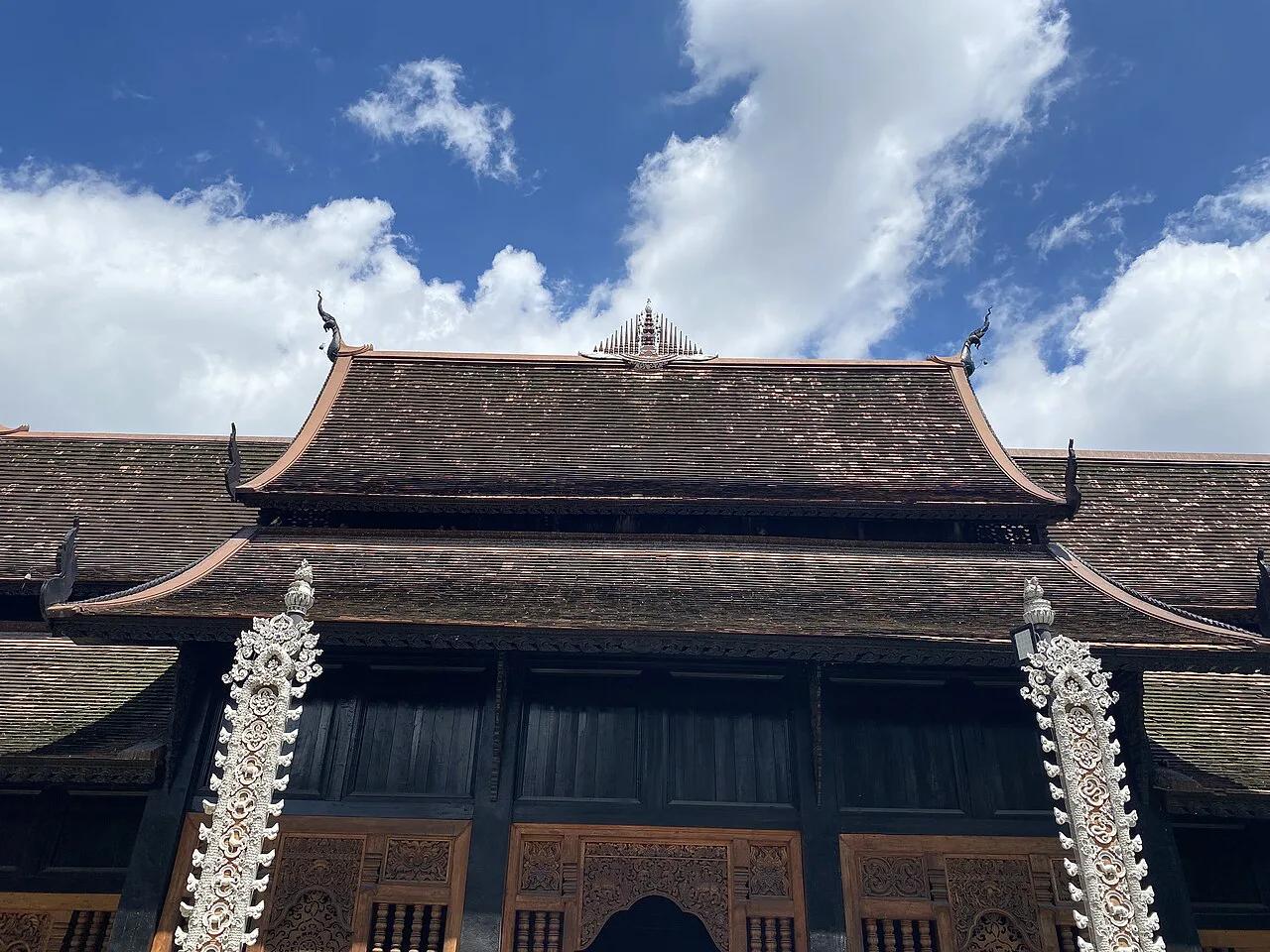
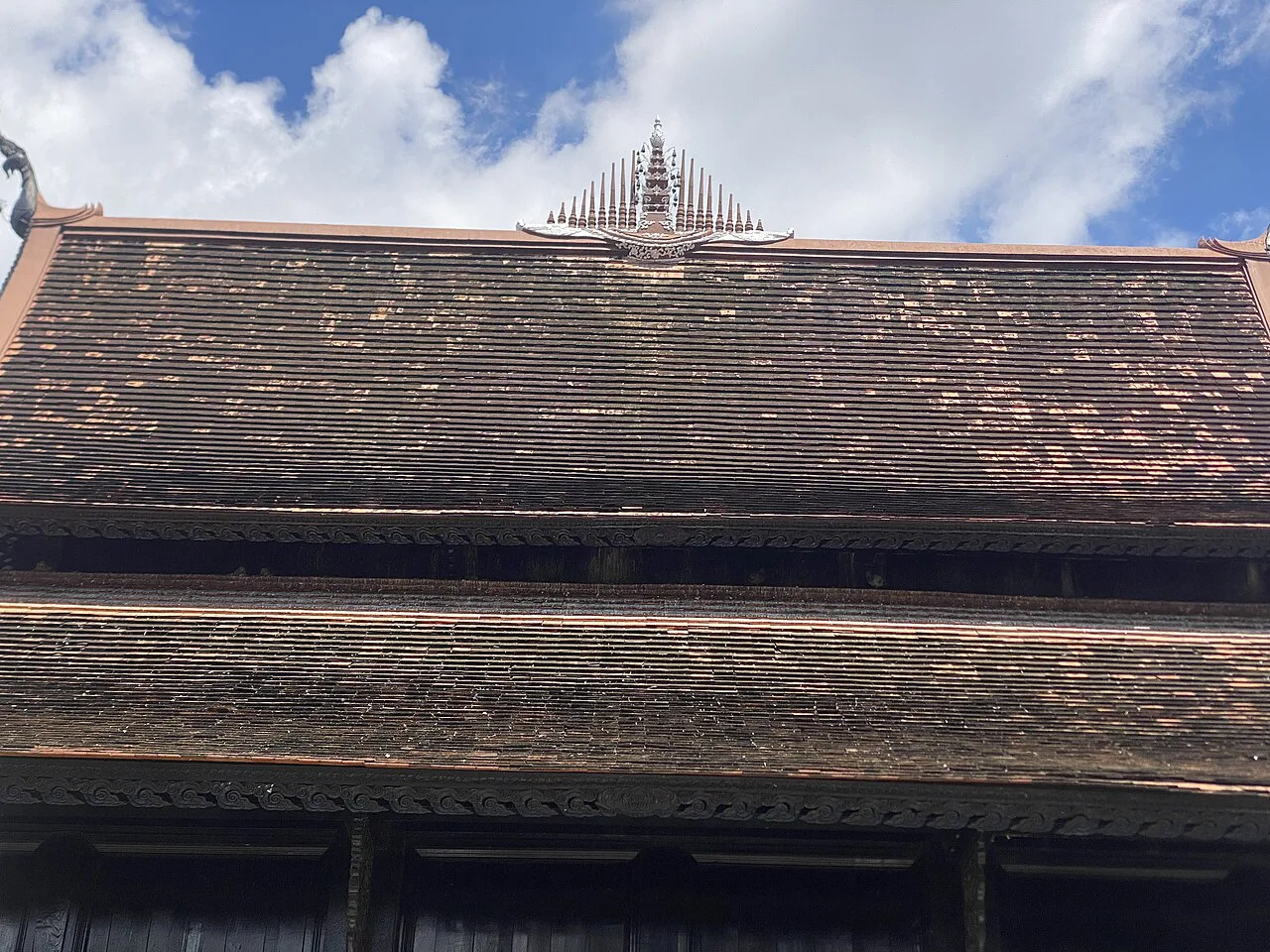
The architectural quirk that justifies the detour is orientation: the structures are arranged along a north–south axis, whereas most Buddhist monuments of this kind face east toward the sunrise. You also get a wooden viharn front carrying carvings that mix Hindu and Buddhist motifs, plus naga staircases flanking the entrance. If you have seen a lot of gold chedis already, this combination is what makes the stop feel different.

Where it is: north side of the north moat
You will find the temple on the north side of the north moat, outside the walled square and roughly 400 meters west of Chang Phuak Gate, which is the old city's north gate. That puts it outside the walled square, so it does not belong to the dense temple cluster inside the moat. Use the gate as your mental anchor rather than an old-city soi number.
How to get there: on foot, by tuk-tuk or by rideshare
On foot, walk out through or past Chang Phuak Gate and continue west along the north moat for about 400 meters until you reach the temple wall, allowing extra time to cross the moat road. From inside the old city this is the shortest and most predictable route.
By tuk-tuk or rideshare app, give the driver the Thai name วัดโลกโมฬี as well as the English spelling and name the gate as the reference point, because drivers know the gate better than the temple. Fares vary by app, distance and time of day, and no reliable published fare exists, so agree a price before you get in a tuk-tuk or check the app quote first. Do not count on a specific amount in baht.
What to see inside the compound
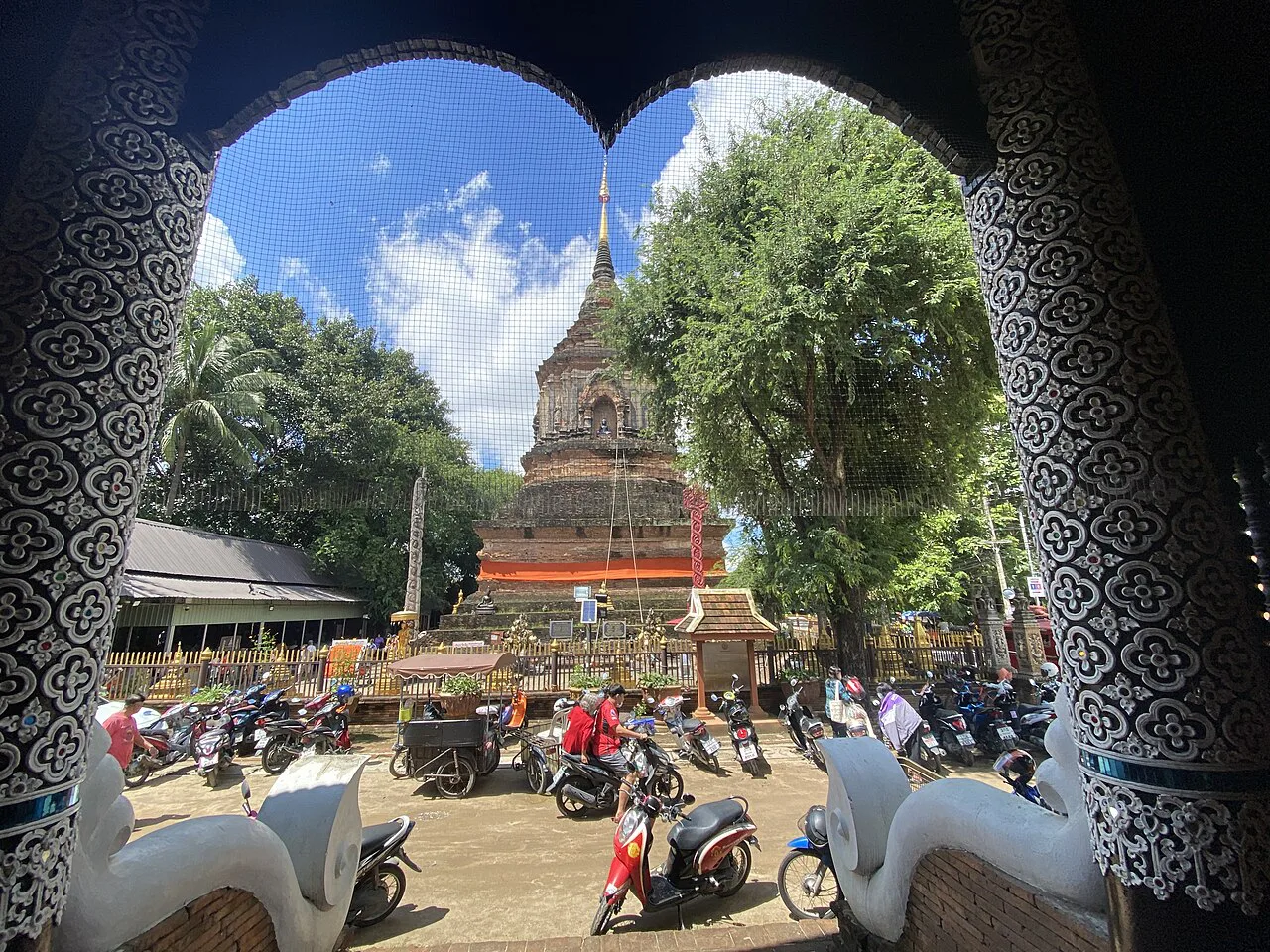
Start with the chedi, the reliquary monument that anchors the site, then work back to the viharn, the assembly hall whose wooden facade carries the carvings. The naga balustrades along the entrance stairs are the most photographed detail, so look at them before you go inside rather than after.
Inside the prayer room, keep your voice low and stay out of the way of anyone making offerings; this is a working temple, not only a monument. The garden and precinct are small but pleasant and give you a shaded place to sit for a few minutes. Expect modest grounds rather than an extensive complex.
Opening hours and entry: what is published and how to confirm
One third-party travel page lists the temple as free to enter and open daily from 6 a.m. to 5 p.m., but that is a single secondary source and not an official temple notice, so treat it as a starting assumption rather than a guarantee. Confirm before you set out, especially on a Buddhist holiday or if you are crossing town for it.
How long to allow, and why it is a short stop
Allow 20 to 30 minutes for a relaxed look at the chedi, the viharn facade, the nagas and the garden, plus a few minutes to sit. Photographers who want to work the carvings carefully might stretch that to 45 minutes, but there is no reason to plan a half day.
Crowds and timing: why it is quieter than the old-city temples
Travel accounts describe this temple as noticeably less crowded than the temples inside the old city, largely because it sits outside the walled square where most visitors concentrate. That makes it a good choice if you want space to look at carvings without queuing for a view.
Dress and temple etiquette
Cover your shoulders and knees, which is standard practice at Chiang Mai temples even where no sign spells it out. Remove your shoes before entering the viharn or any room with a Buddha image, and leave them where other visitors have left theirs so you do not block the steps.
What is nearby: gates, moat and the old-city cluster
The gate and the north moat are the immediate surroundings, and the moat road gives you a straightforward walking route back into the old city. The Chang Phuak area is also known for its evening food stalls, which makes a late-afternoon visit easy to combine with dinner. Treat that as a nearby option rather than something the temple itself offers.
Walk south into the old city and you reach the densest temple cluster in Chiang Mai, including Wat Phan Tao and Wat Chedi Luang along Phra Pok Klao Road, then Wat Chiang Man in the Si Phum corner. Each has its own entry rules and hours, so check them separately rather than assuming one schedule covers the group.
Farther west, Wat Suan Dok on Suthep Road and the Chiang Mai national museum near Wat Chet Yot are separate outings rather than walkable add-ons from the north moat. For a broader menu of what to pair with a temple stop, the city's things to do list covers markets, cooking classes and day trips.
Slotting Wat Lok Moli into a north-moat walk
The practical combination is a simple loop: start at the gate, walk west along the north moat to the temple, spend half an hour inside, then walk back and enter the old city for one or two of the bigger temples. That keeps travel time low and puts the quiet stop before the busy ones.

Is Wat Lok Moli worth the short detour?
Yes, if you are already near the north moat and want a quieter half hour with distinctive carvings and an unusual north–south layout. No, if this is your only temple stop in Chiang Mai, because the compound is small and the big old-city temples offer more to see. Decide based on where you are staying and how much time you have rather than on any ranking.
Frequently Asked Questions
Is Wat Lok Moli the same as Wat Lok Molee?
Yes, the two spellings refer to the same temple, and the Thai name วัดโลกโมฬี is the most reliable way to identify it to a driver or on a map. Search results and signs use both English forms, so do not assume you have found a different site.