
Wat Phan Tao: A Visitor's Guide to Chiang Mai's Teak Viharn

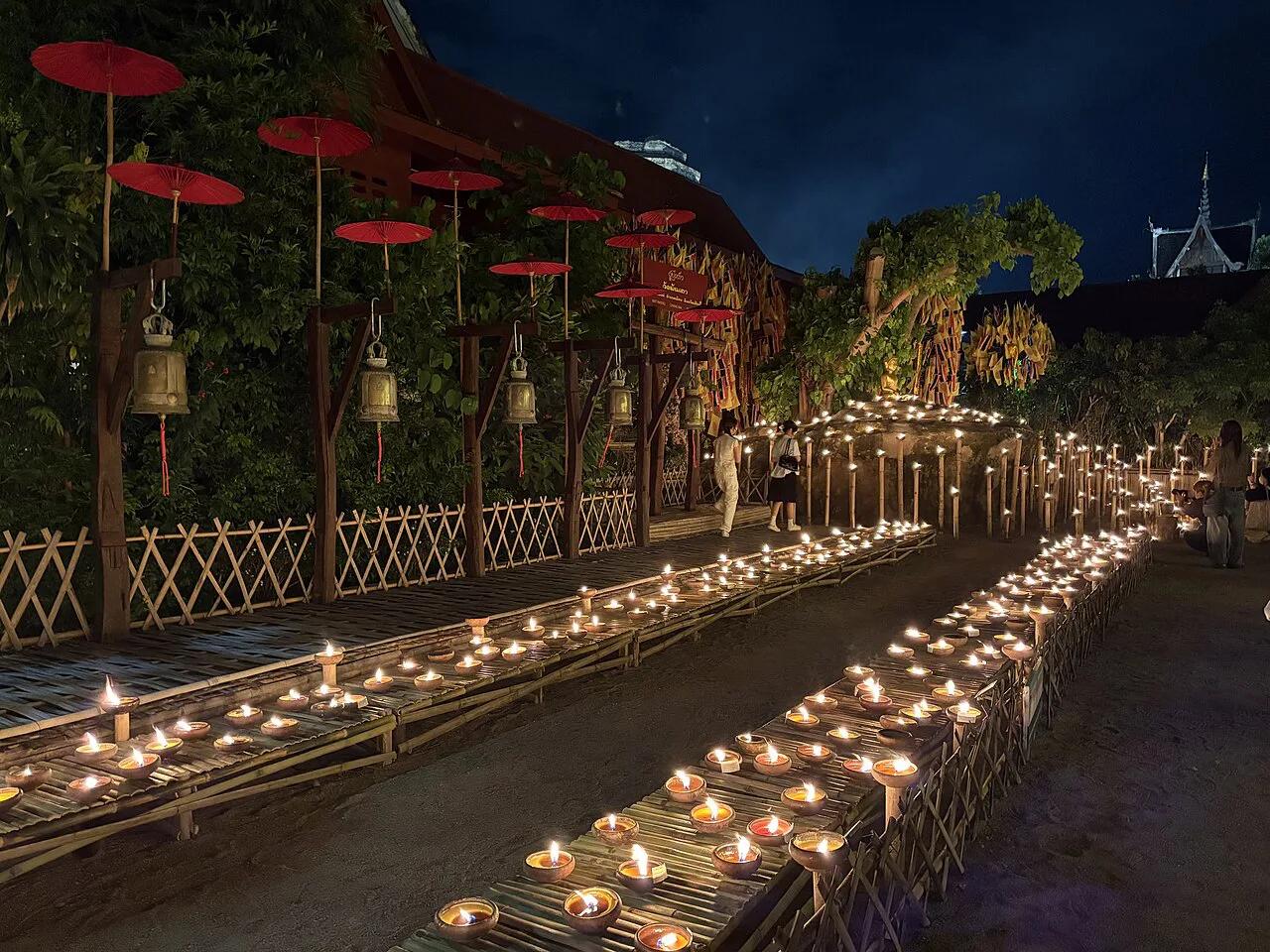
Wat Phan Tao is worth roughly an hour of your morning, and it earns that hour through one building: a dark teak viharn widely described as the most atmospheric hall in Chiang Mai's old city. It sits immediately beside Wat Chedi Luang, so most travelers see both in a single stop rather than treating this as a separate outing. This guide covers where the temple stands, how to reach it, what to look at on the gable and inside the hall, and how to confirm current hours and admission before you go.
What Wat Phan Tao Is
Wat Phan Tao is a small Buddhist temple inside the old city walls of Chiang Mai, in Thailand's north. It was originally built in the 14th century as living quarters for the monks of neighboring Wat Chedi Luang, which explains why the two compounds sit side by side. Its name is usually rendered as Temple of a Thousand Kilns, a reference to the ovens once used here to cast Buddha images.
The temple's later history is what gave it its signature building. From 1846 to 1854 the site served as a royal residence for Chao Mahawong, the ruler of Chiang Mai under the Lanna kingdom. When that residence was dismantled in 1876, the teak from the old palace was reused to construct the viharn you see today, which is why a royal plaque still decorates its gable.

Where It Sits in the Old City
The temple is close to the center of the old city, just south of Ratchadamnoen Road. Its main entrance faces Phra Pok Klao Road, the north-south street that runs through the old city, and the compound abuts Wat Chedi Luang on the same block. If you are staying in a guesthouse anywhere in the Old City, this is a walkable visit rather than a trip across town. See also the nearby Wat Chiang Man.
Use Phra Pok Klao Road as your landmark. Walking north or south along it, you will reach the temple gate shortly before the crowds funnel into Wat Chedi Luang next door. The same street also puts you within a short walk of Tha Phae Gate and the eastern edge of the old city, which makes the temple an easy add-on to a morning on foot.
How to Get There
Walking or cycling from old-city lodgings is the simplest approach, since the temple sits inside the walls and traffic on the surrounding moat roads moves slowly. If you are coming from further afield, a tuk-tuk works, but agree the fare before you set off so there is no argument at the gate. Ask to be let out on Phra Pok Klao Road near Wat Chedi Luang, since the two entrances are only steps apart.
The Teak Viharn
The viharn is the reason to come. Its walls are built from square teak panels pierced by small windows fitted with thin wooden bars, and the thick teak columns inside have been left unadorned rather than lacquered or gilded. The effect is a warm, natural interior that feels closer to a wooden house than to the glittering halls elsewhere in the city.
That interior is dim by design, not by neglect. Darkness encourages reverence in Thai temple architecture, and a teak building with small windows carries the effect further than most. The practical trade-off is that you will want to arrive with your eyes adjusted and linger a few minutes rather than rushing in and out.
What to Look For on the Gable
Before you step inside, look up at the gabled end facing the courtyard. A colorful peacock rendered in glass mosaic takes the center, and beneath it sits a dog figure said to represent King Mahawong's zodiac animal, framed by an arch of four nagas with hamsa birds at the corners. A plaque near the entrance carries the claim that this is the most beautiful teak viharn in Chiang Mai, and the carving goes a long way toward justifying it.
Treat the gable as a two-minute scavenger hunt so you do not walk past it on your way in. The peacock is the easiest to spot; the dog sits below it and is often overlooked. The three-tiered roof above is split into two sections, with simplified nagas running along the barge boards.
Inside the Hall
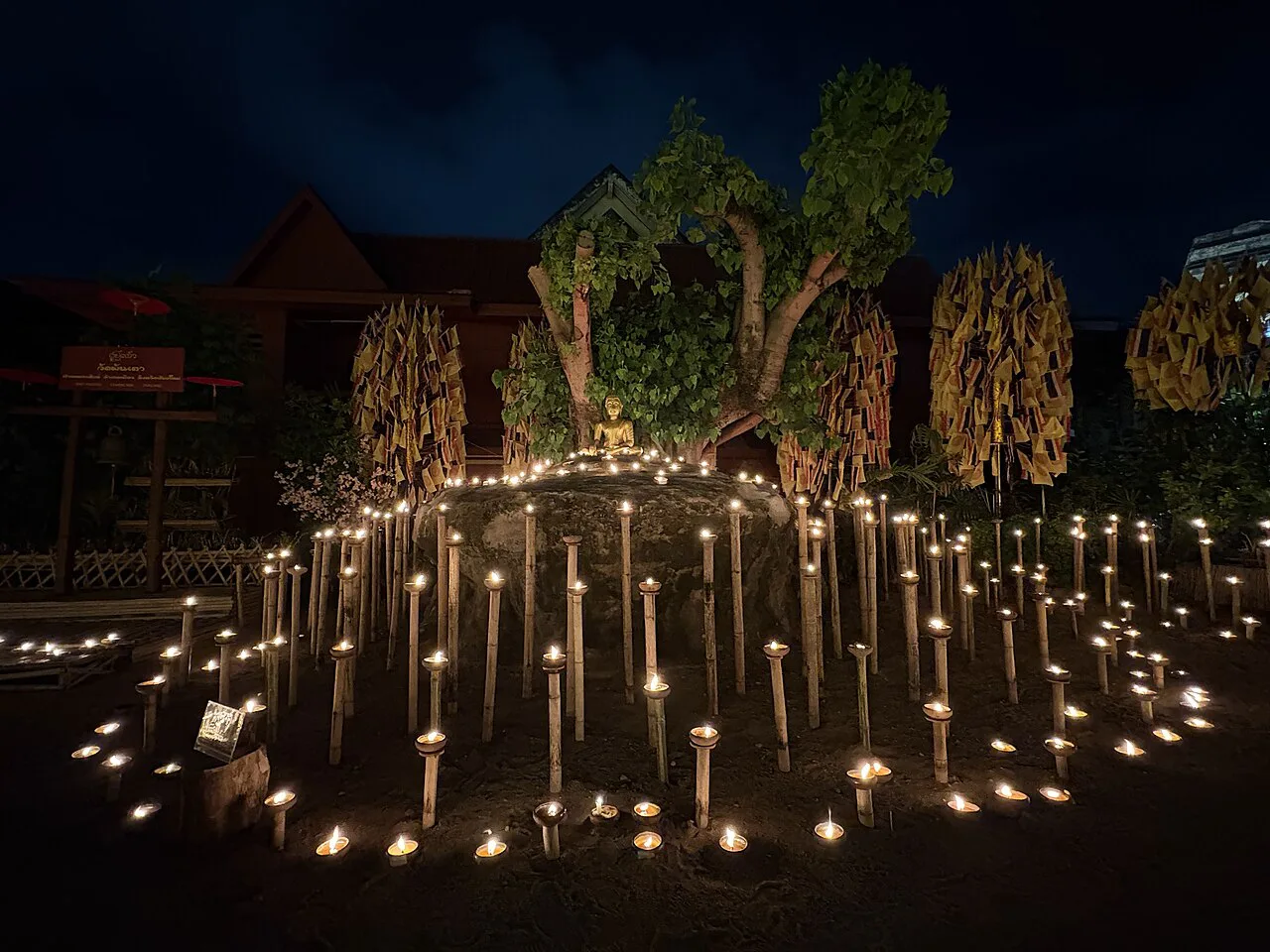
The main Buddha image is the one most photographs from Chiang Mai capture, and it gives the dim hall a calm focal point. Four additional seated Buddha images stand on the same premises. Because the space is small, a handful of tour groups can change the mood quickly, so the quiet you get depends heavily on timing.
Arriving early is the usual solution, though it costs you warmth and light: the hall is darkest in the morning and the wooden panels absorb rather than reflect it. If quiet matters more than a bright interior, come early; if you want to photograph the teak grain, midday is more forgiving but busier.
The Chedi and Its Surroundings
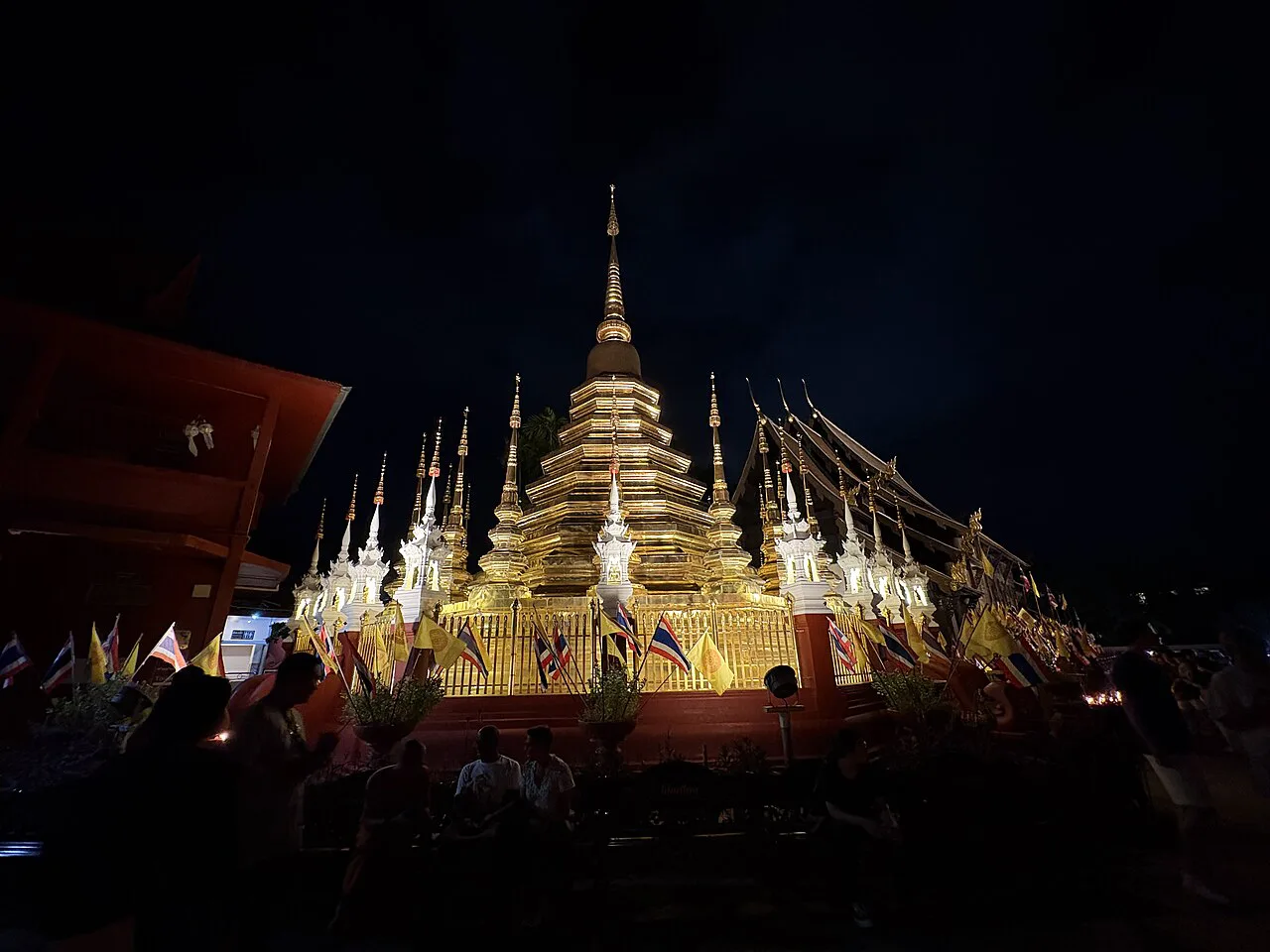
Behind the viharn stands a large white chedi that has been substantially restored from an earlier, darker form. Around its base sits a dense ring of roughly twenty gilt mini-chedis standing over ten feet tall, with small spires and pavilions packed so closely that the area reads as a forest of towers. A red fence marks the ambulatory around the chedi.
Near the front entrance you will also find an octagonal pavilion dedicated to a respected monk, with two images inside covered in thin gold leaf donated by worshippers. It takes a minute to look at and is easy to miss if you head straight for the main hall.
How Long You Need
One hour is the sensible budget for the whole compound, including the viharn, the chedi ring and the pavilion at the entrance. That figure appears in published trip-planning listings and matches the small footprint of the site. If you stop to sit inside the hall or read the plaques, add fifteen minutes.
You can shorten the visit to twenty minutes if you are temple-fatigued and only want to see the teak interior. You will likely stay longer if you pair it with Wat Chedi Luang next door, since the larger temple's grounds and main chedi take considerably more time.
Hours and Entry: What to Check Before You Go
Travel websites list the temple as open from 6:00am to 5:00pm with free entry, but no official temple or tourism authority source has confirmed this. Treat both details as unverified until you check at the gate, through your accommodation, or on a current official tourism channel. Hours can shift on Buddhist holidays and festival days, so do not build a tight schedule around a figure from a travel listing.
If entry is free when you visit, donations toward maintenance are customary at working Thai temples. Bring small notes in Thai baht so you can contribute without hunting for change. If you find a ticket booth instead, the price will be posted, and you can decide on the spot.
Etiquette for a Working Temple
Cover shoulders and knees, and remove your shoes wherever a sign or a raised threshold indicates it. Keep your voice low around anyone praying, and avoid stepping between worshippers and the main image. These are ordinary rules at Thai temples rather than special restrictions for tourists.
Photography inside the hall is a common question, and practice varies. Look for posted signs at the entrance and follow what the monks or temple staff indicate on the day rather than assuming a rule either way. If someone is praying in front of the image, wait until they finish before you frame a shot.
Nearby in the Same Morning
Wat Chedi Luang is literally next door and is the obvious pairing, with its massive ruined chedi and larger grounds. Combine the two as one errand: Chedi Luang first while it is cool, then Wat Phan Tao's dark teak hall once the sun is up.
Other old-city sights are within walking distance for the rest of your morning. Wat Chiang Man, one of the oldest temples in the city, sits to the north in the Si Phum area, and Wat Lok Moli lies just outside the northern moat. For a broader mix of temple and non-temple stops, work through a full list of things to do in Chiang Mai before you lock your day.
If you want more context on the Lanna Kingdom that produced this architecture, the Chiang Mai national museum on the northern edge of the city is a worthwhile add-on, and its grounds sit near Wat Chet Yot. Farther west, Wat Suan Dok on Suthep Road runs evening monk-chat sessions that pair well with a temple-focused day.

Who Should Go and Who Can Skip It
Go if you care about wood architecture, atmosphere or Lanna craftsmanship, because the teak viharn offers something the city's gilded temples do not. Skip it if you are temple-fatigued, short on time, or specifically after gold and glitter, since the appeal here is texture and shade rather than splendor. The strongest case for a detour is its position: because it sits beside Wat Chedi Luang, the marginal cost is a few minutes rather than a separate trip.
Is Wat Phan Tao Worth the Stop?
Yes, as a short stop folded into a Wat Chedi Luang visit rather than a destination of its own. Give it about an hour, look up at the peacock gable before you go inside, and accept the dim hall as part of the experience. Confirm current hours and any admission charge at the gate or through your hotel, since published listings are not official.
Frequently Asked Questions
Is Wat Phan Tao the same as Wat Chedi Luang?
No. They are separate temples on adjacent ground inside Chiang Mai's old city, and Wat Phan Tao was originally built as monk quarters for Wat Chedi Luang. The smaller teak temple is entered from Phra Pok Klao Road, and you can walk between the two in a couple of minutes.
What should you wear to Wat Phan Tao?
Cover your shoulders and knees, and remove your shoes wherever signs or raised thresholds indicate. Keep your voice down around worshippers and avoid stepping in front of anyone praying toward the main Buddha image.