Bangkok MRT Guide: Lines, Fares & Tips for Visitors
How the Bangkok MRT works: lines, stations for top sights, fares, hours, BTS transfers and when a different transport is faster.
On this page
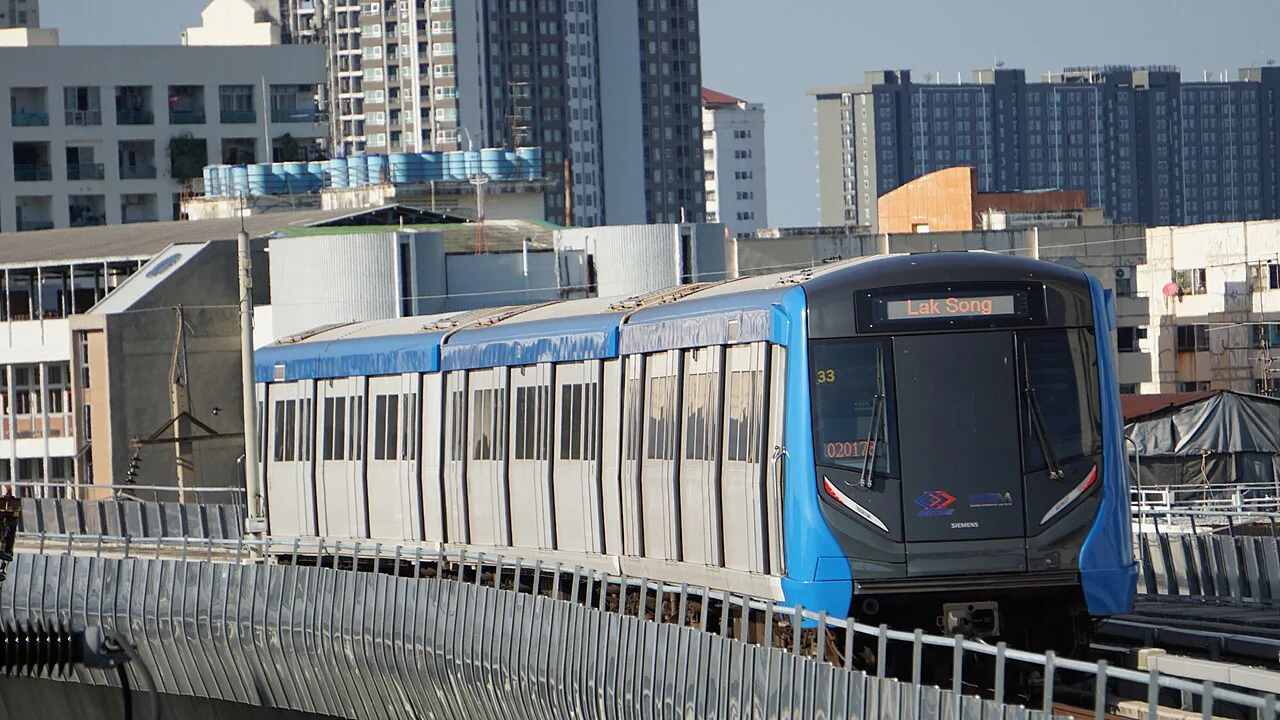
Last updated November 2026: the Bangkok MRT is the city's underground and metro rail network, and it suits cross-city hops in air conditioning without road traffic. It links to the BTS Skytrain at interchange stations. Our guide covers stations, fares, hours and transfers, and it sits under our wider guide to Getting Around Bangkok: BTS, MRT, Boats & Taxis Guide.
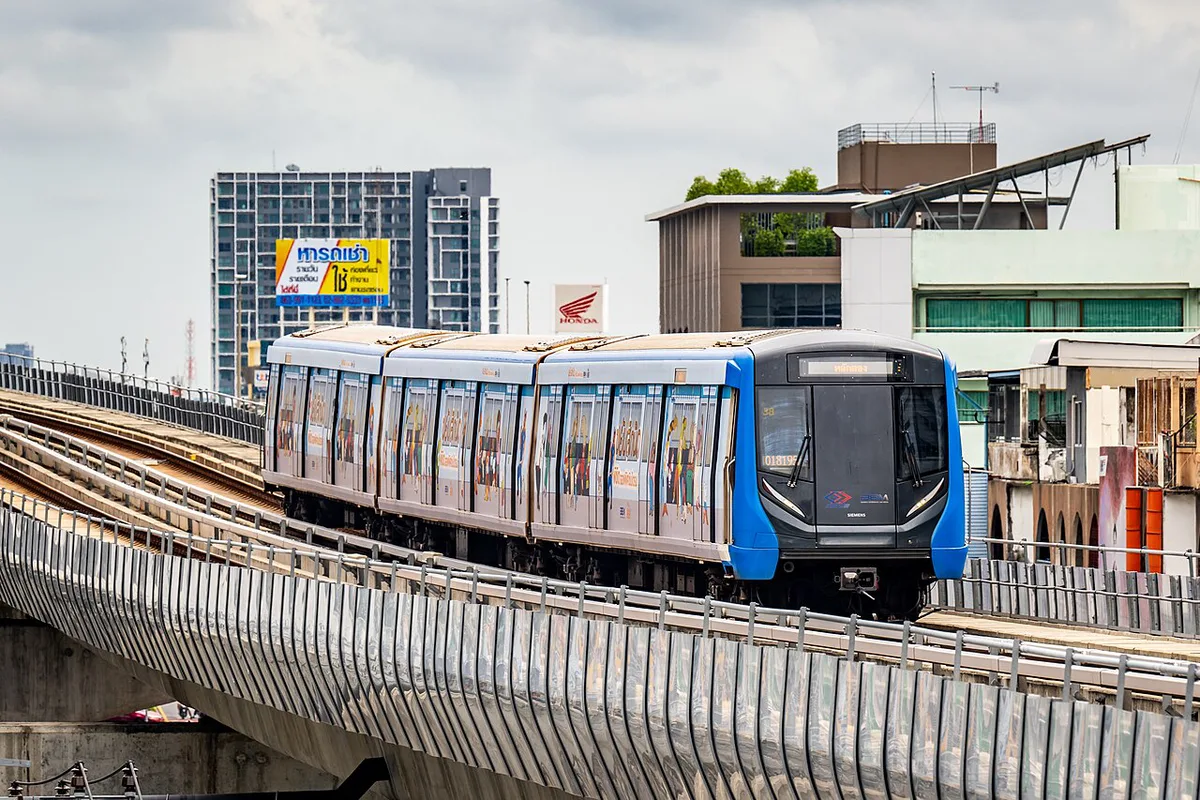
Featured image: Phornlert.gp, CC BY 4.0, via Wikimedia Commons.
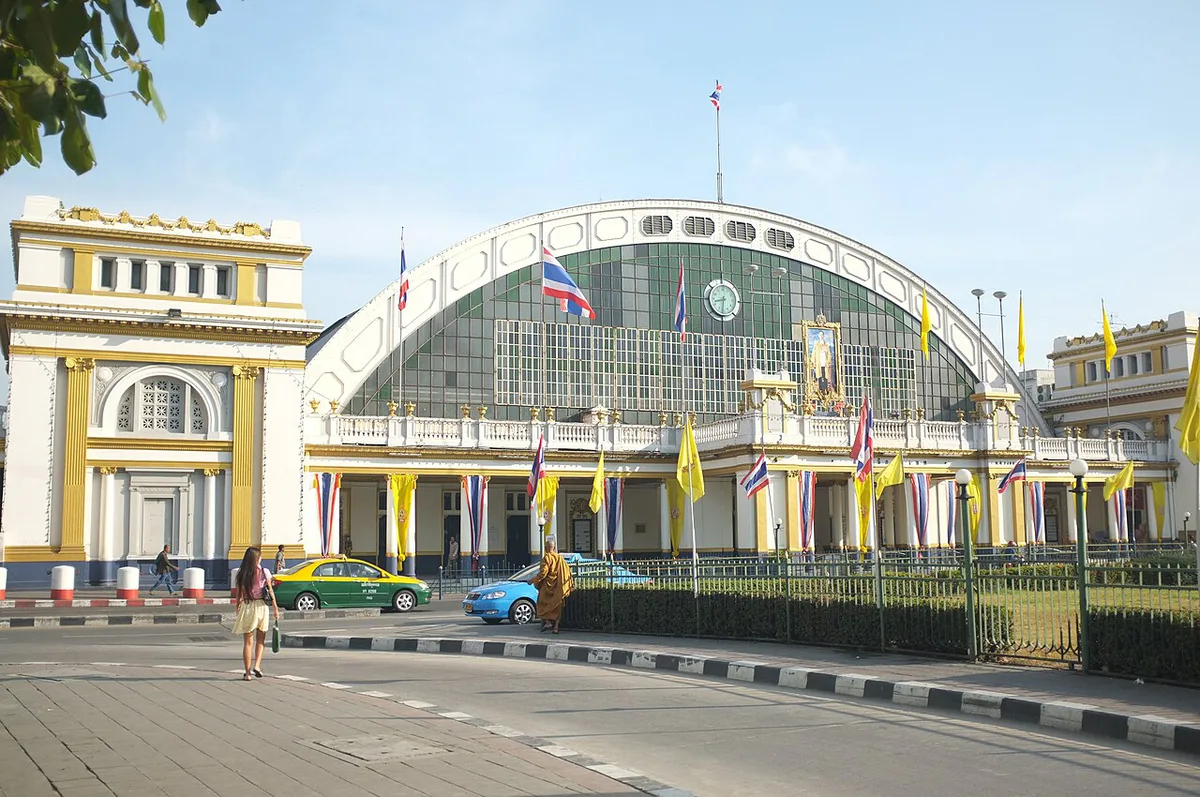
Bangkok MRT Quick Facts: Lines, Hours and Fares
Bangkok MRT service centers on the Blue Line loop and the Purple Line. Most visitors use the Blue Line route through Sukhumvit, Silom and Hua Lamphong. Published operating hours run from 06:00 to midnight daily. Waits are reported at under 5 minutes at peak and under 10 minutes off-peak. Single-trip fares have been listed between ฿15 and ฿40 depending on distance. Confirm the current line list, map and fare table on the MRT operator's official site before you travel.
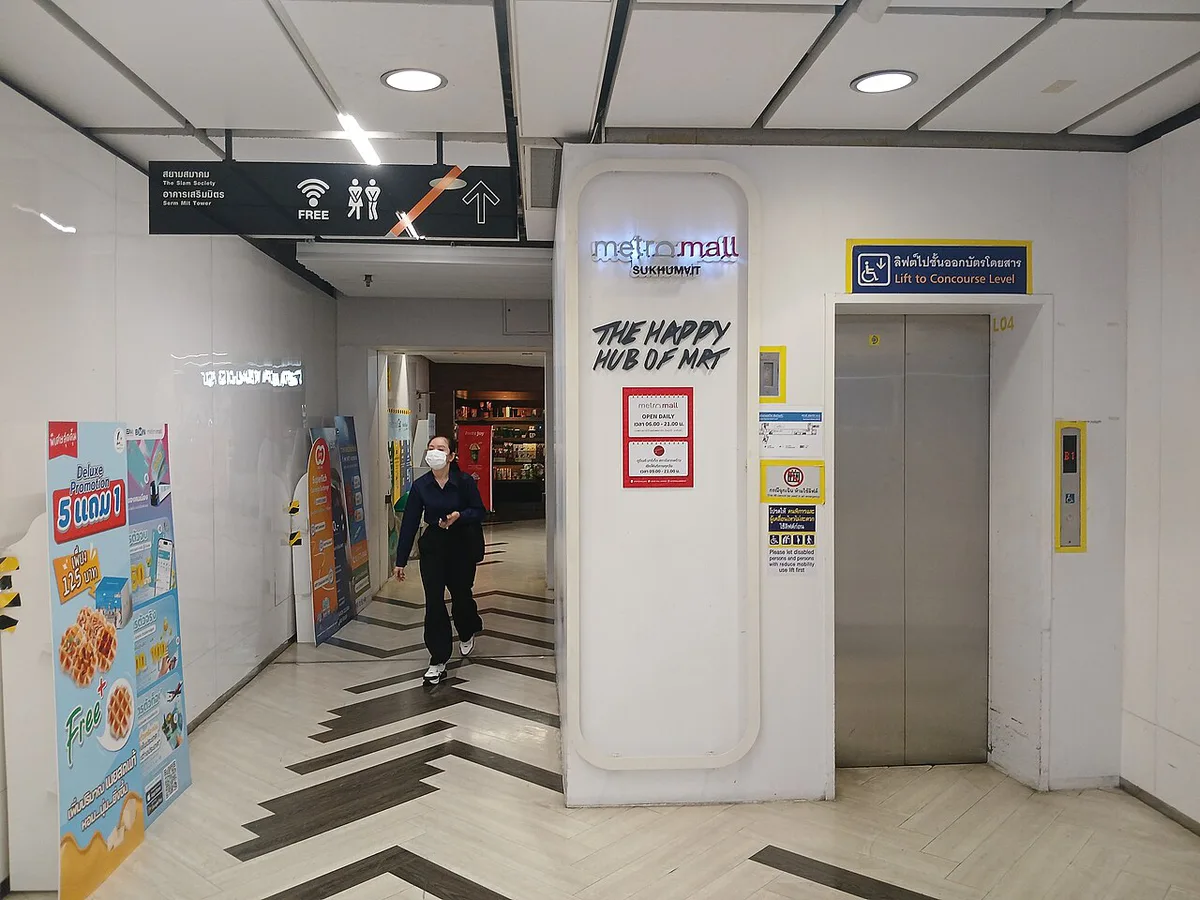
- Hours: about 06:00 to midnight, daily
- Peak windows: 06:00 to 09:00 and 16:30 to 19:30
- Single trip: ฿15 to ฿40, distance-based
- Adult day pass: listed at ฿120, so check it is still sold
- Interchanges: Si Lom, Sukhumvit and Chatuchak Park
Which Bangkok MRT Stations Serve the Main Areas
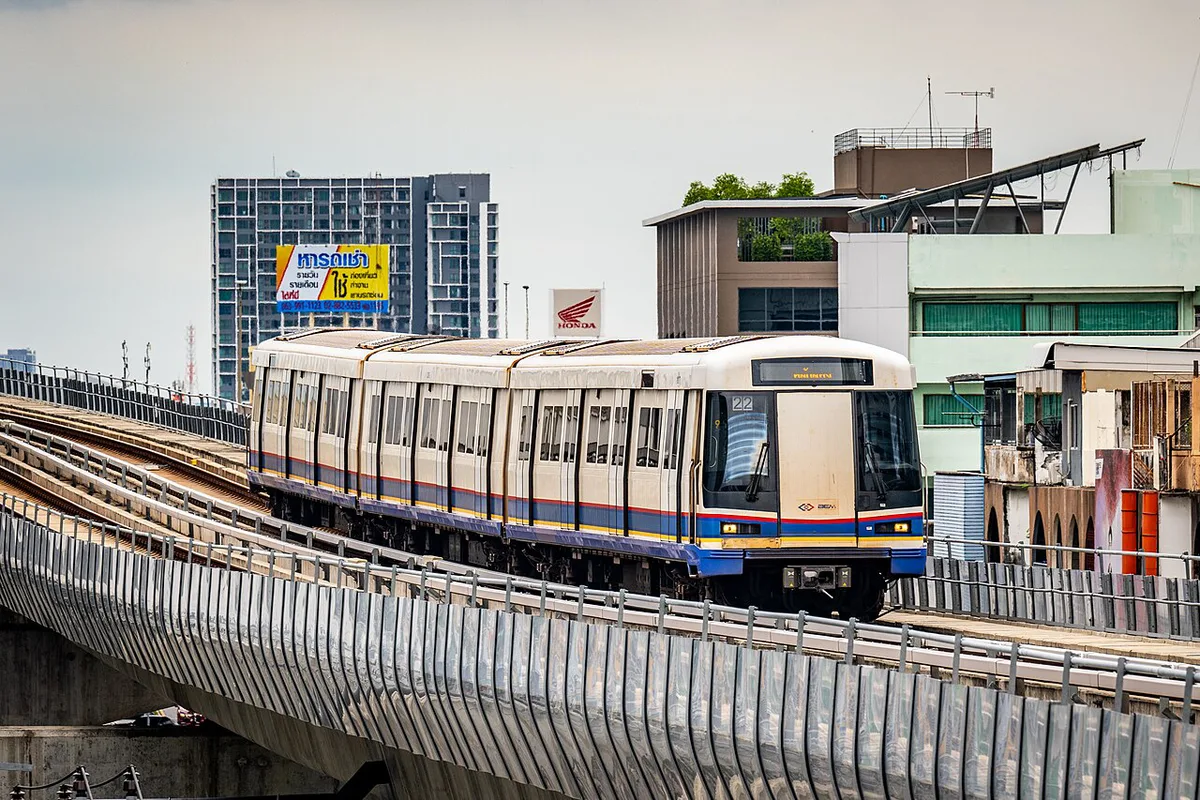
The core Blue Line route has 18 stations in the published list, from Hua Lamphong to Bang Sue. It passes Si Lom and Lumphini, then turns north through Sukhumvit toward Chatuchak Park. Stations beyond that core appear on the current network map, so check it for the loop extension. Use the table to match your hotel or sight to a stop.
Of the 18 stations on the core Blue Line, Chatuchak Park and Sukhumvit need the exit check.
| Nearest MRT station | What it serves | Reality check |
|---|---|---|
| Hua Lamphong | Railway station and the Chinatown side | Check which long-distance trains still use it |
| Sam Yan | Chinatown side | Walk or take a taxi for the final stretch |
| Si Lom | Silom area; links to BTS Sala Daeng | Interchange means a walk between systems |
| Lumphini | Lumphini Park | Best entry point for the park |
| Queen Sirikit Convention Centre | Convention centre | Event days draw large crowds |
| Sukhumvit | Sukhumvit area; links to BTS Asok | Interchange means a walk between systems |
| Thailand Cultural Centre | Cultural centre | Check the exit before you climb out |
| Chatuchak Park | Weekend market; links to BTS Mo Chit | Busy at weekends |
| Kamphaeng Phet | Weekend market, alternative stop | Useful when Chatuchak Park is crowded |
MRT vs BTS: How the Two Systems Connect
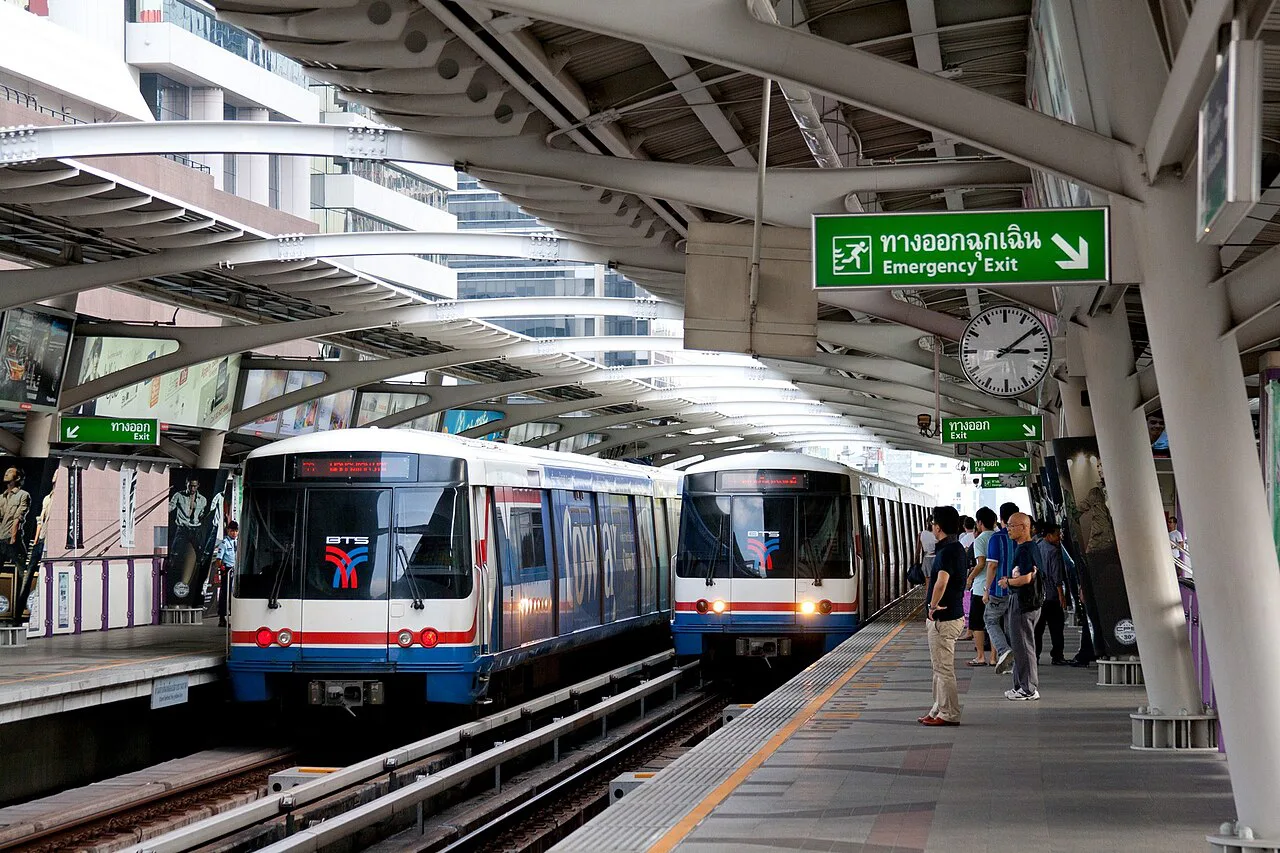
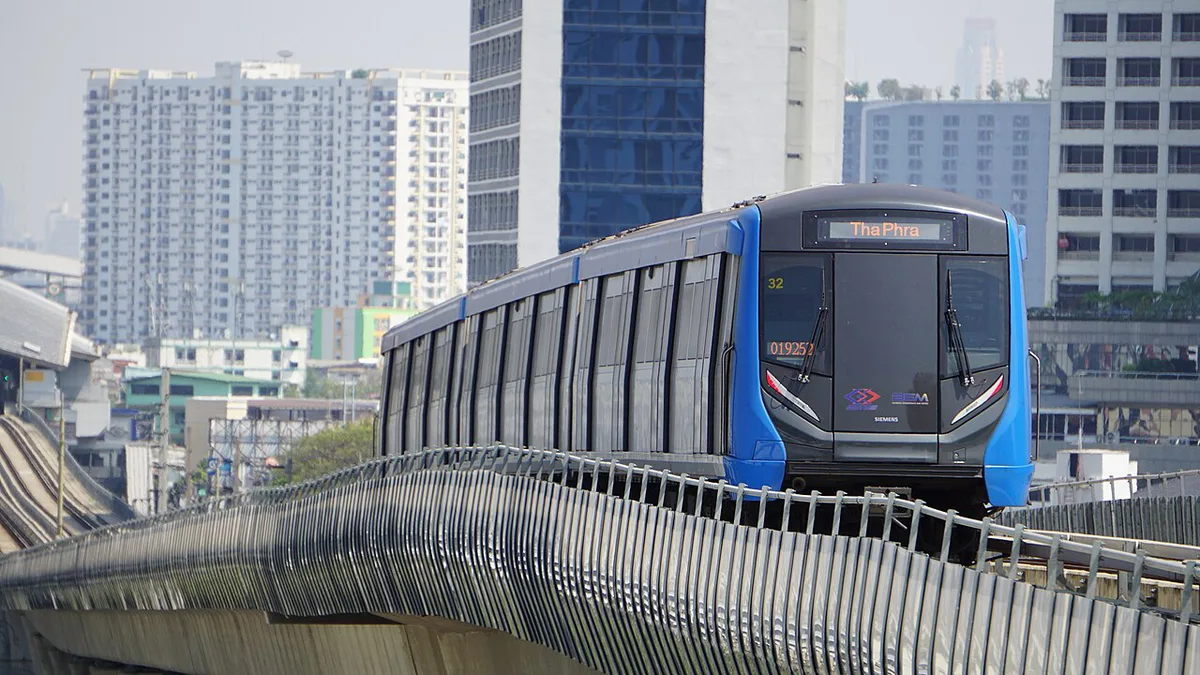
Bangkok's MRT and BTS are separate networks that meet at three interchanges. Our Bangkok BTS guide covers the elevated Skytrain side in detail. Treat each system as its own ticket unless an operator announces a combined fare. The BTS official site lists current Skytrain fares and cards. Expect a walk at each transfer, not a platform swap.
- Si Lom connects with BTS Sala Daeng
- Sukhumvit connects with BTS Asok
- Chatuchak Park connects with BTS Mo Chit
How to Pay and Ride: Bangkok MRT Fares and Gates
Single journeys have been sold at automated ticket machines with English instructions. You receive a small black token and drop it into the barrier when you exit. Adult fares have ranged from ฿15 to ฿40. Child and senior fares have ranged from ฿8 to ฿20. An adult day pass was listed at ฿120. Stored-value cards and contactless bank cards may also work, but foreign cards are not guaranteed. Check the operator's site before you rely on one. Read the exit signs before you leave the platform. Several stations, including Sukhumvit and Chatuchak Park, have exits that lead toward different streets and BTS stations.
A ฿120 day pass costs more than the longest ฿40 trip, so count your planned rides first.
Operating Hours, Frequency and the Best Time to Ride
Trains run from about 06:00 to midnight. Peak periods are 06:00 to 09:00 and 16:30 to 19:30, when waits are under 5 minutes but platforms fill. Off-peak waits are under 10 minutes. Ride between those windows if you carry luggage or a daypack. Check the last-train time for your station at the gate, because it varies by direction and stop. Late-night trips after midnight need a taxi or a Grab car.
MRT vs Grab, Tuk-Tuk, Boat and Airport Options
Pick the MRT when roads are jammed and your start and end points sit near stations. Choose a boat for riverside sights, and our Chao Phraya Express Boat guide explains the routes. For door-to-door rides, see Grab in Bangkok. Short hops and late-night runs suit a Bangkok tuk-tuk, though you should agree the price first. Airport rail links and transfer times are covered in our airport to city guide. The Suvarnabhumi Airport site lists current ground transport.
| Option | Best for | Trade-off |
|---|---|---|
| MRT | Cross-city trips at rush hour | Station walks and stairs; stops near midnight |
| BTS | Elevated routes along Sukhumvit and Silom | Separate ticket; crowded at peak |
| Grab | Luggage, late night, door to door | Slow in rush-hour traffic |
| Tuk-tuk | Short hops | Negotiate the fare; open to heat and fumes |
| Express boat | Riverside sights | Fixed routes and pier walks |
Mistakes to Avoid on the Bangkok MRT
Most problems come from assuming one system works like the other. Plan transfers with a walk in mind, and leave margin before midnight.
- Assuming MRT and BTS share one ticket
- Picking the wrong exit at Sukhumvit or Chatuchak Park
- Carrying big luggage between 06:00 and 09:00 or 16:30 and 19:30
- Ignoring last-train times near midnight
- Riding the MRT when a boat is faster for riverside sights
Frequently Asked Questions
Does Bangkok have Grab?
Yes, Grab Thailand operates in Thailand. Check the app for Bangkok availability, and read our notes on booking a Grab.
Useful notes for your Thailand trip
Optional updates to our guides.
You might also like
Continue reading
More guides you'll find useful