Chiang Mai Songthaew Guide: How to Ride and Pay
How to use a Chiang Mai songthaew: flagging a ride, agreeing fares, where it works, and when Grab or a tuk-tuk is the better choice.
On this page
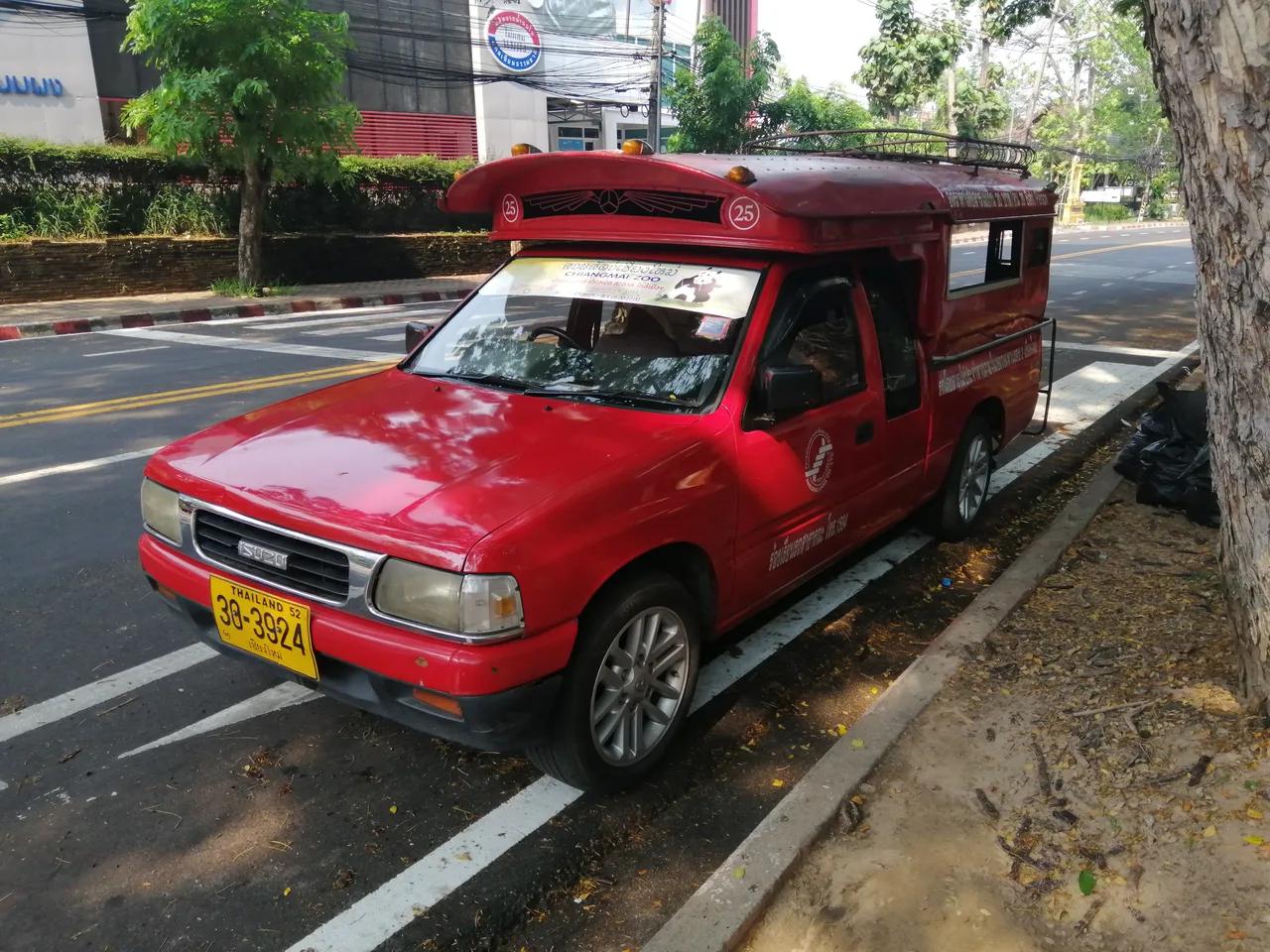
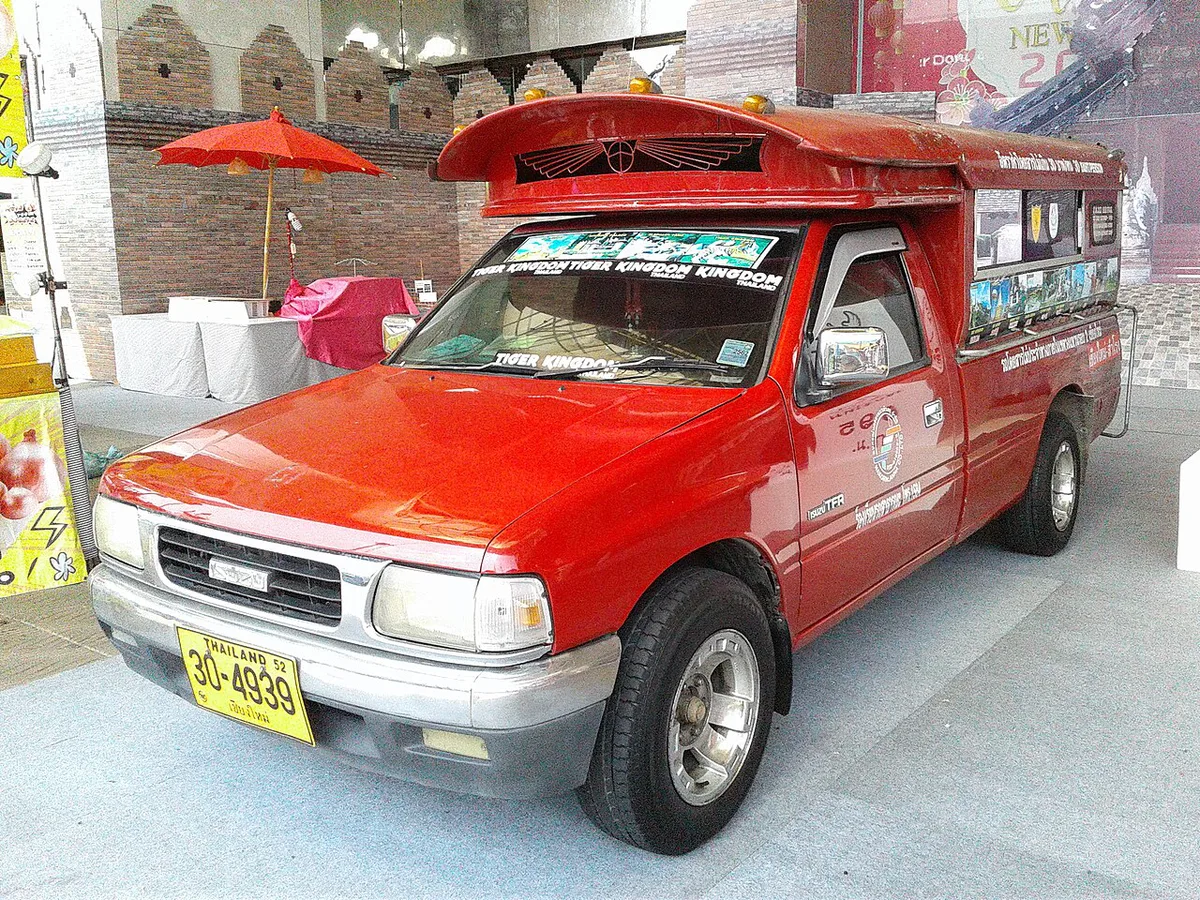
Last updated November 2026: a Chiang Mai songthaew is a shared pickup truck with bench seats in the back, and the red ones are the city's everyday hop-on transport. Flag one down, tell the driver where you are going, agree the fare before you climb in, and press the buzzer when you want to get off. Below, you will see how the types differ, where a ride makes sense, and when Grab is the smarter pick.
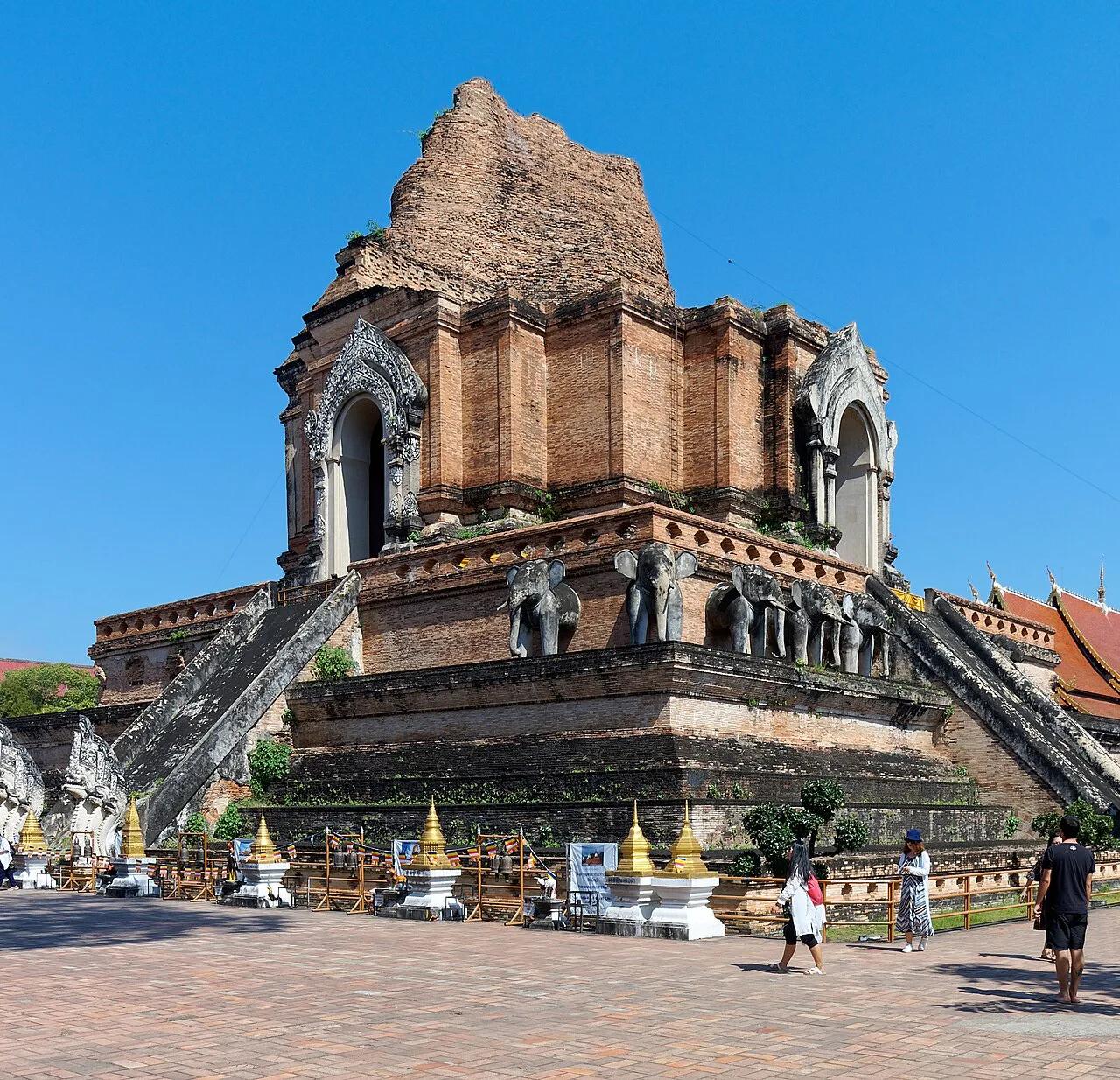
Featured image: Patiparn.Nice2002bkk, CC BY-SA 4.0, via Wikimedia Commons.
What a Chiang Mai songthaew is (and the types)
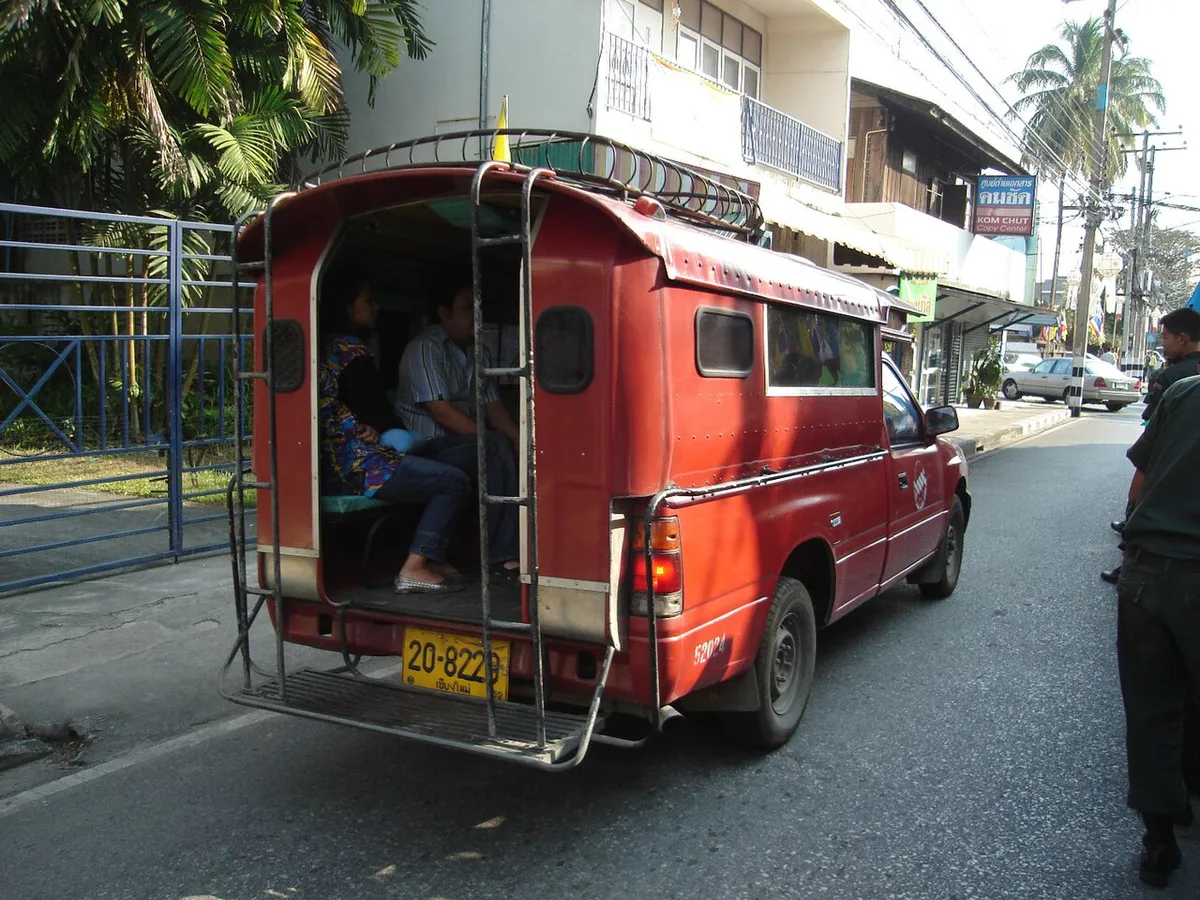
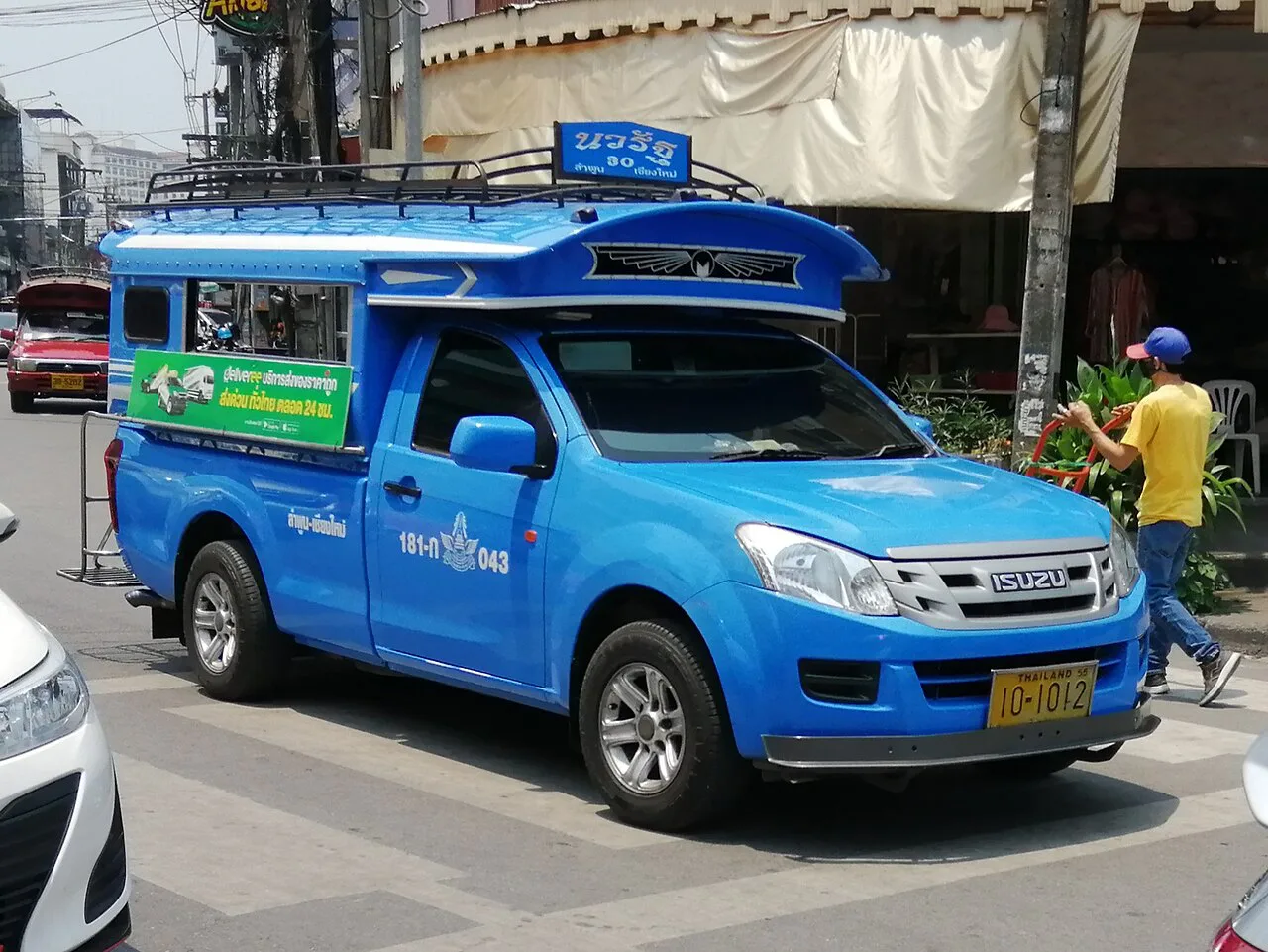
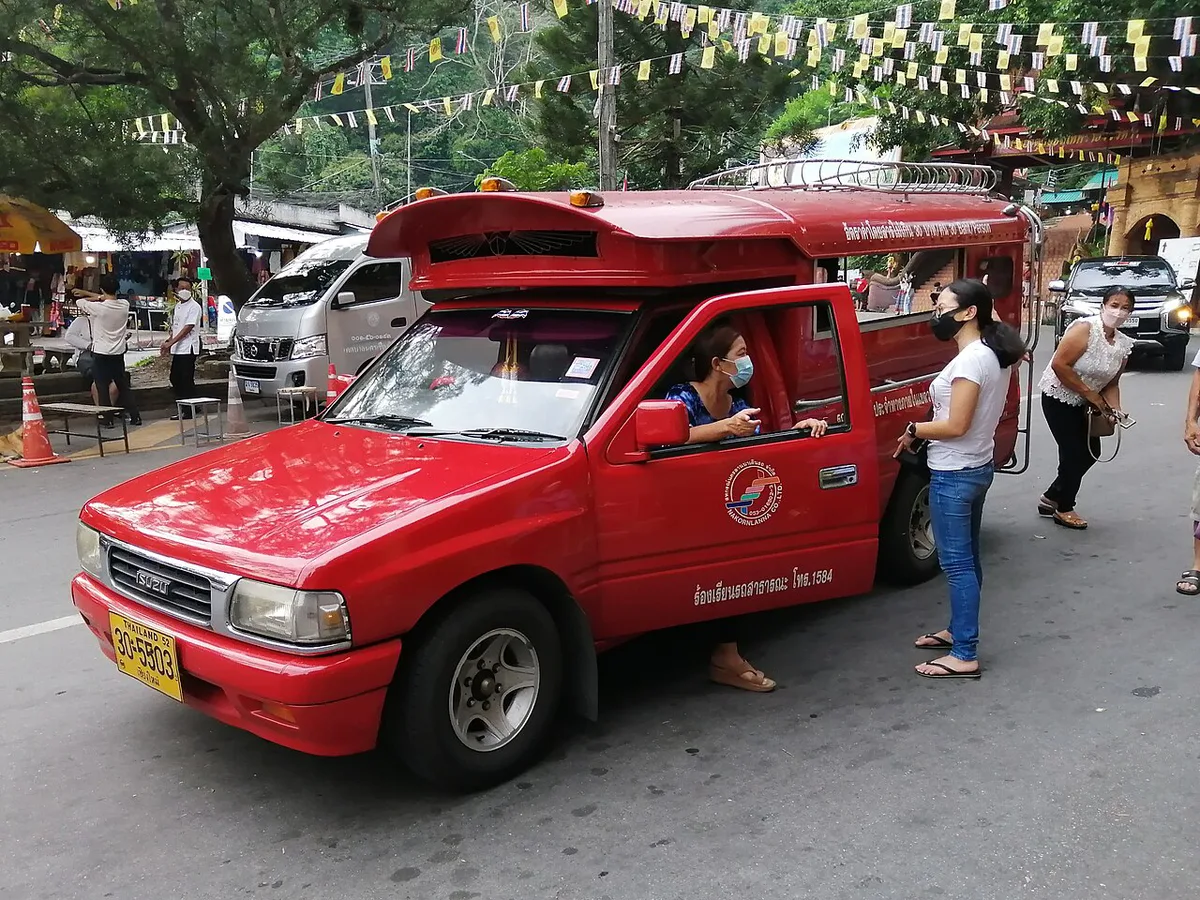
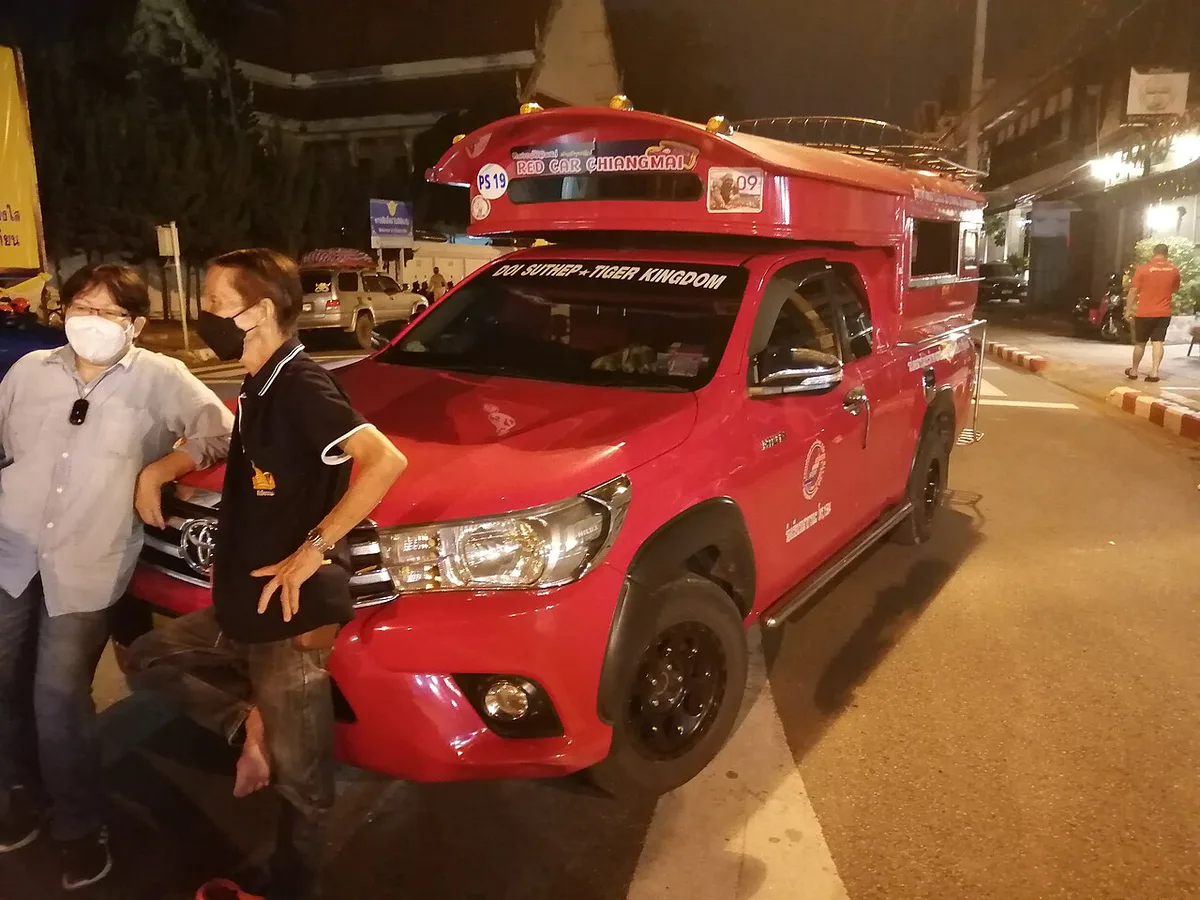
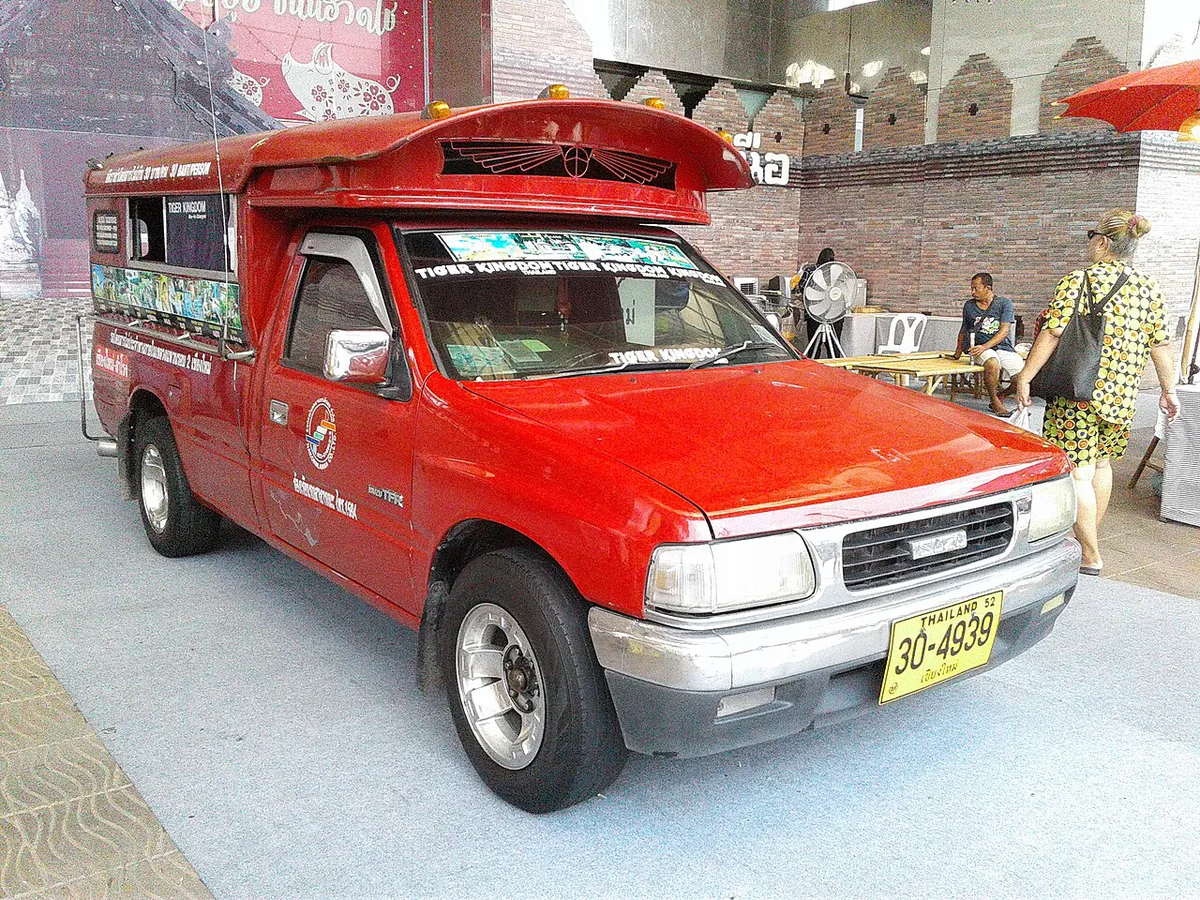
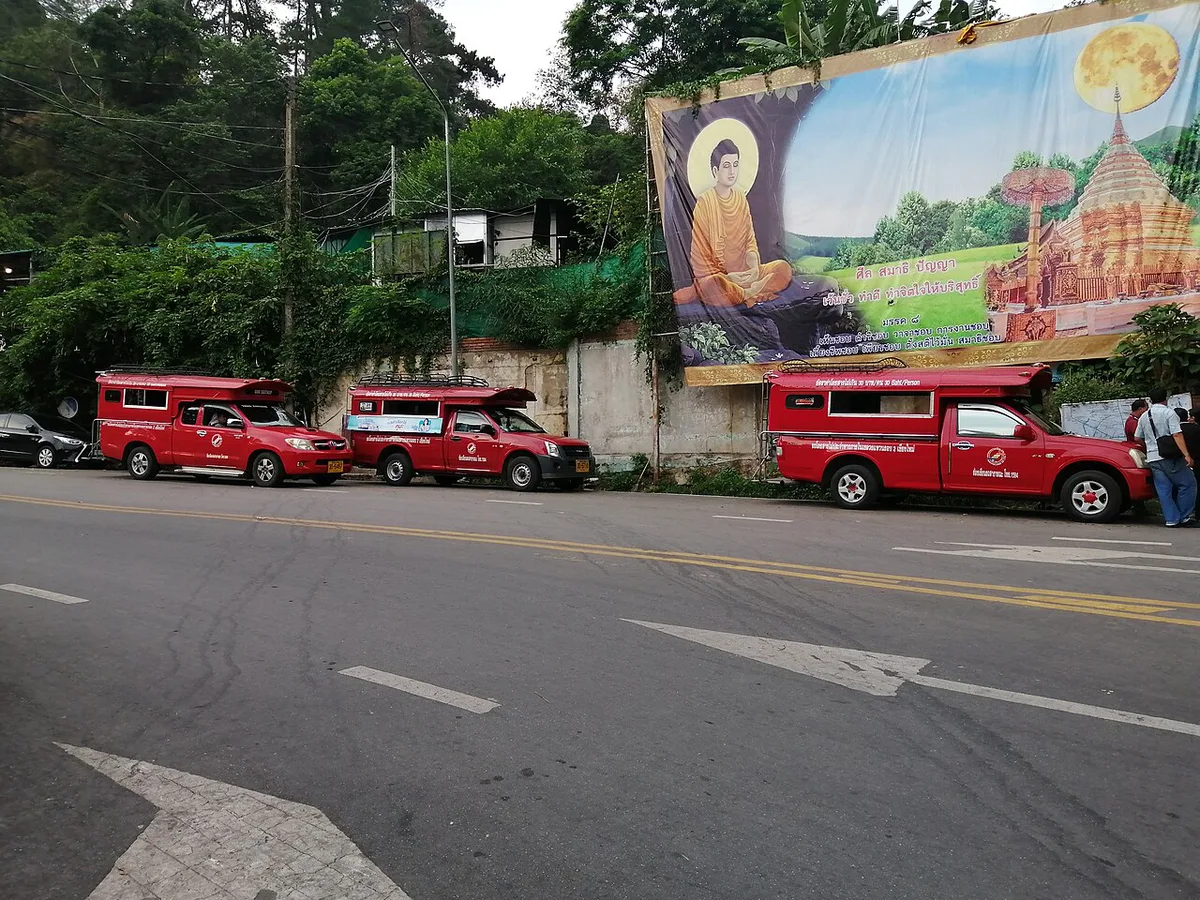
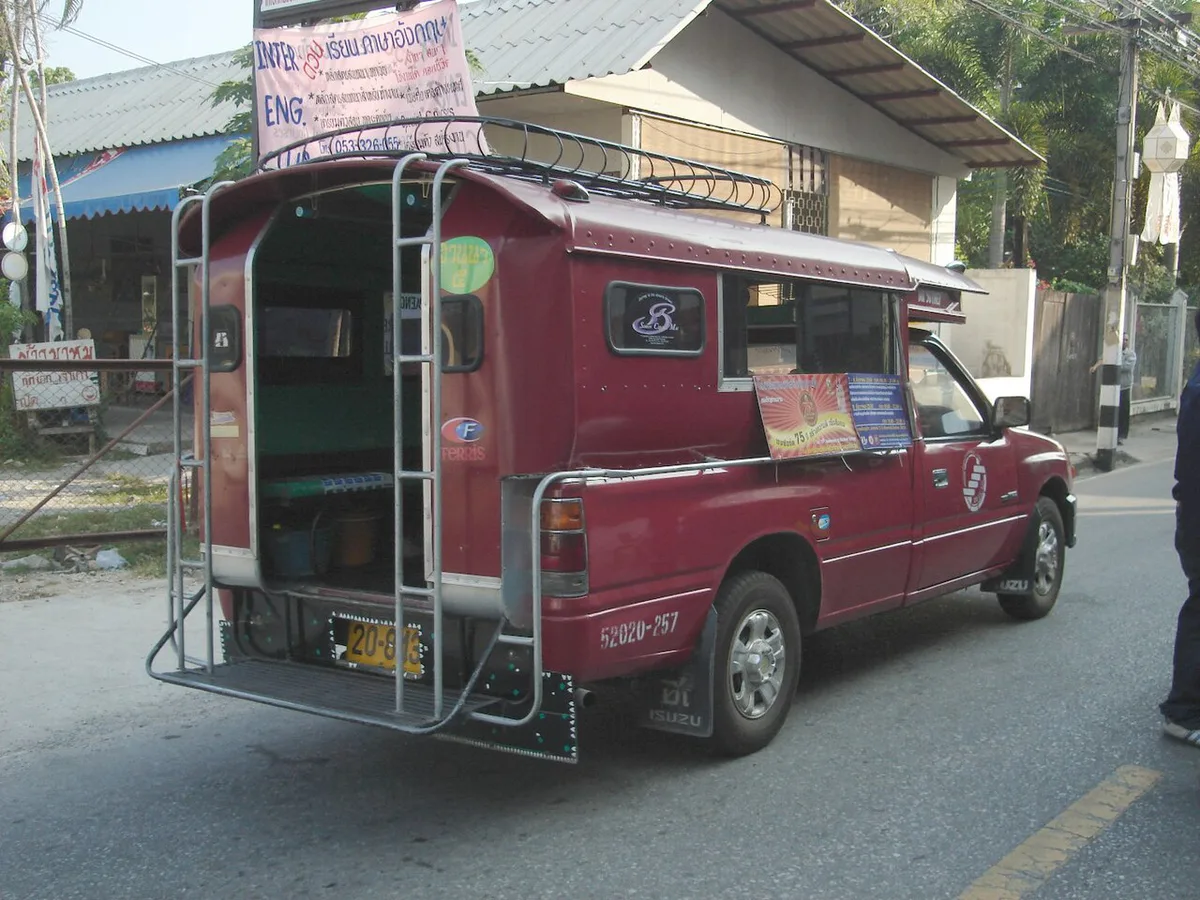
Songthaew means "two rows" in Thai, a nod to the two benches in the covered truck bed. In Chiang Mai, the red truck is the version most visitors meet. Red trucks run as shared taxis around the city, and drivers pick up and drop off passengers along a loose route toward each person's destination. Some travelers use the same trucks as private charters, which changes the pricing and the route. Other colors and intercity trucks exist too. Their routes and fares change, so confirm them at the pickup point instead of trusting an old blog post. For the full picture of how the songthaew fits alongside buses, bikes and ride-hailing, start with our Chiang Mai transport overview.
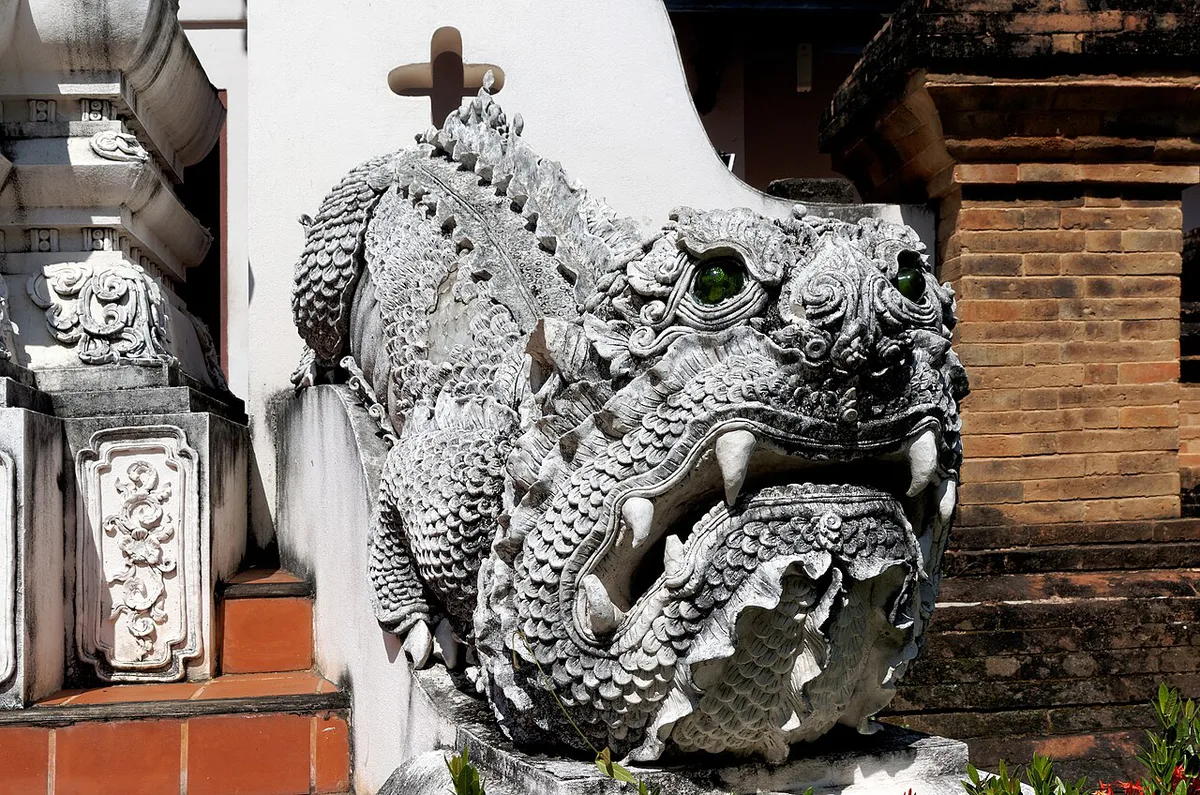
- Shared ride: you join other passengers, and the driver may detour to drop them off.
- Charter ride: you pay for the whole truck and set the destination, stops and waiting time yourself.
- Intercity trucks: they leave for towns and sights outside the city. Ask the driver or a local at the stop about current routes.
How to ride a Chiang Mai songthaew step by step
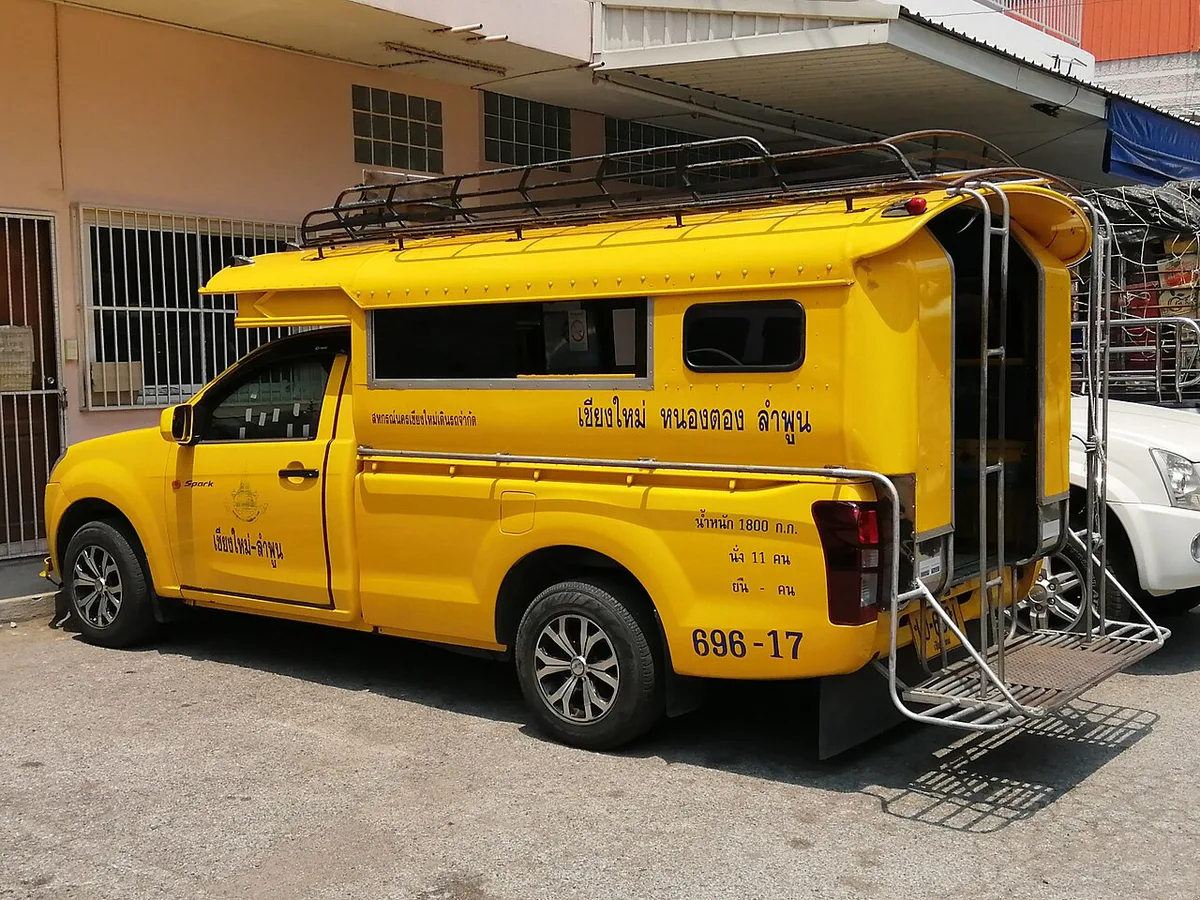
Riding is simple once you know the sequence. Stand somewhere safe along the roadside and wave at an approaching red truck. Slow trucks with open seats are looking for passengers. Lean toward the front window and say the name of your destination. Use a landmark such as a gate, market or hotel name instead of a street address. Drivers answer with a price or a nod. Agree the fare now, because haggling after you have arrived puts you in a weak position. Climb in through the back, take a bench seat and hold the rail as the truck pulls away. When you want to get off, press the buzzer on the ceiling or tap the metal rail with a coin. Step out, walk to the driver's window and pay in cash.
- Flag the truck with an open palm held low.
- Name a landmark, not a street number.
- Confirm whether the fare is per person or for the whole truck.
- Press the buzzer or tap the rail before your stop.
- Pay in cash, and keep small notes and coins ready.
Songthaew price vs alternatives
Street fares are negotiated, so no single published price applies. Shared rides usually cost less than other motorized options over short city distances. Charters cost more but split well across a group. Check what a Grab trip would cost for the same route before you commit. The in-app fare gives you a useful benchmark, and the Grab Thailand site explains how booking works. The table below compares the main options in relative terms.
| Option | Cost | Speed | Comfort | Best for |
|---|---|---|---|---|
| Shared songthaew | Lowest for short hops | Slower, with pickups and detours | Open sides, shared benches | Solo travelers and pairs on simple city routes |
| Charter songthaew | Higher, but split across the group | Direct once agreed | Room for bags and a group | Groups and half-day trips |
| Grab | Fare shown in the app | Predictable | Air-conditioned car or bike | Airport, late night, luggage, rain |
| Tuk-tuk | Negotiated, often above a shared truck | Direct | Open, noisy, small | Short private rides at a fair agreed fare |
| Walking | Free | Fine inside the Old City | Hot at midday | Distances between nearby temples and cafes |
Where a songthaew works well, and where it does not
Red trucks fit the flat, grid-like city best. They suit hops between the Old City, the Chiang Mai Gate area, the Night Bazaar and Nimman. Rides between those zones are short, and trucks pass often during the day. Doi Suthep is a classic case for a shared or chartered truck, since many visitors head up the mountain that way. Confirm the current setup at the pickup point, including whether the driver waits for more passengers before leaving. Weak spots are easy to predict. Trucks have no fixed schedule, so you may wait. Detours add time when other passengers get off first. Large bags are awkward on the benches. Heat and rain reach you through the open sides. Availability thins late at night, so have a backup plan before you head out for dinner.
- Good: short hops between the Old City, Chiang Mai Gate, the Night Bazaar and Nimman.
- Good: a group heading up toward Doi Suthep on a shared or charter truck.
- Poor: airport or station arrivals with large suitcases.
- Poor: late-night returns when trucks are scarce.
- Poor: tight schedules, because pickups and detours stretch the trip.
Songthaew vs Grab, airport and intercity
Pick by group size, luggage and patience. Solo travelers and pairs can use either a shared truck or Grab. Groups of four or more should price a charter against two Grab cars. Grab shows the fare before you commit, so you skip the haggling. Our Chiang Mai Grab guide covers pickup tips and fare checks. For the airport, luggage points toward a fixed-fare or app option over a street truck. Check the Chiang Mai airport transport options for current arrangements, since queue rules and pickup zones can change. Arriving from Bangkok shapes the day too. Our Bangkok to Chiang Mai options help you pick a route, and the overnight train guide explains the sleeper schedule. Timetables and services are on the State Railway of Thailand site. After a long journey, many travelers use Grab to reach the hotel and save the songthaew for lighter days.
- Use a songthaew if you travel light, stay inside the city and accept some waiting.
- Use a songthaew if you want a cheap short hop and speak a few words of Thai or can point at a map.
- Use Grab if you carry big bags, arrive late or want the fare fixed before you ride.
- Use Grab if rain is falling or you have a time-critical connection.
Mistakes and scam-avoidance tips
Most problems come from vague terms, not from the trucks themselves. Agree the price before boarding, and confirm whether it covers one seat or the whole truck. Ask the driver to repeat the destination so you know you were understood. Carry small notes, because drivers may not have change for a large bill. Be wary of offers to add a stop at a gem shop, tailor or other shop along the way. A polite no is enough, and you can end the ride and find another truck. Keep valuables on your lap, not on the bench beside you. Treat these as habits for any negotiated transport, not as claims about particular drivers. If a quote sounds far above what Grab shows for the same trip, walk away and compare.
Frequently Asked Questions
What is a songthaew in Thailand?
A songthaew is a pickup truck fitted with two rows of bench seats in the covered back. In Chiang Mai, red trucks carry passengers along shared routes. Others work as private charters or intercity transport.
Can I use Grab at Chiang Mai Airport?
Grab operates in Thailand, and many travelers book it for airport trips. Pickup points and rules can change. Check our airport guide and the app before you land.
How to go around Chiang Mai?
Most visitors combine walking in the Old City, red songthaews for short hops and Grab for luggage or late nights. Charter trucks suit groups and day trips such as Doi Suthep.
Useful notes for your Thailand trip
Optional updates to our guides.
You might also like
Continue reading
More guides you'll find useful