12 Best Things to Do in Ayutthaya: Temples, Routes & Tips
Plan 12 things to do in Ayutthaya: temples, a route by time and traveler type, Bangkok transport, heat tips and whether to stay overnight.
On this page
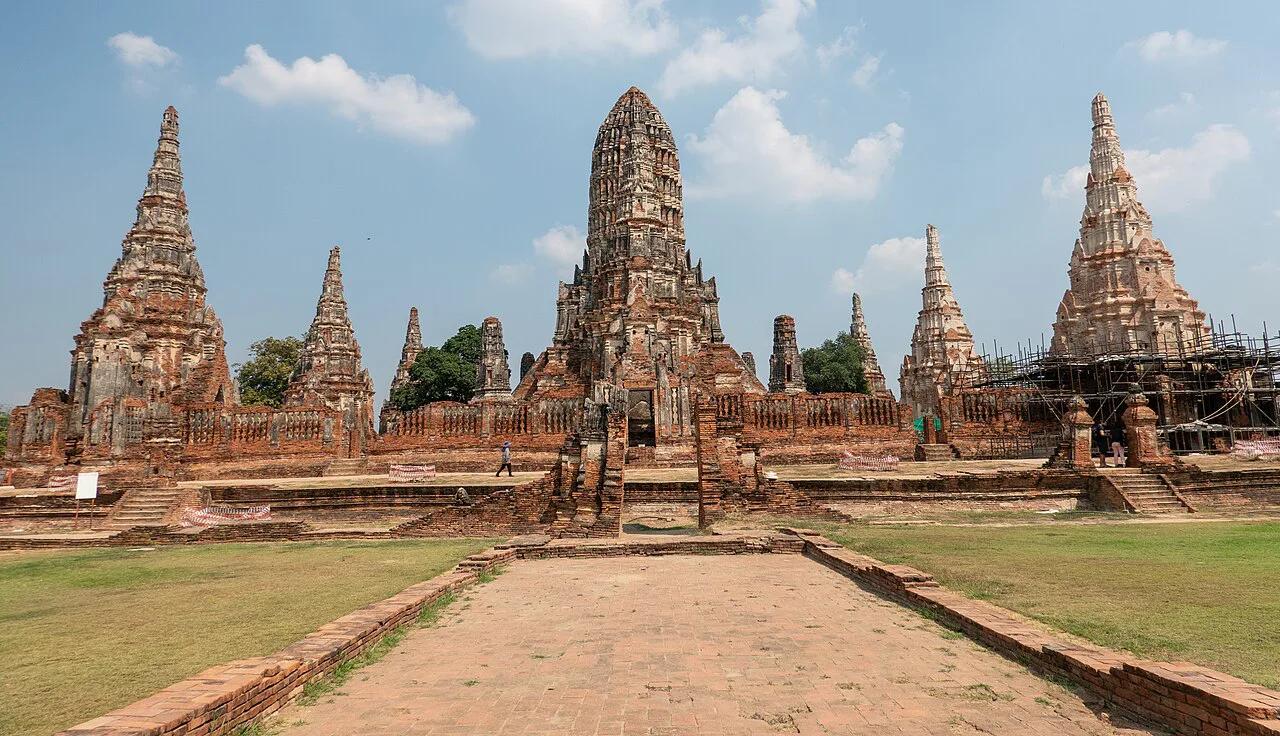
Last updated November 2026: these are the things to do in Ayutthaya that earn the trip, led by Wat Mahathat, Wat Ratchaburana, Wat Phra Si Sanphet and Wat Chaiwatthanaram. Ayutthaya was Siam's capital until the Burmese sacked it in 1767, and UNESCO listed the ruins in 1991. Our verdict: one full day works from Bangkok, but we'd stay one night for sunset and the outer temples.
Featured image: Don Christie, CC BY-SA 4.0, via Wikimedia Commons.
Ayutthaya at a Glance
Ayutthaya sits about 50 miles (80 km) from Bangkok, and trains take roughly 1h40 to 2 hours. Siam's capital for centuries, it fell to Burma in 1767 and joined UNESCO's World Heritage List in 1991. One full day is the minimum for the core ruins. Two days let you add the riverside and outer temples. November to February is the most comfortable window. There is no single park gate, so you pay per site, usually ฿50 at the larger ruins. For the full site map, use our park guide for the ruins. Bicycle, tuk-tuk or a mix of both works best for getting around.
How to Pick Your Route by Time and Traveler Type
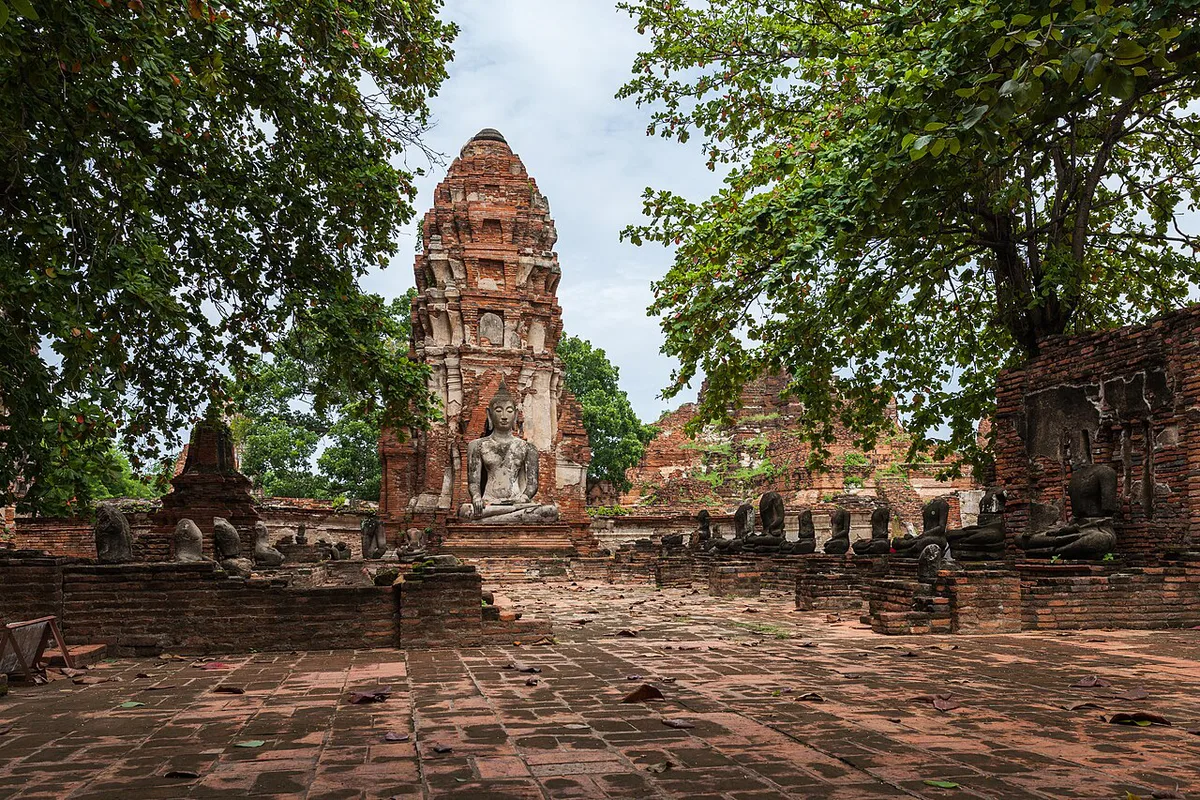
Distances look short on the map and feel long in the heat. Five core ruins fit a 4 to 5 hour tuk-tuk loop. Wat Mahathat and Wat Ratchaburana face each other across the road, so pair them on foot. Wat Phra Si Sanphet and Wat Phra Ram also sit close together. Everything off the island needs a tuk-tuk, bicycle, scooter or boat. Match your plan to the table below.
| Your situation | Best route | Why |
|---|---|---|
| Half day | Central cluster: Wat Mahathat, Wat Ratchaburana, Wat Phra Si Sanphet | Walkable pairs, no transport needed |
| Full day | Central cluster plus Wat Chaiwatthanaram near sunset | Adds the best riverside light |
| Two days | Island core and museum, then Wat Yai Chai Mongkhon, Wat Phanan Choeng and Wat Phutthaisawan | Outer temples get their own day |
| Families | Wihan Phra Mongkhon Bophit, Wat Ratchaburana and a tuk-tuk loop | Short stops, open grounds, no long walks |
| Heat-sensitive | Early start, museum or lunch at midday, riverside after 4 PM | Keeps you indoors at the hottest hours |
| Photographers | Wat Phra Ram late afternoon, Wat Chaiwatthanaram at sunset | Low-angle light on red brick |
| History buffs | Chao Sam Phraya National Museum first, then Wat Mahathat and Wat Ratchaburana | Museum finds explain the ruins |
| Rainy day | Museum plus the roofed hall at Wihan Phra Mongkhon Bophit | Indoor stops close together |
12 Best Things to Do in Ayutthaya, From the Island Core to the Outer Temples
Prices and hours checked November 2026. Entry is paid per site, with ฿50 quoted at several larger ruins and many smaller temples free or by donation. Items 1 to 4 sit in the island core. Items 5 to 7 cover the island's west side and the museum. Items 8 to 12 lie off the island. Opening hours vary by site, so look for the posted board at each gate.
1. Wat Mahathat
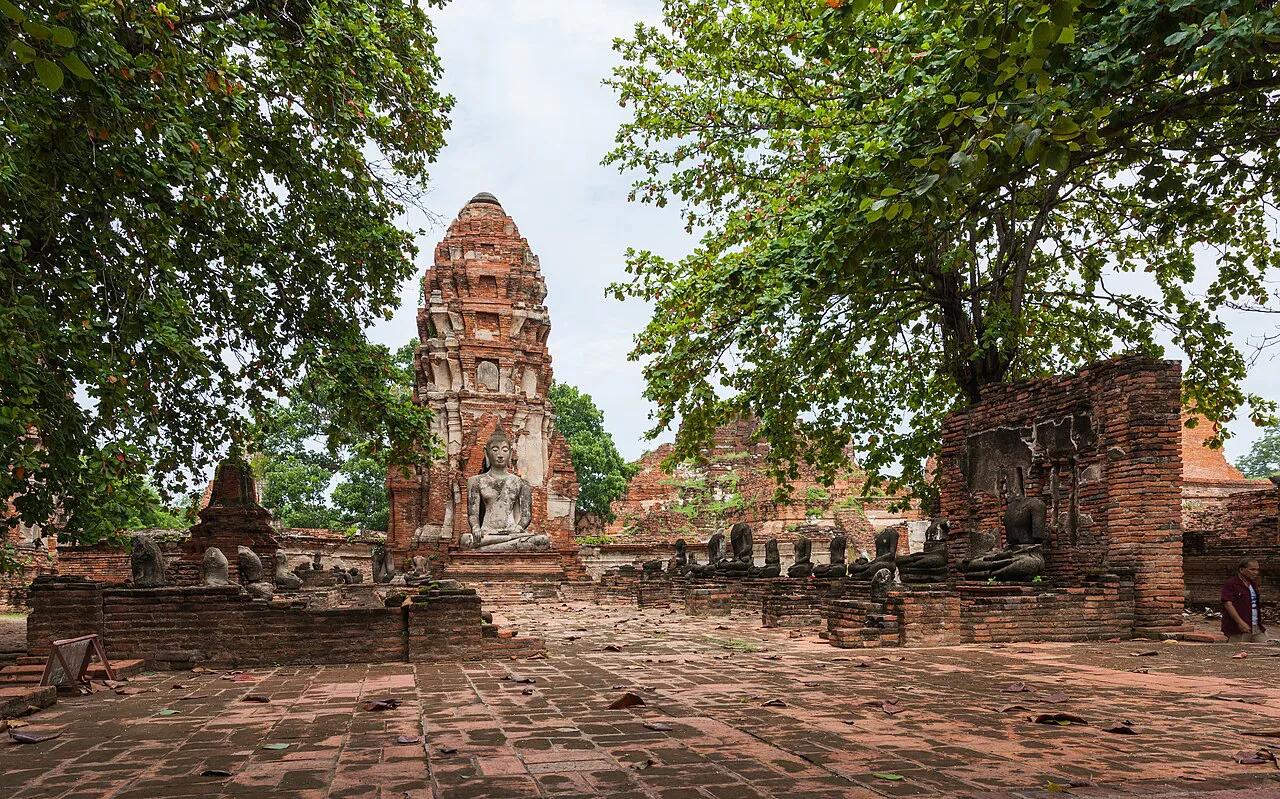
Wat Mahathat sits in the island core, directly opposite Wat Ratchaburana. Work here is thought to have begun in the 1370s, and the complex was once Ayutthaya's largest and most revered temple. Its sandstone Buddha head sits in the roots of a tree and is thought to have fallen from a statue after the 1767 sack. Crouch or sit so your head stays lower than the Buddha's when you photograph it.
Entry costs ฿50, you need covered knees and shoulders, and 45 to 60 minutes is enough. Arrive soon after opening to beat the photo queue. Skip the queue if you dislike waiting for one shot, and spend your time among the headless Buddhas and the central prang. Our Wat Mahathat's Buddha head guide covers the layout.
2. Wat Ratchaburana
Wat Ratchaburana stands across the road from Wat Mahathat, so the two make an easy pair. King Borommarachathirat II built it in 1424 in memory of his two older brothers, who according to historical accounts killed each other fighting over the throne. Its Khmer-style central prang is the standout, and you can climb inside for views over the ruins. Gold treasures from its crypt now sit in the Chao Sam Phraya National Museum.
Allow 45 to 60 minutes. Entry is a paid ticket. Skip the climb if midday heat is already wearing you down. The carved detail on the prang reads well from the ground.
3. Wat Phra Si Sanphet and Wihan Phra Mongkhon Bophit
Wat Phra Si Sanphet was the official royal temple of the old capital, set within the palace complex. Three large chedis stand in a row and are said to hold the ashes of Ayutthaya kings. Walk between them and look for the foundations of old halls and chapels. Right beside the ruins, Wihan Phra Mongkhon Bophit shelters an enormous seated bronze Buddha, so remove your shoes before going in.
Budget about 45 minutes for the ruins, where ฿50 gets you in. The Buddha hall is free or by donation and takes 20 to 30 minutes. Few first-timers should skip this stop, since the three chedis are one of the city's main symbols.
4. Wat Phra Ram
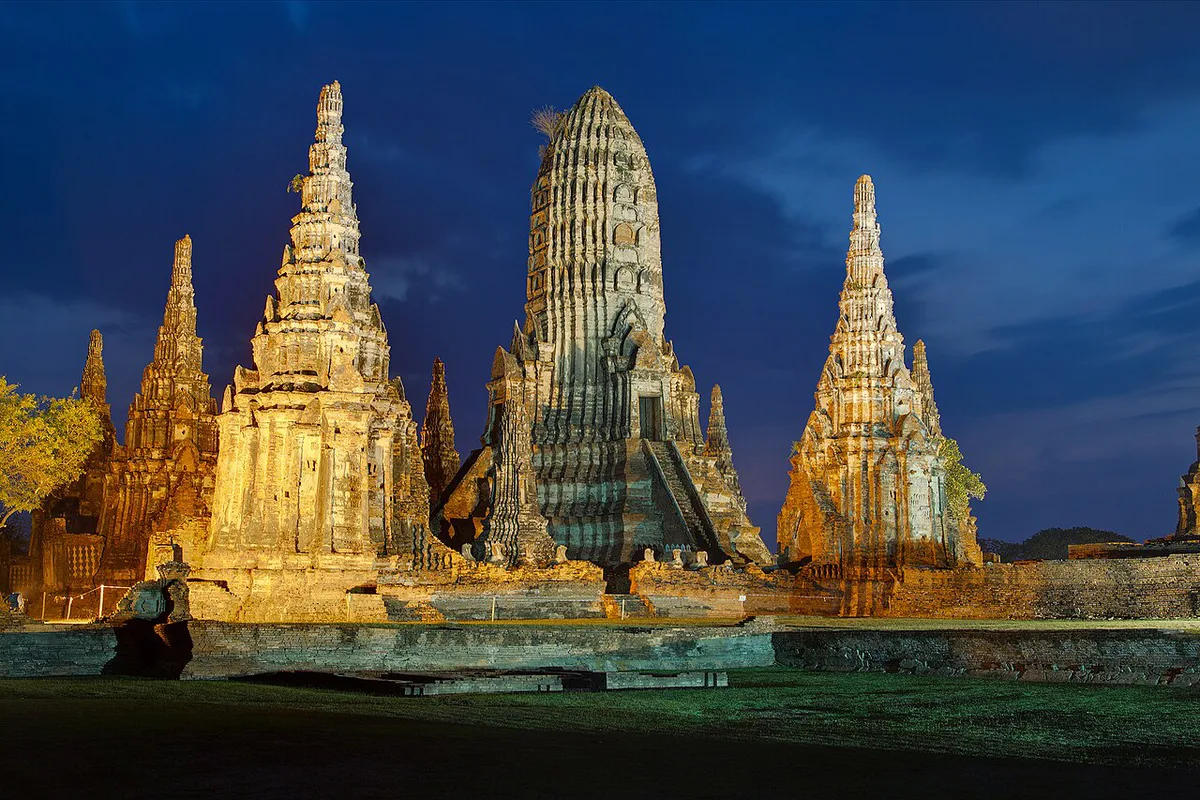
Wat Phra Ram sits close to Wat Phra Si Sanphet, with a tall central prang ringed by smaller chedis. Tradition links the site to the cremation of King U-Thong, Ayutthaya's founder. A park and pond beside the ruins give shade and good late-afternoon angles. Tour groups tend to head for Wat Mahathat and Wat Phra Si Sanphet, so you often get more room here.
Allow about 30 minutes. Entry is ฿50. Skip it if you are short on time or at your ruin limit, because Wat Ratchaburana shows a similar Khmer-style prang.
5. Wat Lokaya Sutha
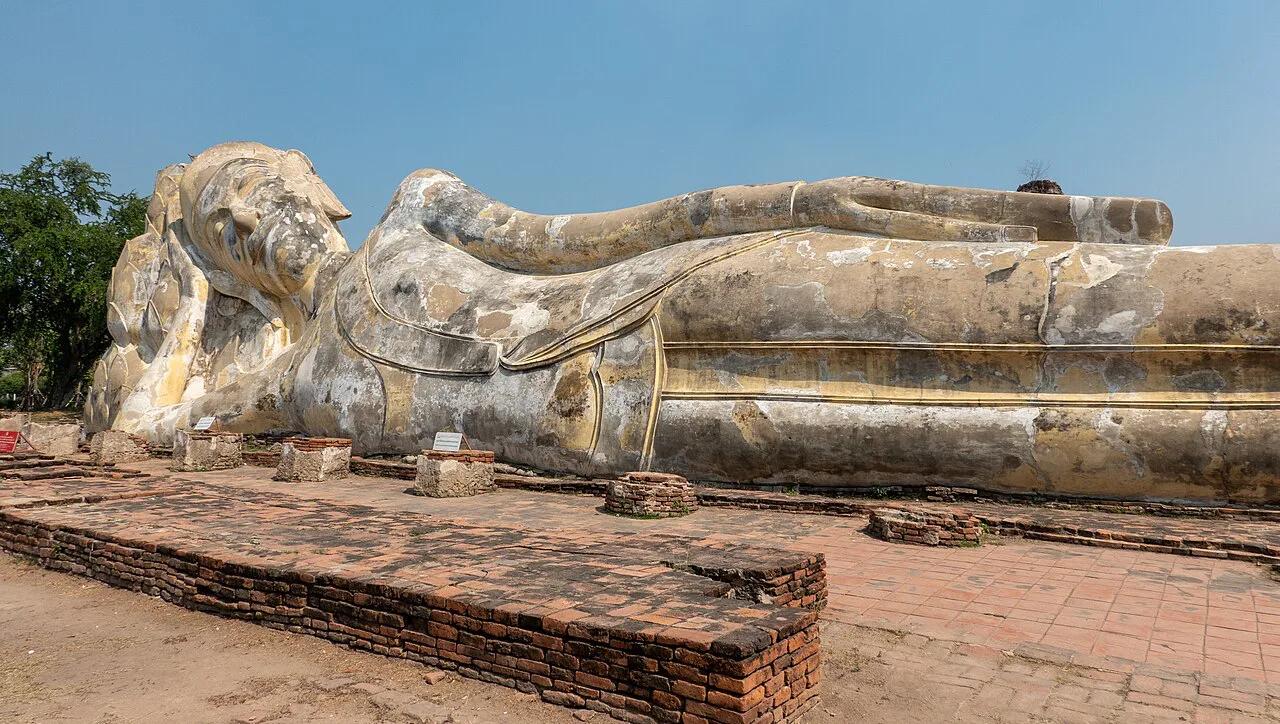
Wat Lokaya Sutha lies along the western edge of the island, beyond the old palace grounds. Its outdoor reclining Buddha is about 42 m (138 ft) long, built of brick and finished with white plaster. Little else of the temple survives apart from foundations and a few chedis, so this is a quick, photogenic stop. Early morning is quietest, and 20 to 30 minutes is plenty. Entry is usually free.
Nearby Wat Wora Chet Tha Ram adds a bell-shaped chedi and almost no crowds if you have another 20 minutes. Skip it only on a half-day route. Otherwise it is a cheap, fast change of pace from prangs.
6. Wat Thammikarat
Wat Thammikarat sits a short wander from some of the best-known ruins and sees few visitors. Lion figures ring a chedi, and many rooster statues recall a legend about a wager over a cockfight. Worshippers leave offerings at the roosters, so keep your voice low and your camera respectful.
Plan a short stop. Add it to a tuk-tuk loop when you want a breather from tour groups. Skip it if you want ruins only. The draw here is the statues rather than monumental architecture.
7. Chao Sam Phraya National Museum
Chao Sam Phraya National Museum explains why the ruins look so bare. Built in the 1960s, it holds gold, jewelry and ceremonial objects recovered from the crypts of Wat Ratchaburana and Wat Mahathat. Ceramics, Buddha images and architectural fragments fill the other rooms. It sits near Wat Phra Si Sanphet.
Allow 60 to 90 minutes. Entry is a paid ticket. We'd visit it first, or at midday when the sun is hardest on the ruins. Skip it only on a half-day route, or once temple fatigue has set in.
8. Wat Chaiwatthanaram
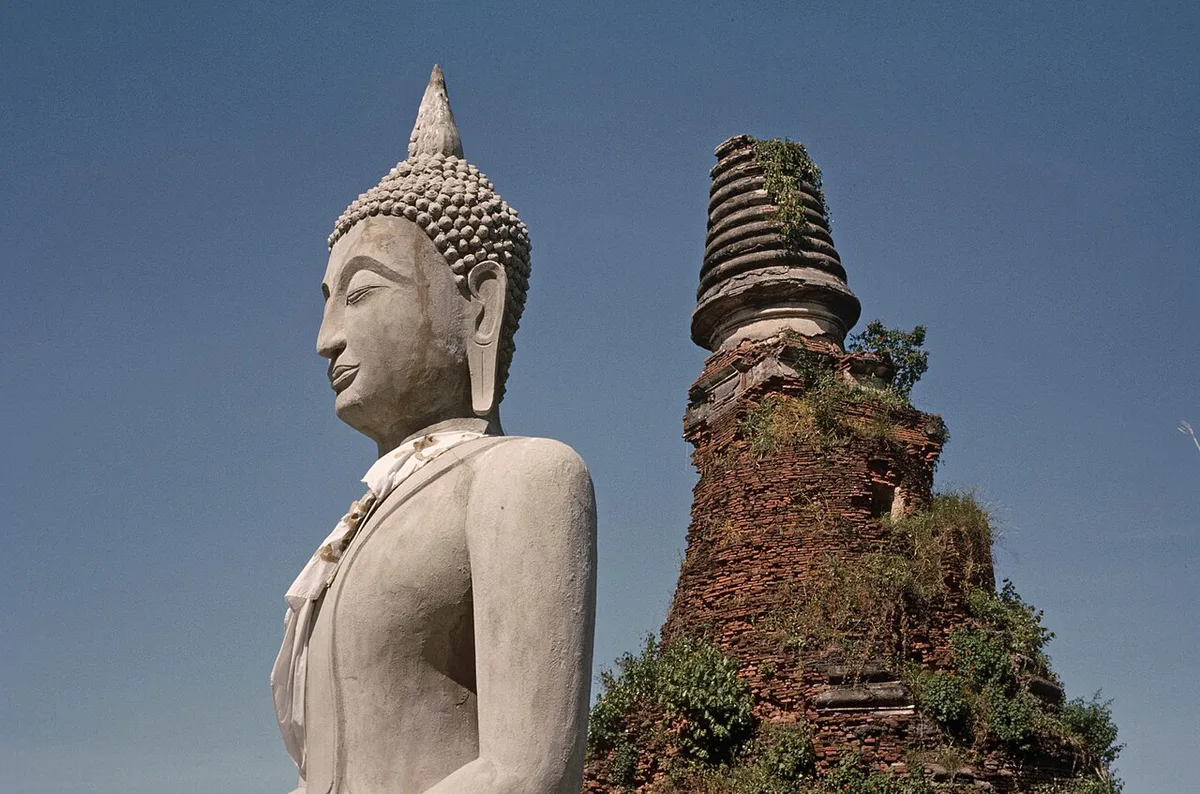
Wat Chaiwatthanaram stands off the island on the western bank of the Chao Phraya River. King Prasat Thong built it in 1630, and Khmer influence shows in its 35 m central prang. Four smaller prangs and eight chapel-like structures surround it in a balanced layout. Many visitors rent traditional Thai clothing near the gate for photos.
Our pick for the best light is late afternoon through sunset. Plan 45 to 75 minutes on site, with a paid entrance, and see our riverside Chaiwatthanaram guide for more. Skip it only if you must leave Ayutthaya by early afternoon, because midday light flattens the brick.
9. Wat Yai Chai Mongkhon
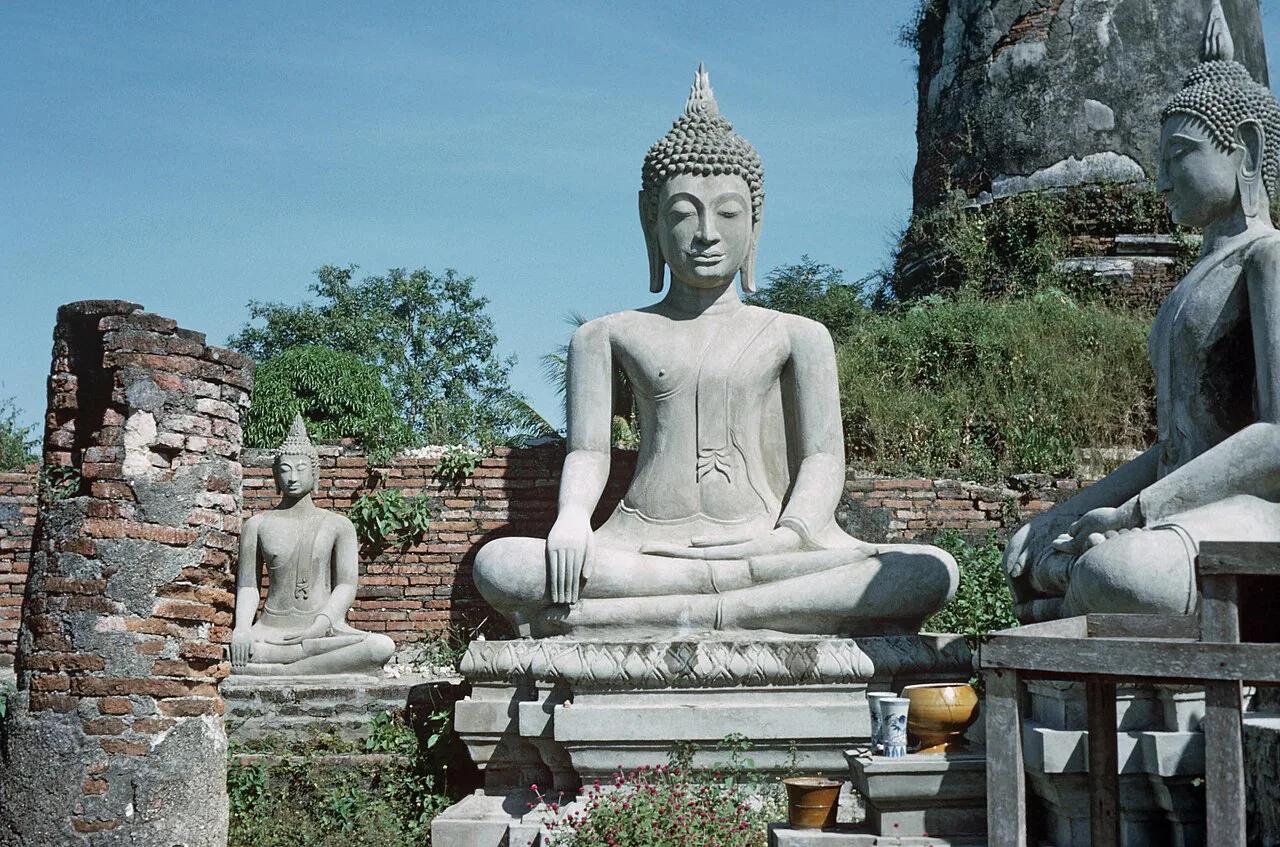
Wat Yai Chai Mongkhon lies off the island to the southeast and works as both a historic site and an active monastery. A tall chedi dominates it, and you can climb part of the way up for views across the grounds. Rows of Buddha statues draped in yellow fabric flank the chedi, and a large reclining Buddha lies nearby.
Plan 45 to 60 minutes and expect a small entrance fee. It combines well with Wat Phanan Choeng on a second sightseeing day. Skip it on a one-day trip. That travel time is better spent on Wat Chaiwatthanaram.
10. Wat Phanan Choeng
Wat Phanan Choeng covers a large area where the Pasak and Chao Phraya rivers meet. Its gilded seated Buddha, Phra Buddha Triratana Nayok, fills almost the whole prayer hall. It is an active temple, important to Thailand's Chinese community, so expect worshippers, offerings and Chinese architectural details. Lotus-shaped floating candles are sold nearby.
Allow 30 to 45 minutes. The entrance fee is small or by donation. Skip it if you want ruins only, since this is a working temple rather than an archaeological site.
11. Wat Phutthaisawan
Wat Phutthaisawan stands beside the Chao Phraya River. King U-Thong founded it in 1353 to mark the campsite where he lived while the new city was built. A white central prang rises above rows of Buddha images, and a raised walkway circles it. Monks still live in the complex.
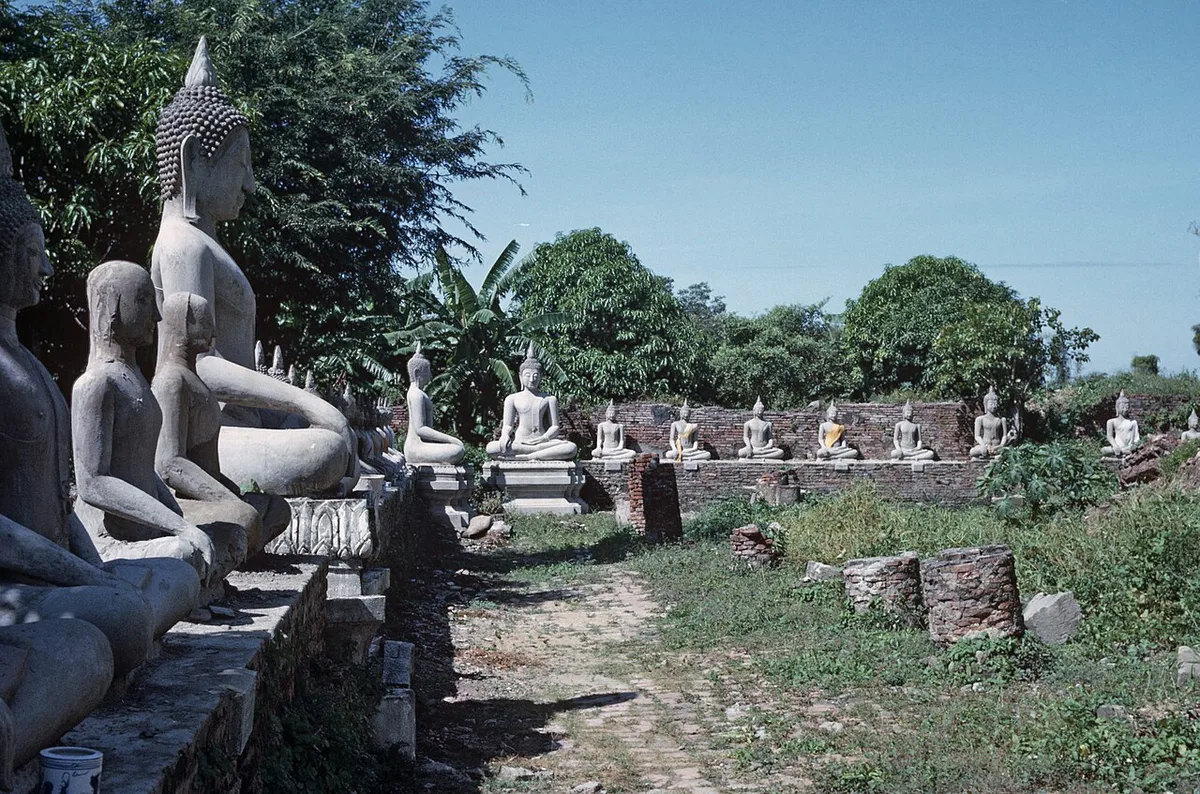
Boat tours stop here, which is the easiest way to arrive, and 30 to 45 minutes is enough. Entry is usually free or by donation. Skip it if you have no boat or tuk-tuk, because it is awkward to combine with the central temples.
12. Wat Phu Khao Thong
Wat Phu Khao Thong, also written Chedi Phu Khao Thong, rises above rice paddies outside the city. Its name means Golden Mount, though the chedi is white. Climb the stairs for a wide view of the countryside. By scooter it takes about 15 minutes from the Wat Lokaya Sutha reclining Buddha.
Few visitors make it out here, which is the appeal. Skip it on a one-day trip, or if you are not confident on a scooter. A tuk-tuk driver can take you instead.
Beyond the Temples: Boat Tour, Floating Market and Bang Pa-In
An evening boat tour is our pick for the riverside temples. A typical trip costs about ฿250 including transport to the pier and runs roughly two and a half hours. Stops include Wat Phanan Choeng, Wat Phutthaisawan and Wat Chaiwatthanaram. A 4:30 PM start puts the last stop in golden hour. Routes and prices differ by operator, so ask before you book. Bang Pa-In's rebuilt royal palace is an add-on about 10 miles south of Ayutthaya, reachable by train, taxi or tuk-tuk. King Rama V rebuilt it into its current form. The floating market on the river offers food cooked on boats in a relaxed, family-friendly setting, but check current opening days first. History fans can add the Japanese Village museum or Baan Hollanda, a Dutch-settlement museum reconstructed and opened in 2013. We'd skip elephant rides because of animal welfare concerns. A bicycle, the boat tour or the museum fills the same time with more substance.
Ayutthaya With Kids and in the Rain
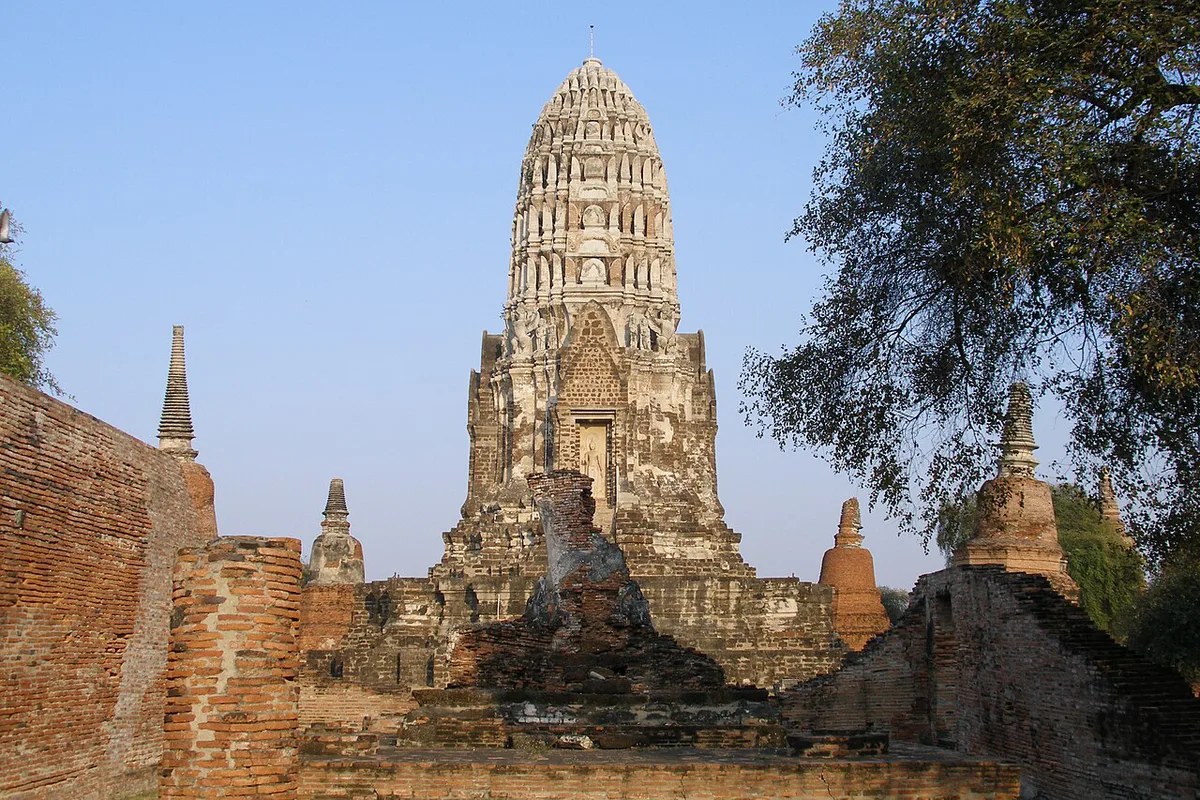
Open lawns at Wat Phra Si Sanphet and Wat Phra Ram give children room to run. Wat Ratchaburana's prang can be climbed inside for views, which most kids enjoy. Keep each stop to 30 to 45 minutes and hire a tuk-tuk, since its long rear benches carry a whole family. Heat is the main risk, so start early and rest at midday. Families can pair the trip with our Bangkok with children plan. Rainy season runs May to October, and flooding can affect low-lying areas. On wet days, Chao Sam Phraya National Museum (60 to 90 minutes) and the roofed hall of Wihan Phra Mongkhon Bophit keep you dry. Back in the capital, indoor options for rainy Bangkok days fill the evening.
Getting to Ayutthaya From Bangkok
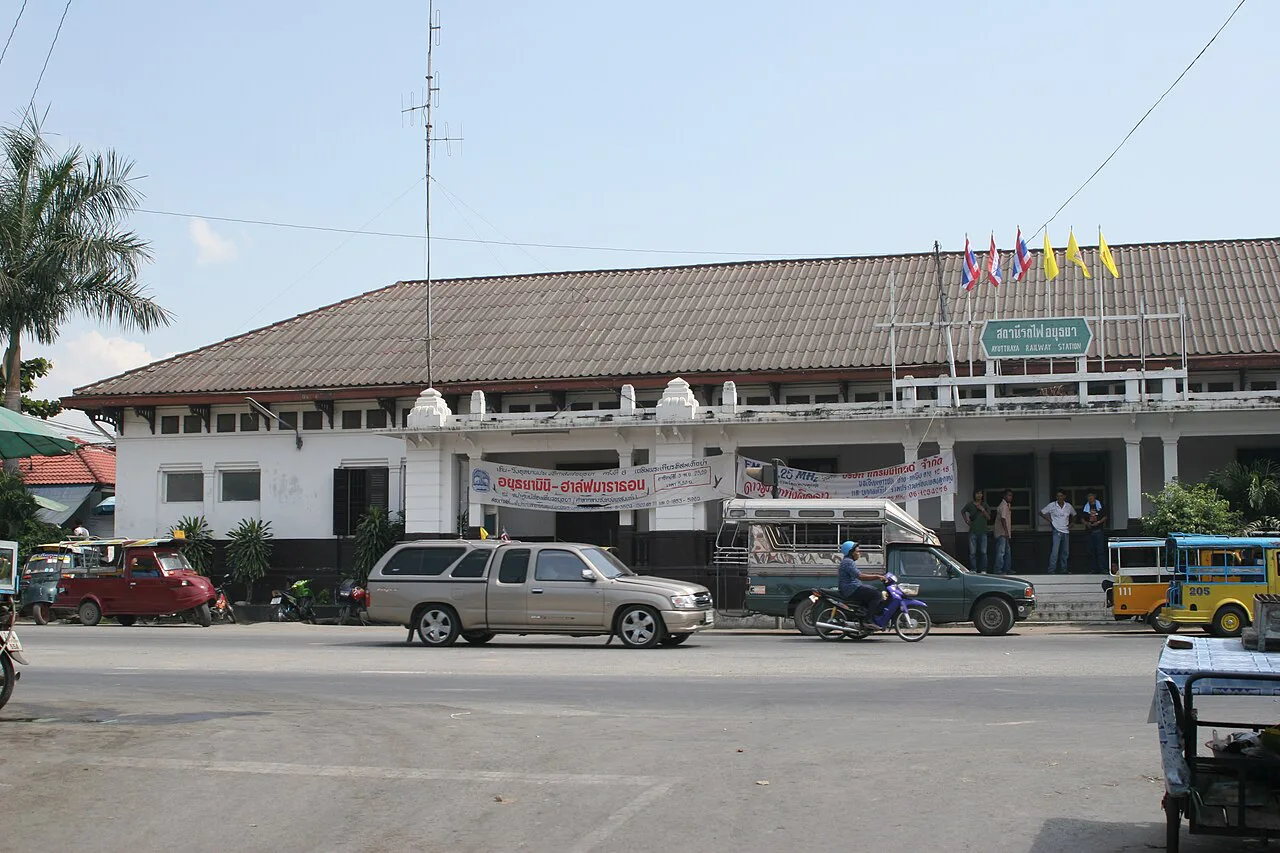
Train is the cheapest option: about ฿30 in third class and about ฿40 in second class. The ride takes 1h40 to 2 hours over roughly 50 miles (80 km), and trains run frequently through the day. Accounts name both Hua Lamphong and Bang Sue as the Bangkok departure station, so check the State Railway of Thailand timetable for your station and the last return train. Minivans, private drivers and guided tours cost more but save planning. A private driver is priced per group, so it suits two or three people. If you plan to be back in the city for dinner, our Bangkok after dark ideas help. Pair the whole trip with our Bangkok sightseeing plan.
| Option | Cost level | Time | Flexibility | Best for |
|---|---|---|---|---|
| Train | Lowest, about ฿30–40 | 1h40–2h | Fixed timetable | Budget travelers |
| Minivan | Low to moderate | Varies with traffic | Set departures | Independent travelers avoiding trains |
| Private transfer or driver | Higher, priced per group | Varies with traffic | High: you set the stops | Two or three people, families, heat-sensitive visitors |
| Guided day tour | Highest | Full day | Low | First-timers who want a guide |
Getting Around Ayutthaya: Bicycle, Tuk-Tuk, Scooter, Boat and Walking
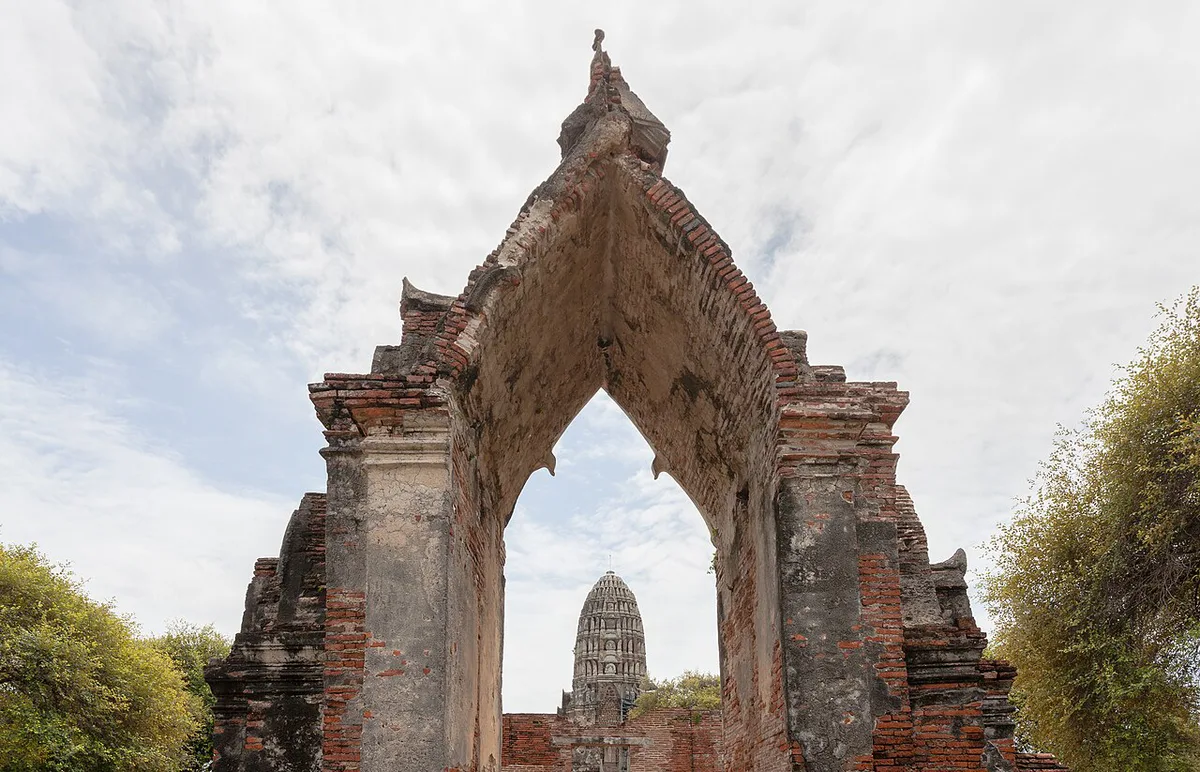
Bicycles rent for about ฿50 to ฿100 per day, shops near the train station quote ฿60, and some guesthouses include bikes free. Tuk-tuk quotes run from ฿200 per hour to ฿1,000–฿1,500 for most of a day, or about ฿1,200 for four or five temples. Agree route, duration, price and waiting time before you board. Scooters rent for about ฿300 and give freedom, but rent one only if you ride confidently. Boat tours cost about ฿250 and cover three riverside temples. Walking works only for the central group of Wat Mahathat, Wat Ratchaburana, Wat Phra Si Sanphet and Wat Phra Ram.
Five core ruins fit a 4 to 5 hour tuk-tuk loop, so expect a quote of about ฿1,200 for four or five temples, agreed before you board.
| Mode | Approx. cost | Best for | Trade-off |
|---|---|---|---|
| Bicycle | ฿50–100 per day | Central island, independent travelers | Heat; outer temples are far |
| Tuk-tuk | ฿200 per hour or ฿1,000–1,500 per day | Outer temples, families, hot days | Negotiate price and route first |
| Scooter | About ฿300 | Confident riders on a tight schedule | Road safety; not for beginners |
| Boat | About ฿250 | Riverside temples at sunset | Fixed stops and short visits |
| Walking | Free | Central cluster only | Not realistic off the island |
Best Time to Visit Ayutthaya and How to Beat the Heat
November to February is the most comfortable window, with temperatures around 68 to 86°F (20 to 30°C). March and April run hottest, above 104°F (40°C). May to October is rainy season, with humidity and possible flooding but fewer visitors. Build each day around the sun. Start early, break for lunch or the museum at midday, and save the riverside temples for late afternoon. Cover your knees and shoulders at temples that require it. At the Buddha head in Wat Mahathat, crouch so your head stays lower than the statue's.
Day Trip or Overnight in Ayutthaya?
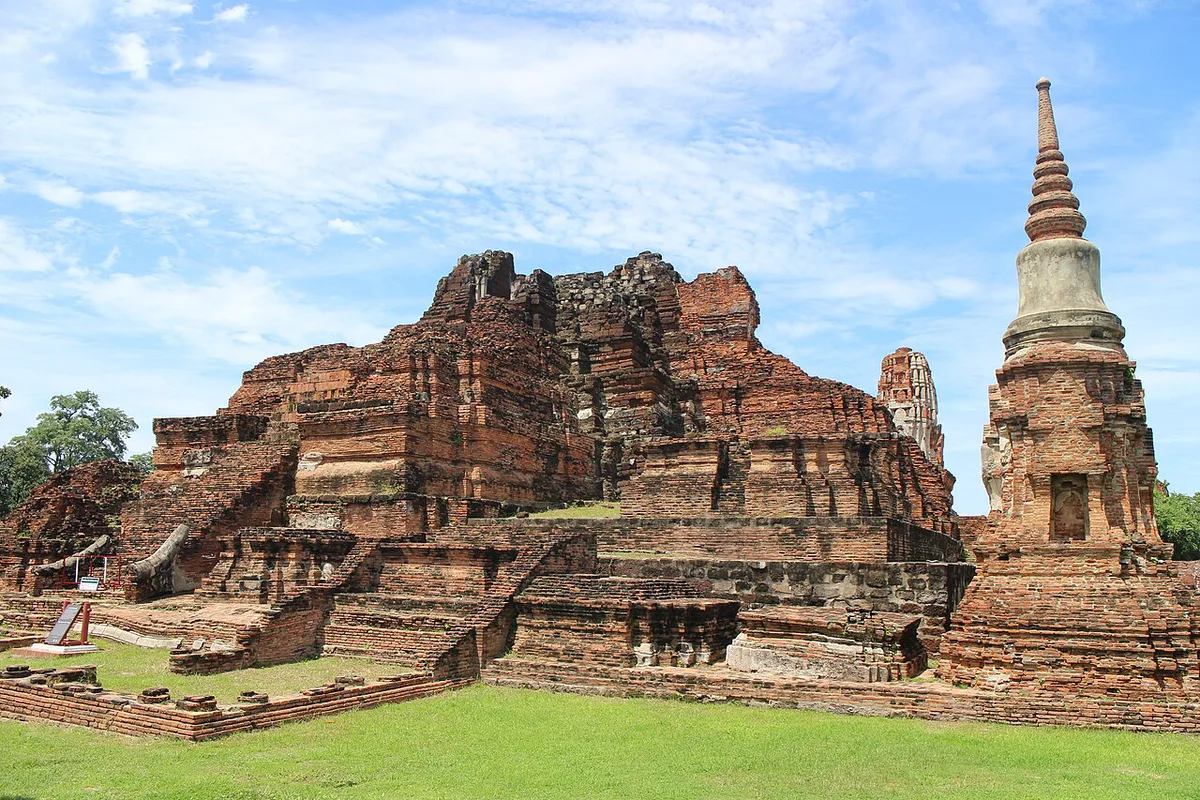
One full day covers the five core ruins, so we'd choose a day trip if you only have one day or travel with young children. Stay a night for sunrise or sunset at the ruins, the evening boat tour, a midday break from the heat, or the outer temples. Evening logistics matter, because reports suggest few taxis or tuk-tuks after dark. Ask your host about rides and the last train back before you commit. Do not plan on night visits to the temples, since hours and lighting vary by site. Sala Ayutthaya sits across the Chao Phraya from Wat Phutthaisawan. Baan Lotus is a homestay-style option near Soi Farang. The Park Ayutthaya sits within the Historical Park, with Wat Mahathat in view.
- Stay if you want sunset at Wat Chaiwatthanaram, the boat tour or a cooler morning start.
- Go as a day trip if you have one day, or if you travel with toddlers.
- Choose the riverside for atmosphere, or the area near Wat Mahathat to be close to the ruins.
Ayutthaya Costs and Mistakes to Avoid
Expect ฿50 at several major ruins, including Wat Mahathat and Wat Phra Si Sanphet. Many smaller temples are free or ask for a donation. No combined park ticket exists on the standard route, so budget per site. A day by train, bicycle (฿50–100) and a few ฿50 entries stays inexpensive. Most mistakes come from distance and heat rather than money.
- Underestimating distances: the island looks compact, but riverside and outer temples need wheels.
- Skipping heat planning: start early and rest at midday from March to April.
- Hiring a tuk-tuk without agreeing route, price and waiting time first.
- Expecting every site to be walkable: only the central group is.
- Assuming temples are open or lit at night: ask locally.
Sample Ayutthaya Itineraries for One Day and Two Days
Both plans start early and keep midday for lunch. Food stalls sit across the street from Wat Phra Ram, which makes it a natural break.
An early train, arriving around 10 AM, gets you to the ruins before midday heat builds, and March and April run hottest, above 104°F (40°C).
- One day: take an early train, arriving around 10 AM, then visit Wat Mahathat and Wat Ratchaburana on foot.
- One day: lunch near Wat Phra Ram, then Wat Phra Si Sanphet and Wihan Phra Mongkhon Bophit.
- One day: take a tuk-tuk to Wat Chaiwatthanaram for late light, then catch the train back.
- Two days, day one: start at Chao Sam Phraya National Museum, then the island core and Wat Lokaya Sutha.
- Two days, day two: Wat Yai Chai Mongkhon and Wat Phanan Choeng, then the evening boat tour past Wat Phutthaisawan and Wat Chaiwatthanaram.
Explore More Ayutthaya Guides
Keep planning your Ayutthaya trip with these guides.
Ayutthaya Guides
- Ayutthaya attractions hub: tickets, hours & maps
- Ayutthaya Historical Park: Ruins, Tickets & How to Visit
- Wat Mahathat Ayutthaya: Buddha Head, Tips & Route
- Wat Chaiwatthanaram Guide
- Ayutthaya Floating Market: Is It Worth Visiting? (Guide)
- Bang Pa-In Palace
- 14 Things to Do in Bangkok
- 30 Things to Do in Bangkok at Night
- 8 Things to Do in Bangkok When It Rains
- 14 Things to Do in Bangkok With Kids
Things to do in other cities
Useful notes for your Thailand trip
Optional updates to our guides.
You might also like
Continue reading
More guides you'll find useful