Wat Arun Bangkok: Visit Guide, Ferry, Climb & Timing
How to visit Wat Arun in Bangkok: getting there by ferry, how long to stay, the prang climb, dress code, and pairing it with Wat Pho.
On this page
Last updated November 2026: Wat Arun, the Temple of Dawn, stands on the Thonburi bank of the Chao Phraya River, facing Wat Pho and the Grand Palace across the water. Plan on 1.5 to 2.5 hours, and cross from Tha Tien Pier on a ฿5 shuttle boat. Our verdict is that Wat Arun earns the trip for its porcelain-covered prang and river views, and it fits neatly into the wider Bangkok temple overview.
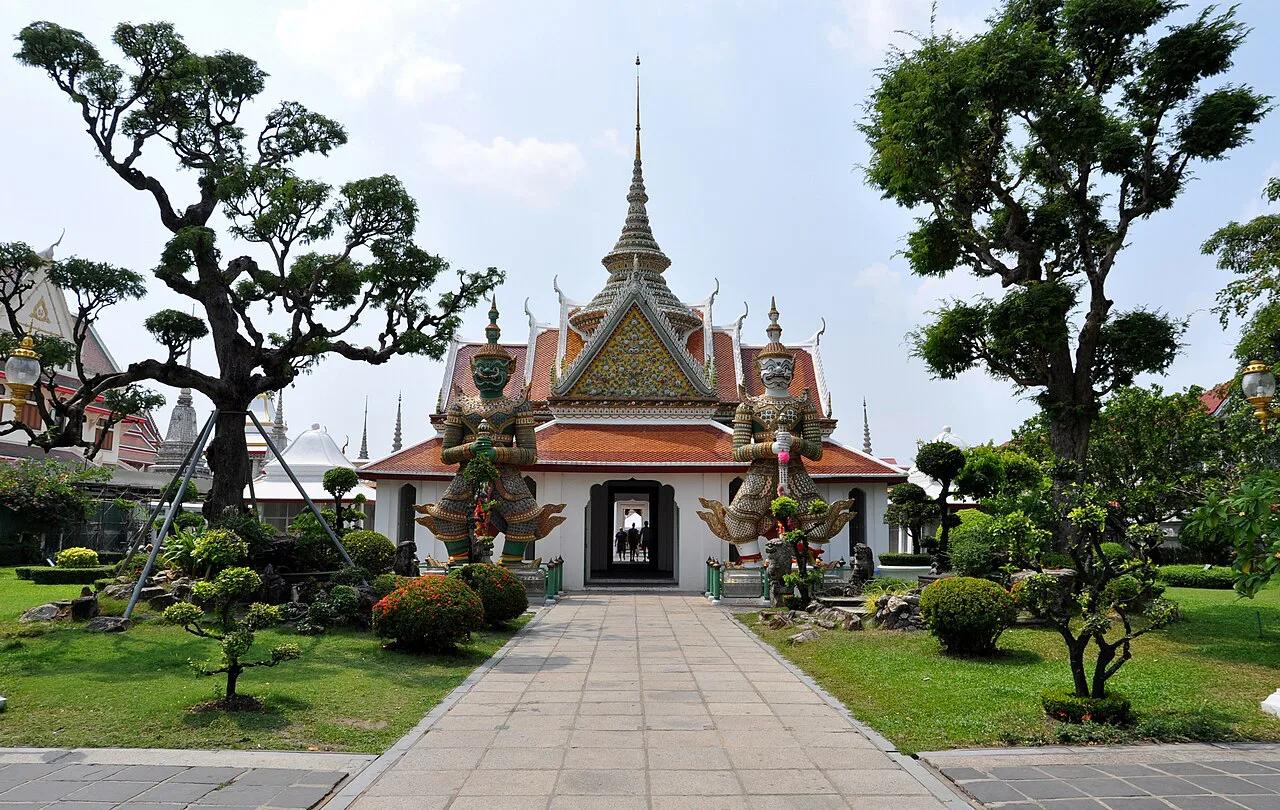
Featured image: Don Ramey Logan, CC BY-SA 3.0, via Wikimedia Commons.
Wat Arun at a Glance
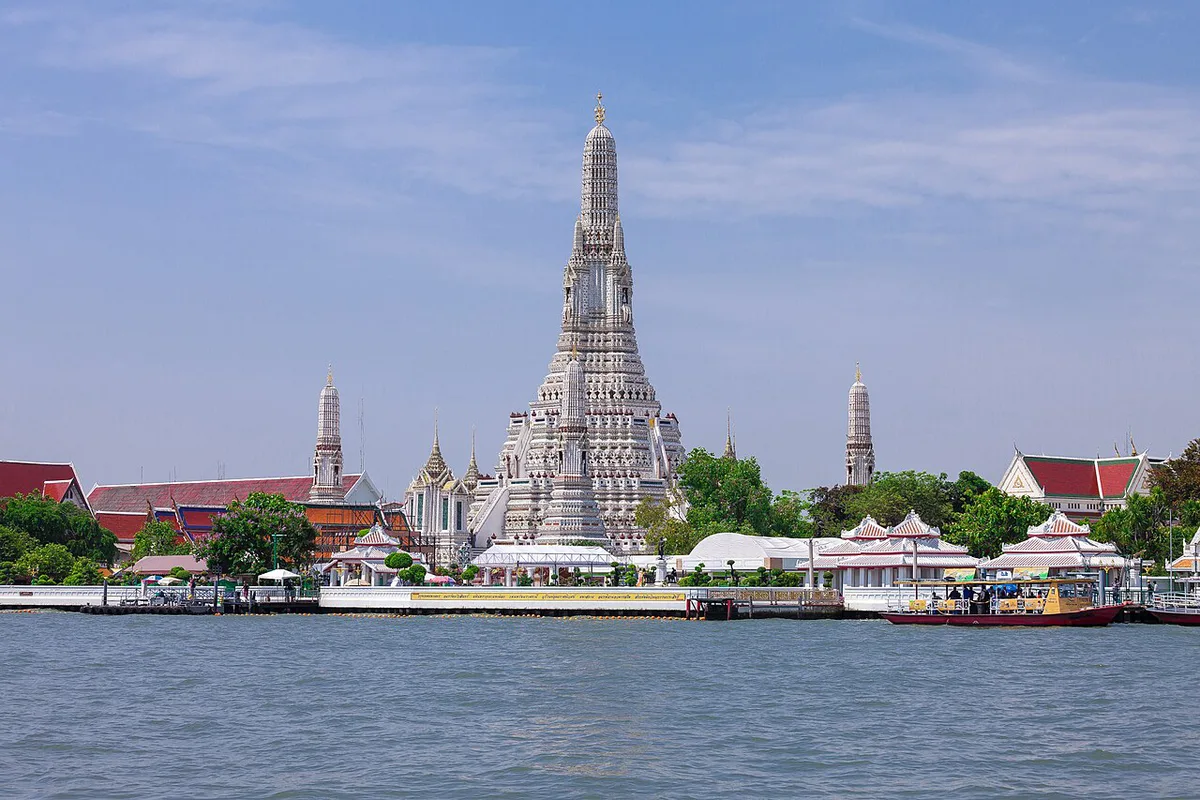
Wat Arun Ratchawararam is a working Buddhist temple on the west bank. Its central Khmer-style prang is listed at over 80 meters, roughly 260 feet. Most visitors need about 1.5 to 2.5 hours, including the climb and photo stops.
- Where: Thonburi (west) bank of the Chao Phraya, across from Wat Pho and the Grand Palace.
- Why go: porcelain-shard mosaics on the central prang, plus the view back toward the Grand Palace.
- Time needed: 1.5 to 2.5 hours.
- Admission: published listings show ฿200 for foreign adults; confirm on the official site.
- Best time: early morning or late afternoon, to avoid midday heat.
- Who might skip: anyone short on time or unable to manage steep stairs.
Is Wat Arun Worth Visiting?
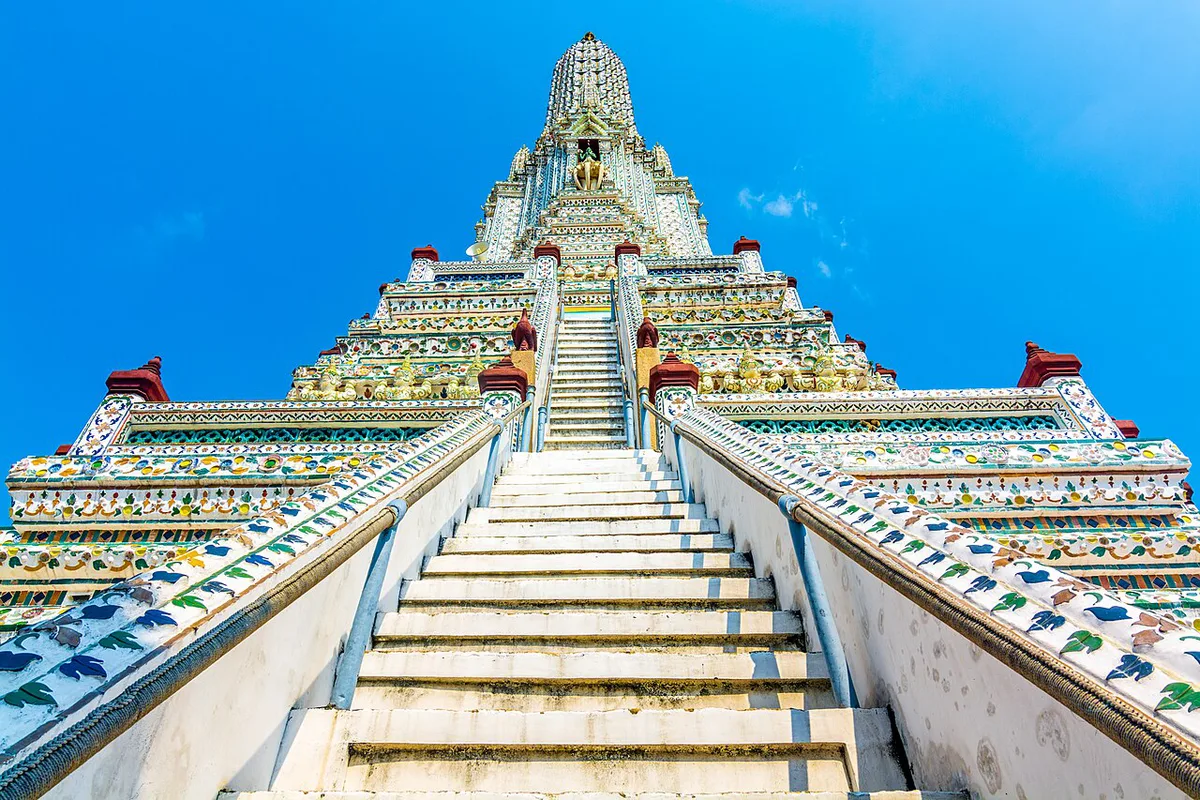
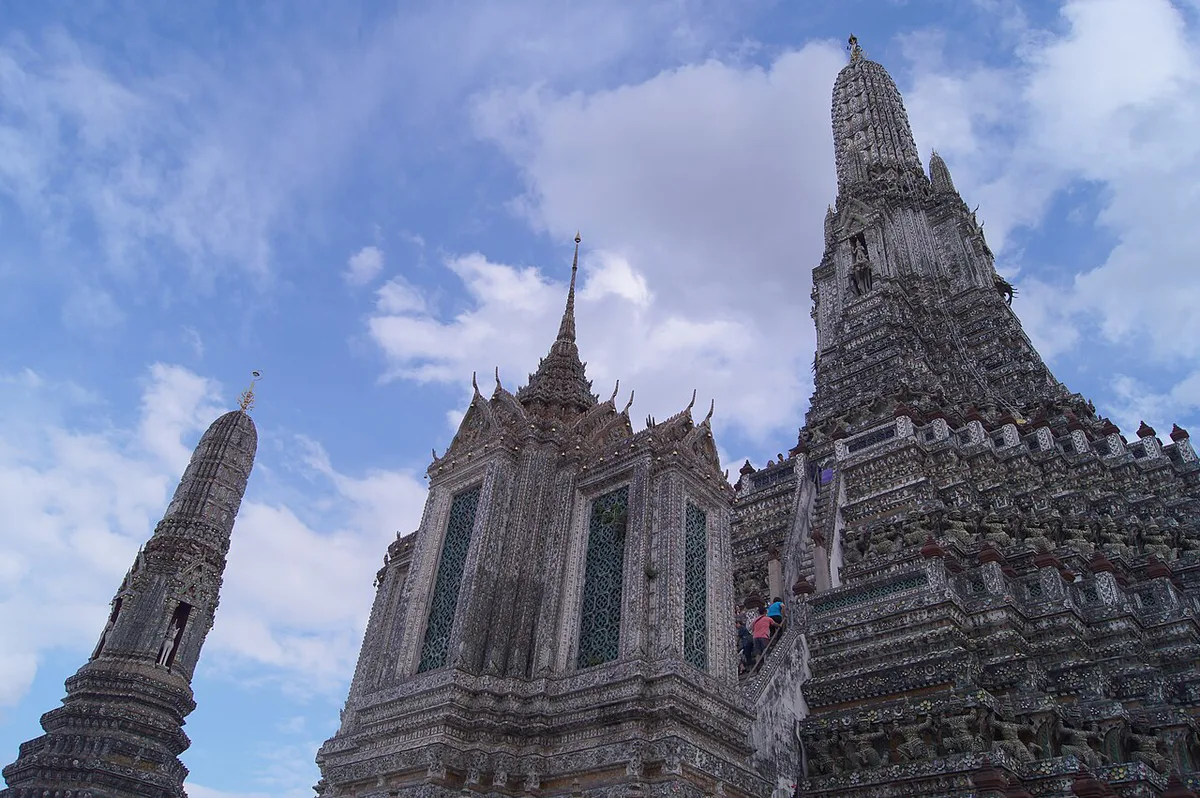
For most first-time visitors, yes. Few Bangkok temples reward a close look like this one. Up close, the prang is covered in pieces of Chinese porcelain and shells set into plaster in floral patterns. Photos flatten that detail. Travelers already doing the main Bangkok temples will find Wat Arun a different kind of stop, because the draw is the tower itself rather than a single interior hall.
Short on time? A 45-minute loop around the base and the first terrace still covers the main sight. Combine it with Wat Pho if you have a half-day. Skip it if you have a single temple slot and care more about interiors than architecture. Wat Arun is also not part of the Grand Palace complex, so do not assume one ticket covers both.
How to Get to Wat Arun
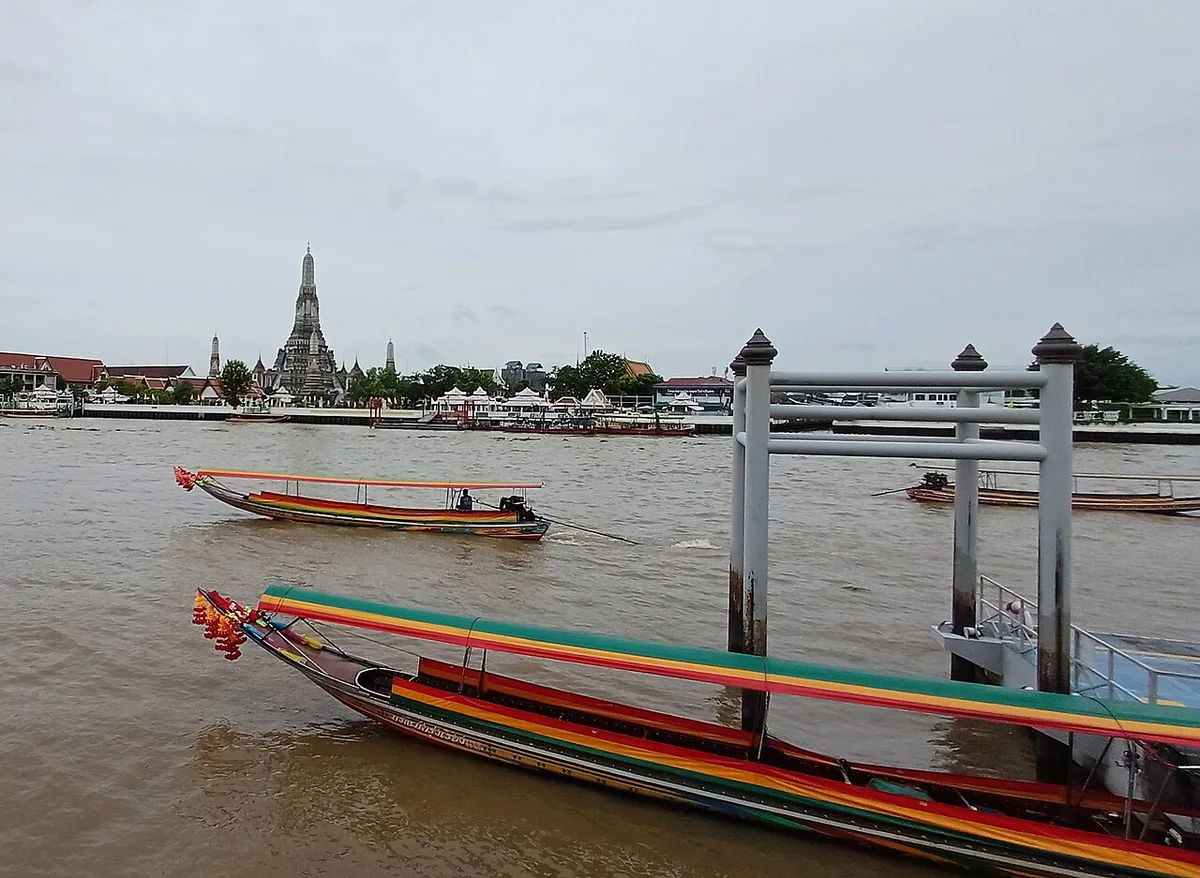
Wat Arun sits on the opposite bank from Wat Pho, so you cross the river. The easiest route starts at MRT Sanam Chai, Exit 1. From there, Tha Tien Pier is about a 3-minute walk. A shuttle boat from Tha Tien to Wat Arun Pier is reported at ฿5. The tourist boat from Sathorn Pier is reported at ฿30. Fares and routes change, so check the price posted at the pier.
Taxis and ride-hail apps also work. They avoid the boat but must cross a bridge, so allow extra time in traffic. Wat Pho's official visitor information is the best place to confirm its own hours before you plan the crossing.
| Route | Approx. time | Cost | Best for |
|---|---|---|---|
| MRT Sanam Chai (Exit 1), walk to Tha Tien, shuttle boat | About 3 min walk plus a short crossing | ฿5 (verify at pier) | Most visitors; combining with Wat Pho |
| Chao Phraya tourist boat from Sathorn Pier | Varies with river traffic | ฿30 (verify) | Travelers staying near Saphan Taksin |
| Taxi or ride-hail | Varies with traffic | Metered or app fare | Heat, mobility limits, small children |
Best Time to Visit: Dawn, Midday or Sunset
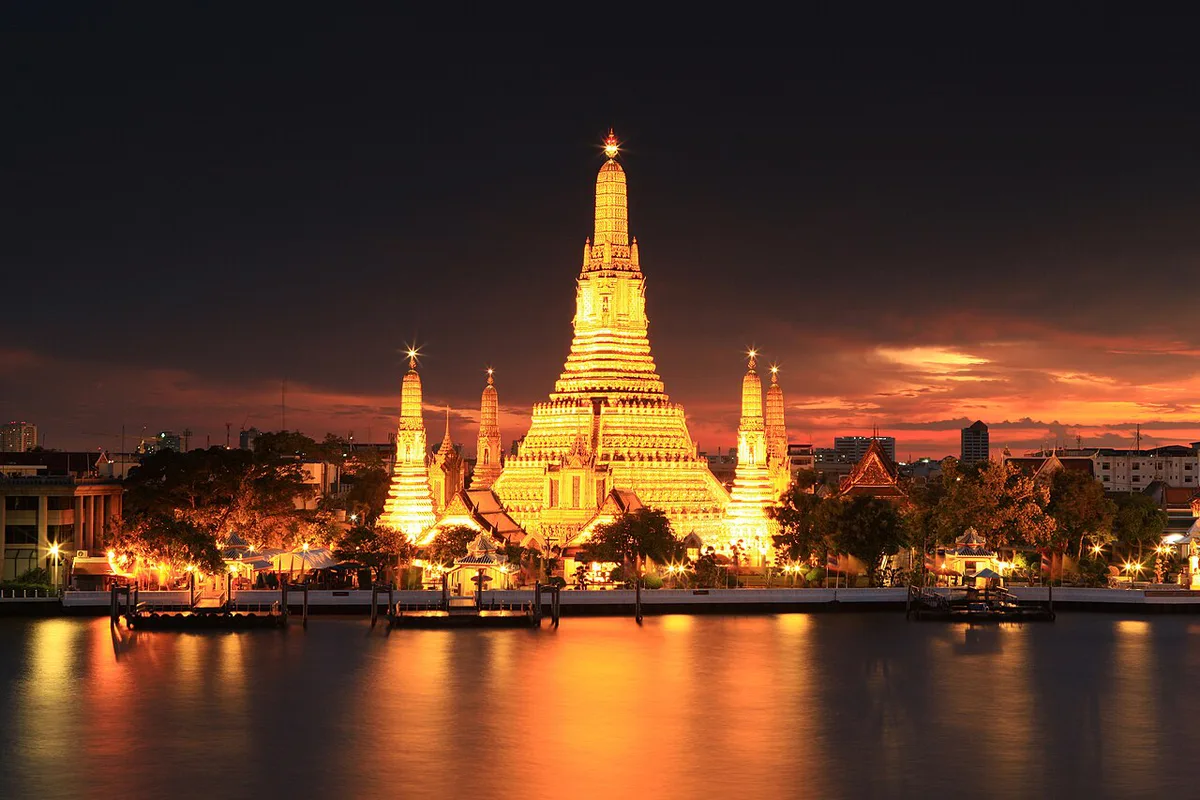
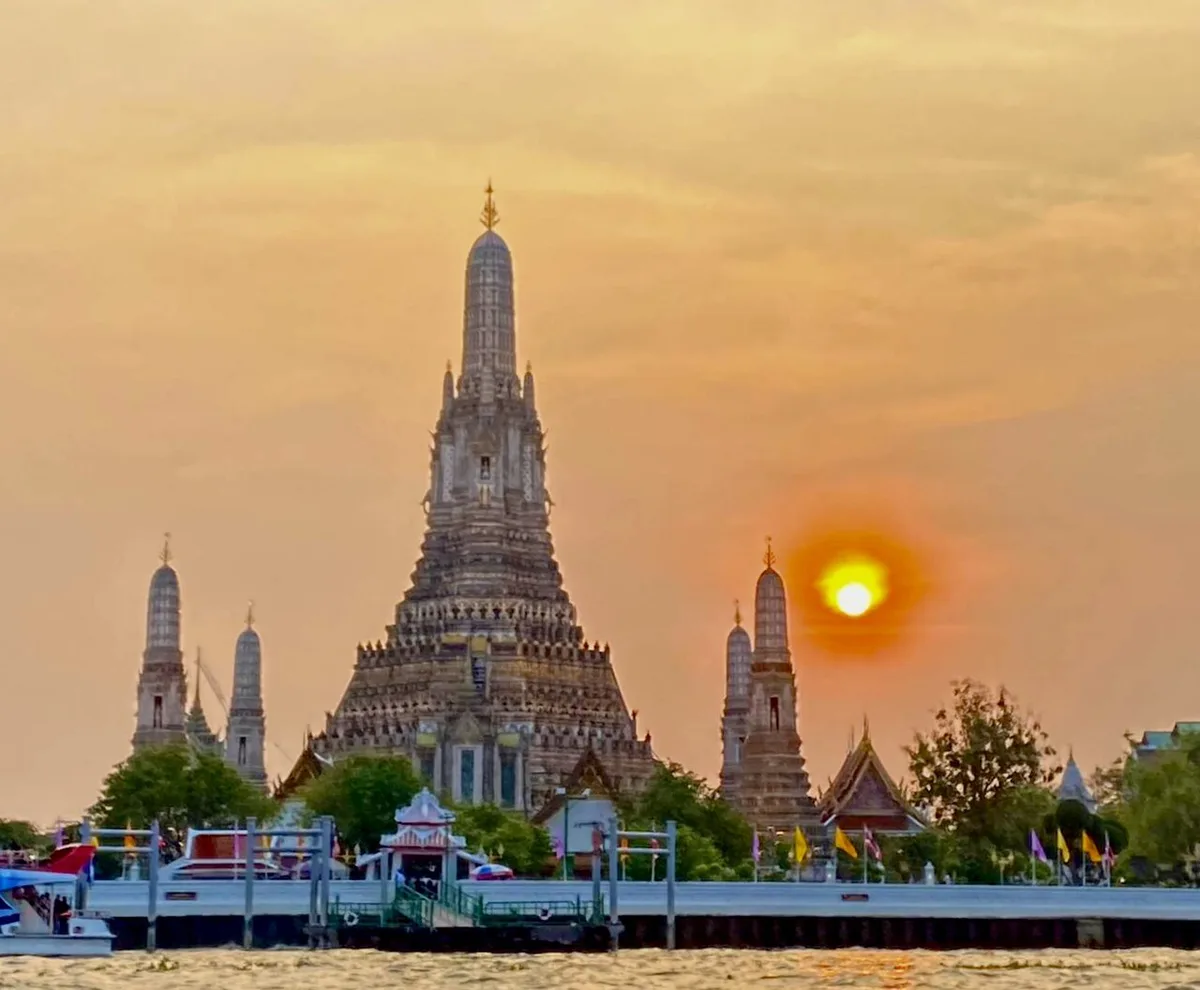
Despite the name, a true sunrise visit is unlikely. Published listings put opening at 8:00 and closing at 18:00, so confirm current hours before you plan around light. Arriving at opening gives cooler air and softer light on the porcelain. Midday brings the harshest heat, and the stone terraces offer little shade. Sunset can look excellent from the riverbank, but check the closing time first so you are not turned away at the gate.
Bangkok humidity often tops 80%, and the prang stairs are steep, so save the climb for the cooler part of the day.
Bangkok humidity often tops 80%, with daytime temperatures around 30°C to 35°C (86°F to 95°F). Carry water and sun protection whatever the hour. For the classic shot of Wat Arun from across the water, many visitors use the Tha Tien side in late afternoon.
What to See and Do Inside
Start at the central prang. Its lower tiers carry figures that appear to hold up the tower, and the surface is covered in porcelain shards. Walk the base first, then decide on the climb. Four smaller prangs stand at the corners. The ordination hall has a principal Buddha image, and shoes come off before you enter.
The prang stairs are steep and narrow, and descending feels harder than going up. Handrails help, but the steps are uneven. Rules on how high visitors may climb have changed over time, so ask at the gate or check the official Wat Arun site. The upper platform is the best spot for the river view toward the Grand Palace.
- Skip the climb if you have small children, bad knees or a fear of heights.
- Skip it in wet weather, when stone steps get slippery.
- Go slowly on the way down, facing the steps.
Tickets, Hours and Costs
Published visitor listings give foreign-adult admission as ฿200, with hours from 8:00 to 18:00. Treat both as figures to confirm, because they change. The temple's own website is the first place to check. The shuttle boat adds ฿5 each way if the fare holds.
Going independently costs far less than a bundled tour. Guided half-day tours that combine the Grand Palace, Wat Pho and Wat Arun exist, and they add a guide and transport. You do not need a guide to enjoy the site, but one helps if you want the symbolism explained.
How to Fit Wat Arun into a Wat Pho and Grand Palace Day
Treat the Grand Palace as its own morning, since its dress rules and queues take time. Check the palace's official page for current hours. Our Grand Palace day plan covers that visit in more detail.
Plan backward from closing at 18:00. A visit needing 1.5 to 2.5 hours leaves little slack for a late start.
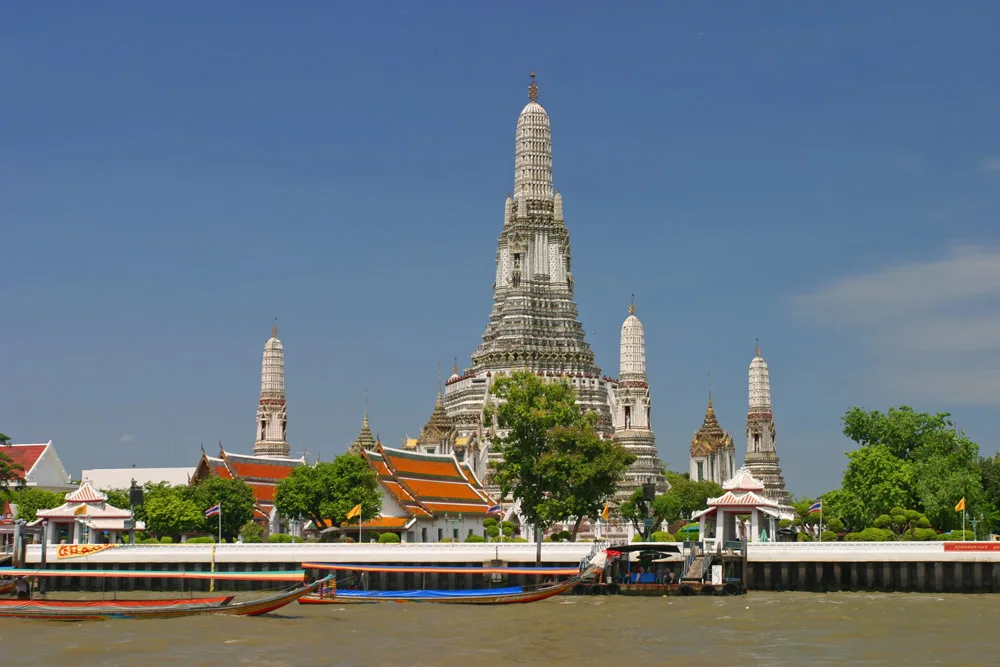
A sensible order is Wat Pho first, then the Tha Tien crossing, then Wat Arun. Our Wat Pho visit guide explains why the early slot suits it. Wat Arun then comes in the lower-heat late afternoon, with the river view as the finish. If you still have energy, the Golden Mount stop is a possible add-on, but check a map before you commit.
What to Wear and Temple Rules
Cover shoulders and knees. Sleeveless tops and shorts may be refused at entry. Light cotton trousers or a long skirt keep you cool. Wear slip-on shoes for the ordination hall. Our temple etiquette guide covers behavior inside worship spaces. Keep voices low, and do not point your feet toward Buddha images.
Common Mistakes to Avoid
Most problems come from timing and geography.
- Arriving at midday, when the terraces are hottest.
- Reaching late without checking the closing time.
- Heading to the wrong pier instead of Wat Arun Pier.
- Confusing Wat Arun with Wat Phra Kaew, which sits inside the Grand Palace.
- Assuming it stands on the same bank as Wat Pho.
Frequently Asked Questions
How old is Wat Arun in Bangkok?
Wat Arun began as a smaller temple known as Wat Makok, before Bangkok became the capital. It was later renamed Wat Chaeng. The tall central prang was built under King Rama III, who reigned 1824 to 1851.
How long does it take to see Wat Arun?
Plan on 1.5 to 2.5 hours, including the climb and photo stops. A quick visit covering the base and first terrace can take about 45 minutes. Add travel time if you are crossing from Wat Pho.
Useful notes for your Thailand trip
Optional updates to our guides.
You might also like
Continue reading
More guides you'll find useful