Wat Lokayasutharam: Ayutthaya Reclining Buddha Guide
A practical guide to Wat Lokayasutharam in Ayutthaya: what remains, how long to stay, entry to confirm, and how to pair it with nearby temples.
On this page
Last updated November 2026: Wat Lokayasutharam, also written Wat Lokaya Sutha (วัดโลกยสุธาราม), is a small ruined temple in Ayutthaya with one very large brick-and-cement reclining Buddha. Budget roughly 10 to 20 minutes, because this is a short stop and not a half-day destination. If you are still choosing sites, start with the Ayutthaya temple list and slot this one in around the bigger ruins.
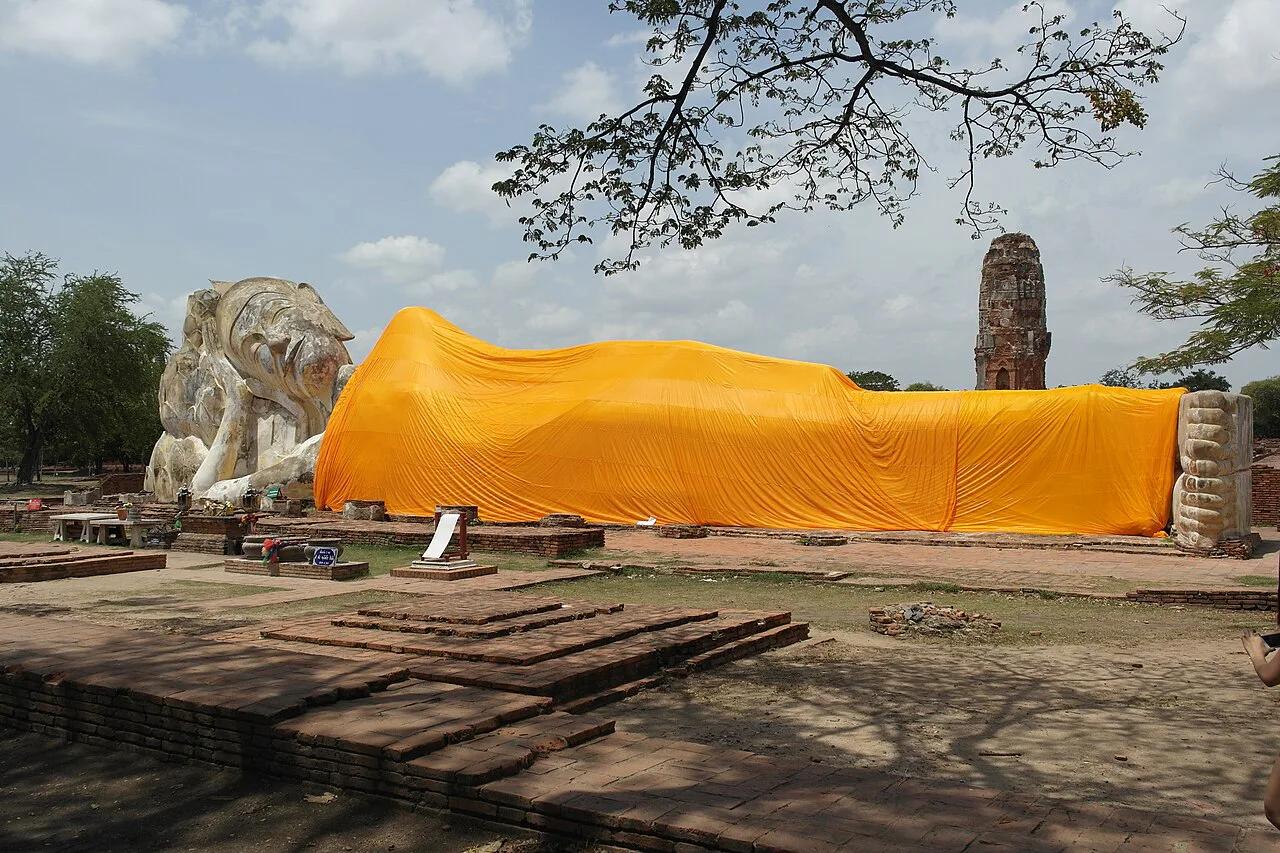
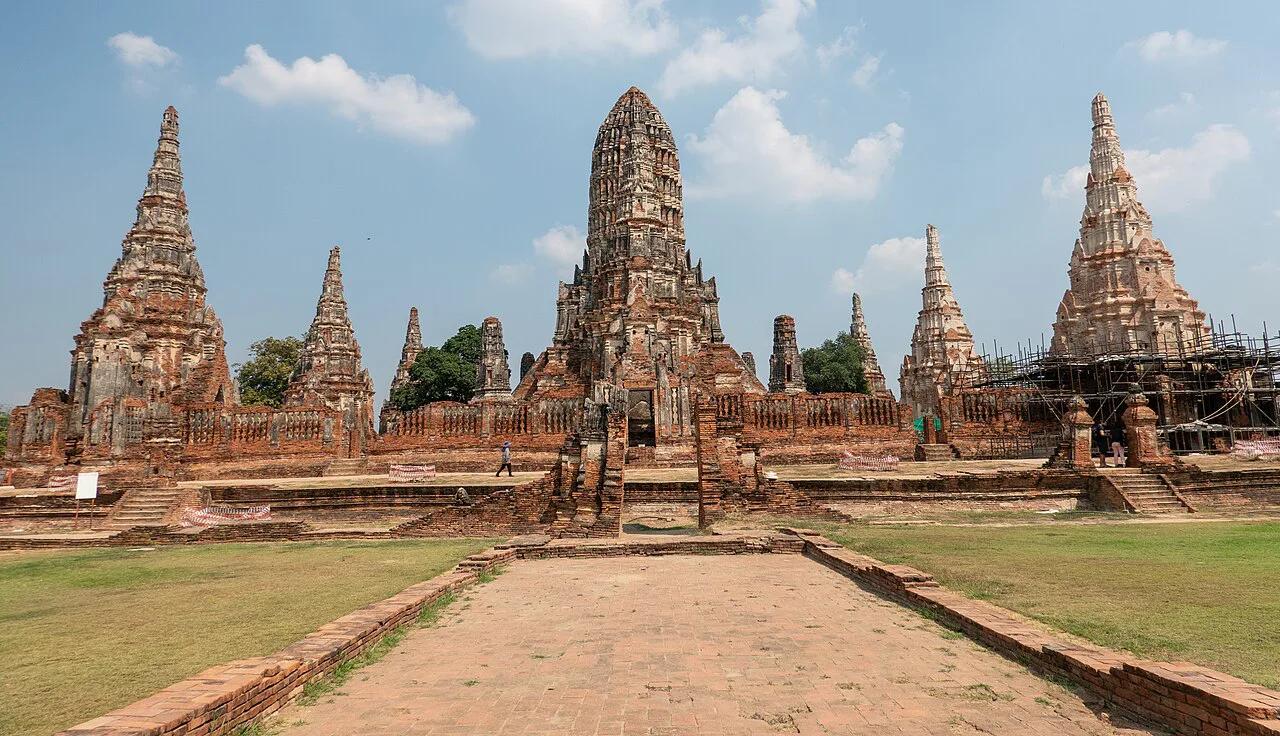
Featured image: Nord794ub, CC BY-SA 4.0, via Wikimedia Commons.
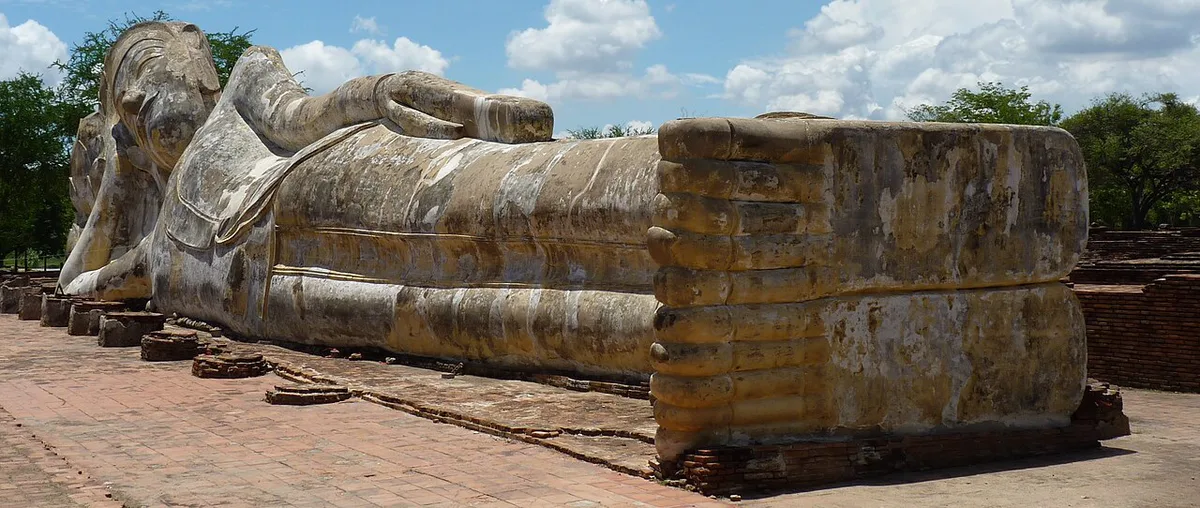
Wat Lokayasutharam at a glance
Wat Lokayasutharam sits in the northwest corner of Ayutthaya Historical Park, on the island's western side near Wat Mahathat. Its headline feature is a reclining Buddha reported at about 42 m (roughly 138 ft) long. Little else survives except a standing central prang and brick foundations. Local reports describe entry as free with open access at all times. Ticketing in Ayutthaya has changed before, so confirm on arrival. For current rules, check the Fine Arts Department website.
- Entry: reported free, so confirm on arrival
- Hours: reported open access, so confirm on arrival
- Time needed: about 10 minutes for photos, up to 20 if you walk the layout
- Best for: anyone already in the northwest of the park, plus photographers
- Skip if: you have only half a day and the main ruins are still unseen
What you will actually see
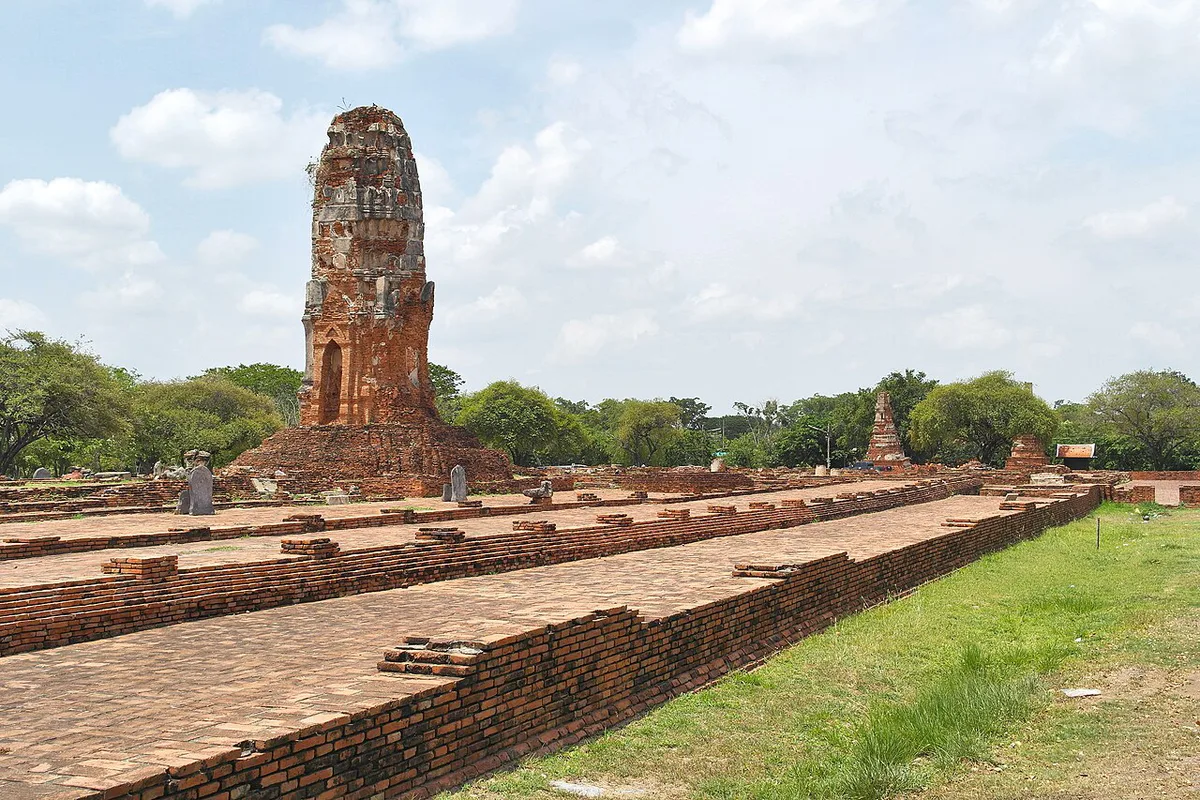
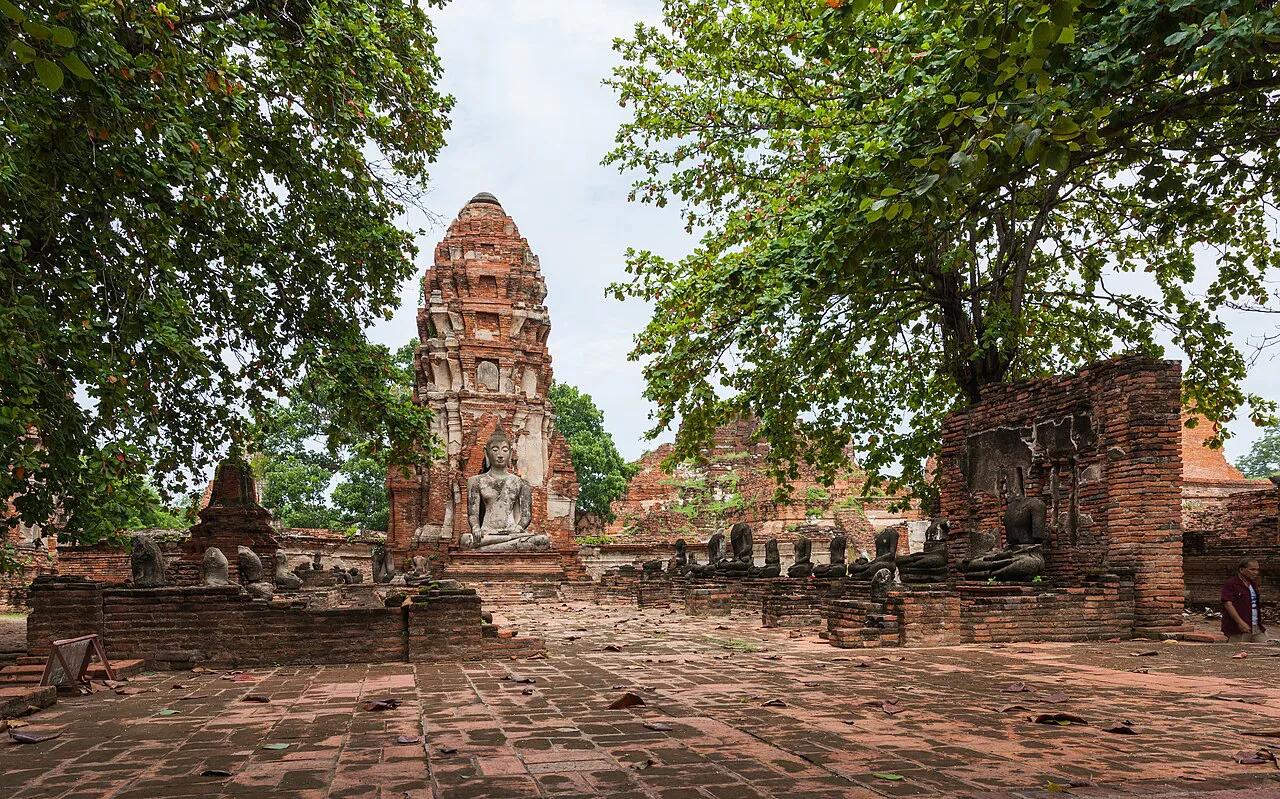
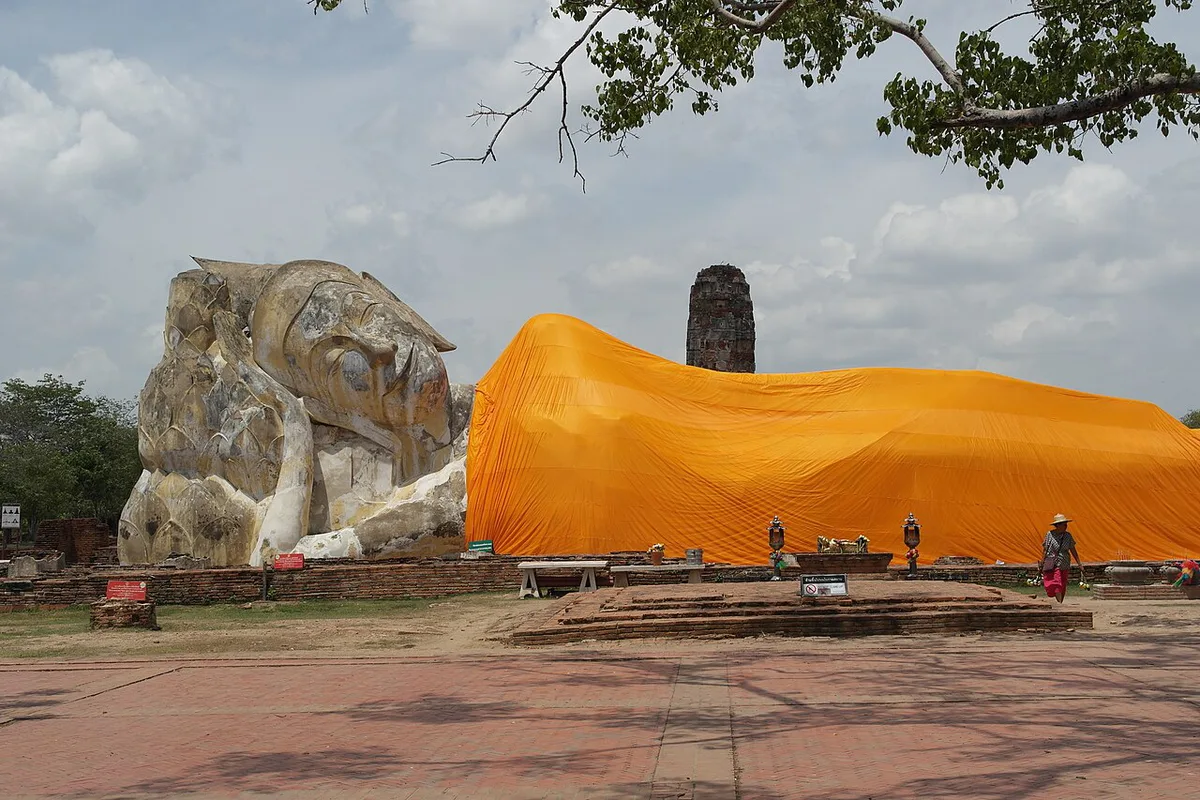
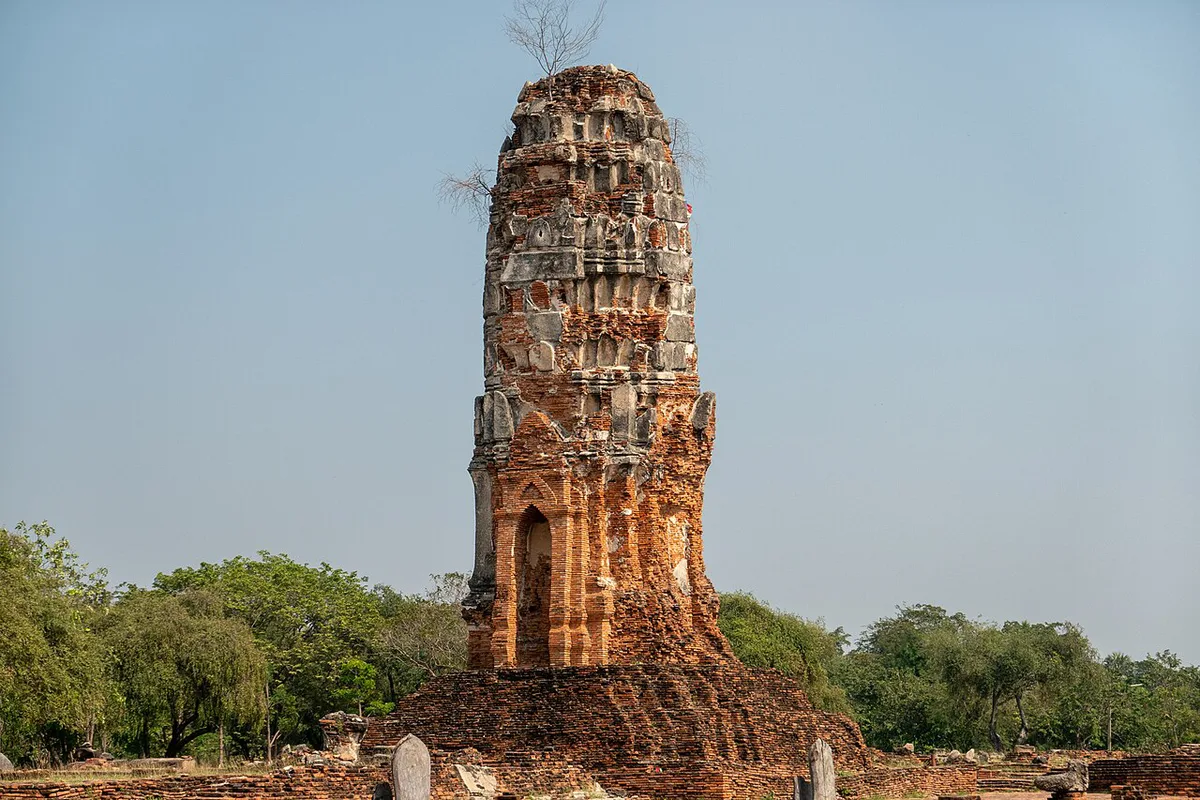
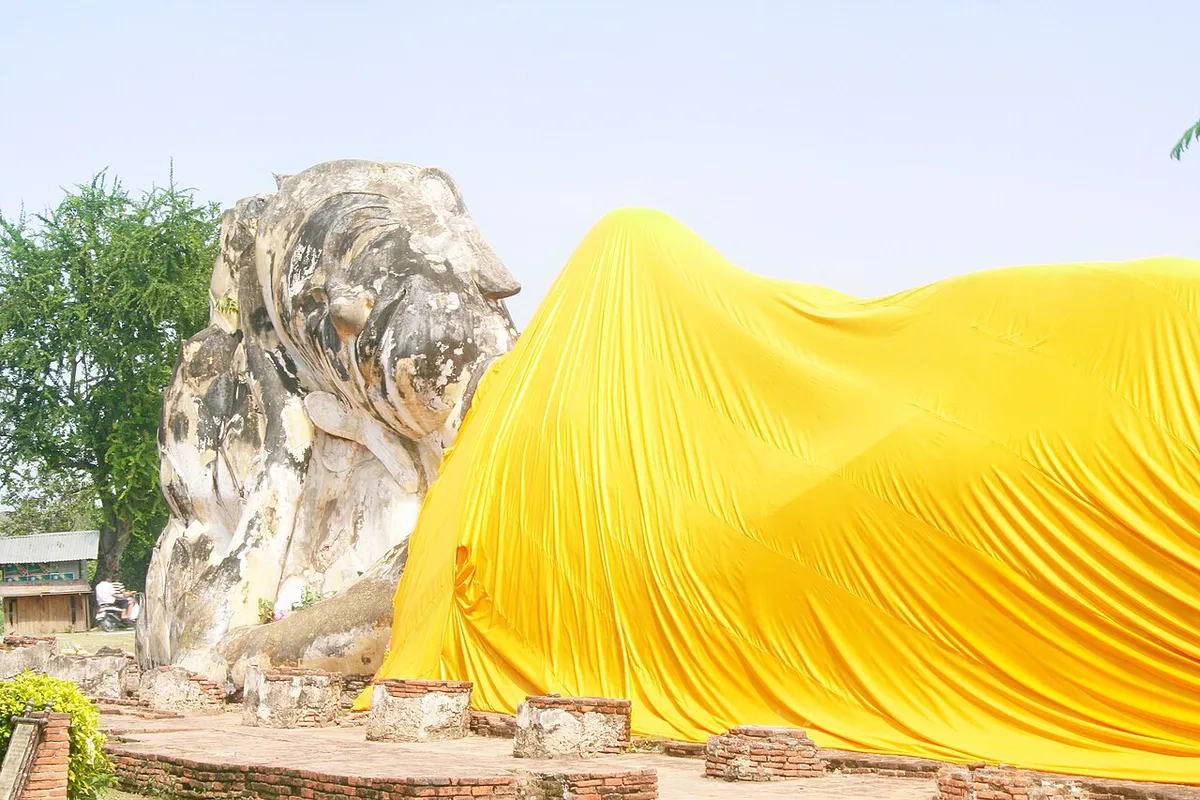
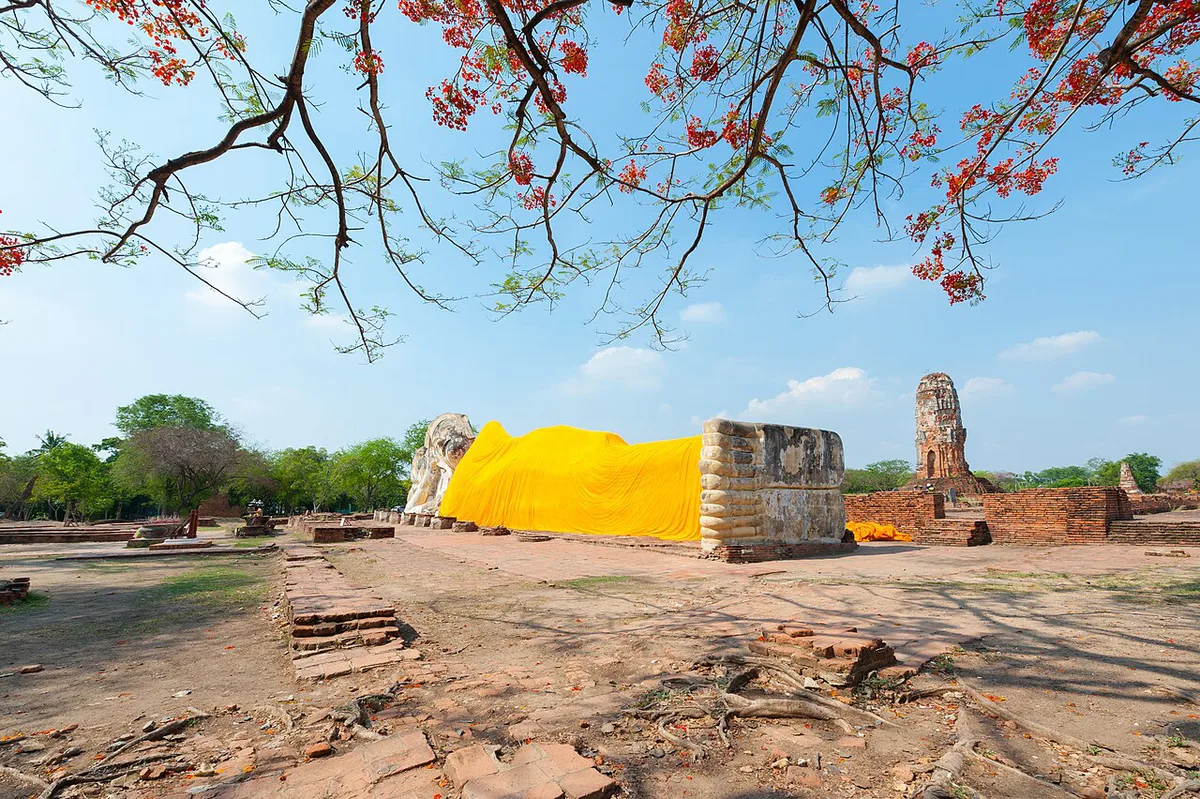
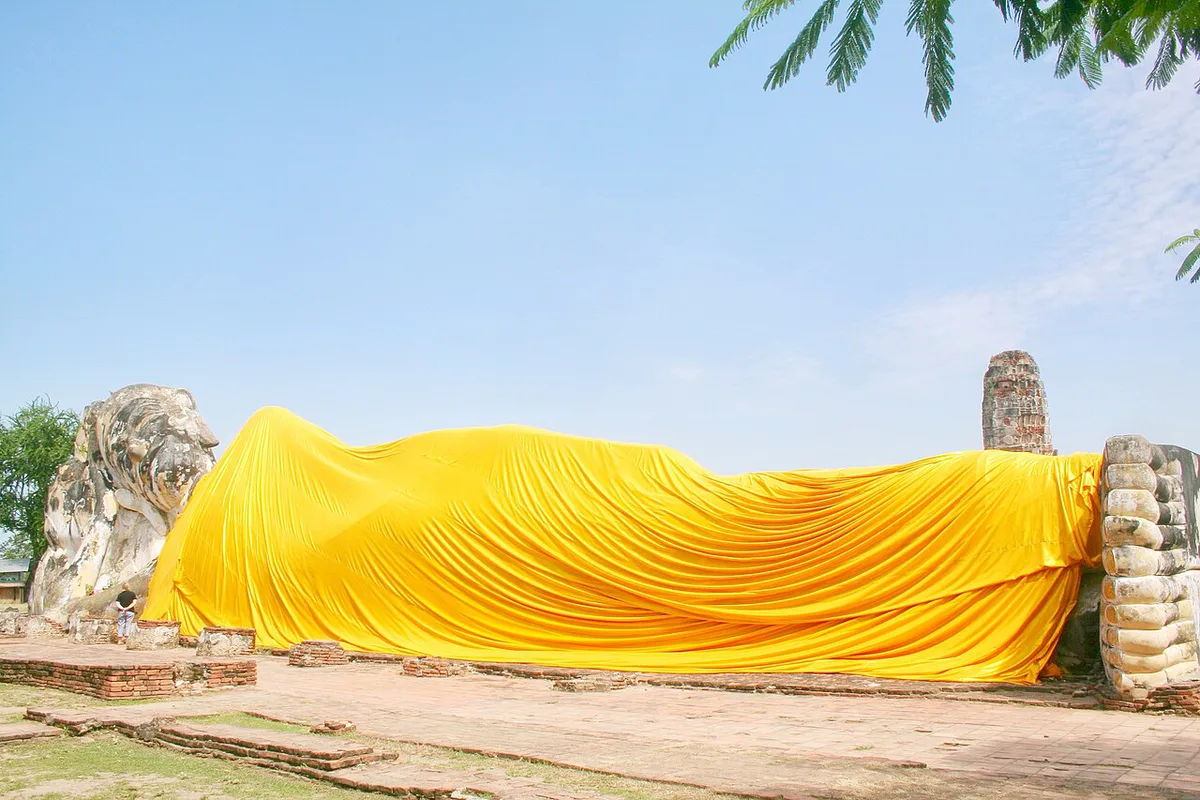
Start at the central prang, a corncob-shaped tower reported at about 30 m (roughly 98 ft) high. Its entrance faces east. Only a few stucco ornaments remain near the top. Walk west into the courtyard to find the ubosot, an ordination hall reported at 33 m by 14 m. Six sema boundary stones still stand around it and mark the sacred space. East of the prang, three viharn foundations once stood side by side. They are low brick outlines now, so a quick look is enough. Finish at the far western end, where a viharn once sheltered the reclining Buddha. Only its foundations and the bases of octagonal roof pillars remain. The figure lies on a north-south axis with its head facing west. Its head rests on a cushion shaped like lotus buds and is propped on the right arm. Reported dimensions are 42 m long and 8 m high, about 26 ft. Some accounts call it Phra Buddha Sai Yat, though transliterations vary.
A short history, and what is uncertain
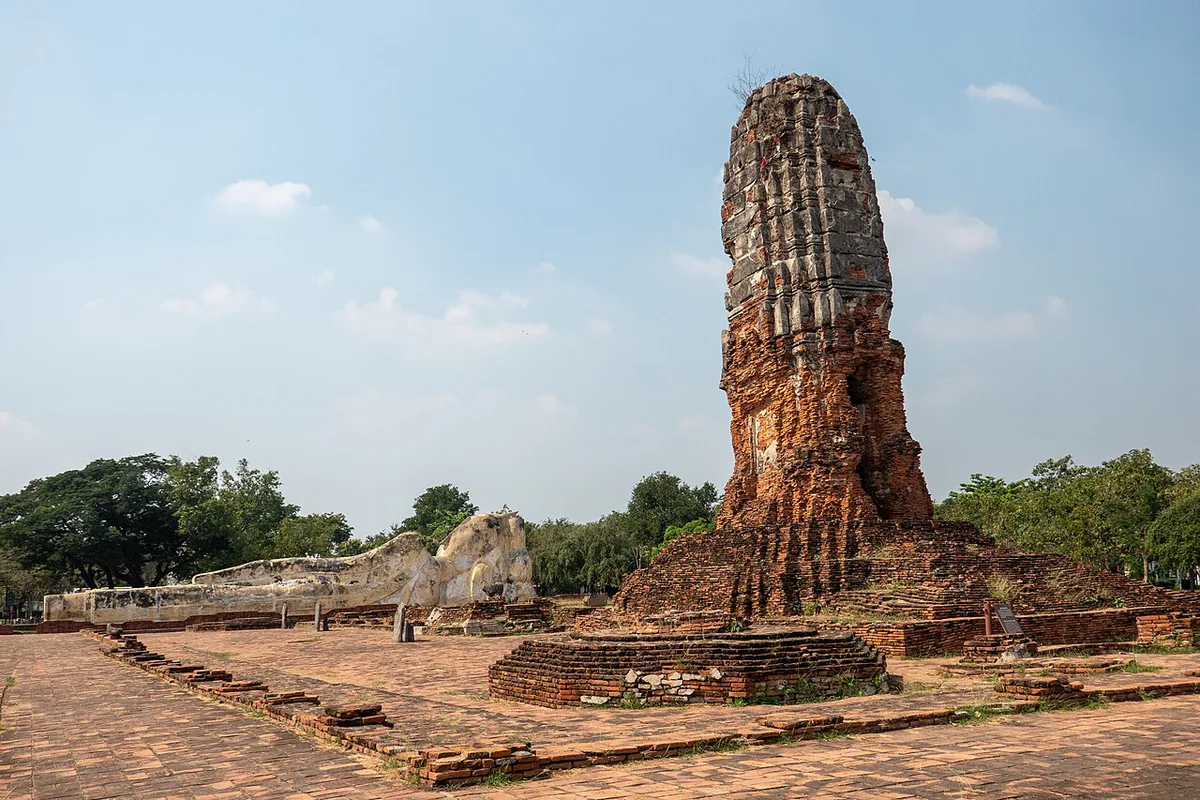
Little is certain about the founding. The prang resembles those at Wat Mahathat and Wat Ratchaburana, which suggests the early Ayutthaya period. Some accounts credit King Intharatcha I, who reigned from 1408 to 1424. Treat that as a hypothesis, not a fact. Proximity to the old royal palace, reported at about 350 m, hints that the temple mattered. At about 130 m wide, it is a smaller version of Wat Mahathat, which is reported at over 200 m. Burmese forces sacked Ayutthaya in 1767, and very little rises above ground level here today. Restoration of the Buddha reportedly began in 1954. Most of the work was done by the Fine Arts Department roughly two years later. What you see is therefore restored fabric, not original. Facial details and the crown-like headdress may differ from the first version, and later renovation has made it look fresh.
At about 130 m wide, the grounds are modest, yet the reclining figure alone runs 42 m long, so it dominates the view.
Is it worth the stop? A verdict by visitor type
Worth it depends on how much time you have and where you already are. A single large figure and a few foundations will not fill a morning. They do reward a short detour.
| Visitor | Verdict | Why |
|---|---|---|
| First-timer on a one-day loop | Only if nearby | Prioritize the major ruins first, then add this if time remains |
| Photographer | Stop | A 42 m reclining figure fills a wide frame, with the prang as a second subject |
| History-focused visitor | Stop | Layout reading and the restoration story reward 15 to 20 minutes |
| Family with small children | Only if nearby | Short walk, free entry reported, but little shade is mentioned in local reports |
| Short on time | Skip | Ten minutes here is better spent at a larger site |
How to fit it into your Ayutthaya day
Pair this stop with the Phra Si Sanphet ruins, which lie close by in the same corner of the park. Do the bigger site first while energy is high. Then come here for 10 to 20 minutes. If you want a larger site with a different feel, compare it with the larger Chai Mongkhon temple. Check the full temple list before you fix an order. Visitors coming from the capital can compare scope in our Bangkok temple options. For getting around, renting a tuk-tuk for the day is the easiest choice. Bicycles are the classic alternative, and guesthouses often lend them to guests. Expect tricky traffic and strong heat on a bike. Tuk-tuks cost more, but they save energy for the ruins. Confirm current rates before you agree to anything.
Budget up to 20 if you walk the layout, which makes this a stop after a major site, never the main event.
Visiting etiquette and on-site friction
No guard enforces a strict dress code here, so rules feel looser than at active temples. Dress modestly anyway, with covered shoulders and knees. The statue is still revered. Keep your voice low, never climb on the base, and keep your feet from pointing at the image. A small altar in front holds a miniature Buddha covered in gold leaf. Visitors press leaf onto it as a mark of respect. Tables nearby hold lotus flowers for offerings, and vendors may approach you on arrival. A polite shake of the head and a smile is enough if you decline. Buy an offering only if you want one, and ask the price first. Souvenir shops and cold-drink stalls sit opposite the statue, though food is unlikely. A car park large enough for buses is on site.
Best time to visit
Central Thailand is workable nearly year-round. Local guidance puts November to February as the best window, with cooler air and less rain. May, September and October are the months to avoid. Early morning and late afternoon give softer light and less heat on the open ground. Night or sunset opening has not been confirmed for this site. For after-dark options, see our guide to temples after dark.
Common mistakes at Wat Lokayasutharam
Most problems come from expectations and timing, not from the site itself.
- Treating it as a major site and giving it an hour
- Arriving at midday when the open ruins have almost no shade
- Buying offerings under pressure instead of by choice
- Assuming the statue is original, when restoration began in 1954
- Skipping the nearby stops that make the detour worthwhile
Frequently Asked Questions
Is Ayutthaya Historical Park free?
Wat Lokayasutharam is reported as free, with open access at all times. Other sites inside the park may charge, and ticketing has changed before. Confirm current fees with the Fine Arts Department on arrival.
Was Ayutthaya the old capital of Thailand?
Yes, Ayutthaya was the capital of the Ayutthaya kingdom until the Burmese army sacked it in 1767. Ruins such as this temple date from that earlier era. Most of the damage you see traces back to that event.
Useful notes for your Thailand trip
Optional updates to our guides.
You might also like
Continue reading
More guides you'll find useful