Wat Yai Chai Mongkhon: Visitor Guide and History
How to visit Wat Yai Chai Mongkhon in Ayutthaya: the giant chedi, reclining Buddha, getting there, time needed and what to combine it with.
On this page
Last updated November 2026: Wat Yai Chai Mongkhon is an active monastery southeast of Ayutthaya's city island, and its bell-shaped chedi is one of the town's best-known landmarks. Plan it as a separate trip, because it sits outside the island core. Pair it with our full guide to Ayutthaya temples to build a complete day.
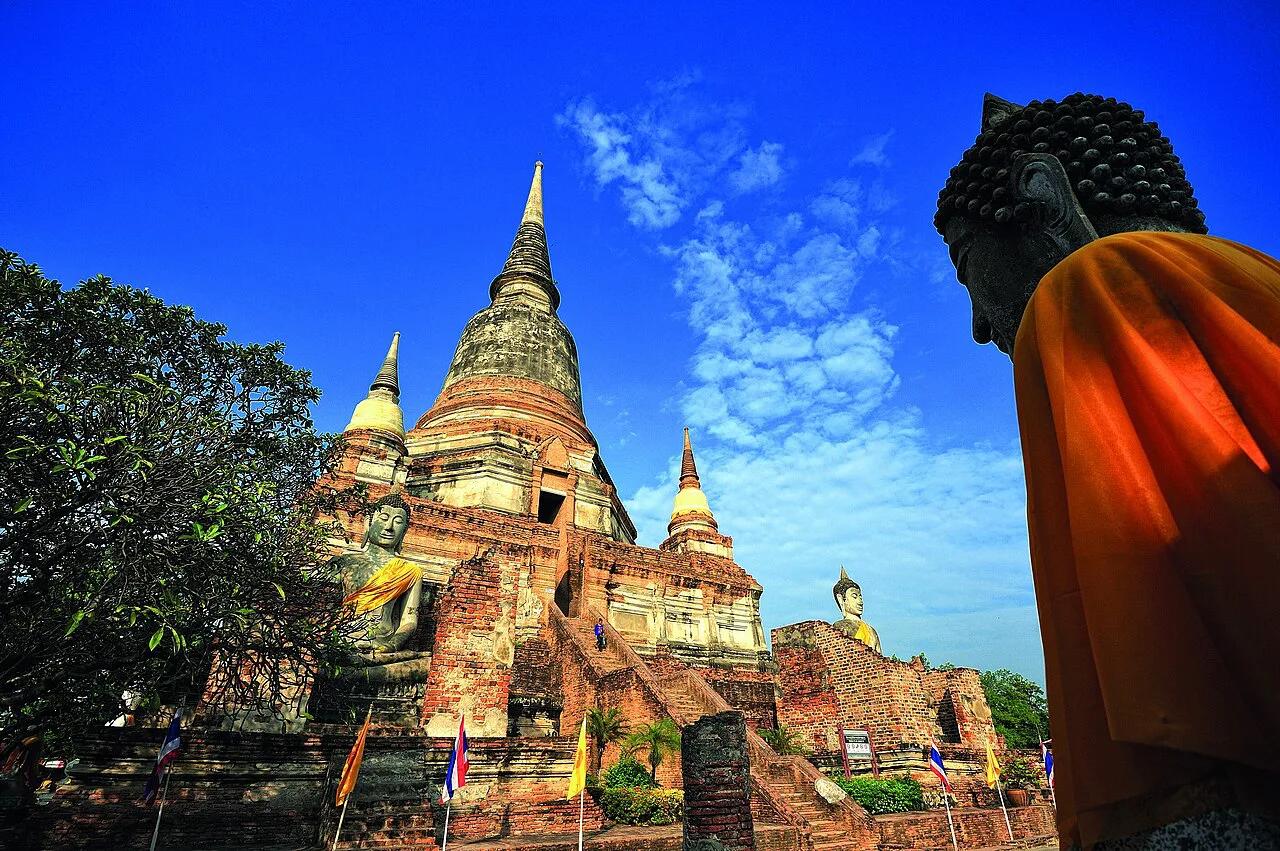
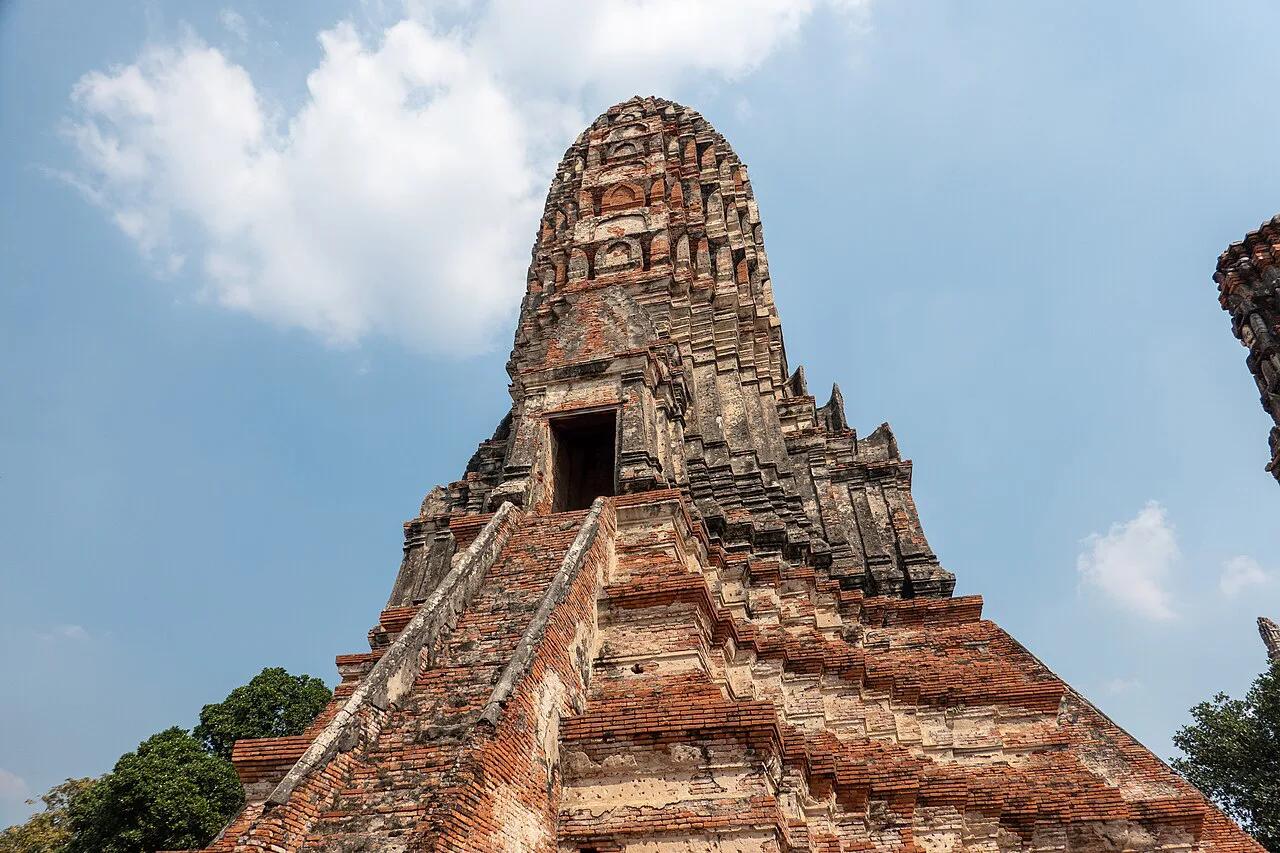
Featured image: Mr.Peerapong Prasutr, CC BY-SA 4.0, via Wikimedia Commons.
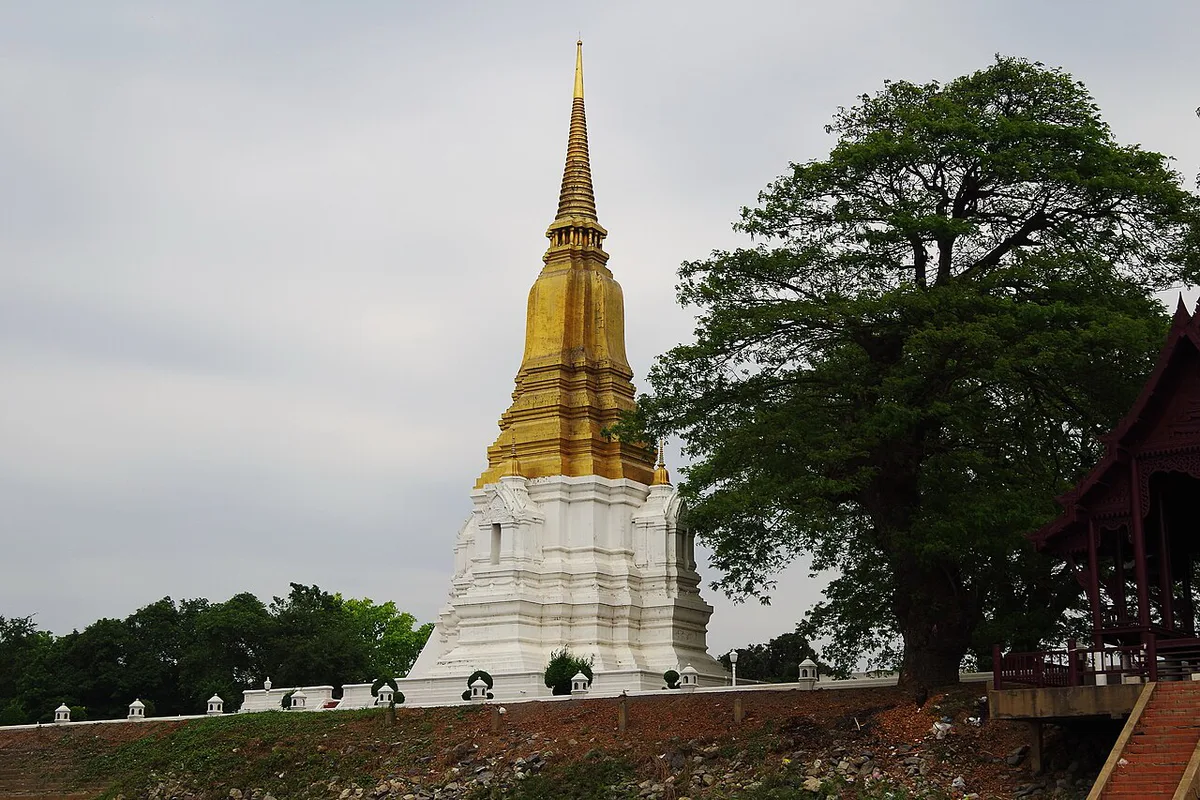
Is Wat Yai Chai Mongkhon Worth Visiting?
Yes for most first-time visitors who can spare a half day. Many maps and signs spell it Wat Yai Chai Mongkol, and older sources use Chaiya Mongkhon. All three names point to the same temple. Skip it only if your trip covers nothing beyond the island ruins.
- First-timers with limited time: the big chedi is the sight that most defines the Ayutthaya skyline from the east.
- Photographers: open terraces and long rows of seated Buddha statues reward morning light.
- History readers: the site links to King Naresuan and to the Ayutthaya court's religious life.
- Island-only visitors: you can skip it, but you will miss the best-preserved large chedi outside the walls of the old city.
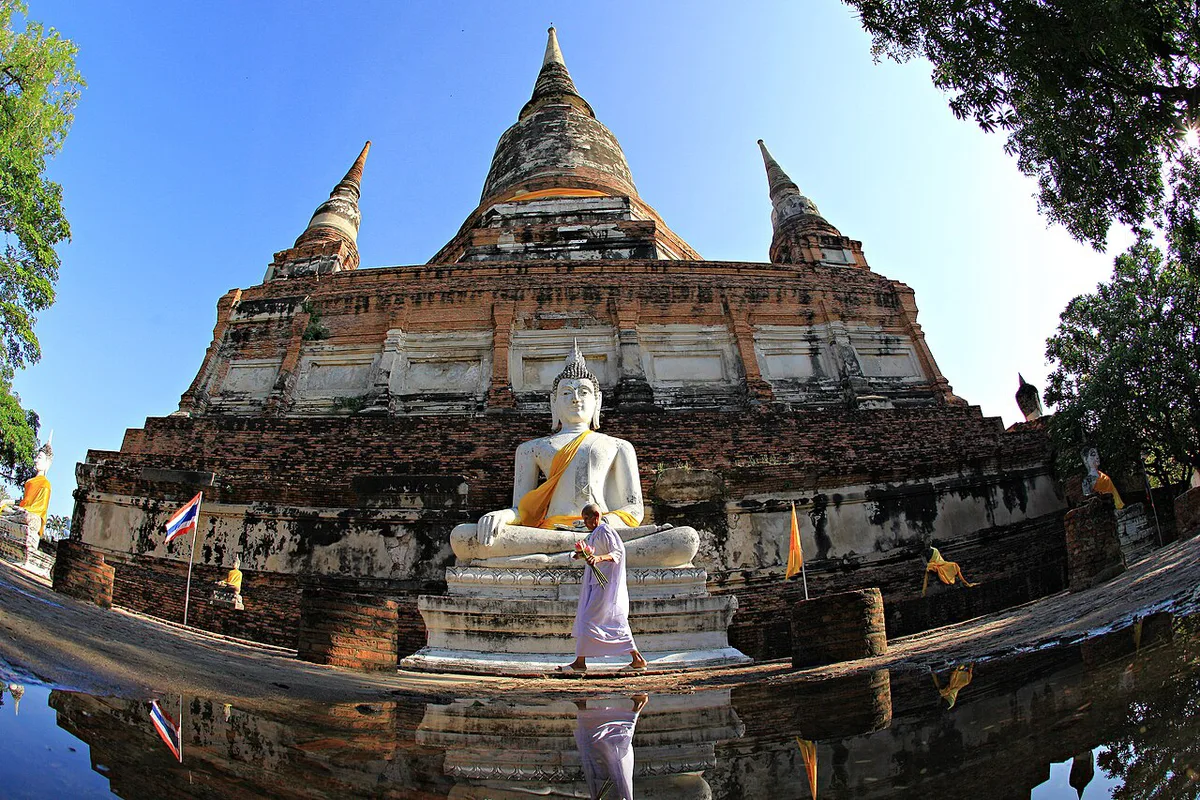
What to See at Wat Yai Chai Mongkhon, in Order
Start at the entrance on the northern side, between the monastery and the monks' living quarters. Walk toward the main chedi first, then work outward.
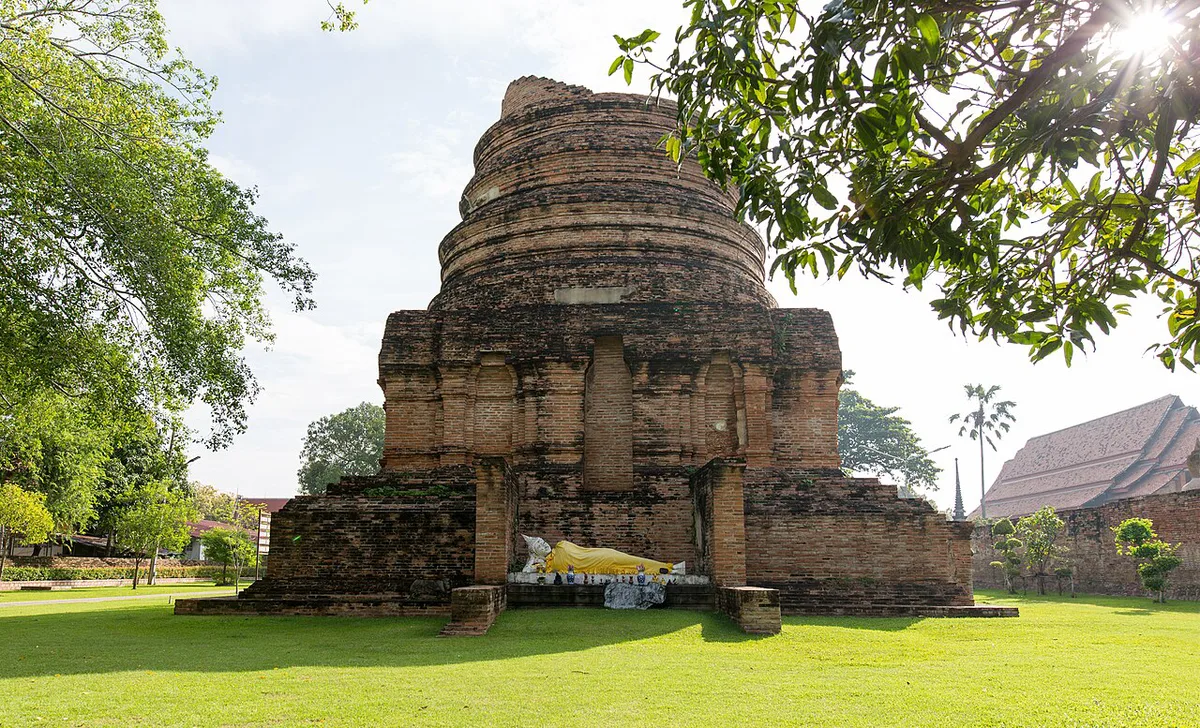
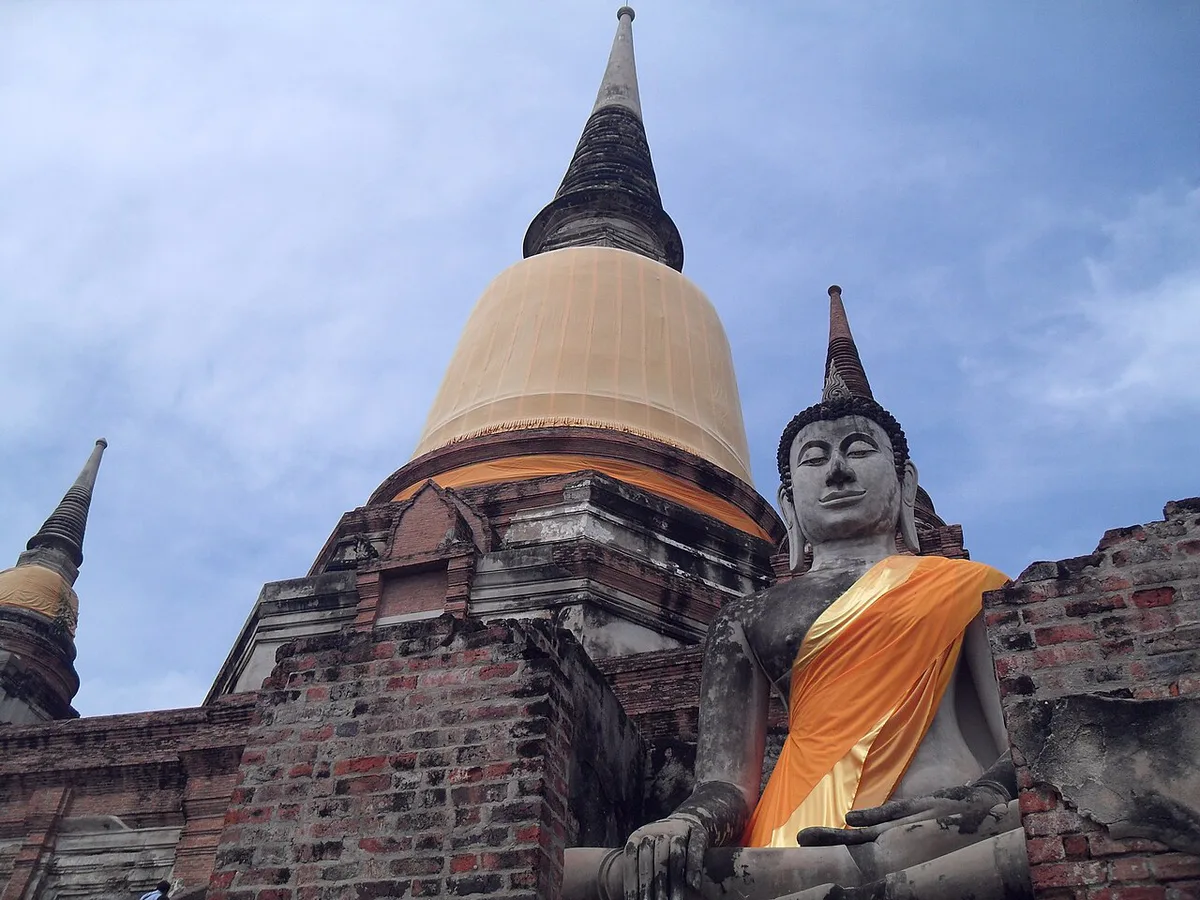
Phra Chedi Chaiya Mongkhon is bell-shaped. It stands on an elevated square base with smaller chedis at the corners. A second octagonal pedestal carries the bell. Stairs on the east side lead to the first terrace, so check on site whether climbing is currently allowed.
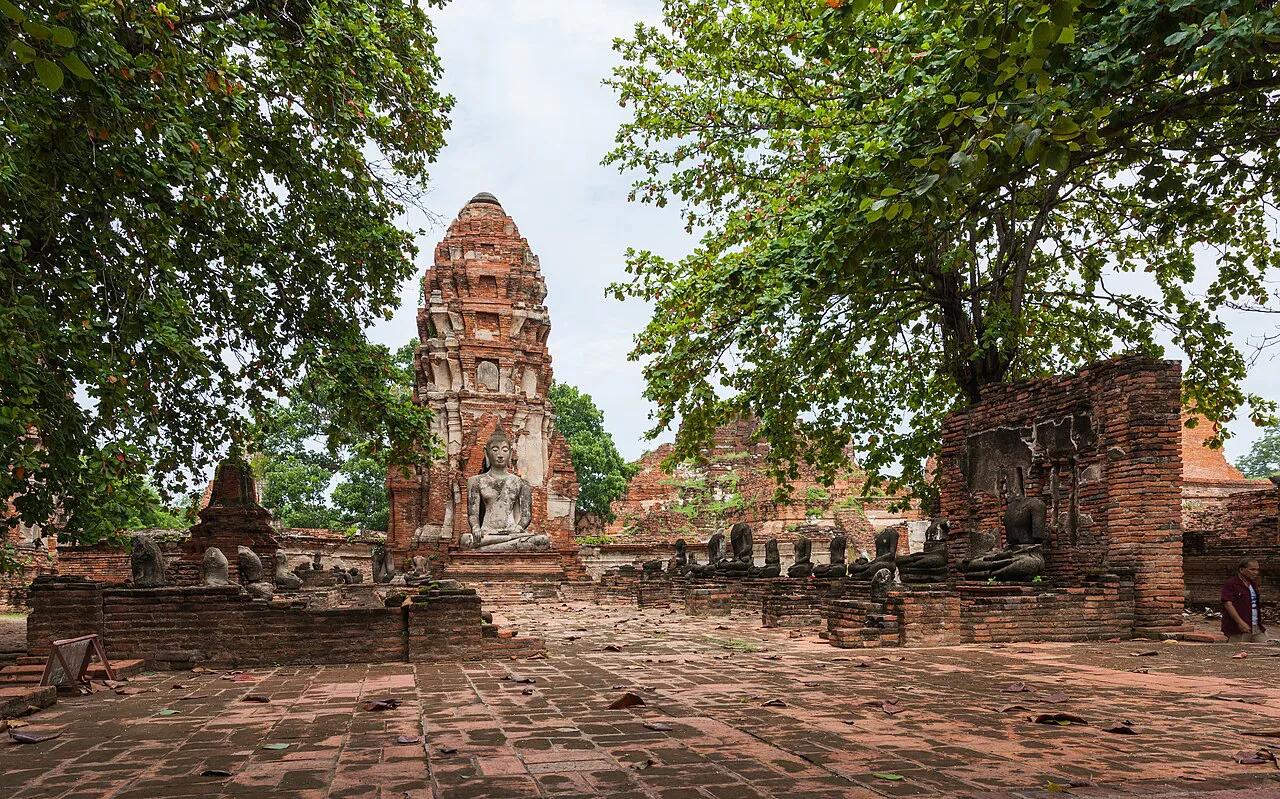
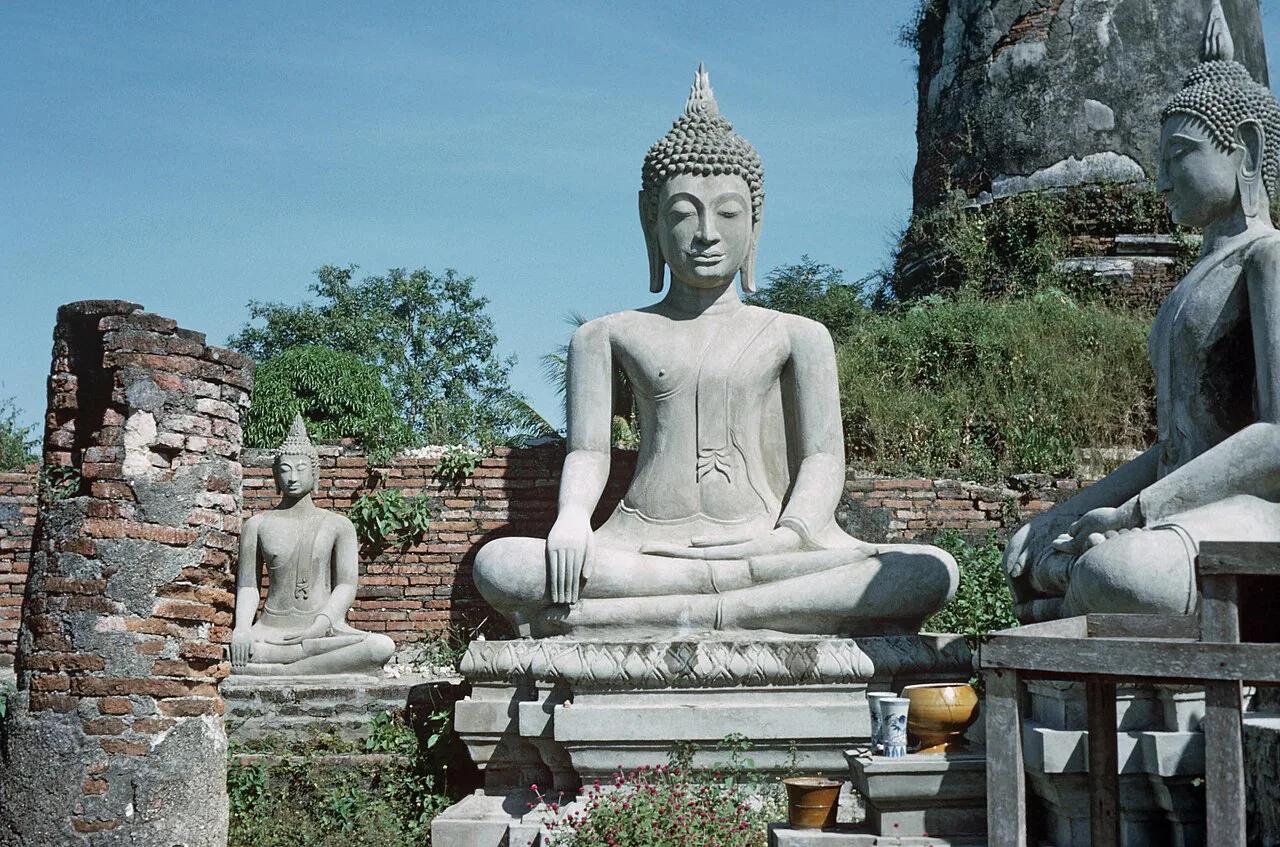
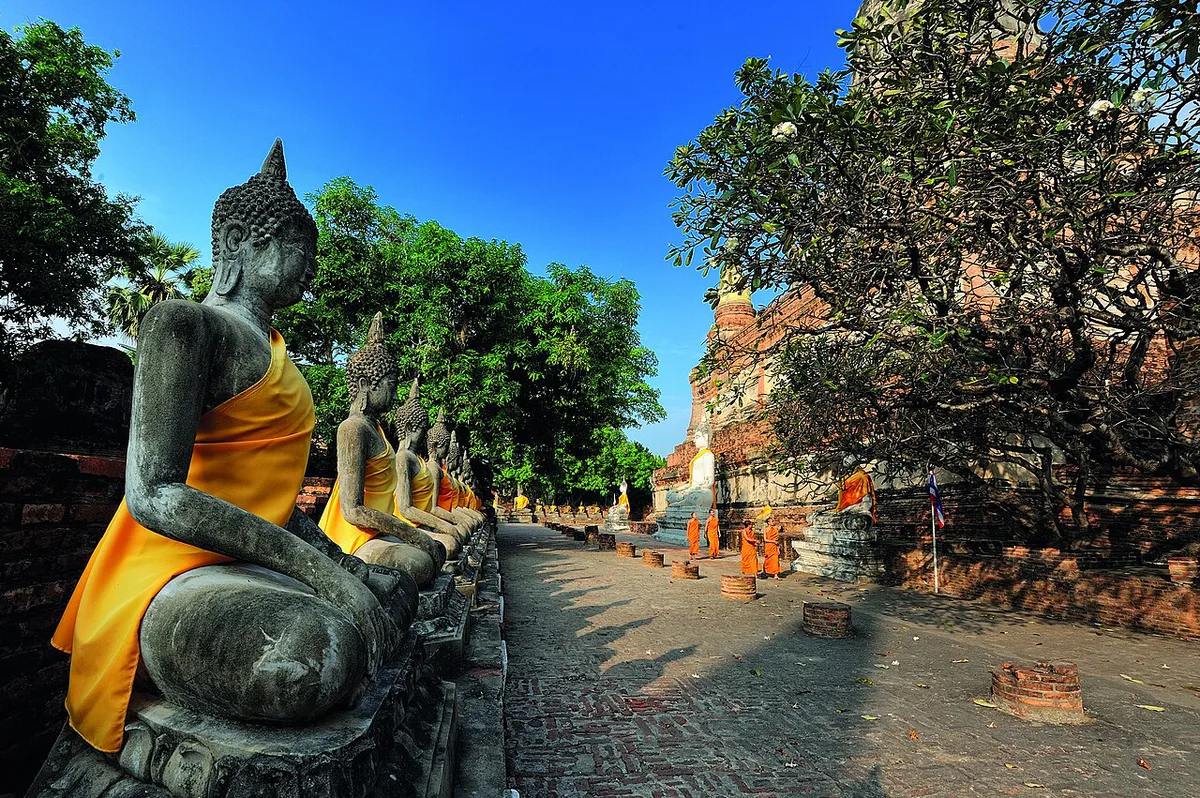
A rectangular gallery encircles the chedi. Rows of seated, robed Buddha statues line its inner wall on decorated bases. Most of these images are newly sculpted replacements for ones that collapsed over time. Their bases hold the ashes of the dead.
Outside the gallery, more than 20 satellite chedis of varied sizes hold the ashes of former sponsors of the temple. Walk among them for a sense of how large the original complex was.
East of the main chedi and in front of it stands the ordination hall, or ubosot. It measures 16 m by 44 m and has been re-roofed to protect it. Inside is Phra Phuttha Chaiya Mongkhon, regarded as one of the most sacred Buddha images in Ayutthaya.
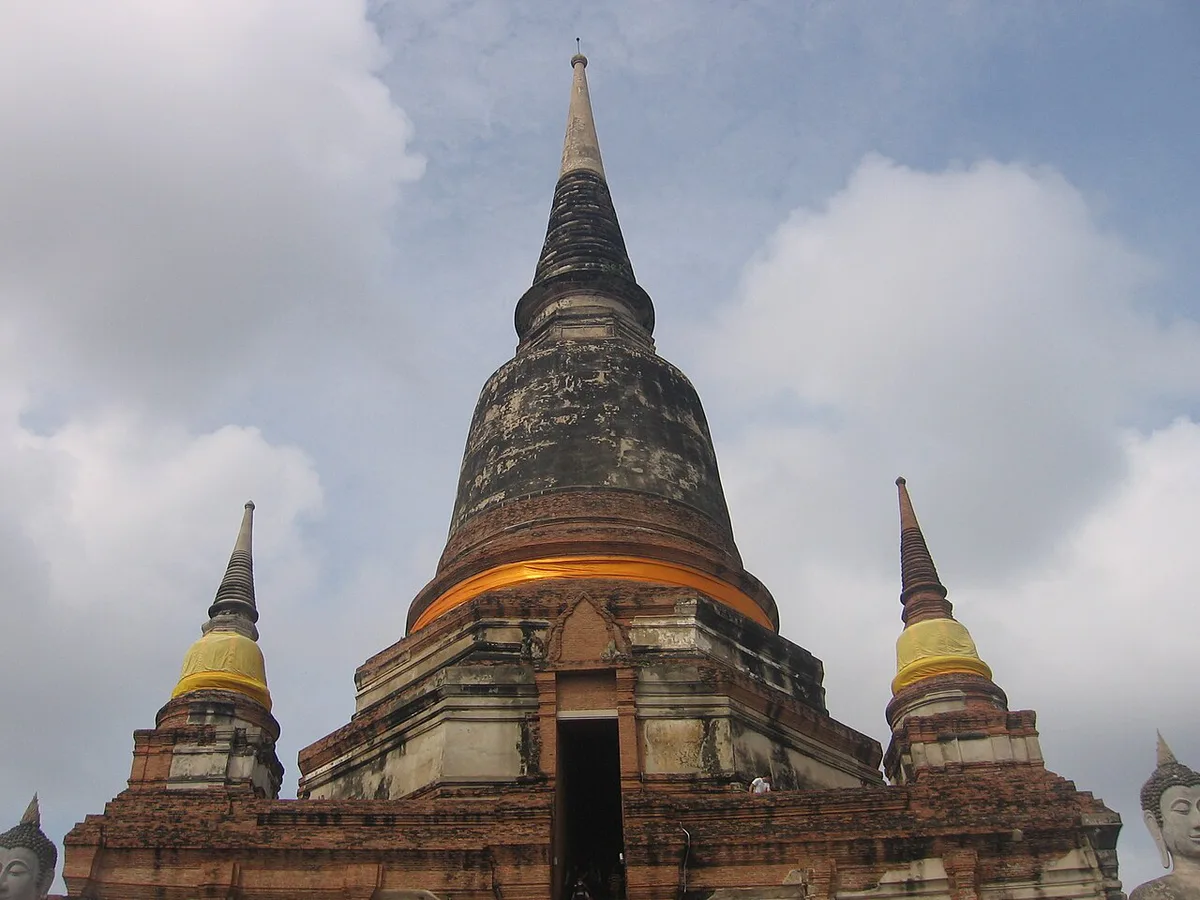
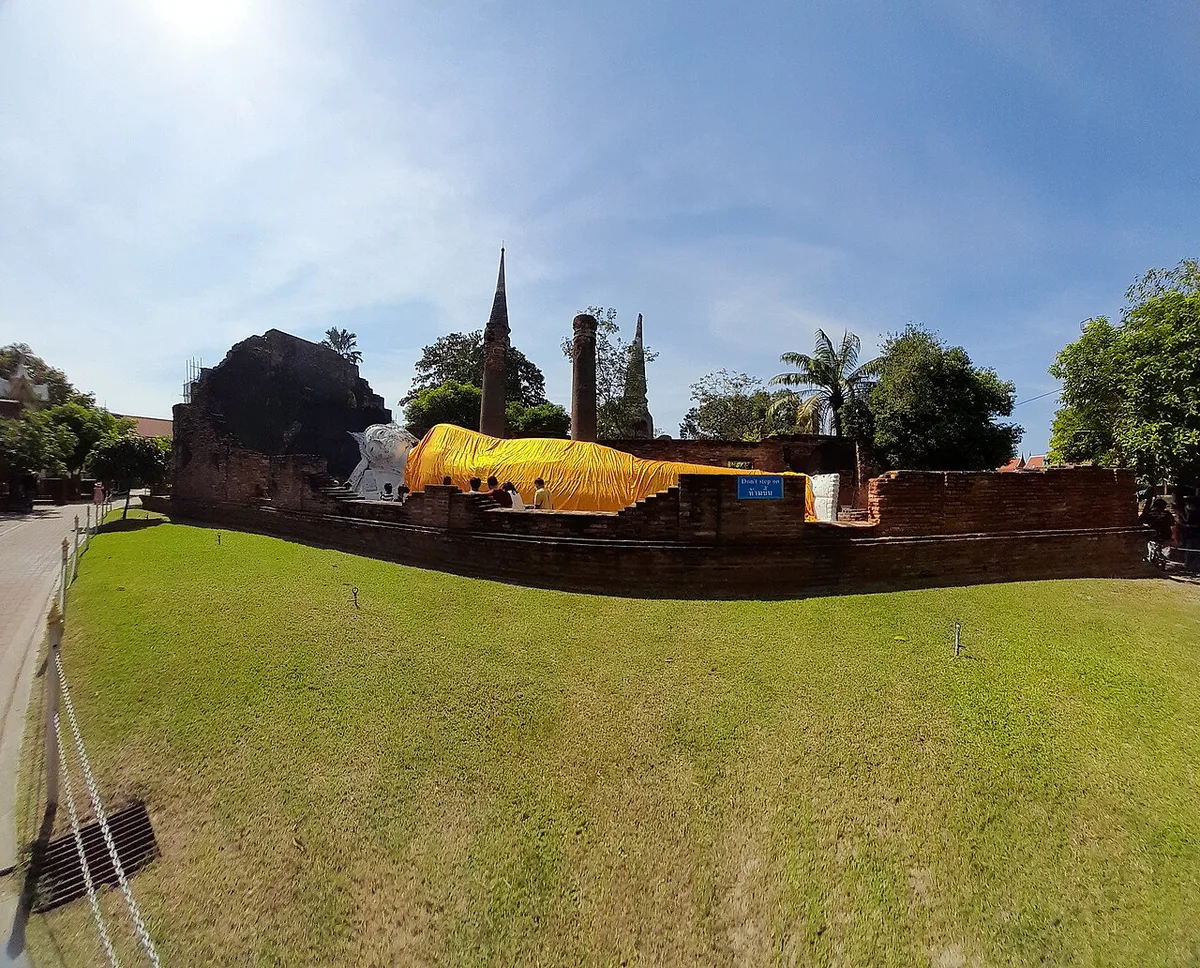
The reclining Buddha shrine, Wihan Phra Phuttha Saiyat, dates to the reign of King Naresuan. Its image was remodeled in 1965 after the original was ruined by treasure hunters. The figure lies north to south, with its head to the south, facing east. Visitors place gold leaf on its feet. Sources describe the shrine's position in the grounds differently, so follow on-site signs.
A Short History to Use on Site
Tradition dates the founding to 1357, when the temple began as Wat Pa Kaeo. The Royal Chronicles give 1363, so treat any single founding year with caution.
The large chedi is traditionally tied to King Naresuan's 1592 victory over the Burmese crown prince in an elephant duel at Nong Sarai. The Chronicles do not record the chedi's construction, so this is a traditional attribution. That battle is also the origin of the temple's name, the Great Monastery of Auspicious Victory.
Burmese forces sacked the temple in the 18th century, and it stood deserted. It was re-established as a monastery and officially recognized in 1957.
How to Get There and Around
Wat Yai Chai Mongkhon lies off the city island, so it needs its own transport. Trains and vans from Bangkok both reach Ayutthaya town. Check the State Railway of Thailand for current timetables, and see Bangkok's own temples if you are building a wider trip.
Drivers on road 3059 are on a separate trip from the island, so the drive needs its own time slot.
Drivers can turn south at the Wat Sam Plum roundabout chedi on Rojana Road and follow road 3059. A local history reference places the temple on the east side of that road. Confirm the route on your map app before setting out.
| Option | Effort | Best for | Trade-off |
|---|---|---|---|
| Tuk-tuk (negotiated round trip) | Low | Visitors without their own transport | Agree the waiting time and fare before you leave |
| Bicycle | High in the heat | Confident riders staying a full day | Exposed roads; weather affects the ride |
| Motorbike taxi | Low | Solo travelers on a short hop | Less comfortable with bags or in rain |
| Private car or guided tour | Lowest | Groups and Bangkok day-trippers | Fixed itinerary and less time at each stop |
| Own car or scooter | Medium | Flexible, multi-stop days | Navigation and parking are your responsibility |
How Long to Stay and When to Go
Allow roughly 60 to 90 minutes as an editorial estimate. The chedi terraces are open and exposed, so morning is kinder than midday. A late-afternoon visit also works if you want softer light. Carry water either way.
Budget about 80 minutes by our estimate, which sits inside the 60 to 90 minute range for a visit here.
- Arrival and orientation: about 10 minutes
- Main chedi and terraces: about 25 minutes
- Ubosot and Buddha gallery: about 20 minutes
- Reclining Buddha shrine: about 10 minutes
- Buffer for heat, photos and satellite chedis: about 15 minutes
Fees and Opening Hours
No current fee or opening hours were confirmed for this guide, and both can change. Check the Fine Arts Department site or ask on arrival.
What to Wear and How to Behave
This is a working monastery, so monks and worshippers are often present. Cover your shoulders and knees, as is customary at Thai temples. Remove your shoes before entering halls and shrines. Keep your voice low near the ubosot and the reclining Buddha. If you leave a gold-leaf offering, do it quietly and without blocking other worshippers.
Combining It With Other Ayutthaya Stops
A sensible half-day route puts the island first and this temple last. Start at Wat Phra Si Sanphet: Visit Guide, Tickets & Tips, the royal temple on the island, for contrast with this outlying site. Add another reclining Buddha at Wat Lokayasutharam: Ayutthaya Reclining Buddha Guide if you want to compare two images.
Because the visit here runs about 80 minutes by our estimate, it fits easily after lunch. For a later finish, read about Ayutthaya temples after dark.
Mistakes to Avoid
Most problems come from name confusion and poor timing. Check the temple name on your map pin before you set off.
- Confusing it with Wat Chaiwatthanaram or Wat Chai Mongkhon, which are separate temples with similar names.
- Assuming it sits on the island and leaving no time for the trip out.
- Arriving at midday, when the open terraces offer little shade.
- Wearing sleeveless tops or short shorts to an active monastery.
Useful notes for your Thailand trip
Optional updates to our guides.
You might also like
Continue reading
More guides you'll find useful