
Wat Phanan Choeng: Visiting Ayutthaya's Luang Pho To Temple

Wat Phanan Choeng is worth about an hour of your Ayutthaya day, mainly for Luang Pho To, the enormous seated Buddha that fills its main hall. It is a living monastery on the Pa Sak River, not an abandoned ruin inside the walled historical park, so you will share it with worshippers rather than only tour groups. This guide covers where the temple sits, how to get there from the island, what each building holds, and how long to allow.
The most common mistake is arriving in beachwear and expecting crumbling brick. Cover your knees and shoulders, take your shoes off at the main shrine, and keep your voice down. Read the transport section if you are still planning, or jump to the etiquette checklist if you are already on your way.
What Wat Phanan Choeng actually is
This is an active temple complex, known in full as Wat Phanan Choeng Worawihan, where monks live and local people come to make merit. That shapes how you behave and what you photograph, because the main hall is quiet and devotional rather than museum-like. Expect incense, kneeling worshippers and a working shrine.
The temple is closely tied to Ayutthaya's Chinese community, which is why Chinese-style decoration and a separate shrine sit alongside the Thai Buddhist buildings. Expect a mix of styles rather than a single clean architectural period. The complex is compact enough to walk in one loop, but the halls are distinct.
Tradition places the founding in the 14th century, before Ayutthaya was formally established as a kingdom, and a popular legend links it to a Chinese princess. Treat those stories as tradition rather than verified history. The Ayutthaya-era context is easier to absorb after you have seen the real thing.

Where it sits and how to reach it
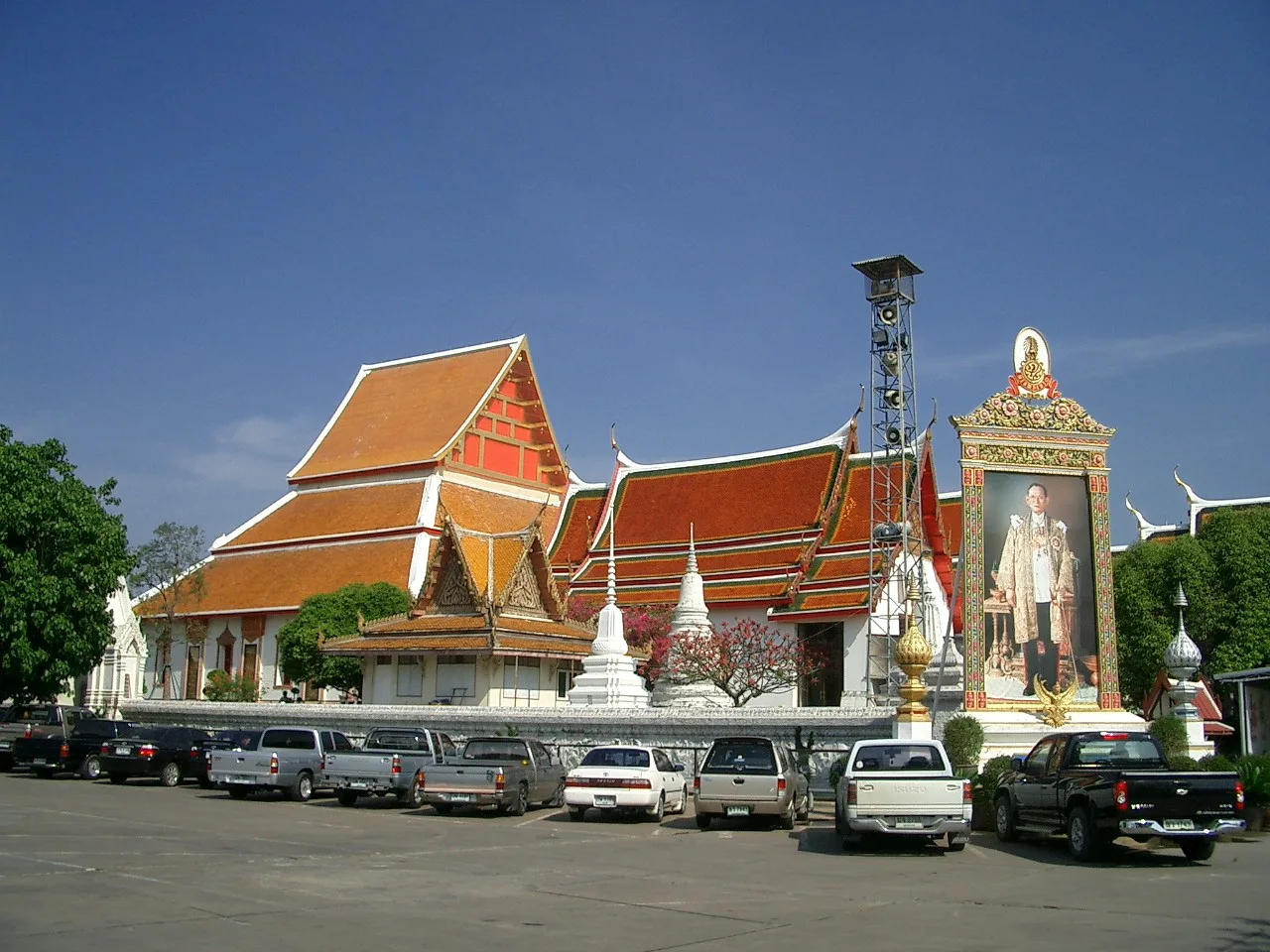
Wat Phanan Choeng stands on the southeast side of Ayutthaya, on the bank of the Pa Sak River, outside the moat that rings the main island. That location is why boats can pull up at a temple pier and why the frontage opens onto water rather than a street of ruins. Use the river and the pier as your landmarks when directing a driver.
From the island, the usual options are a tuk-tuk, a songthaew, or a boat along the Pa Sak. Road transport is simplest if you are already touring by tuk-tuk, since the temple is a short ride from the main ruin clusters. Boat trips are a pleasant alternative because the approach from the water shows the riverfront properly, but fares vary by negotiation and route, so agree on the price before you set off.
Tell your driver the temple name and add that it is the one with the big seated Buddha on the river, near the Chinese community; that is usually clearer than an address. If you come by boat, confirm the operator stops at the temple pier and how long you get ashore. Allow a buffer, because riverside stops can run long.

Luang Pho To: the reason you came
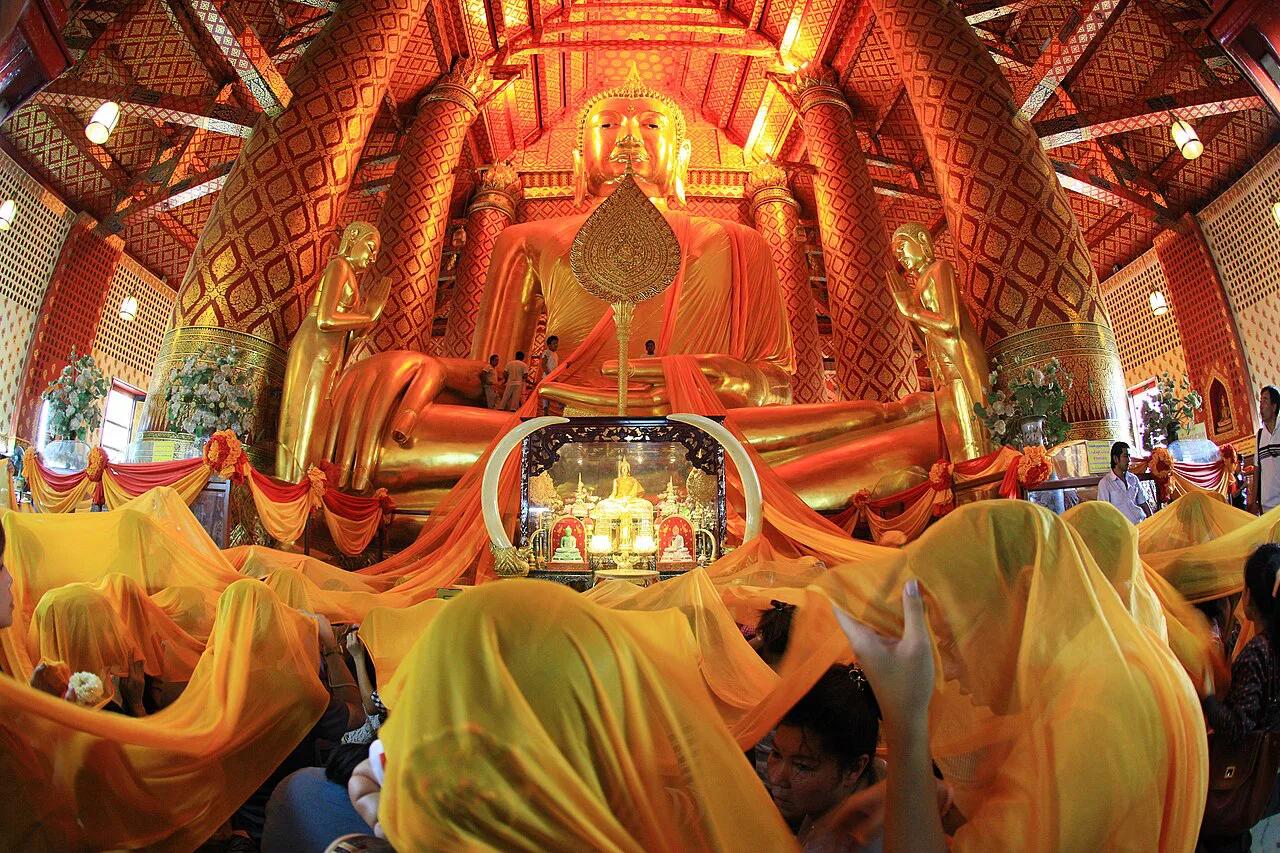
The headliner is Luang Pho To, a seated Buddha in the subduing-Mara posture that dominates the principal assembly hall. Third-party travel sources put its height at roughly 19 meters, which is why it reads as a wall of gold rather than a statue on an altar. Stand near the entrance first to take in the scale, then move closer to see the face and robes.
The image is heavily gilded and has been restored repeatedly over the centuries, most notably in the 19th century, so what you see is a layered object rather than an untouched original. It remains highly revered, and Thai and Chinese worshippers come specifically to pray before it and to seek signs about their fortunes. That devotional traffic, not tourist numbers, sets the rhythm of the hall.
Expect to remove your shoes before entering the main shrine, and expect locals to be kneeling and offering incense while you look. Keep to the edges, do not step in front of someone mid-prayer, and save conversation for outside. Photography rules inside the hall are set by the temple and can change, so follow posted signs and staff instructions on the day.
The rest of the complex: smaller vihara, Chinese shrine, corridors
Beyond the main hall, a smaller vihara north of the ordination area holds another seated Buddha and walls decorated with Chinese-style murals. It is easy to skip and usually quiet, which makes it a good place to slow down after the crowd around Luang Pho To. Look up at the murals rather than only at the image.
The shrine to Soi Dok Mak, a Chinese deity, sits in its own courtyard with two buildings and colorful figures of dragons and phoenixes around the doors and windows. The deity is on the upper floor. This is the clearest expression of the temple's Chinese connections and the part most casual visitors miss.
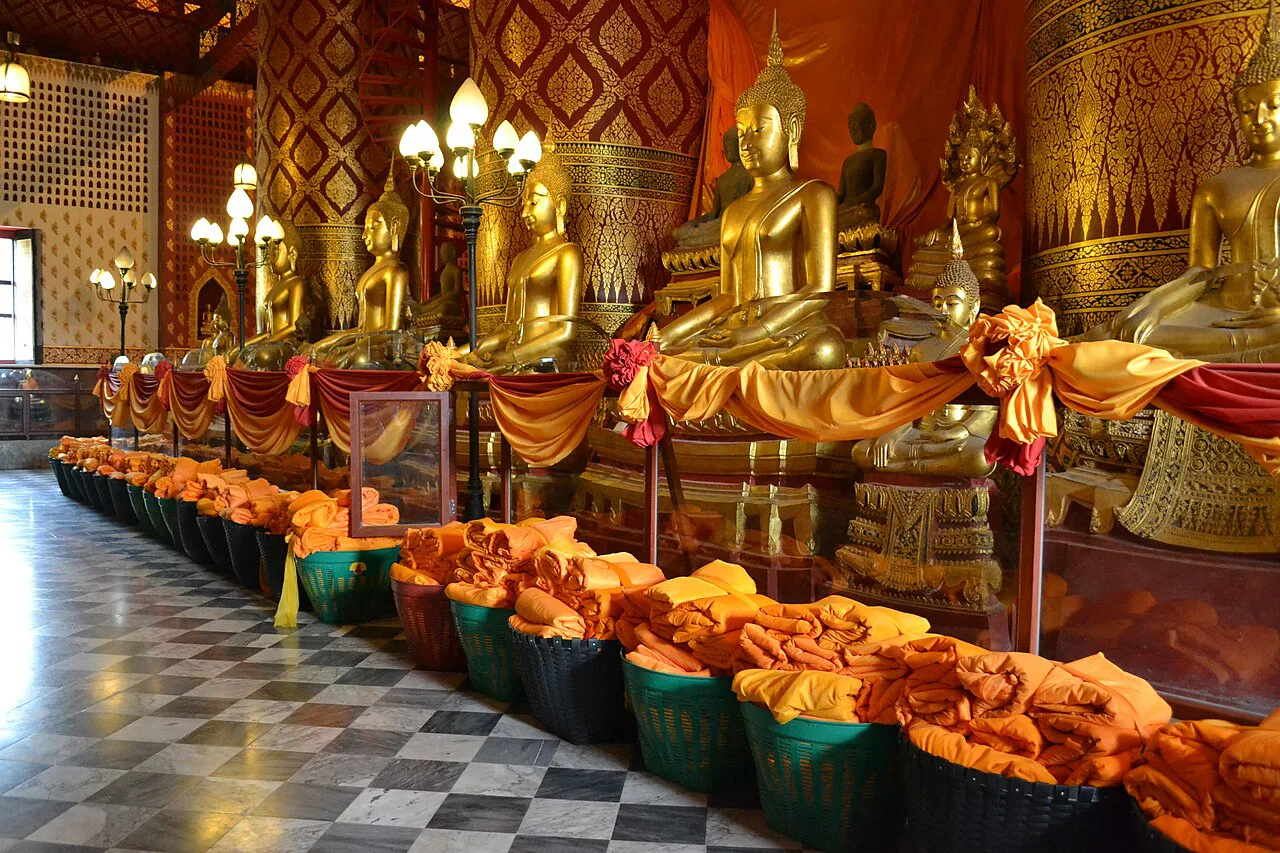
Corridors around the complex are lined with rows of smaller seated Buddha images, many of them old and weathered. Walking them takes only a few minutes but conveys the temple's age better than any single showpiece. Bring small notes if you want to make an offering, since donation boxes are standard.
How much time to allow, and when it is busiest
Budget 45 minutes to an hour for a focused visit: the main hall, the smaller vihara, the Chinese shrine and one pass along the corridors. Photographers and anyone who wants to sit with the atmosphere should plan closer to 90 minutes. If you are combining the temple with other riverside stops, give it a fixed slot.
Weekends and Buddhist holy days bring noticeably more worshippers, and the compound can feel packed. Mornings tend to be calmer and cooler, which also suits the open, sunny parts of the grounds. If crowds bother you, avoid the busiest middle of the day.
Dress code, etiquette and practical comfort
Dress for a working temple, not a beach. Cover your knees and shoulders completely, which in practice means trousers or a long skirt and a shirt with sleeves, plus a scarf if you are wearing something sleeveless. Remove your shoes outside the main shrine, and wear footwear that slips off easily.
Inside, keep your voice low, avoid public displays of affection, and do not point your feet toward Buddha images. Do not climb on statues or platforms, and ask before photographing monks or worshippers. If a sign restricts photography, follow it even when others ignore it.
The grounds are exposed, so bring water, a hat and sun protection. There is shade in the corridors but little in the open courtyards. Combine those comfort steps with modest clothing and you will enjoy the visit far more than a rushed, overheated one.
Hours and entry price: what to confirm before you go
Opening hours and entry fees are the details most likely to have changed since any third-party page was last updated, so treat them as unconfirmed until you check. Holidify's listing reports hours of 8:00 AM to 5:00 PM and an entry fee of THB 20, but that is a commercial travel site rather than the temple or a government body. Consult the Tourism Authority of Thailand's attraction listing for the current position before you travel.
Because the temple is active, access can also be affected by ceremonies, which is another reason to confirm on the day rather than weeks ahead. If a hall is closed for worship when you arrive, wait or return later instead of arguing at the door. Carry small baht notes in case there is a fee or you want to make an offering.
Photography and the riverfront view
The temple's riverside setting is part of the experience, and the classic view is from the Pa Sak looking back at the gilded frontage. If you take a boat past the temple, stay seated and keep your camera clear of other passengers. On land, the pier area gives you a clean angle on the water and the surrounding Chinese shophouse district.
Inside the main hall, light is low and flash is often unwelcome, so a phone camera will struggle with the height of Luang Pho To. Look for posted photography rules and follow staff instructions. For a clear shot of the full image, the back of the hall is usually a better vantage point than standing underneath it.
What is nearby
Wat Phanan Choeng sits outside the walled core, so the most natural pairing is with the ruin temples on the island rather than with other riverfront stops. Wat Ratchaburana and Wat Phra Ram are both central-island complexes that reward a separate visit with proper time set aside. Plan two or three island temples maximum, and treat this one as its own stop.
For a change of register after temples, the Chao Sam Phraya national museum on Rojana Road gives context on the artefacts and history of the former capital. It is a good wet-season or midday-heat option, though you should check its hours directly.
Common mistakes to avoid
The first is expecting ruins. Wat Phanan Choeng is roofed, gilded and busy with worshippers, so it feels nothing like the brick prangs of the historical park. If you want the ruined-city experience, plan that for a different temple and keep this visit for the living-monastery side of Ayutthaya.
The second is treating the Chinese shrine as an afterthought; it is a short detour that adds real texture to the visit. The third is arriving in beachwear or tank tops and being turned away from the main shrine, which wastes your trip.
Is Wat Phanan Choeng worth your time?
Yes, if you want to see one of Ayutthaya's most revered Buddha images in a working temple rather than another set of ruins. Skip it if your day is built purely around the historical park's brick prangs, or if you have very limited hours and would rather concentrate on the island's central temples.
For a balanced day, pair it with two island temples, confirm the hours and any fee on the official Tourism Authority of Thailand listing, and dress for a place of worship. For a wider menu of options before committing, start from the Ayutthaya Attractions overview and choose what fits your pace.
Explore more Ayutthaya guides
Frequently Asked Questions
Is Wat Phanan Choeng inside Ayutthaya Historical Park?
No. It stands outside the moat on the southeast side of the city, on the Pa Sak River. That is why it feels different from the ruined temples within the park: it is an active monastery with roofs, worshippers and a riverside pier rather than an excavated brick complex.
How tall is the Buddha at Wat Phanan Choeng?
Third-party travel sources put Luang Pho To at roughly 19 meters, which is what makes the main hall feel so overwhelming. The temple does not publish an official measurement that is easy to verify, so treat the figure as an approximation rather than a surveyed number.
Can you take photos inside Wat Phanan Choeng?
Rules are set by the temple and can change, so check posted signs and follow staff instructions on the day. Be discreet around worshippers, avoid flash in the main hall where possible, and never climb on statues or platforms for a better angle.