
Wat Na Phra Men: Ayutthaya's Surviving Temple, Explained

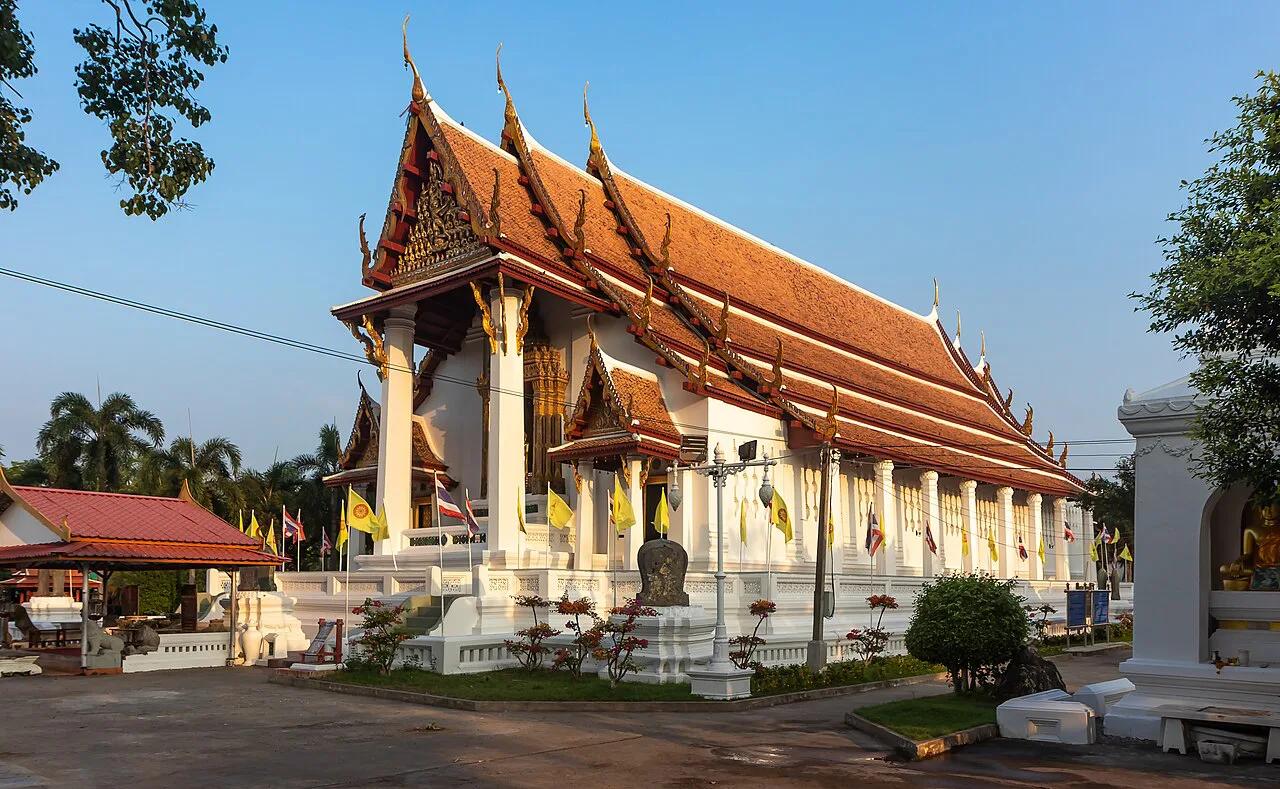
Wat Na Phra Men is worth 30 to 45 minutes of your Ayutthaya day, and it is the one stop where you see a roofed, working ordination hall rather than a field of brick foundations. The temple sits on the north bank of the Lopburi River, and it is noted for coming through the 1767 destruction of the city largely intact while the rest of the capital was burned. This guide covers where it is, how to cross from the island, what to look for inside, and how to fit it into a half day.
What Wat Na Phra Men Is, and Why Its Survival Matters
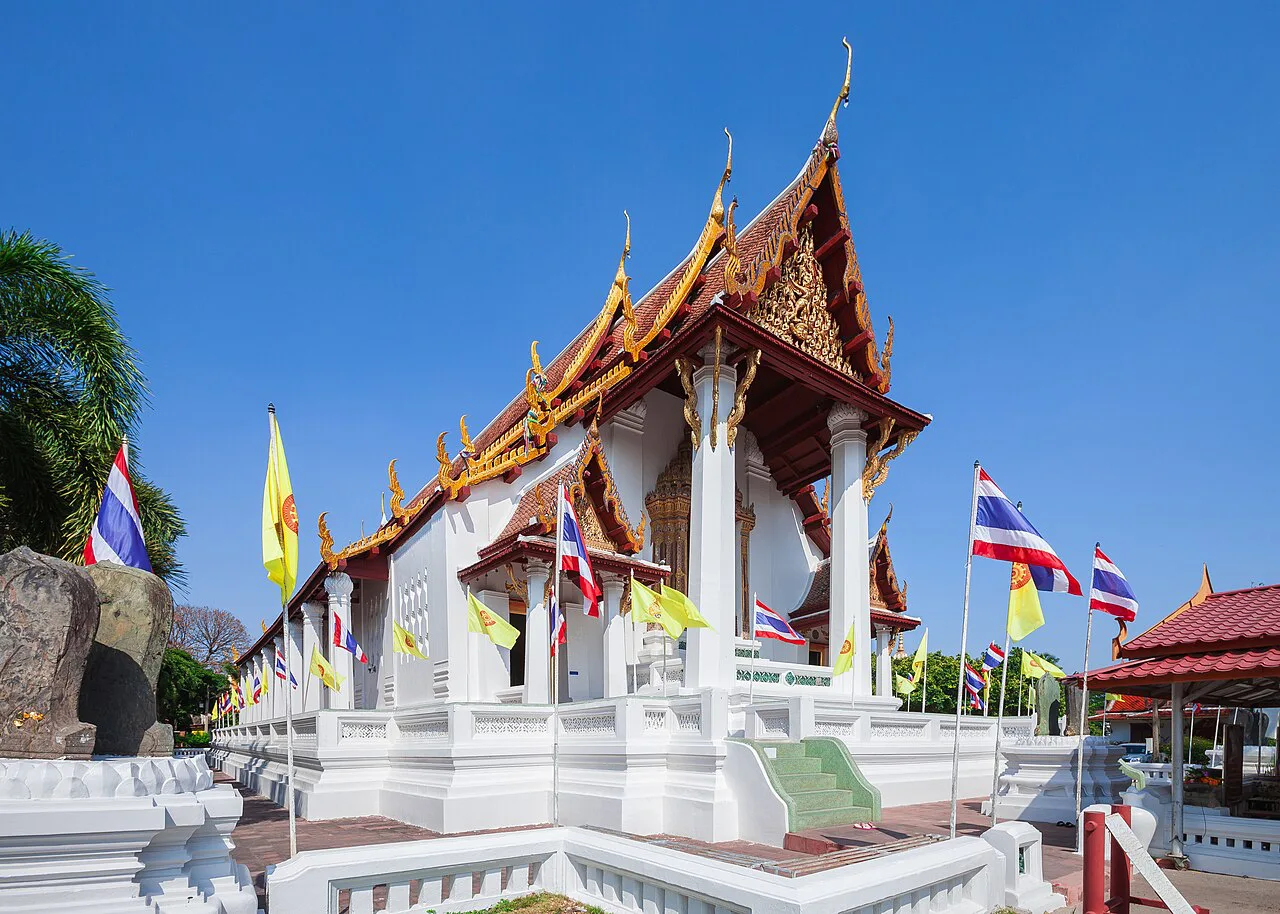
Ayutthaya's headline temples are ruins: platforms, pillars and partial prangs you read as archaeology. Wat Na Phra Men is the exception that lets you see the alternative, with an ordination hall still standing, still in use, and still holding its principal images. That difference is the whole reason to come, because it changes how you look at everything else in the city afterward.
The temple is generally dated to the early 16th century under King Ramathibodi II, with later restoration in the Ayutthaya period, and it is described in visitor sources as an active monastery rather than a ticketed ruin inside the park. Treat construction dates from third-party pages as background rather than settled fact.
One popular story holds that a Burmese king besieging the city in 1760 positioned cannon here and was mortally wounded when one burst, prompting a withdrawal. Treat that as legend or account rather than established history; it is told briefly and it is not why the temple matters.

Where It Sits: North of the Island, Across the Lopburi River
The temple is on the north side of Ayutthaya island, across the Lopburi River, roughly opposite the old royal palace area. Because it is outside the moat that defines the historical park, it does not sit on the standard ruin circuit and you will usually share it with Thai worshippers rather than tour groups.
Plan your route around one river crossing rather than a loop of the island. Coming from the ruins on the west or center of the island, you cross north and arrive within a few minutes of the water, which makes the temple a natural first or last stop rather than a mid-morning detour.
Getting There from Ayutthaya Island
A bicycle is the simplest option: ride north off the island over the river and follow the signs, and you can leave the bike at the entrance. A tuk-tuk or a car with a driver is the better choice in the heat or if you are combining the temple with sites further north, and it removes the need to navigate the bridge traffic yourself.
If you use a ride-hailing app, search several spellings before deciding the temple is missing from the map, and confirm the pin sits north of the river rather than at a similarly named site on the island. Agree a return pickup with a tuk-tuk driver or keep the app open, because the immediate surroundings are quiet.
Inside the Ubosot: The Crowned Bronze Buddha
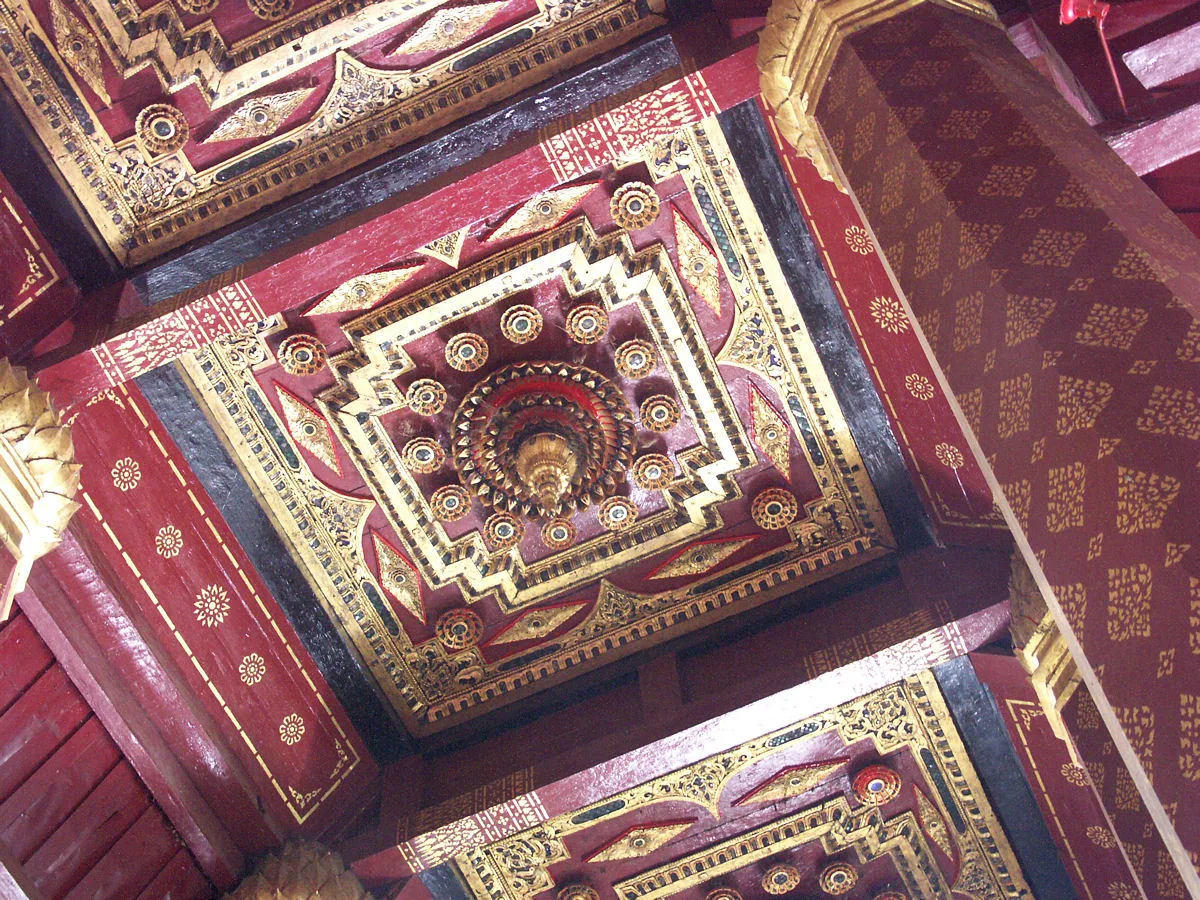
The main image inside the ordination hall is a large crowned bronze Buddha in royal attire, seated beneath red pillars with gold patterns. It is the visual shock of the visit: gilded, ornamented and complete, in a way that the exposed brick of the park's ruins cannot prepare you for.
Look up as well as forward. The ceiling and the painted columns frame the image, and photographs taken from a standing position near the entrance tend to catch both the crown and the hall's depth. Keep your voice low and step aside when worshippers are making offerings.
The Phra Khanthararat: The Stone Buddha You Might Walk Past
The second headline image is easy to miss. Phra Khanthararat, a Dvaravati-style stone Buddha seated in a distinctive posture, sits in a separate small viharn to the right of the ordination hall, so walk the compound before you leave rather than turning back at the door.
Sources differ on its age, with some describing it as more than a thousand years old, so treat the number as approximate. What you can judge for yourself is the contrast: pale stone, a posture unlike the usual lotus-seated images, and a much quieter room than the main hall.
Temple Names You Will See on Signs and Maps
The same temple appears as Wat Na Phra Men, Wat Na Phra Meru and Wat Na Phra Men Ratchikaram Worawihan, and the official Thai name is rendered inconsistently in English. None of these are different places. If a sign, map pin or driver uses a variant, you are still heading to the monastery north of the river.
For spelling reassurance before you travel, check the Tourism Authority of Thailand attraction page for the temple, and use its English spelling when you enter the name into a map or app.

Hours, Tickets and What to Confirm on the Day
Third-party pages give opening hours and a small entrance fee, but they are not consistent with each other and none of them is the temple's own publication. The temple is described as an active monastery, so treat the park's ticket system as separate and confirm the current situation at the entrance rather than budgeting from a blog.
Before you set out, check the Tourism Authority of Thailand attraction page for Wat Na Phra Men and ask your hotel or driver whether the hall is open to visitors that day. Religious ceremonies can close parts of a working temple at short notice, and that is a normal part of visiting one rather than a disappointment.
How Long to Allow and When to Slot It In
Allow 30 to 45 minutes: the compound is small, but the ordination hall rewards a slow look and the stone Buddha sits in a separate building. It is not a half-day destination on its own, and treating it as one leads to padded itineraries.
Go early in the morning or in the last couple of hours before closing, when the light through the hall doors is best and the heat is manageable. Because the temple is off the island, whichever end of the day you choose it with determines the shape of your route.
Dress and Behavior in a Working Monastery
This is a functioning temple, so dress as you would for any active Thai monastery rather than as you might for a ruin: shoulders and knees covered, shoes off before entering the ordination hall and the small viharn. Keep a light layer in your bag rather than relying on loaner clothing being available.
Do not point your feet toward a Buddha image, do not climb on anything, and ask before photographing people. If a ceremony is underway, watch from the edge or wait; the temple is not a museum and worshippers take priority.
What Is Nearby for a Half-Day Loop
The temple pairs naturally with sites on the north and east of the island. Wat Thammikarat and Wat Phanan Choeng sit east of the center and are easy to combine with the river crossing, and the Chao Sam Phraya national museum is the place to go afterward if the stone Buddha has left you wanting context.
If you are building a full circuit of the central ruins, keep Wat Ratchaburana and Wat Phra Ram on the island side of the plan and finish at Wat Na Phra Men as the contrast piece. That order gives you ruins first and a complete temple last, which makes the survival story land.
Who Should Prioritize It and Who Can Skip It
Prioritize Wat Na Phra Men if you have already seen one or two ruin temples and want to understand what was lost in 1767, or if Buddhist art is the reason you came to Ayutthaya. It also suits anyone traveling with people who tire of brick platforms, because there is a roof, shade and something to look at inside.
Skip it if you have a single half day and your list is built entirely around Wat Mahathat and Wat Chaiwatthanaram, since the extra river crossing eats time for a small compound. It is also not the stop for anyone hoping for scale or spectacle, because the appeal here is intimacy and survival rather than size.
Should Wat Na Phra Men Be on Your Ayutthaya Route?
Yes, if you can spare the river crossing. Wat Na Phra Men gives you the one thing Ayutthaya's ruins cannot: a complete, gilded ordination hall and a separate stone Buddha in a small viharn, both seen in under an hour. Build it into a route that ends with the island temples rather than making it the day's centerpiece.
Before you go, confirm current hours at the entrance or through the Tourism Authority of Thailand listing, and check the wider Ayutthaya Attractions: 6 Visitor Guides collection to see how this stop fits with the ruins you are already planning.
Explore more Ayutthaya guides
Frequently Asked Questions
Can you go inside the ordination hall at Wat Na Phra Men?
The ordination hall is the main reason to visit and is generally open to respectful visitors during the temple's opening hours, but it is a working monastery, so ceremonies can restrict access without notice. Cover your shoulders and knees, remove your shoes at the door, and check at the entrance on the day rather than assuming.
Is Wat Na Phra Men the same temple as Wat Na Phra Meru?
Yes. Wat Na Phra Men, Wat Na Phra Meru and Wat Na Phra Men Ratchikaram Worawihan are variant English spellings of the same monastery on the north bank of the Lopburi River. If a map or driver uses a different spelling, confirm the pin sits north of the river before you set off.
Do you need an Ayutthaya Historical Park ticket to visit Wat Na Phra Men?
The temple lies outside the moat that defines the historical park and is described as an active monastery, so do not assume the park ticket covers it or that a ticket is needed. Ask at the entrance what applies that day, and check the Tourism Authority of Thailand attraction page before you travel.